Every wire harness starts as a design. But here's what most engineers don't realize: roughly 70% of a harness's total production cost is locked in during the design phase, long before any wire is cut or terminal is crimped. A harness that works perfectly on the bench can be a manufacturing nightmare on the production floor—driving up labor costs, scrap rates, and delivery timelines.
Design for Manufacturability (DFM) is the systematic practice of designing wire harnesses so they can be produced efficiently, consistently, and at target cost. It's the difference between a design that “functions” and a design that “ships.” According to the IPC/WHMA-A-620 industry standard, catching design issues before production is roughly 10 times cheaper than fixing them on the line.
This checklist distills 15 battle-tested DFM rules that our engineering team applies to every project. Whether you're designing your first harness or your five-hundredth, running through these rules before releasing your design to manufacturing will save weeks of rework, thousands in scrap, and more than a few tense phone calls with your production team.
Designs that skip DFM review often cost more to produce even when they are electrically correct. DFM is not about compromising function; it ensures the assembly can be built reliably at the required production rate.
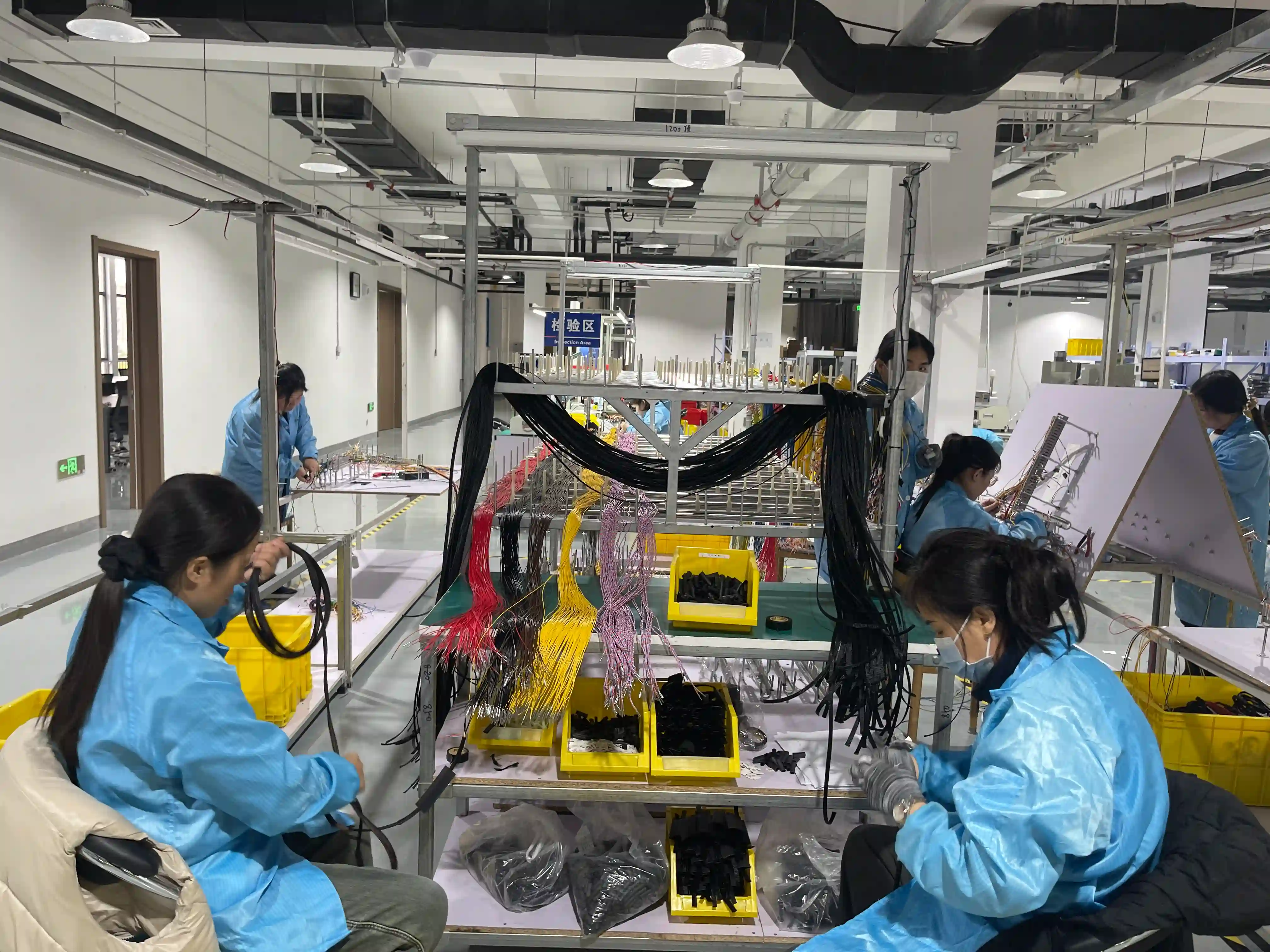
What Is Wire Harness DFM and Why It Matters
Design for Manufacturability (DFM) is a structured engineering approach that evaluates a wire harness design against real-world production constraints before it reaches the factory floor. The goal is simple: ensure that your design can be assembled repeatedly, at target cost, with minimal variation—using the equipment, skills, and materials your manufacturer has available.
With DFM Review
- 20–35% lower unit production cost
- 40% fewer engineering change orders (ECOs)
- First-pass yield above 95%
- Predictable production lead times
- Smoother prototype-to-production transition
Without DFM Review
- Repeated rework cycles on production floor
- Tooling modifications mid-production
- First-pass yield below 80%
- Component shortages from late spec changes
- Costly line-stop events during ramp-up
The most effective time to conduct a DFM review is after the electrical design is verified but before you release the design for tooling and production. Most manufacturers—including our team—offer DFM review as part of the RFQ process, so you get manufacturing feedback before committing budget.
The 15-Point Wire Harness DFM Checklist
Apply these 15 rules in sequence during your design review. Each rule is organized by category: Routing & Geometry, Component Selection, Protection & Environment, and Production & Testing.
A. Routing & Geometry (Rules 1–5)
Maintain Minimum Bend Radii
Violating bend radius is the single most common DFM failure. Conductors bent too tightly develop micro-fractures in the copper strands, causing intermittent failures that are nearly impossible to diagnose in the field. According to Lawrence Berkeley National Laboratory standards, the optimum bend radius for typical harnesses is 10 times the cable outer diameter (OD).
| Application | Minimum Bend Radius | Notes |
|---|---|---|
| Static (fixed install) | 5× cable OD | Permanently routed, no movement |
| Dynamic (flexing) | 10× cable OD | Repeated movement, hinges, doors |
| Coaxial cable | 6× cable OD | Signal integrity critical |
| Robotics / continuous flex | 10–15× cable OD | 10M+ flex cycle rated |
Design for Assembly Board Layout
Most harnesses are built on flat assembly boards (nail boards or form boards). Your design must translate cleanly to a 2D board layout. Avoid 3D routing paths that can't be flattened without crossing branches. If branches must cross, specify the stacking order clearly in the drawing.
- Keep branch angles at 45° or 90° for clean routing on assembly boards
- Dimension all breakout points from a single reference datum
- Provide 2D flat-pattern drawing alongside 3D installation view
Use Realistic Wire Length Tolerances
Over-specifying tolerances is a hidden cost driver. Specifying ±1mm on a 500mm branch when ±10mm would function identically forces slow, manual measurement on every unit. Match your tolerance to the actual installation requirement, not an arbitrary precision standard.
Cost impact: Specifying ±1mm vs ±10mm can add 20–40% to production cost on long runs, with zero functional benefit for most commercial applications.
Separate Power and Signal Cables
Running high-current power wires alongside low-level signal wires in the same bundle creates electromagnetic interference (EMI) that degrades signal integrity. Route power and signal cables in separate branches whenever physically possible, or use appropriate EMI shielding methods when separation isn't feasible.
- Maintain minimum 50mm separation between power and signal bundles
- Cross power and signal paths at 90° angles when they must intersect
Optimize Service Loop and Slack Allocation
Every harness needs enough service loop for installation, maintenance access, and thermal expansion—but excessive slack adds cost, weight, and bundle diameter. Specify service loop length at each connector endpoint (typically 50–150mm) and document the reason. This prevents assemblers from guessing and adding inconsistent amounts of slack across units.
B. Component Selection (Rules 6–9)
Standardize Wire Gauges and Colors
Every unique wire gauge and color in your BOM is a separate spool on the production floor. Reducing from 12 unique wire types to 6 can cut material changeover time by 40% and reduce minimum buy quantities. Use the minimum number of gauges that meet your electrical requirements.
- Consolidate to 2–4 wire gauges per harness where electrically safe
- Follow industry-standard color codes (IEC 60446 or SAE J1128)
- Specify approved alternates in the BOM to prevent single-source risk
Choose Connectors That Match Production Capabilities
Connector selection is a top-three DFM factor. Specify connectors that your manufacturer's existing crimping tools can process. Introducing a new connector family may require $2,000–$10,000 in new tooling and operator training, which gets added to your NRE.
| Connector Factor | DFM-Friendly | DFM Risk |
|---|---|---|
| Termination | Standard crimp | Custom solder cup |
| Availability | Multi-source (Molex/TE/JST) | Single-source proprietary |
| Pin Count | Standard sizes (2-24 pin) | Custom pin configurations |
| Keying | Polarized, color-coded | No keying (assembly errors) |
| Wire Range | Matches harness gauges | Requires gauge adaptation |
Design Error-Proof Assemblies (Poka-Yoke)
If two connectors on your harness look identical but serve different functions, assemblers will swap them. This is not an operator skill problem—it's a design problem. Build mistake-proofing into the design from the start.
- Use different connector families for different circuit functions
- Apply unique keying or polarization on same-series connectors
- Color-code or label connectors that could be confused during installation
- Vary wire lengths so wrong connections physically can't reach
Verify Component Availability Before Finalizing BOM
A beautifully designed harness means nothing if key components are on 26-week lead times or approaching end-of-life (EOL). Check current stock availability, lead times, and lifecycle status for every connector, terminal, and specialty component in your BOM. Specify at least one approved alternate for each critical component. This small step prevents the most common cause of production delays: component shortages discovered after tooling is already built.
C. Protection & Environment (Rules 10–12)
Match Insulation to Actual Operating Conditions
Specifying silicone insulation rated to 200°C when your harness operates at 60°C wastes money. Conversely, specifying PVC in an under-hood application where temperatures exceed 105°C guarantees premature failure. Match the insulation material to the actual, measured operating environment—not a worst-case assumption.
| Material | Temp Range | Relative Cost | Best For |
|---|---|---|---|
| PVC | −20°C to 80°C | 1× | Indoor, consumer electronics |
| XLPE | −40°C to 125°C | 1.5× | Automotive, industrial |
| PTFE (Teflon) | −65°C to 260°C | 4–6× | Aerospace, high-temp engines |
| Silicone | −60°C to 200°C | 3–5× | Medical, food processing |
Specify Appropriate Strain Relief at Every Termination
The connection between wire and connector is the weakest point in any harness. Without proper strain relief, vibration and cable weight will eventually pull the termination apart. But over-specifying strain relief (e.g., overmolding when a heat shrink boot would suffice) adds unnecessary cost and complexity.
- Static applications: heat shrink or cable ties (low cost)
- Moderate flex: backshells or strain relief boots (medium cost)
- High flex / harsh environment: overmolding or potting (higher cost, but required)
Identify and Mitigate Abrasion Points
Every point where your harness contacts a sharp edge, passes through a panel, or rubs against another component is a potential abrasion failure. Mark these points on your drawing and specify protection: grommets for panel pass-throughs, conduit or braided sleeving for high-vibration zones, and edge protectors where cables route over sheet metal.
Field data: Abrasion-related failures account for approximately 15–20% of all wire harness field returns in automotive and industrial applications, according to SAE International failure analysis data.
D. Production & Testing (Rules 13–15)
Design for Automated Wire Processing
Modern wire harness facilities use automated cut-strip-crimp machines that can process thousands of wires per hour—but only if your design allows it. Wires shorter than 50mm or longer than 10 meters often require manual processing, which is 3–5 times slower.
- Keep individual wire lengths between 100mm and 5,000mm for optimal machine processing
- Specify standard strip lengths (3–6mm) compatible with applicators
- Group wires by gauge and termination type to minimize machine changeovers
Include Labeling and Traceability in the Design
Labeling is often an afterthought that becomes a production headache. Specify label type, position, content, and orientation during the design phase—not during production setup. For industries requiring traceability (medical, aerospace, military), serialization and date coding must be built into the production flow.
- Heat shrink labels: durable, repositionable during assembly
- Printed wire marking: permanent, no extra material cost
- Laser-etched labels: high-durability for harsh environments
Define Test Requirements During Design, Not After
Test requirements directly influence harness design. A harness that must pass hi-pot testing needs different insulation clearances than one that only requires continuity checks. Specify all required tests, acceptance criteria, and sample rates before the design is finalized.
| Test Type | Design Impact | Typical Rate |
|---|---|---|
| Continuity / short circuit | Test point access needed | 100% production |
| Hi-pot (dielectric) | Minimum insulation clearance | 100% production |
| Pull force (crimp) | Terminal and wire pairing | First article + sampling |
| Environmental (temp, vibe) | Material and routing design | Qualification only |
Error-proofing is a high-impact DFM control. A design that physically prevents the wrong wire from entering the wrong cavity eliminates a major category of assembly defects and line stops.
How to Conduct a DFM Review: 5-Step Process
A DFM review is most effective when it involves both your design team and your manufacturing partner. Here's the process our engineering team follows on every new harness program.
Gather Complete Design Package
Collect all drawings, BOM, connectivity tables, and environmental specs. Missing documents extend the review by 1–2 weeks.
Review Against the 15-Point Checklist
Walk through each rule systematically. Flag items as Pass, Fail, or Needs Discussion. Don’t skip “obvious” items—most DFM issues hide in plain sight.
Identify Cost Drivers and Alternatives
For each flagged item, calculate the cost impact and propose alternatives. Often a simple connector change or tolerance relaxation saves 15–25% on that element.
Create DFM Report with Recommendations
Document every finding with severity (Critical / Major / Minor), cost impact, and proposed solution. Share this with all stakeholders before making changes.
Iterate and Validate
Implement accepted changes, update drawings, and re-verify against the checklist. Build prototypes to validate that DFM changes don’t affect electrical performance.
Industry-Specific DFM Considerations
Beyond the universal 15 rules, different industries impose additional DFM requirements driven by regulations, standards, and application demands.
Automotive (IATF 16949)
- • PPAP submission package required before production
- • Flame retardancy per FMVSS 302
- • Under-hood temp ratings: −40°C to 150°C minimum
- • Vibration resistance per SAE J1378
- • IPC/WHMA-A-620 Class 2 or Class 3 workmanship
Medical (ISO 13485)
- • Biocompatible materials per ISO 10993
- • Cleanroom assembly for Class II/III devices
- • Full lot traceability from raw material to finished goods
- • Sterilization compatibility (EtO, gamma, autoclave)
- • FDA design controls and DHF documentation
Aerospace & Defense
- • AS9100 Rev D quality management system
- • MIL-DTL-27500 wire specifications
- • DO-160G environmental testing qualification
- • DFARS-compliant material sourcing
- • IPC/WHMA-A-620 Class 3 workmanship (mandatory)
Industrial Automation
- • Continuous flex rating for robotic applications
- • Oil and coolant resistance for machine tools
- • IP67/IP69K sealing for washdown environments
- • EMC compliance per IEC 61000 series
- • Cable tray and drag chain compatibility
Treating the harness as an afterthought locks in connector locations and routing constraints before manufacturability is reviewed. Harness design should begin at the concept stage alongside the PCB, enclosure, and firmware.
Quick-Reference DFM Checklist
Use this consolidated checklist for every design review. Each item maps back to the detailed rule above.
Frequently Asked Questions
What is DFM in wire harness design?
Design for Manufacturability (DFM) is a systematic approach to designing wire harnesses so they can be efficiently produced at scale with minimal rework, scrap, and assembly errors. It evaluates your design against real-world production constraints including equipment capabilities, material availability, assembly ergonomics, and testing requirements. A proper DFM review typically reduces production costs by 20–35% compared to designs released without manufacturing input.
When should a DFM review be performed in the design process?
The ideal time for a DFM review is after the electrical design is validated but before the design is released for tooling and production. This is typically at the end of the detailed design phase, before prototyping begins. However, DFM principles should inform the design from the concept stage onward. Involving your manufacturing partner at the concept design stage yields the best results, as early decisions about connector placement and routing have the largest cost impact.
How much does a DFM review cost?
Many reputable wire harness manufacturers offer DFM review as a complimentary service during the quoting process, as it benefits both parties. For complex designs requiring detailed analysis, a standalone DFM review may cost $500–$2,000 depending on harness complexity. This investment typically returns 10–50 times its cost through reduced production issues, lower unit costs, and faster time-to-market. Some manufacturers, including our team, provide DFM feedback as part of the standard RFQ response.
What is the most common DFM mistake in wire harness design?
The most common DFM mistake is over-specifying tolerances and materials. Engineers often apply aerospace-grade tolerances (±1mm) and high-temperature insulation to commercial applications that would perform identically with ±10mm tolerances and standard PVC insulation. This single mistake can inflate production costs by 20–40% with zero functional benefit. The second most common mistake is specifying connectors that require new tooling, adding $2,000–$10,000 in NRE that could be avoided by selecting from the manufacturer's existing connector families.
Can DFM principles be applied to prototype wire harnesses?
Absolutely—and they should be. While prototypes are inherently more expensive per unit than production runs, applying DFM principles during prototyping ensures a smoother transition to volume production. A prototype built with production-compatible connectors, standard wire gauges, and proper bend radii validates both the electrical design and the manufacturing process simultaneously. Prototypes that ignore DFM often require a complete redesign before production, adding 4–8 weeks to the program timeline.
References & Standards
[1] IPC/WHMA-A-620 Requirements and Acceptance of Cable and Wire Harness Assemblies — Industry standard for wire harness workmanship and acceptance criteria.
[2] Lawrence Berkeley National Laboratory — Design and Manufacturing Standard for Electrical Harnesses — Reference standard for bend radius and harness construction specifications.
[3] SAE International Standards — Automotive and aerospace wire harness design and testing standards.
[4] Fusion Design — Design Checklist for Cable and Wiring Harnesses — Comprehensive DFM checklist covering connections, wire specs, production, and testing.
Related Articles
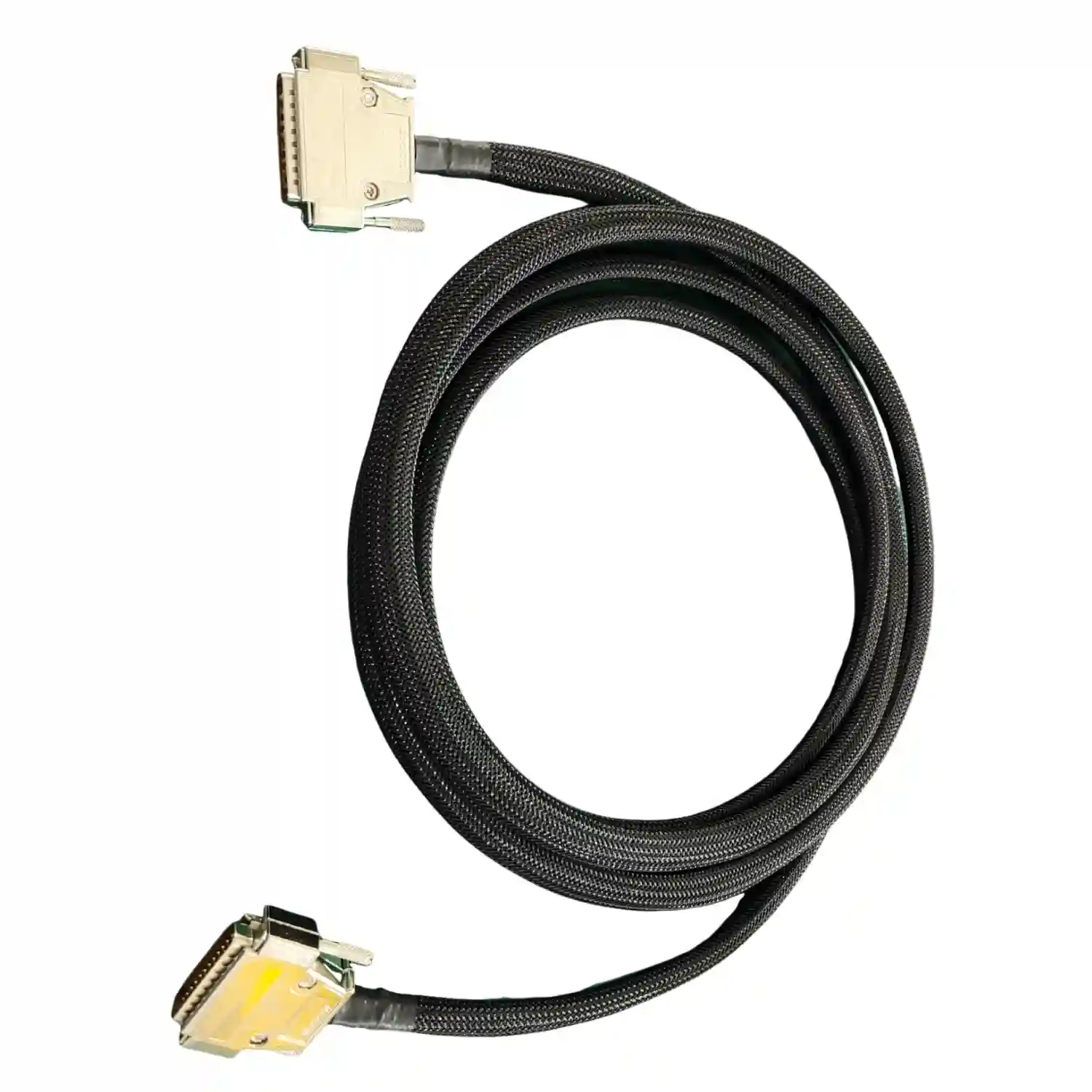
Wire Harness Design Guide: 12 Steps from Concept to Production
Complete step-by-step design process for wire harness development.

Top 7 Wire Harness Design Mistakes and How to Avoid Them
Common design errors that lead to manufacturing problems and field failures.
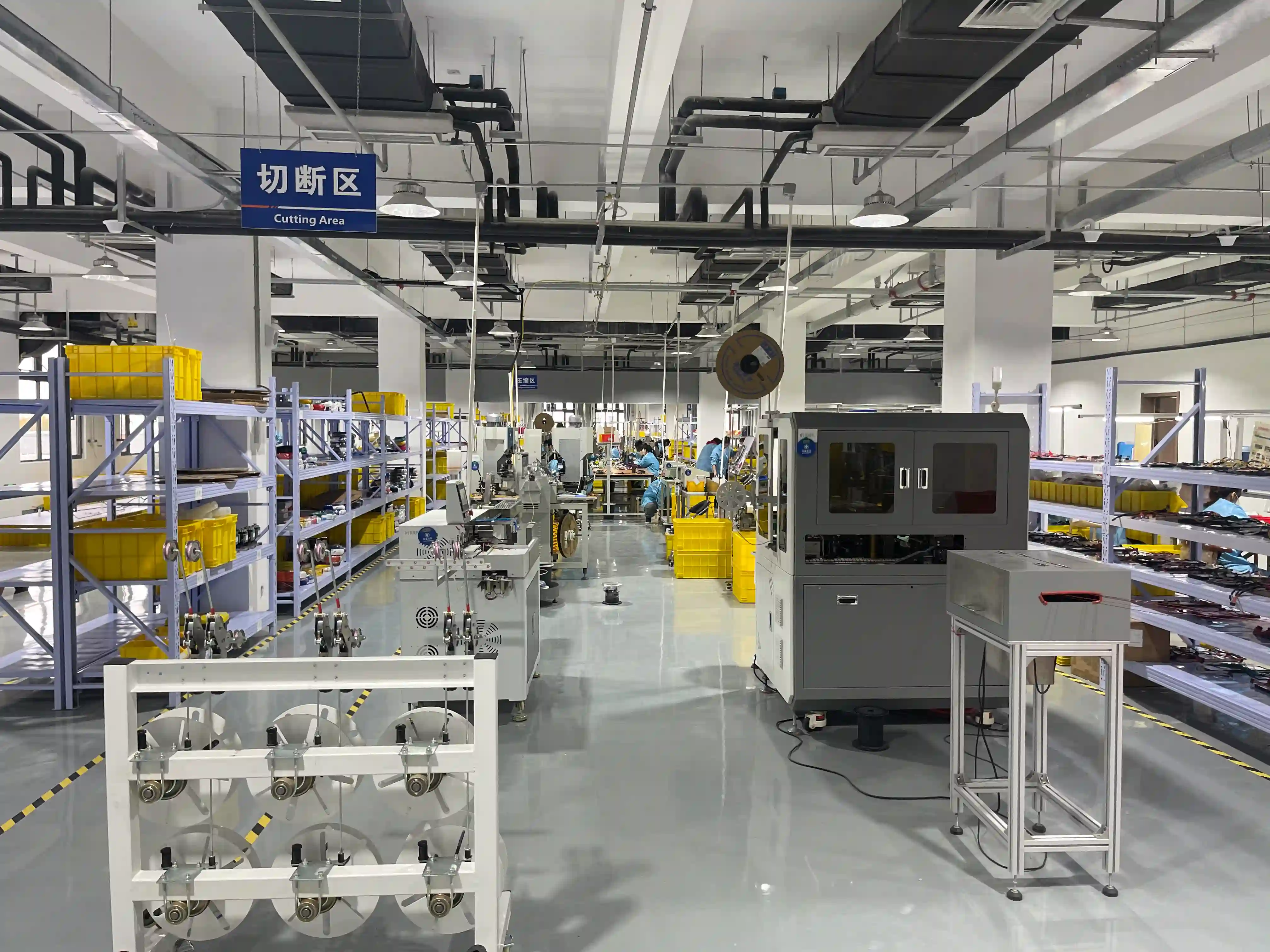
Top 8 Cost-Saving Tips for Wire Harness Projects
Proven strategies to reduce cable assembly costs without compromising quality.
About the Author
OurPCB Engineering Team brings over 15 years of combined experience in wire harness design, DFM optimization, and production engineering. The team has reviewed over 2,000 harness designs across automotive, medical, aerospace, and industrial applications, specializing in helping engineers bridge the gap between design intent and manufacturing reality.