Top 5 High-Temperature Wire Insulation Materials
From aerospace to automotive, understanding high-temperature wire insulation is critical for reliability. Compare PTFE, FEP, Silicone, XLPE, and Polyimide to find the right material for your application.
For industry reference, see cable harness and IPC standards.
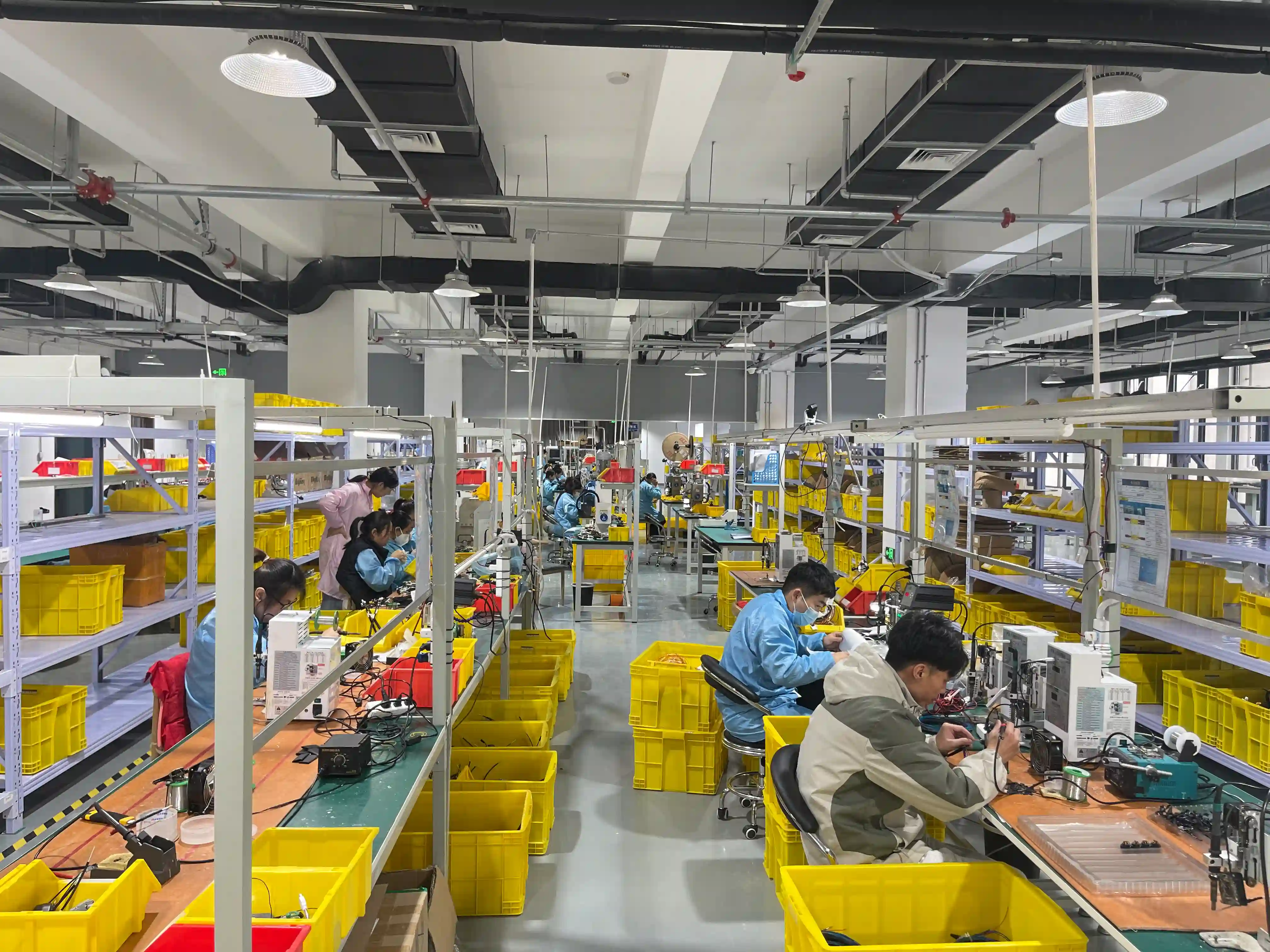
Selecting the right high-temperature insulation ensures wire harness reliability in demanding environments
When standard PVC insulation fails at 80-105°C, engineers turn to specialized high-temperature materials that can withstand extreme heat while maintaining electrical integrity. The choice between PTFE, FEP, silicone, XLPE, and polyimide can mean the difference between a reliable product and a costly field failure.
In this guide, we'll compare the five most important high-temperature wire insulation materials, examining their temperature ratings, electrical properties, mechanical characteristics, and cost considerations. Whether you're designing for aerospace systems operating at 300°C or automotive applications near engine compartments, this comparison will help you make the right material selection.
Quick Temperature Comparison
| Material | Max Continuous | Peak Rating | Primary Use |
|---|---|---|---|
| PTFE (Teflon) | 260°C | 450°C | Aerospace, Industrial |
| Polyimide (Kapton) | 260°C | 400°C | Aerospace, Military |
| FEP | 200°C | 250°C | Plenum, Industrial |
| Silicone | 200°C | 250°C | Appliances, Medical |
| XLPE | 125°C | 150°C | Automotive, Power |
PTFE (Polytetrafluoroethylene)
The "Tank" of Wire Insulation
Temperature Performance
- Continuous use: up to 260°C (500°F)
- Peak exposure: 450°C (842°F) short-term
- Low temperature: -200°C (-328°F)
Electrical Properties
- Excellent dielectric strength: 60 kV/mm
- Low dielectric constant: 2.1
- Ideal for high-frequency applications
PTFE (commonly known by the brand name Teflon®) represents the gold standard for high-temperature wire insulation. Its exceptional chemical inertness means it resists virtually all industrial chemicals, making it ideal for harsh environments in oil & gas and industrial manufacturing.
The material's non-stick properties (the same that make it excellent for cookware) translate to low friction coefficients in wire routing, allowing cables to move freely without wear. This makes PTFE-insulated wire the preferred choice for aerospace wire harnesses where weight savings and reliability are paramount.
Advantages
- Highest temperature rating among common insulations
- Virtually chemically inert
- Excellent electrical properties at high frequencies
- Low smoke and toxicity in fire
Limitations
- Highest cost among these materials
- Requires sintering (complex manufacturing)
- Stiffer than alternatives (poor flexibility)
- Cold flow under sustained pressure
When specifying PTFE wire, the selection must be justified by the application. Yes, it's expensive—sometimes 3-4x the cost of XLPE—but in aerospace and defense applications, you're not paying for the material, you're paying for absolute certainty that it won't fail. In 20 years, the review've never seen a properly installed PTFE wire fail due to heat or chemicals.
OurPCB Engineering Team
Polyimide (Kapton®)
The Aerospace Industry Standard
Temperature Performance
- Continuous use: up to 260°C (500°F)
- Peak exposure: 400°C (752°F)
- Low temperature: -269°C (-452°F)
Aerospace Heritage
- Used in 70+ military/commercial aircraft
- James Webb Space Telescope sunshield
- New Horizons mission to Pluto
Invented by DuPont in the 1960s, Kapton® polyimide has become the principal wire insulation in aerospace applications due to its exceptional combination of properties: low weight, low smoke toxicity, high dielectric strength, and the ability to operate from near absolute zero to extreme heat.
The material's remarkable temperature range (-269°C to +400°C) makes it uniquely suited for space applications where extreme thermal cycling occurs. NASA's New Horizons spacecraft used Kapton in a "Thermos bottle" design to maintain operating temperatures during its 9-year journey to Pluto.
Important Consideration: Arc Tracking Susceptibility
Polyimide insulation has known issues with arc tracking—a phenomenon where electrical arcs can propagate along the wire surface. The US Navy banned polyimide wires for aircraft applications in 1992 due to these concerns. Modern solutions pair polyimide with PTFE outer layers (known as "KT" wire) to mitigate this risk while retaining polyimide's benefits.
Advantages
- Widest temperature range (-269°C to +400°C)
- Excellent weight-to-performance ratio
- High dielectric strength and toughness
- Low smoke toxicity in fire
Limitations
- Arc tracking susceptibility (without PTFE layer)
- Degrades in hot, humid environments
- Poor abrasion resistance
- Higher cost (though less than pure PTFE)
FEP (Fluorinated Ethylene Propylene)
The Balanced Fluoropolymer Choice
Temperature Performance
- Continuous use: up to 200°C (392°F)
- Peak exposure: 250°C (482°F)
- Low temperature: -200°C (-328°F)
Manufacturing Benefits
- Melt-processable (easy extrusion)
- Consistent insulation thickness
- More cost-effective than PTFE
FEP shares many of PTFE's excellent properties—chemical resistance, low friction, excellent electrical characteristics—but with a key advantage: it's melt-processable. While PTFE requires sintering (a complex, expensive process), FEP can be conventionally extruded, enabling smooth production with consistent insulation thickness.
This manufacturing advantage makes FEP the preferred choice for plenum-rated cables in HVAC systems, where fire safety requirements demand low smoke generation. FEP is also widely used in communication systems, automation controls, and medical instruments.
FEP is what the review call the 'smart engineer's fluoropolymer.' You get 80% of PTFE's performance at 60% of the cost, with easier processing and better flexibility. For most industrial applications in the 150-200°C range, FEP is the sweet spot. PTFE is warranted only when the application needs that extra 60°C headroom or specific chemical resistance.
OurPCB Engineering Team
Advantages
- Similar properties to PTFE at lower cost
- Melt-processable (easier manufacturing)
- More flexible than PTFE
- Excellent clarity and smooth surface
Limitations
- Lower melting point than PTFE (60°C less)
- Still more expensive than silicone or XLPE
- Limited radiation resistance
Silicone Rubber
The Flexible High-Temp Solution
Temperature Performance
- Standard grade: up to 150°C (302°F)
- High-grade silicone: up to 250°C (482°F)
- Maintains flexibility at temperature
Flexibility Advantage
- Remains soft and pliable at extremes
- Ideal for tight spaces and routing
- Handles repeated flexing well
Silicone's standout characteristic is maintaining flexibility across its entire operating temperature range. While PTFE and polyimide become stiff at both temperature extremes, silicone-insulated wire remains soft and pliable—a critical advantage for applications requiring movement or tight routing.
This flexibility makes silicone the go-to material for high-temperature appliances, heating elements, and applications where the wire harness must fit into tight locations. It's commonly used in medical device wire harnesses where biocompatibility and flexibility are both required.
Advantages
- Superior flexibility at high temperatures
- Good high-voltage performance
- Biocompatible (medical applications)
- Moderate cost compared to fluoropolymers
Limitations
- Poor tear and cut resistance
- Sensitive to petroleum-based fluids
- Lower abrasion resistance than fluoropolymers
- Can absorb moisture over time
XLPE (Cross-Linked Polyethylene)
The Cost-Effective Upgrade from PVC
Temperature Performance
- Continuous use: up to 125°C (257°F)
- Short circuit: up to 250°C
- 25-45°C higher than standard PVC
Automotive Standard
- TXL/GXL wire standard in automotive
- Excellent cost-to-performance ratio
- Thinner wall than PVC at same rating
XLPE represents the practical "step up" from standard PVC when you need modest temperature improvement without the cost of fluoropolymers. The cross-linking process transforms ordinary polyethylene's molecular structure, creating a tougher, more heat-resistant material.
This makes XLPE the standard choice for automotive wire harnesses (as TXL/GXL wire) where under-hood temperatures can exceed PVC's limits. It's also widely used in power cables and industrial control wiring where durability matters but extreme temperatures aren't present.
XLPE is the unsung hero of automotive wiring. Every time a customer specifies PTFE for their automotive project 'just to be safe,' the review should request: what's your actual peak temperature? Nine times out of ten, TXL wire at 125°C is more than adequate. It's 5x cheaper, easier to terminate, and has decades of proven performance. Save the PTFE budget for where you really need it.
OurPCB Engineering Team
Advantages
- Excellent cost-to-performance ratio
- Better mechanical strength than PVC
- Thinner insulation walls possible
- Good chemical resistance vs. PVC
Limitations
- Lower max temp than fluoropolymers (125°C vs 200°C+)
- Not suitable for flame retardant requirements
- Limited chemical resistance vs. PTFE/FEP
Complete Material Comparison
| Property | PTFE | Polyimide | FEP | Silicone | XLPE |
|---|---|---|---|---|---|
| Max Continuous Temp | 260°C | 260°C | 200°C | 200°C | 125°C |
| Min Temp | -200°C | -269°C | -200°C | -60°C | -40°C |
| Chemical Resistance | ⭐⭐⭐⭐⭐ | ⭐⭐⭐⭐ | ⭐⭐⭐⭐⭐ | ⭐⭐⭐ | ⭐⭐⭐ |
| Flexibility | ⭐⭐ | ⭐⭐⭐ | ⭐⭐⭐⭐ | ⭐⭐⭐⭐⭐ | ⭐⭐⭐⭐ |
| Abrasion Resistance | ⭐⭐⭐⭐ | ⭐⭐ | ⭐⭐⭐⭐ | ⭐⭐ | ⭐⭐⭐⭐ |
| Dielectric Strength | ⭐⭐⭐⭐⭐ | ⭐⭐⭐⭐⭐ | ⭐⭐⭐⭐ | ⭐⭐⭐⭐ | ⭐⭐⭐⭐ |
| Relative Cost | $$$$$ | $$$$ | $$$ | $$ | $ |
| Primary Applications | Aerospace, Chemical | Aerospace, Space | Plenum, Industrial | Appliance, Medical | Automotive, Power |
Material Selection Guide
Need >200°C continuous + extreme chemical resistance?
Choose PTFE. The highest performance option for aerospace, chemical processing, and demanding industrial environments.
Learn about oil & gas applicationsSpace/aerospace with cryogenic to high-temp cycling?
Choose Polyimide (with PTFE layer). Unmatched temperature range and proven aerospace heritage.
Explore aerospace solutionsIndustrial 150-200°C with cost sensitivity?
Choose FEP. Similar properties to PTFE at lower cost, with easier processing.
View industrial capabilitiesNeed flexibility at temperature + biocompatibility?
Choose Silicone. Maintains flexibility up to 200°C, ideal for medical and appliance applications.
Medical wire harness solutionsAutomotive under-hood or general industrial up to 125°C?
Choose XLPE (TXL/GXL). Best cost-to-performance ratio, industry-proven automotive standard.
Automotive wire harness expertiseIndustry Application Matrix
| Industry/Application | Typical Temp | Recommended | Alternative |
|---|---|---|---|
| Aircraft engine bay | 200-300°C | PTFE | Polyimide/PTFE |
| Spacecraft/satellites | -270 to +200°C | Polyimide | PTFE |
| Plenum cabling (HVAC) | 75-150°C | FEP | PTFE |
| Medical devices (sterilizable) | 134°C autoclave | Silicone | FEP |
| Automotive engine compartment | 85-125°C | XLPE (TXL) | Silicone |
| Industrial ovens | 150-250°C | Silicone | FEP |
| Chemical processing | Varies + chemicals | PTFE | FEP |
| High-frequency electronics | Varies | PTFE | FEP |
Frequently Asked Questions
Can I use XLPE in place of silicone to save costs?
Only if your maximum continuous temperature stays below 125°C. Silicone offers 200°C capability and superior flexibility, which may be critical for certain applications. However, for cost-sensitive automotive projects where 125°C is adequate, XLPE (TXL wire) is the proven industry choice.
What's the difference between PTFE and Teflon?
Teflon is DuPont's brand name for PTFE (polytetrafluoroethylene). They are the same material—Teflon is simply the trademarked name. Other manufacturers produce PTFE under different brand names, but the material properties are essentially identical.
Why was polyimide wire banned by the US Navy?
The US Navy banned pure polyimide-insulated wire in 1992 due to arc tracking concerns—the insulation could propagate electrical faults along the wire surface. Modern aerospace wire typically uses polyimide with a PTFE outer layer ("KT" wire) to prevent this while retaining polyimide's weight and temperature benefits.
How do I calculate actual wire temperature in my application?
Wire temperature = Ambient temperature + Temperature rise from current (I²R heating) + External heat sources. Use our voltage drop calculator to estimate current-related heating. Always add a 20-25°C safety margin above your calculated maximum.
Can I mix insulation types within one harness?
Yes, this is common practice. Use higher-temperature insulation only for wires routed through hot zones, and standard insulation for cooler areas. This optimizes cost while ensuring reliability. However, ensure all materials are compatible for overmolding or potting if used.
Related Articles
PVC vs TPE vs Silicone Cable Jackets
Compare jacket materials for flexibility, temperature, and cost.
Shielded vs Unshielded Cable
When EMI protection is necessary and selection criteria.
Top 10 Wire Harness Cost Factors
Understand what drives wire harness pricing and how materials fit in.
Top 7 Design Mistakes to Avoid
Common engineering errors that lead to wire harness failures.
Need High-Temperature Wire Harness Solutions?
Our engineers specialize in material selection for demanding thermal environments. From aerospace PTFE to automotive XLPE, we help you choose the right insulation for your application.