Custom Wire Harness Assembler
ISO 9001 certified contract wire harness assembly for OEM programs, with no minimum order and 48-hour prototyping for standard, ready-to-build designs; exact timing confirmed at quote.
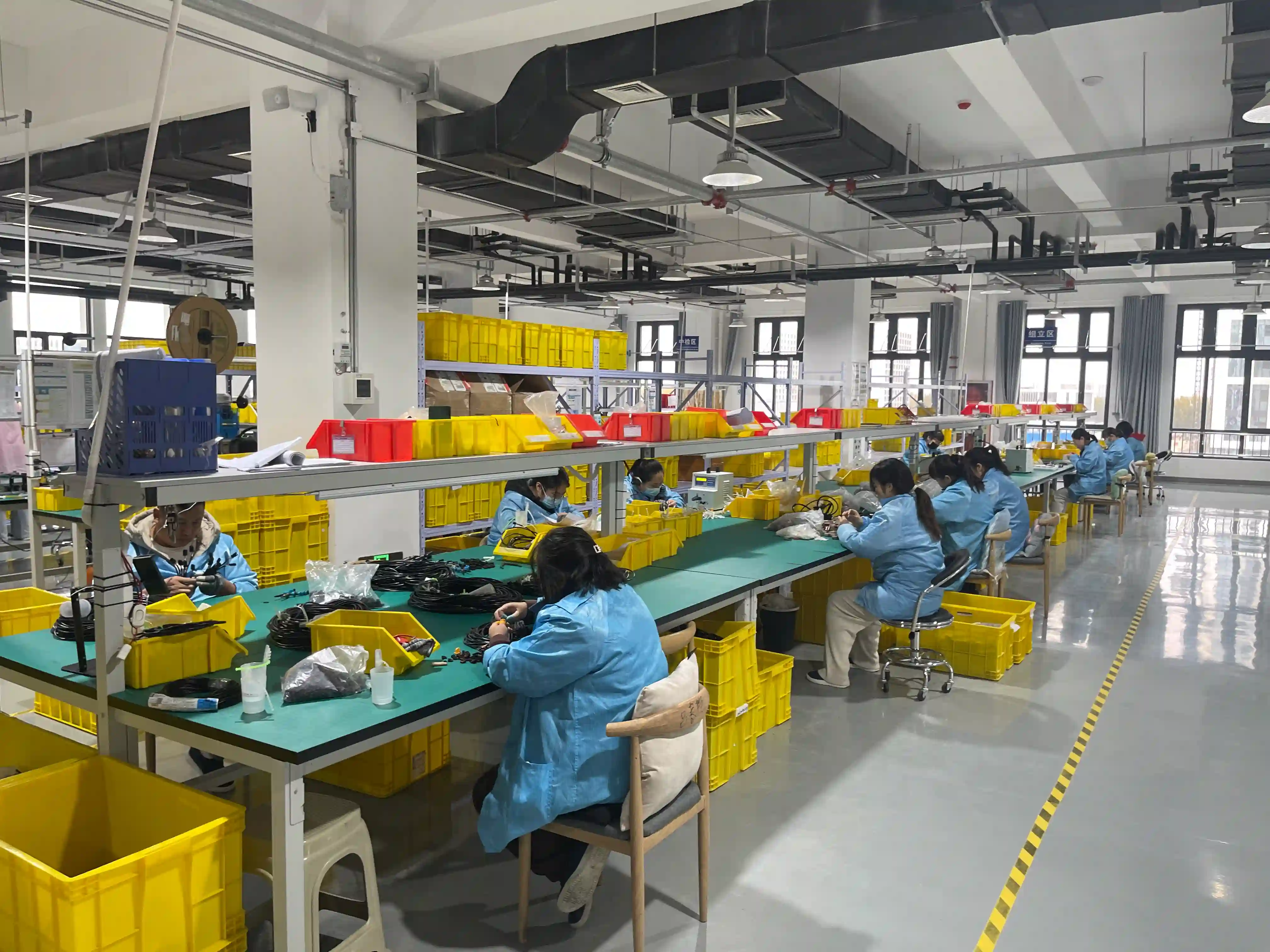
Your Wire Harness Assembly Partner
As a contract wire harness assembler, we combine engineering review with controlled manufacturing capabilities to deliver custom wire harness assemblies against your released drawing and BOM. Our wire harness manufacturing facilities support prototype builds, pre-production samples, and repeat production.
Dual Factory
China & Philippines wire harness production
48-Hour Prototyping
Rapid prototype builds available
ISO 9001 Certified
IPC/WHMA-A-620 criteria where specified
No MOQ
No minimum order required
Wire Harness vs. Cable Assembly
The terms overlap in everyday use, but the construction and routing intent usually distinguish them.
Wire harness
A wire harness organizes individual wires or subassemblies into branches that distribute power or signals through a product. Breakouts, connector positions, labels, clips, and protective coverings help the harness fit a defined routing path.
Cable assembly
A cable assembly more often centers on one jacketed cable or cable bundle terminated with connectors, contacts, or lugs. It may prioritize a point-to-point power, data, or signal connection.
Explore cable assembliesThe naming is not absolute: the drawing, branch structure, protection, electrical requirements, and installation method are more useful than the label when defining a build.
Wire Harness Types & Solutions
Use the application, operating environment, electrical function, and construction method to find the relevant harness category. Each linked page covers the selection topic in more detail.
Waterproof Wire Harness
Sealed harness construction for applications exposed to moisture, washdown, or outdoor conditions.
Learn MoreHigh Voltage Wire Harness
Power-path harnesses where voltage, current, insulation, spacing, and connector selection require coordinated review.
Learn MoreShielded Wire Harness
EMI shielded wire harness with braided or foil shielding for electromagnetic interference protection in sensitive electronics
Learn MoreHigh Flex Wire Harness
Continuous flex wire harness designed for robotics, motion control systems, and applications requiring repeated bending cycles
Learn MoreAutomotive Wire Harness
Harness routing for vehicle power, control, sensor, and body electrical systems.
Learn MoreMedical Wire Harness
Drawing-controlled harness assemblies for diagnostic, monitoring, and other medical equipment programs.
Learn MorePrecision Wiring Harness
Tight-tolerance wire harness builds with repeatable routing, documented inspection, and traceability
Learn MorePower Tool Wire Harness
Compact battery, trigger, motor, and charger harnesses for cordless tools and handheld equipment
Learn MoreChoose by environment
Start with the exposure or operating condition that drives material and protection choices.
Choose by function
Use the electrical job and installation location to narrow the architecture.
Choose by construction
Start here when physical protection, signal integrity, or routing method defines the build.
Wire Harness Industry Applications
Our wire harness manufacturing expertise spans across multiple industries, delivering specialized wire harness solutions for demanding applications.
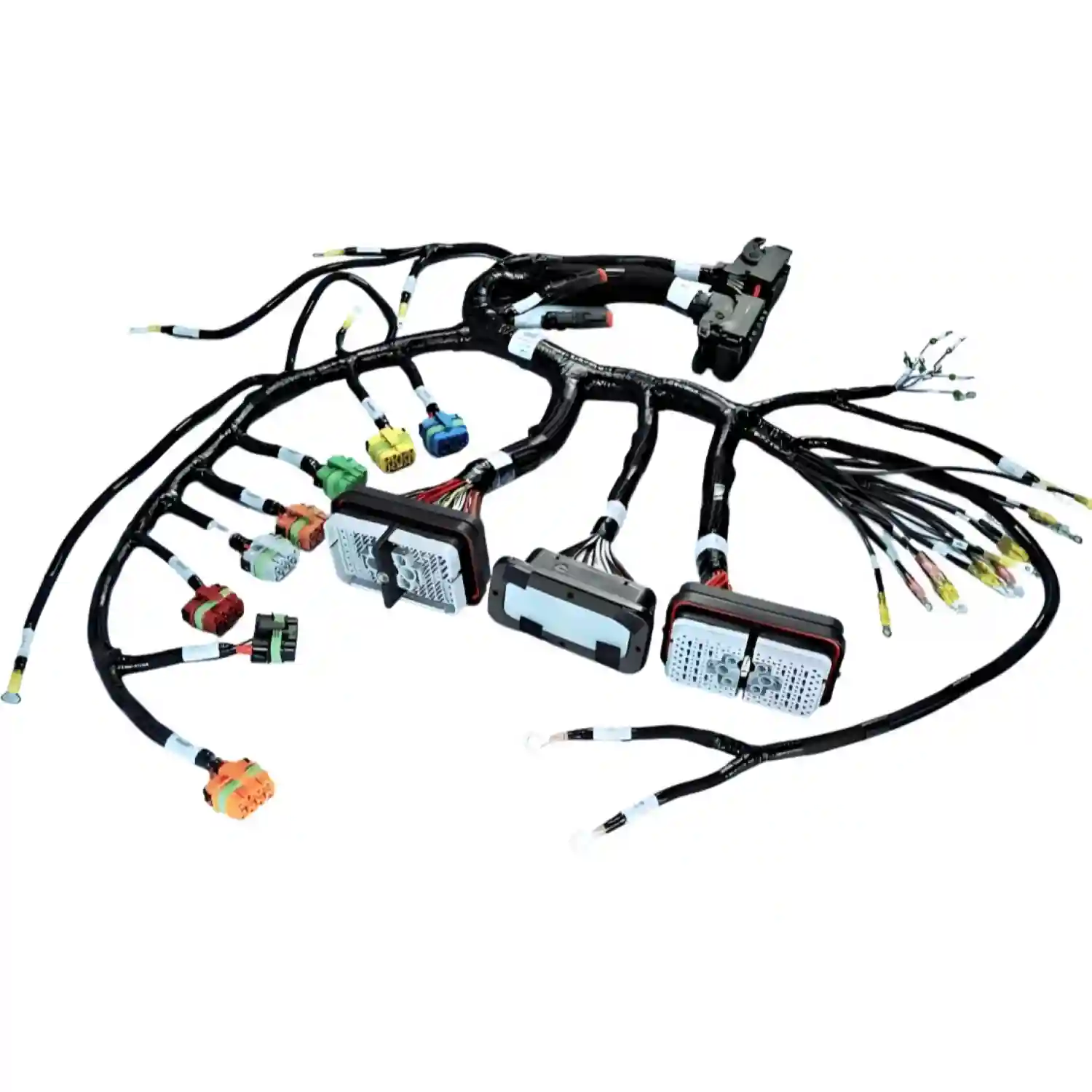
Automotive Wire Harness
ECU, sensors, infotainment, and EV battery wire harness systems
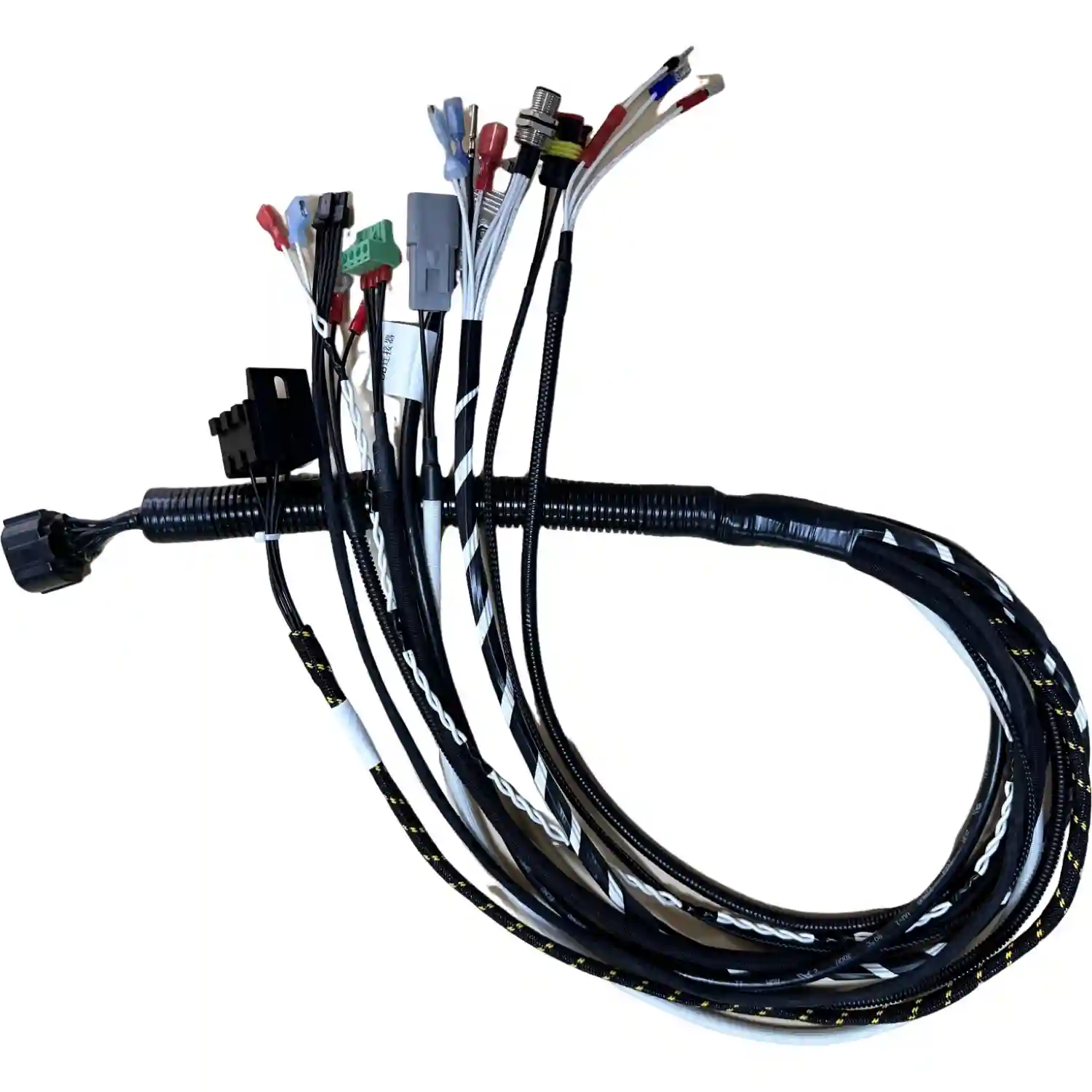
Medical Device Wire Harness
Diagnostic equipment, patient monitors, surgical wire harness systems
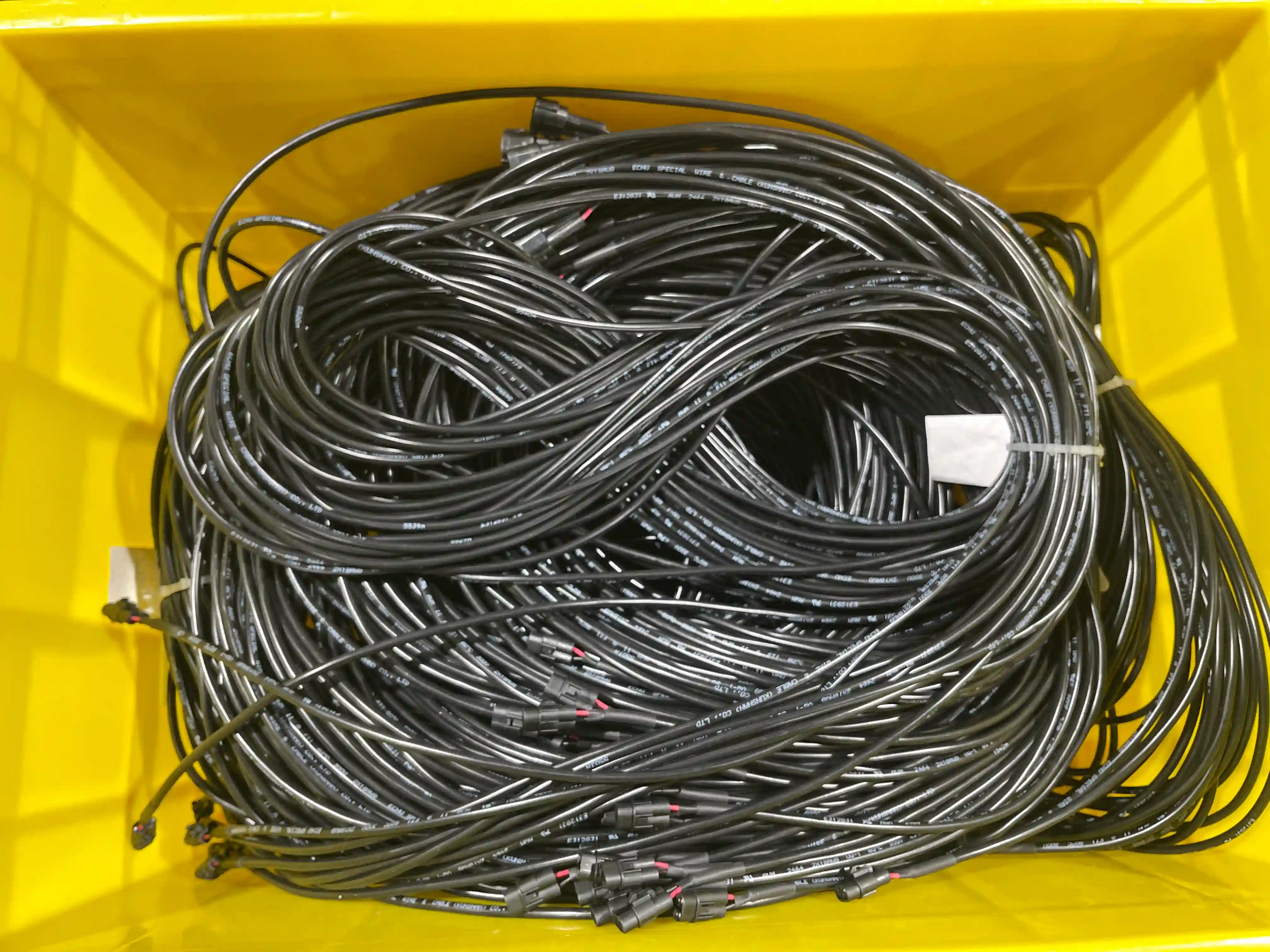
Industrial Wire Harness
Automation, control panels, heavy machinery wire harness
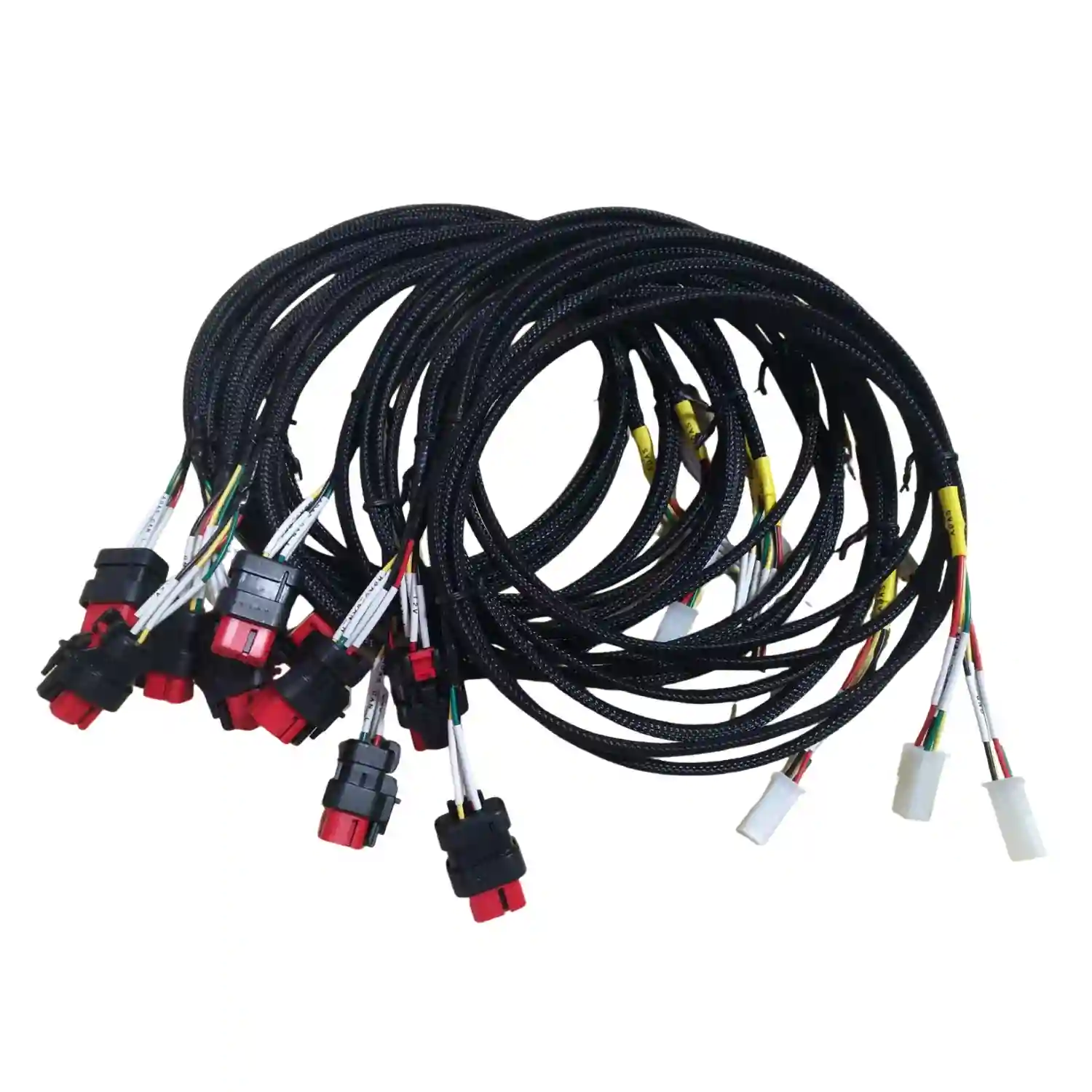
Robotics Wire Harness
Robotic arms, motion systems, automation wire harness
Wire Harness Manufacturing Process
Our streamlined wire harness assembly process controls quality from design review to production release.
Cut & Strip
Prepare each wire to the released cut list
Terminate
Crimp or otherwise terminate specified contacts
Insert
Load contacts into the specified connector positions
Protect
Apply specified tape, braid, loom, or conduit
Quality Check
100% electrical testing
Inspect
Verify workmanship, routing, labels, and dimensions
The exact sequence follows the released build documentation. See our cutting and stripping, crimping, braiding, and testing capability overviews for more detail.
Advanced Wire Harness Production
Our wire harness manufacturing facility supports documented assembly operations. Available processes depend on the drawing, materials, tooling, and inspection plan; review the broader manufacturing capabilities or discuss the following during RFQ review:
- Wire cutting and stripping to drawing-defined lengths
- Terminal crimping and connector contact insertion
- Soldering or ultrasonic welding where the design calls for it
- Overmolding, potting, heat shrink, or strain relief where specified
- 100% electrical testing, including continuity testing
- Labels, coverings, branch dimensions, and visual workmanship inspection
Materials & Construction Decisions
A useful specification connects each material choice to the electrical load, environment, movement, routing space, and mating interface.
Wire and insulation
Select conductor size for the circuit load and allowable voltage drop, then choose insulation for the required temperature, fluids, abrasion, flexibility, and applicable customer standard.
Terminals and connectors
Match contact system, plating, seal, keying, retention, current path, and mating-cycle needs to the specified interface. Exact manufacturer part numbers reduce substitutions and ambiguity.
Shielding and grounding
Foil, braid, drain-wire, and shield-termination choices depend on the interference source, frequency range, grounding scheme, flexing, and coverage needed. See shielded harnesses.
Strain relief and protection
Specify bend support and pull protection at exits, then use loom, braid, tape, conduit, heat shrink, or overmolding according to abrasion, bundling, serviceability, and exposure requirements.
From Requirements to a Buildable Wire Harness
A useful harness package defines more than connectivity. It identifies wire and contact part numbers, pin locations, branch dimensions and tolerances, labels, coverings, assembly notes, and the acceptance tests that apply. Our design-support overview explains how drawing and BOM questions are resolved before a custom wire harness build is released.
Workmanship control translates those requirements into repeatable preparation, termination, contact insertion, routing, protection, identification, and inspection steps. IPC/WHMA-A-620 workmanship may be referenced when the customer specification calls for it; the drawing and purchase requirements should identify the applicable acceptance criteria. The quality plan can also define first-article review, in-process checks, traceability, and nonconformance handling without assuming that every harness needs the same controls.
Application pages add context without replacing the build specification. Compare automotive harnesses, medical equipment harnesses, and industrial harnesses, or browse the related automotive, medical, industrial, and robotics industry overviews.
Every harness receives 100% electrical testing, including continuity testing to verify the intended point-to-point paths. Additional electrical checks follow circuit risk and the released test plan. Review the testing capability and include test limits, connector mating requirements, and required records in the RFQ. With no minimum order and 48-hour prototyping for standard, ready-to-build designs with exact timing confirmed at quote, programs can move from an initial build into planned production releases.
Wire Harness Manufacturing FAQ
A wire harness is a systematic arrangement of wires, terminals, and connectors that transmits electrical power and signals throughout a system. While cable assemblies typically involve a single cable with connectors at each end, wire harnesses integrate multiple wires bound together with tapes, sleeves, conduit, or braiding for organized routing in complex systems like vehicles, medical devices, or industrial equipment. Wire harness manufacturing requires specialized expertise in wire routing, termination, and testing.
We have no minimum order quantity (MOQ) for custom wire harness manufacturing. We can support a single prototype as well as planned production releases; see our no-MOQ service page for details.
We offer 48-hour wire harness prototyping for standard, ready-to-build designs. Timing depends on receiving complete build documentation and the availability of the specified materials, and exact timing is confirmed at quote.
Our wire harness production quality system is certified to ISO 9001. Workmanship follows IPC/WHMA-A-620 where specified. Our IATF 16949 certificate (T198433 / IATF 0611191) is valid to 2029-08-08. ISO 13485 applies specifically to the China entity's medical wire-harness scope, not to all harness work. We can use UL-rated wire and RoHS materials where the customer drawing calls for them.
Workmanship control starts with the released drawing, BOM, connector positions, termination requirements, and inspection criteria. Builds can use IPC/WHMA-A-620 workmanship criteria where specified, with checks for items such as conductor preparation, crimp condition, contact seating, routing, protection, identification, and drawing-defined electrical tests.
Design-for-manufacturing review can identify open questions in the drawing, BOM, wire selection, connector definition, routing, protection, and test plan before production. Final electrical, thermal, regulatory, and system-level requirements remain part of the customer's approved design documentation.
Send the drawing or pin-to-pin connection table, BOM or approved component list, wire specifications, connector and terminal part numbers, lengths and tolerances, labels, coverings, test requirements, expected quantities, and delivery destination. Photos or a physical sample can add context, but controlled build documentation is still needed to define the assembly.
Related Wire Harness Assemblies & Services
Cable Assembly
Custom cable assembly manufacturing
ServicesRapid Prototyping
48-hour wire harness prototyping
ServicesNo MOQ
Wire harness builds with no minimum order
ServicesDesign Support
Wire harness DFM review
CapabilitiesQuality Testing
Wire harness testing services
QualityIPC/WHMA-A-620
Wire harness workmanship reference
CapabilitiesManufacturing Capabilities
Processes supporting harness builds
AssembliesTrailer Wire Harness
Custom trailer wiring solutions
AssembliesMotorcycle Wire Harness
OEM & aftermarket motorcycle harness
AssembliesPrecision Wiring Harness
Tight-tolerance builds with documented inspection
AssembliesDashboard Wire Harness
Instrument panel wiring assemblies
AssembliesData Wire Harness
Signal & data transmission harness
AssembliesPower Wire Harness
Power distribution wire harness
AssembliesDoor Wire Harness
Vehicle door wiring assemblies
AssembliesPower Tool Wire Harness
Compact tool battery and trigger wiring
Start Your Wire Harness Project Today
Share your drawing, BOM, quantities, test requirements, and delivery needs for a wire harness quote and build review.
All Wire Harness Types
Every wire harness page on this site.