Medical Device Cable Assembly Manufacturing
Cable assemblies for diagnostic equipment, patient monitoring, surgical systems, and medical imaging, supported by an ISO 13485-certified quality-management system.
Medical Device Applications
Custom cable solutions for the full spectrum of medical devices and equipment.
Patient Monitoring
ECG leads, SpO2 sensors, vital signs monitors
Diagnostic Equipment
Blood analyzers, lab instruments, test systems
Imaging Systems
CT, MRI, X-ray, ultrasound cable assemblies
Laboratory Devices
Microscopes, centrifuges, analysis equipment
Therapeutic Devices
Infusion pumps, ventilators, dialysis machines
Surgical Systems
Electrosurgical units, robotic surgery cables
Why Trust Us with Medical Cables
Medical equipment programs require controlled specifications, repeatable workmanship, and records that fit the customer's quality system. Our China manufacturing entity's ISO 13485-certified quality-management scope covers production of medical wire harnesses.
- ISO 13485 certified quality management
- Customer-defined drawings, BOMs, and acceptance criteria
- Medical-grade material options evaluated for the intended use
- Lot traceability and incoming-material control when specified
- Cleaning and disinfectant exposure considered during material selection
- EtO, gamma, or steam compatibility reviewed—not assumed
- Inspection and test records matched to the quality agreement
- Production-record support for the customer's DHR
Design and Material Considerations
A medical cable specification should connect patient-contact, cleaning, sterilization, flexing, and electrical requirements to the exact materials and construction.
Biocompatibility and contact
Medical-grade silicone, TPU, and PVC are candidate jacket or overmold families, not automatic proof of biocompatibility. The specific compound, colorant, processing, patient-contact category, and contact duration determine what evidence is relevant. ISO 10993 is the framework customers use to plan biological evaluation; requirements should be established before material approval.
Cleaning and sterilization compatibility
Repeated wipe-down can affect jackets, markings, adhesives, seals, and overmolded strain reliefs. If EtO, gamma, or steam/autoclave exposure is expected, the method, dose or cycle, temperature, and number of exposures should be stated. Material supplier data guides selection, followed by validation in the customer's finished-device context.
Quality, Traceability, and Change Control
We align cable-assembly records with the customer's drawing, purchase requirements, and quality agreement.
Incoming Material
Verify specified part numbers and retain supplier documentation when the program requires it.
Lot Traceability
Link defined materials and production lots to the assembly record at the agreed level.
DHR Support
Provide production, inspection, and test records that the customer can incorporate into its DHR.
Change Control
Control drawing and BOM revisions and route proposed substitutions or process changes for approval.
Required retention periods, serialization, report formats, and approval paths should be stated in the quality agreement; they are not identical for every program. See our cable and harness testing capabilities for available electrical and mechanical verification.
Cable Assemblies for Medical Equipment
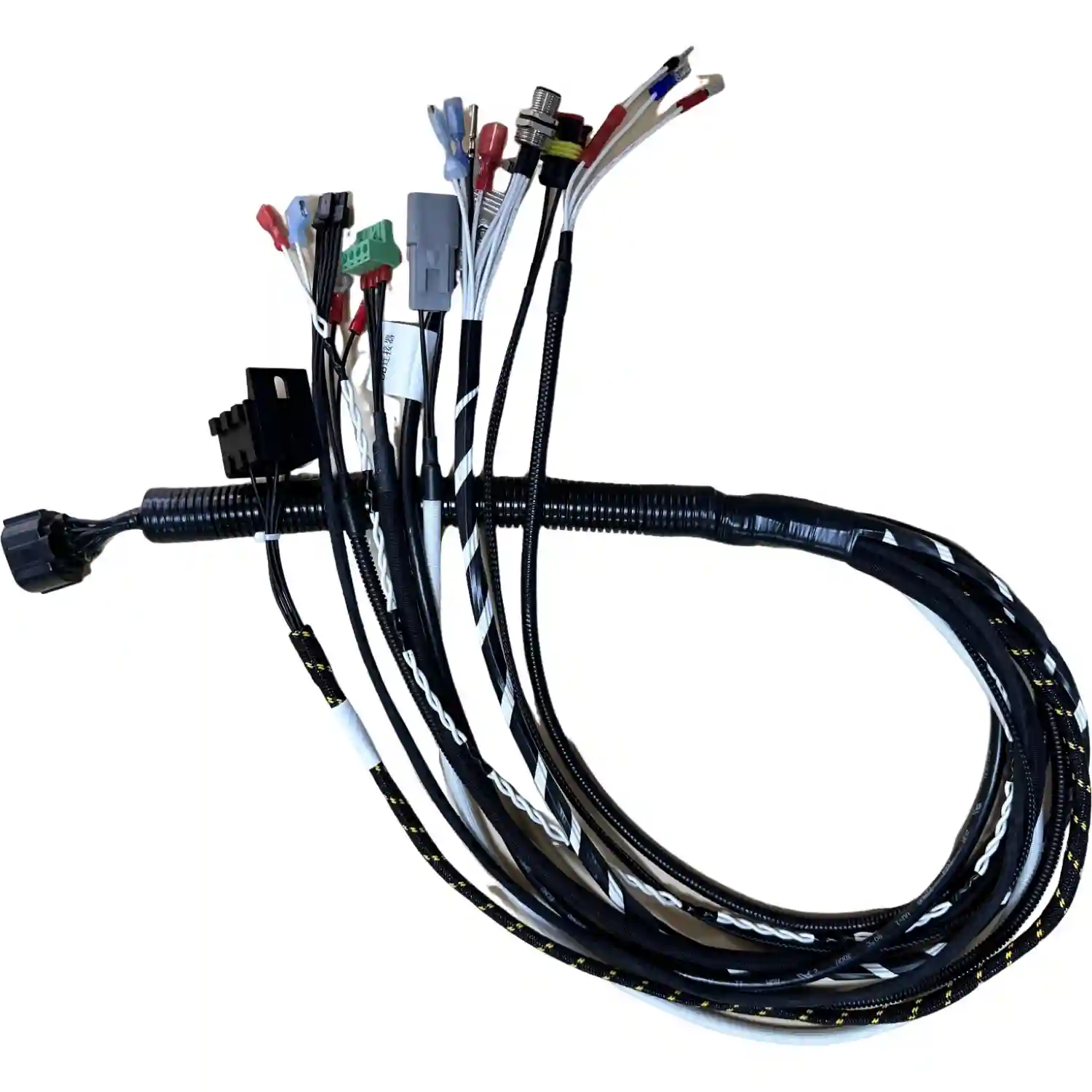
OurPCB manufactures medical cable assemblies and wire harnesses that go into medical equipment; we do not claim to manufacture or obtain regulatory clearance for the finished device. Typical end uses include patient-monitoring equipment, diagnostic and imaging systems, surgical equipment, and laboratory or analytical instruments. For harness-specific construction options, see our medical wire harness page.
Patient-monitoring equipment can use cable assemblies for ECG leads, SpO2 sensors, and vital-sign connections. Imaging equipment such as CT, MRI, X-ray, and ultrasound systems may require shielded construction where electromagnetic interference is a design concern. Data cable construction is selected around the specified interface, bandwidth, routing, and signal-integrity requirements.
Example end uses also include electrosurgical and robotic-surgery equipment, infusion pumps, ventilators, dialysis equipment, analyzers, and laboratory automation. Where motion is expected, high-flex cable construction can be evaluated against the application's bend radius and cycle requirements. Custom cable assemblies are built to the customer's released specification.
A released specification should identify continuity, insulation, shielding, dimensional, workmanship, and any application-specific tests. Hipot or functional testing is added when the customer specification requires it. Cleaning or sterilization compatibility is treated as a material-and-construction requirement, not as a claim that every cable tolerates every process. Wire harnesses can integrate multiple connections in laboratory and diagnostic equipment.
View the certificate and registered scope on our ISO 13485 certification page. Our design support can review manufacturability against customer-controlled drawings and requirements. Contact us with the current drawing, BOM, expected environment, cleaning or sterilization exposure, test plan, quantities, and documentation requirements.
Medical Cable Assembly FAQ
Our China manufacturing entity holds ISO 13485:2016 certification with a scope covering production of medical wire harnesses. ISO 13485 applies to the quality-management system; it is not approval or clearance of a customer's finished medical device.
The record package can be defined around the customer drawing and quality agreement. Depending on the program, it can include incoming-material records, lot traceability, drawing and BOM revisions, inspection and electrical-test results, certificates supplied with materials, and production records that support the customer's device history record (DHR).
Biocompatibility is not a blanket property of every medical cable. We can source candidate medical-grade silicone, TPU, or PVC compounds to a customer specification, but suitability depends on the finished assembly's type and duration of contact. ISO 10993 provides the evaluation framework; the customer should define the required evidence and approve the selected material for its intended use.
Compatibility must be checked for the exact jacket, overmold, connector, adhesive, label, dose or cycle, and expected number of exposures. Candidate materials can be selected for EtO, gamma, or steam/autoclave exposure, but no material is assumed compatible without supplier data and application-specific validation. We manufacture the cable assembly; we do not claim sterilization as a service.
Related Products & Services
Medical Grade Cable
Material and construction options for medical equipment
ProductsShielded Cable
EMI protection for sensitive devices
CertificationsISO 13485
Medical quality certification
CapabilitiesQuality Testing
Comprehensive testing services
ServicesPrototyping
Rapid prototype development
ServicesDesign Support
DFM and engineering support
Start Your Medical Cable Project
Contact us to review the specifications, materials, testing, traceability, and documentation needed for the cable assembly used in your medical equipment.