BNC Cable Assembly
Custom BNC cable assemblies for RF instrumentation, broadcast video, CCTV, and industrial equipment. We support prototype validation, repeat production, and 100% electrical testing on defined coax cable builds.
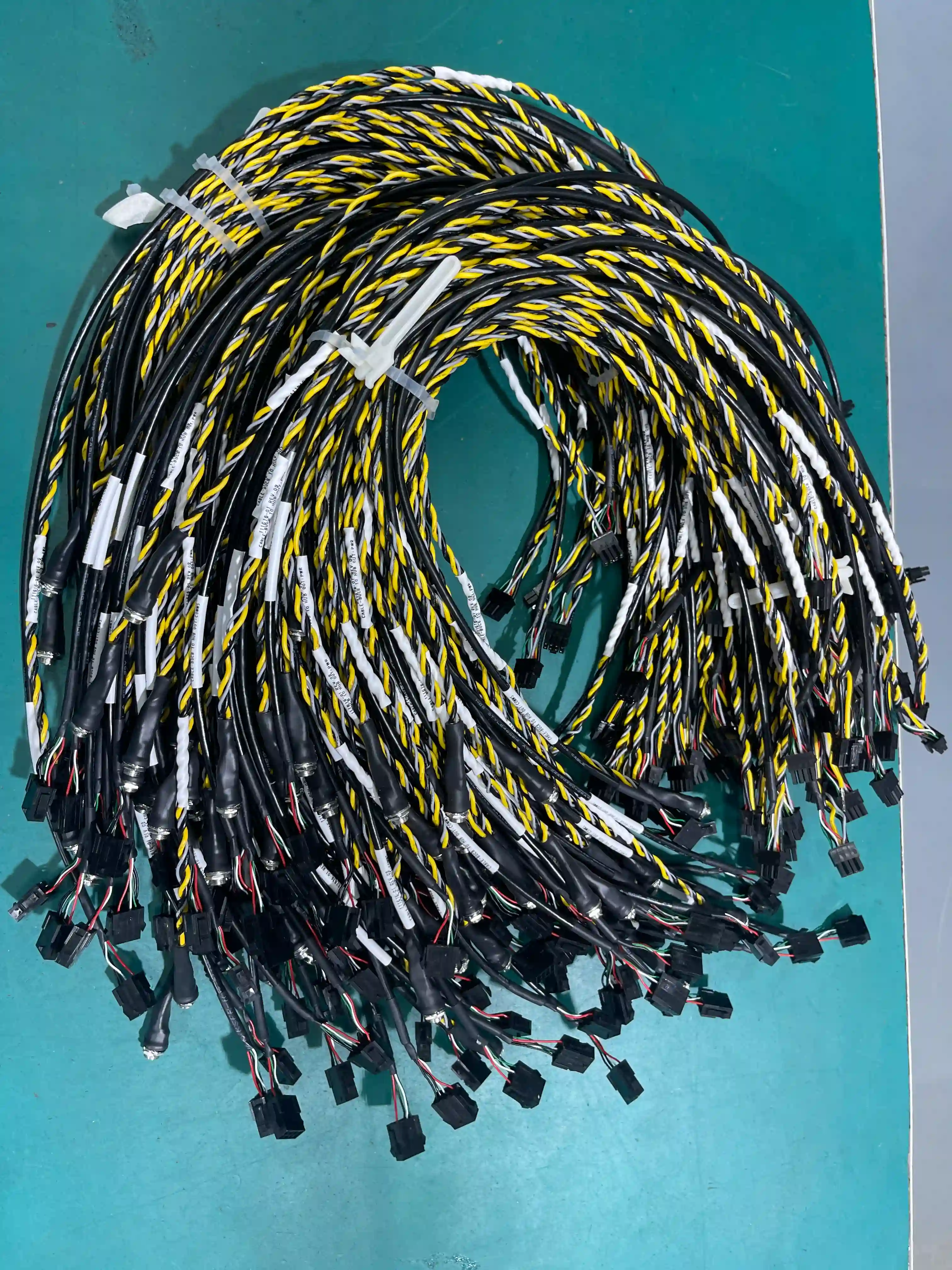
A dedicated BNC page for buyers who already know the connector family
Related capabilities include coaxial cable assembly and RF connector cable assembly. Those pages cover broader RF and coax demand. This page is for buyers sourcing a BNC-terminated cable that must fit an existing lab instrument, video system, panel interface, or fieldable assembly.
That boundary matters because BNC programs are often won or lost on practical details such as 50 ohm versus 75 ohm selection, cable flexibility, panel clearance, and strain-relief behavior during repeated connect-disconnect cycles. We keep the scope tied to manufacturable cable definitions so sample approval can move cleanly into repeat supply.
Best Fit
Bench instruments, video links, panel cable sets, CCTV, and industrial signal routing.
Not a Fit
Undefined commodity coax supply or very high-frequency connector selection better handled elsewhere.
BNC Cable Formats We Build
These are the commercial BNC assembly patterns most commonly requested by engineering, sourcing, and operations teams.
What Our BNC Assembly Service Includes
Everything here is grounded in capabilities already present across the site: crimping, shielding, testing, overmolding, prototyping, and repeat production control.
50 Ohm and 75 Ohm Control
BNC programs fail when buyers mix connector, cable, and equipment impedance assumptions. We quote the assembly against the actual signal path, not a generic connector label.
Connector Retention for Real Use
The bayonet coupling is fast and reliable when the cable weight, bend direction, and panel geometry are handled correctly during the build definition.
Shield Continuity Discipline
We manage shield preparation, connector termination, and strain relief so the assembly preserves the EMI and return-path behavior the application depends on.
Prototype Through Production
Programs can begin with engineering samples, then move into recurring supply using the same approved materials and work instructions.
Instrument and Video Focus
This page is built around commercial BNC demand from labs, broadcast, security, industrial instrumentation, and legacy telecom equipment.
100% Electrical Verification
Every released production job can be continuity tested, with resistance, hipot, or application-specific checks added where the print requires them.
Specifications tied to real BNC manufacturing scope
Capability Scope and Limits
Included scope
- Custom BNC cable assemblies for instrument, video, and industrial signal paths
- Panel-mount, bulkhead, strain-relief, and labeled production cable sets
- Prototype through production quantities under released build instructions
Out of scope
- Generic coax connector shopping better handled by the broader RF connector page
- Undefined field installation services or on-site commissioning work
- Programs that really require another connector family for higher-frequency margins
If the project expands into a broader shielded interconnect family, we can route it through shielded cable assembly or related production planning as the project requires.
How BNC Programs Move Through Production
This workflow is built for teams that need a quoted cable to become a repeatable manufactured part number.
Interface Review
We confirm whether the program is 50 ohm or 75 ohm, what endpoints it must mate with, and whether the cable is for bench use, fixed install, or field handling.
Cable and Connector Match
The selected coax, BNC body style, and backshell or strain-relief plan are aligned to the actual routing, panel, and durability requirements.
First-Article Build
Sample assemblies validate fit, pull direction, connector clocking, panel clearance, and handling before the job is released for repeat manufacture.
Electrical Verification
Assemblies move through continuity verification and any added customer-defined test steps that belong in the released traveler.
Inspection and Labeling
Finished cables are checked against drawing, label, packaging, and hardware requirements so receiving teams get a production-ready part number.
Repeat Supply
Once the first article is approved, the same locked cable definition moves into recurring production without changing suppliers or process controls.
BNC cable assembly for instrumentation, video, and industrial signal paths
BNC cable assemblies remain commercially relevant because many installed systems still depend on fast, reliable bayonet-coupled coax connections. Customers choosing BNC are not usually after a general lesson on RF connectors; they already know the interface on the equipment side and need a manufacturer that can build the cable correctly around that constraint. This page focuses on that specific build, distinct from our broader coaxial cable assembly and RF connector cable assembly pages.
The underlying technical context is straightforward but important. The BNC connector is commonly used where secure quarter-turn coupling and repeat service access matter, while the performance of the finished cable still depends on the behavior of the coaxial cable behind it. For many buyers, the critical decision is not whether BNC exists, but whether the system is truly 50 ohm or 75 ohm and whether the selected cable and connector set preserve that target through the whole route.
In practical buying terms, BNC demand usually clusters around test benches, security video, legacy telecom interfaces, lab fixtures, and broadcast hardware. Video programs often care about 75 ohm continuity because impedance errors show up immediately in signal quality. Instrument programs often care more about cable flexibility, repeated mating, and shielding stability over time. That is why we quote BNC builds against the real installation and usage pattern rather than relying on a single stock recipe.
Related resources on this site include our RG58 coaxial cable guide, connector selection guide, and testing capability page. Those pages provide the surrounding engineering context. This page is the quote path for a custom BNC-terminated cable assembly.
Buyers who need fast validation can start with no MOQ and move into 48-hour prototyping for standard, fully defined jobs. Once the first article is approved, we can release the same cable definition into repeat production with controlled materials, instructions, and inspection checkpoints.
Common BNC cable assembly use cases
Test and Measurement
Oscilloscopes, generators, counters, and bench instruments that still depend on robust BNC interconnects.
Broadcast and Video
SDI video routing, patch panels, camera chains, and monitoring equipment using 75 ohm BNC paths.
Industrial Instrumentation
Sensor, timing, trigger, and control interfaces where fast locking and repeat service access matter.
Security and CCTV
Legacy and hybrid surveillance systems that still use BNC for dependable video transport.
OurPCB Engineering Team
"BNC looks simple, but most sourcing mistakes come from treating impedance, panel use, and cable handling as afterthoughts."
We position this page around production-ready BNC programs rather than broad connector browsing so quoting stays anchored to the real cable definition.
BNC Cable FAQ
The important difference is the complete signal path, not just the connector label. A 50 ohm BNC assembly is typically used for RF, lab instrumentation, and general signal work, while a 75 ohm BNC assembly is more common in video and broadcast systems. If the cable, connector, and equipment impedance are not matched, you can create reflections, loss, or unstable measurement results.
Yes. We support commercial BNC demand across RF instrumentation, telecom equipment, broadcast video, imaging, and security systems. The quoting inputs change depending on the program, because a short bench jumper is not engineered the same way as a routed panel cable or a 75 ohm SDI video lead.
That depends on impedance, bend requirements, frequency, and installation environment. Common constructions include RG58, RG59, RG6, RG174, and RG316, but we also build to customer-specified coax families when the drawing or approved vendor list is already fixed.
Yes. We manufacture BNC cable assemblies that terminate into bulkhead connectors or panel hardware when the cable needs to pass through an enclosure wall, rack, or instrument housing. Those jobs are usually quoted with attention to panel thickness, lock washer hardware, bend direction, and mating clearance.
Standard production supports 100% continuity verification, and we add resistance, isolation, hipot, or other customer-defined checks when the specification requires them. For specialized RF validation beyond production electrical checks, we align with the customer test plan instead of making unsupported generic performance claims.
BNC is usually chosen when quick bayonet coupling, moderate frequency range, and easy service access matter more than maximum frequency performance. If the application needs a compact threaded connector or much higher-frequency margin, pages like SMA-oriented RF content may be a better fit. If the system already uses BNC at the equipment interface, staying with BNC often simplifies installation and maintenance.
Related Products and Resources
Coaxial Cable Assembly
Broader RF and antenna-focused coaxial cable manufacturing
ProductsRF Connector Cable Assembly
Connector-family coverage across BNC, SMA, N-Type, and more
ProductsShielded Cable Assembly
EMI-controlled cable builds for broader industrial applications
ResourcesRG58 Coaxial Cable Guide
Selection context for one of the most common small 50 ohm coax families
CapabilitiesTesting Capability
Electrical verification and inspection support for released cable programs
IndustriesTelecommunications Industry
Cable assembly support for network, RF, and communications hardware
Real Project Experience
How we've handled similar wire harness and cable assembly projects
See de-identified project scenarios — supplier qualification, connector-shortage recovery, lead-time compression, and engineering spec lockdown — drawn from real production records.
Need Custom BNC Cable Assemblies?
Send your impedance target, cable type, length, and endpoint details. We support BNC cable programs from first-article validation through repeat production.