Cable Harness Manufacturing Service
We build custom cable harnesses for buyers who need more than a generic cable assembly quote. The service combines DFM review, controlled terminations, testing, protection methods, and a repeatable production route for OEM and industrial programs.
A cable harness quote should show how the build will stay stable in production
Buyers search for cable harness manufacturing service when they need an organized build that mixes wires, cables, connectors, breakout points, labels, and protection materials into one install-ready assembly. The technical work usually overlaps with wire harness manufacturing and custom cable assembly, but the buying question is different: can the supplier take a custom harness package and produce it repeatably without silent substitutions or process drift?
Our answer is built on controlled manufacturing. We align the build with public quality frameworks such as ISO 9001, workmanship expectations associated with IPC, and material or safety requirements tied to UL recognized components when the application requires them. The goal is not to add paperwork for its own sake. The goal is to make the next lot match the approved lot.
OurPCB Engineering Team summarizes the commercial risk clearly: "A custom harness becomes expensive when the supplier quotes quickly but leaves connector risk, test limits, or packaging details undefined. The safest quote is the one that exposes those decisions early, before the build reaches volume."

What This Service Controls
The page targets buyers evaluating a manufacturer, so the important question is not only capability. It is whether the supplier can hold that capability stable under repeat orders.
DFM Before Material Commitment
We review drawings, wire lists, connector families, strain relief, bend radius, and label rules before turning a quote into a production release.
Controlled Harness Build Process
Cutting, stripping, crimping, soldering where specified, tubing, braiding, and overmolding coordination are documented to reduce lot-to-lot variation.
Inspection and Test Coverage
Continuity, pinout, hipot, pull force, visual inspection, and first article checks can be defined against the drawing instead of informal bench checks.
Scalable Production Route
Programs can move from sample builds into repeat production with the right mix of cost, tariff exposure, and lead-time planning.
Traceability Where It Matters
For automotive, medical, defense, and industrial programs, we can lock part numbers, revision control, and inspection records to the approved build.
Shipment Ready Output
Harnesses can be labeled, kitted, bagged, serialized, and packed by installation sequence to reduce receiving and field-installation errors.
Cable Harness Production Controls
These are the four control points that separate a reliable harness supplier from a shop that can only build one good sample.
| Checkpoint | Common Failure | Our Control |
|---|---|---|
| Part definition | Harness quotes rely on generic descriptions like 2-pin connector or 18 AWG cable, which leaves too much room for substitutions. | We lock exact connector, terminal, seal, wire, sleeve, and label requirements before release, including approved alternates where they exist. |
| Termination quality | A sample may fit once while crimp height, strip length, and terminal retention are still uncontrolled in production. | Tooling, strip dimensions, pull-force checks, orientation checks, and operator work instructions are tied to the released harness revision. |
| Electrical verification | Continuity is checked casually, but mis-pins, shorts, shield issues, or insulation defects are not tied to a defined acceptance plan. | We translate the drawing into continuity, pinout, hipot, insulation resistance, or functional checks based on application risk. |
| Protection and packaging | A harness passes electrically but arrives with bent branches, unreadable labels, or no install sequence for the receiving team. | Sleeves, overmolds, caps, labels, bags, carton quantity, and kitting rules are set before shipment so the assembly remains usable on arrival. |
First article review matters here because production stability is learned, not assumed. Public background on first article inspection reflects the same principle: verify the released build against specification before relying on wider output.
Technical Scope and Limits
This offer is meant for cable and harness programs that need production discipline. It is not a generic catch-all manufacturing page.
Typical assemblies
Multi-branch wire harnesses, connectorized cable harnesses, shielded looms, overmold-ready builds, power harnesses, signal harnesses, and mixed cable-and-wire subassemblies.
Supported processes
Cutting, stripping, crimping, splicing, soldering where specified, heat shrink, labels, sleeving, braiding, potting support, and box-build integration when needed.
Input package
Drawing, BOM, wire list, connector and terminal part numbers, pinout table, annual volume forecast, test requirements, and packaging rules.
Quality framework
ISO 9001 quality controls, IPC/WHMA-A-620 workmanship alignment, with ISO 13485 support for regulated programs.
Volume range
Single-piece prototypes, pilot lots, scheduled replenishment, and recurring production orders with no forced MOQ.
Out of scope
PCB fabrication, SMT assembly, undocumented redesigns, silent connector substitutions, and field installation outside cable and harness manufacturing.
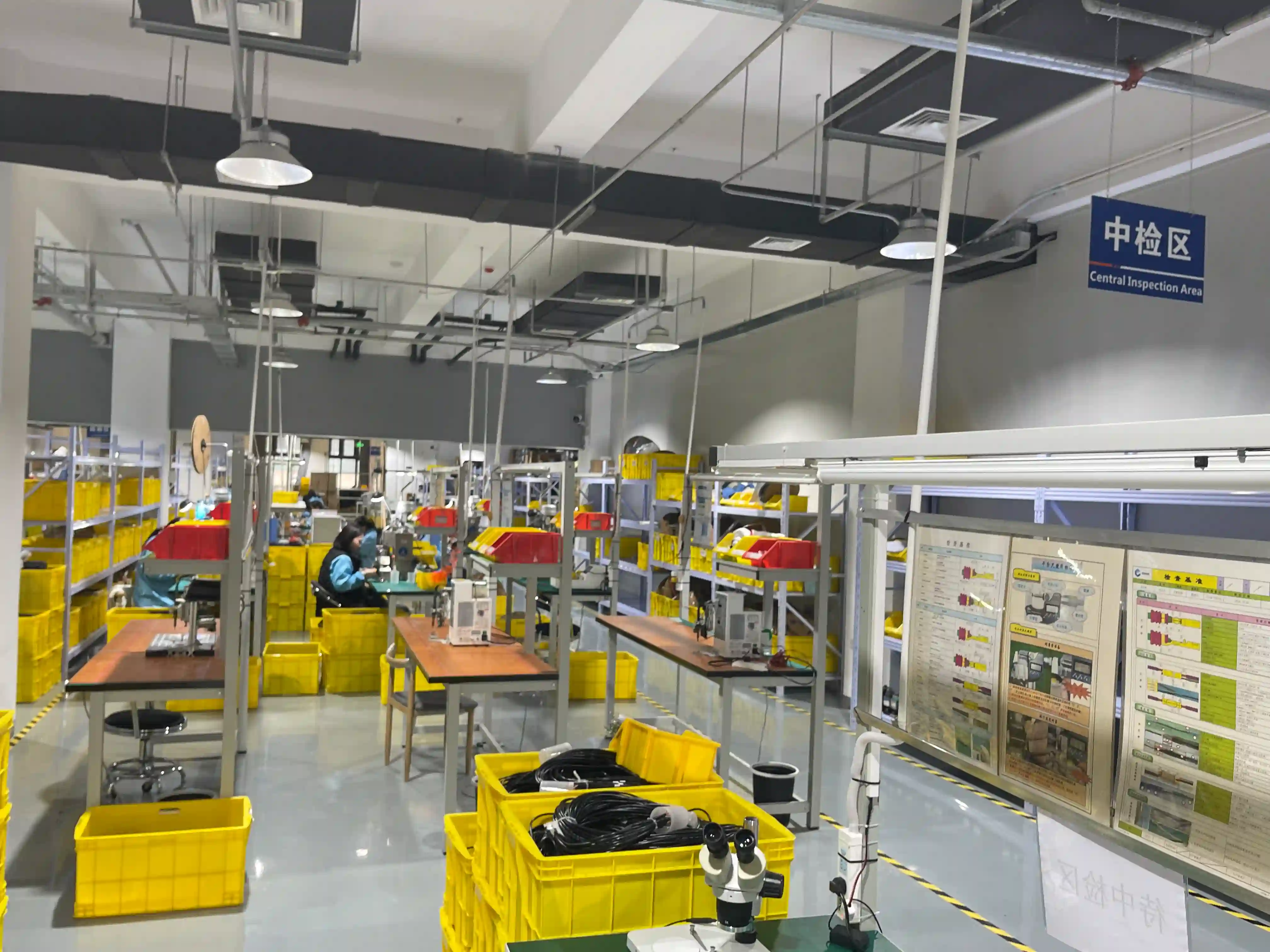
The harness is only finished when the receiving team can install it without guesswork
A cable harness that passes continuity but arrives with mixed labels, weak branch support, or unclear bagging can still disrupt your line. That is why this service ties inspection to installation use, not only electrical pass/fail. We connect crimp control, strain relief and overmolding support, test coverage, and packaging rules into one manufacturing plan.
When buyers need a stable second source, the real deliverable is not just a harness. It is a documented route that another trained operator can reproduce under the same revision and test limits. That is also why many customers pair this service with our production-ready cable assembly support or a controlled rush harness plan depending on schedule pressure.
"Most harness cost overruns do not start at the crimp press. They start when the quote leaves open questions about the exact part, the exact test, or the exact packaging method."OurPCB Engineering Team
Cable Harness Manufacturing Workflow
This process is designed for commercial buyers comparing manufacturers, not for a generic educational overview.
RFQ and Technical Review
We review the cable harness package for drawing gaps, connector risk, sourcing constraints, target volumes, and required certifications before quoting the release path.
DFM and Material Closure
Wire construction, branch breakout, shielding strategy, overmolding interfaces, label positions, and approved alternates are closed before material buys start.
Sample or First Article Build
A controlled prototype or pilot lot proves the released route with production-intent tooling, operator instructions, and inspection points.
Testing and Approval
The approval package can include continuity data, pinout confirmation, dimensional checks, photos, pull-force results, and first article records.
Scale-Up Planning
We align batch size, replenishment cadence, safety stock, and factory routing with your program so lead-time risk is separated from assembly time.
Repeat Production and Shipping
Approved harnesses move into repeatable manufacturing with revision control, lot traceability, and packaging rules matched to receiving and installation needs.
Where This Offer Fits
These are the scenarios this service is built for.
You need a custom cable harness, not a catalog cable
This service fits programs with mixed branch lengths, multiple connector types, labels, shielding, or strain relief rules that off-the-shelf cable assemblies do not solve.
You are replacing a weak incumbent supplier
When lead-time drift, undocumented alternates, or inconsistent crimp quality are the issue, we compare the sample, drawing, and BOM before copying the problem into a second source.
You need production discipline after prototype approval
If the sample works but the next 500 units still risk variation, first article drift, or weak packaging control, this page is the right commercial offer.
You use wiring loom terminology
Buyers searching for custom wiring loom manufacturers usually need the same core service: organized wire and cable routing, controlled terminations, protection, and repeat production quality.
RFQ Checklist for Custom Cable Harnesses
Frequently Asked Questions
These are the commercial questions buyers usually ask before awarding a custom harness program.
The service covers the practical steps needed to move from drawing or sample to repeatable harness production: DFM review, sourcing review, cutting and stripping, crimping, soldering where specified, shielding and sleeving, testing, labeling, packaging, and shipment planning. It is designed for custom cable harnesses rather than commodity stock cables.
The terms overlap in the market, but buyers often use cable harness when a build combines multiple conductors, branches, connectors, labels, and protective materials into one organized routing package. A simple cable assembly may only have one cable with connectors at each end, while a wire harness or cable harness typically includes more routing, breakout, and installation control.
The fastest quote includes the latest drawing revision, wire list, connector and terminal part numbers, pinout table, expected quantities, target ship date, test requirements, and packaging instructions. Sample photos are useful, but a released part list makes the quote more reliable because it reduces substitution and pinout risk.
Yes. We support shielded, braided, heat-shrunk, and overmold-ready harnesses as long as the mating interfaces, environmental requirements, and tooling assumptions are defined early. For custom overmolds, we review tooling, material, and validation scope before promising the production schedule.
Yes. We support single-piece prototypes, pilot lots, and recurring production without a forced MOQ. The difference between a prototype and a production order is not the quantity alone; it is whether the drawing, BOM, test plan, and packaging are stable enough for repeat manufacturing.
Most programs rely on ISO 9001 quality controls and IPC/WHMA-A-620 workmanship expectations, with additional requirements from ISO 13485, UL-recognized materials, or customer-specific test plans depending on the application. We define the practical inspection and test plan against the released harness requirements.
Related Services and Resources
Rush Wire Harness Assembly
Use this when delivery speed is the primary buying intent.
CapabilityProduction-Ready Cable Assembly
Use this when prototype approval must turn into stable repeat production.
ServiceCustom Cable Assembly
For connectorized cable builds with a simpler cable-centric scope.
ServiceCustom Wire Harness
For wire-harness-first programs and branch-heavy routing assemblies.
BlogWire Harness Manufacturing Process Guide
See the full production workflow buyers should expect from a qualified supplier.
BlogWire Harness RFQ Guide
Use this checklist to send the right files before quoting.
Real Project Experience
How we've handled similar wire harness and cable assembly projects
See de-identified project scenarios — supplier qualification, connector-shortage recovery, lead-time compression, and engineering spec lockdown — drawn from real production records.
Need a Quote for a Custom Cable Harness?
Send the drawing, wire list, connector details, and target quantities. We will review manufacturability, sourcing risk, and the right production path before quoting.