Wire Harness Board Manufacturing
We use wire harness boards to turn harness drawings into repeatable production layouts. That means fixed branch exits, controlled connector orientation, practical routing paths, and a documented build standard that scales from pilot lots to recurring production.
A good harness board prevents routing drift before it becomes a production problem
Buyers searching for a wire harness board supplier are usually not looking for a piece of plywood with pegs. They need a supplier that can convert harness geometry into a controlled production method. This work draws on our tooling, design support, and testing capabilities. The core issue is repeatability: can the next 500 harnesses match the approved branch routing and installation shape, not just the electrical net list?
In wire harness manufacturing, boards are the bridge between drawing intent and operator execution. Public references on cable harnesses and production jigs describe the same core principle: a fixture exists to hold parts in the right relationship during assembly so quality does not depend on guesswork. For harnesses, that relationship includes branch length, crossover order, breakout spacing, and connector clocking.
OurPCB Engineering Team summarizes the risk directly: "A harness that passes continuity but misses the intended branch geometry still fails the customer. The board is what turns routing discipline into a repeatable factory standard."

What This Capability Controls
The board is valuable because it controls geometry, routing logic, and operator consistency at the same time.
Board Layout Before Volume Build
We convert harness drawings into a manufacturable board layout that preserves branch lengths, breakout angles, connector orientation, and operator access.
Fixture and Peg Control
Peg locations, branch exits, support blocks, and routing references are documented so repeat lots do not drift from the approved harness shape.
Routing Feasibility Review
The board stage exposes bend-radius conflicts, wire crossing issues, and unreachable branches before those problems turn into floor rework.
Production-Intent Work Instructions
Operators build against a controlled board definition, not memory or sample-to-sample interpretation.
Inspection Tied to Harness Geometry
Dimensional checks, branch breakout confirmation, connector orientation review, and electrical verification are aligned to the board-defined shape.
Repeatable Factory Release
Once the board and harness are approved, the same release package supports pilot lots, recurring orders, and supplier-transfer programs.
Board-Controlled Production Risks
Most repeat-build problems trace back to undefined geometry, weak revision control, or undocumented routing logic.
| Checkpoint | Common Failure | Our Control |
|---|---|---|
| Board geometry | The drawing shows branch lengths but not a practical flat-board layout, so operators improvise wire paths and crossover order. | We translate the harness into a board-ready layout with fixed branch exits, peg references, and documented routing logic before release. |
| Connector orientation | A harness may pass continuity while still being hard to install because connector clocking and breakout direction were never controlled on the board. | Board references and visual criteria lock connector orientation, branch angle, and strain-relief placement to the approved build method. |
| Revision stability | Late ECO changes move one breakout or component family, but the board, operator instructions, and inspection points are not updated together. | We treat board changes as controlled release items so the fixture definition and production documents stay synchronized. |
| Transfer to repeat production | A pilot lot built by experienced technicians looks fine, but repeat operators cannot reproduce branch spacing or routing without a disciplined board standard. | The approved board layout becomes part of the manufacturing package for pilot, ramp, and recurring production lots. |
This is also why first-article discipline matters. Public background on first article inspection centers on proving the released build before larger production depends on it. In harness work, that proof includes geometry and routing, not just an electrical pass result.
Technical Scope and Limits
This capability is for buyers who need board-backed harness production control, not a generic overview of tooling or electrical assembly.
Best-fit projects
Multi-branch wire harnesses, automotive sub-harnesses, industrial machine harnesses, dashboard harnesses, appliance wiring sets, and harnesses with controlled breakout geometry.
Typical input package
Released drawing or board print, wire list, BOM, connector and terminal part numbers, branch dimensions, breakout notes, and test requirements.
What the board controls
Overall harness shape, branch positions, breakout spacing, routing path, label access, tie points, and connector orientation during assembly.
Related factory processes
Cutting, stripping, crimping, splice management, sleeves, tapes, braiding, heat shrink, labels, continuity testing, and packaging.
Quality framework
ISO 9001:2015 certified; IPC/WHMA-A-620 Class 3 workmanship, with a certified IPC/WHMA-A-620 specialist on staff; customer-specific dimensional and electrical acceptance criteria.
Out of scope
PCB assembly, undocumented redesigns, fixture-only supply without harness context, and field installation work performed at the customer site.
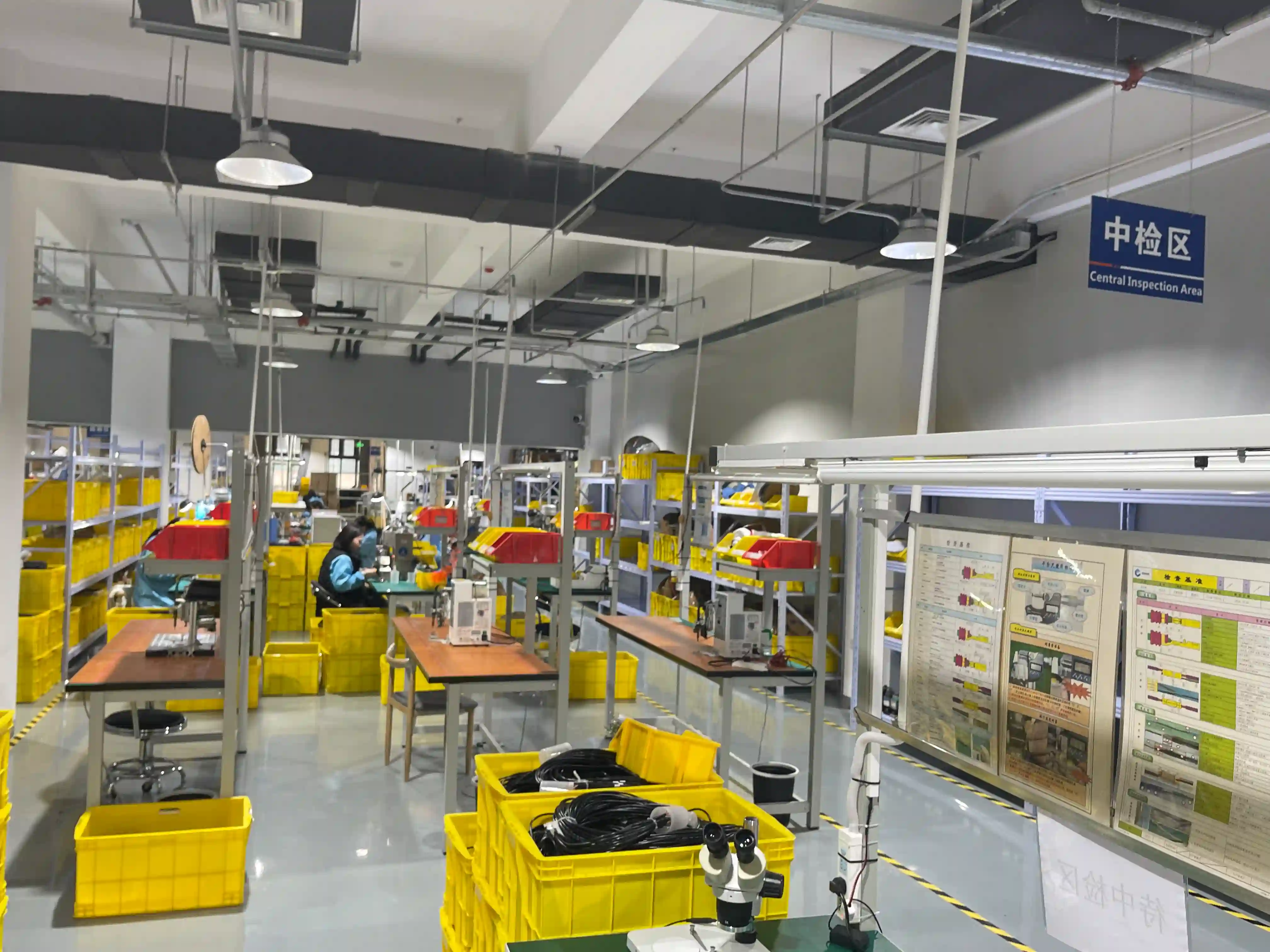
The board matters because it teaches the production line how to build the harness
A complex harness can look simple when one experienced technician builds it from tribal knowledge. That approach collapses during repeat production. Our board-driven release method ties together crimp control, wire preparation, continuity testing, and labeling and packaging with one stable routing reference.
This is especially useful for supplier transfers and pilot-lot scale-up. If your incumbent source can build an acceptable first sample but the repeat lots drift in breakout position, crossover order, or connector angle, the underlying problem is usually uncontrolled board logic. Fixing that at the release stage is cheaper than sorting finished harnesses after shipment.
"The board is the physical version of the manufacturing intent. When it is right, operator training, inspection, and repeat supply all become easier. When it is vague, every lot turns into a new interpretation."OurPCB Engineering Team
Wire Harness Board Workflow
The workflow is built for engineering and procurement teams sourcing repeatable harness geometry, not just one-off samples.
RFQ and Drawing Review
We review the harness print, wire list, branch dimensions, connector family, and production target to confirm whether the design translates cleanly onto a form board.
Board Layout Definition
The harness is flattened into a board-ready layout with routing paths, branch exits, peg positions, and connector reference points that support assembly flow.
Pilot Build on Controlled Board
A sample or pilot lot is assembled on the board using production-intent methods so geometry, access, and branch handling are proven in real work.
Dimensional and Electrical Verification
Breakout positions, orientation checks, continuity, and other required tests are run against the released criteria rather than informal sample comparisons.
Instruction and Fixture Lock
The approved board definition is tied to operator instructions, material setup, and revision records so repeat lots start from the same standard.
Ramp to Repeat Supply
Once approved, the board-backed harness package moves into recurring production with traceable change control and stable assembly flow.
Where This Service Fits
Choose this page when repeatable harness geometry is part of the buying requirement.
Your harness geometry matters as much as the pinout
Use this capability when branch spacing, breakout position, and connector orientation affect installation, not just electrical continuity.
You are moving from sample builds to repeat production
A harness board closes the gap between an experienced technician making one good sample and a production team reproducing the same build at scale.
You need a second source for an existing harness program
Board-level review helps copy the released geometry and routing logic instead of only duplicating the BOM and pinout.
Your current supplier’s repeat lots drift in shape or breakout lengths
That usually points to weak board discipline or undocumented operator knowledge, not a basic inability to crimp or test wires.
What to send for a faster wire harness board quote
The strongest RFQs include the harness drawing, wire list, BOM, branch dimensions, connector part numbers, annual demand, test requirements, and any board-print references you already use. If you are transferring an existing supplier, sample photos and previous work instructions help expose hidden routing assumptions early.
Typical quote inputs
- Harness drawing or board print
- Wire list and BOM
- Connector and terminal part numbers
- Branch dimensions and breakout notes
- Pilot lot or annual quantity target
- Continuity and other test requirements
Wire Harness Board FAQ
A wire harness board, also called a nail board or form board, is a flat fixture used to hold branch paths, breakout positions, and connector orientation while a harness is assembled. It converts a drawing into a repeatable physical reference so multiple operators can build the same harness geometry consistently.
The tooling page covers the broader ability to design fixtures, gauges, and production aids. This wire harness board page is a commercial capability focused on using board layout and form-board control to release repeatable harness production. The buying intent is more specific: can the supplier convert my harness design into a board-defined manufacturing standard?
A board is usually the better choice when the harness has multiple branches, controlled breakout spacing, fixed orientation requirements, or installation-sensitive geometry. Simple point-to-point leads may not need a dedicated board. As complexity rises, the board becomes one of the main tools for keeping repeat builds stable.
Yes, but the quote is stronger when supported by a drawing, wire list, or board layout. If only a physical sample exists, we can review it for routing logic, branch dimensions, connector orientation, and manufacturability before proposing a controlled build method.
No. The board controls geometry and repeat assembly flow, while electrical testing verifies continuity, shorts, pinout, and other defined acceptance criteria. Both matter. A harness can be electrically correct yet still fail installation if board control is weak.
Most programs rely on ISO 9001 quality controls plus workmanship expectations associated with IPC/WHMA-A-620. The exact dimensional tolerances, routing rules, and electrical tests come from the customer drawing, the application environment, and the approved production release package.
Related Capabilities and Resources
Tooling
See our broader fixture, board, and production tooling capability.
CapabilityCable Harness Manufacturing Service
Commercial support for full custom harness production programs.
CapabilityDesign Support
DFM review for routing, branch geometry, and release-package clarity.
CapabilityTesting Capabilities
Electrical verification options that complement board-controlled assembly.
BlogWire Harness Manufacturing Process
See where form boards fit in the overall harness production workflow.
BlogWire Harness DFM Checklist
Prevent routing and board-layout issues before releasing the job.
Real Project Experience
How we've handled similar wire harness and cable assembly projects
See de-identified project scenarios — supplier qualification, connector-shortage recovery, lead-time compression, and engineering spec lockdown — drawn from real production records.
Need a repeatable harness board and production release path?
Send your harness print, board layout, or sample photos. We will review routing feasibility, board-control risk, and the best path to pilot or recurring production.