EV Wire Harness Manufacturer
We build EV wire harnesses for battery packs, power distribution, charging systems, and mixed HV-LV vehicle assemblies. The offer is designed for buyers qualifying a manufacturer that can move from RFQ to pilot and repeat production without loose assumptions.
An EV harness quote should show how the build will stay safe, traceable, and repeatable
Buyers searching for an EV wire harness manufacturer are usually not looking for a generic low-voltage harness shop. They need a supplier that can manage high-voltage connector systems, battery-pack branches, charging interfaces, shield termination, labels, and test coverage without leaving basic assumptions open. Our EV and new energy industry coverage gives the wider context; the question here is whether the manufacturer can take a released electric-vehicle harness package and hold it stable from sample through recurring production.
Our answer is built on production discipline. We align the process with public quality frameworks such as ISO 9001, workmanship expectations associated with IPC, and the application context of modern electric vehicles. For battery programs, the practical handoff between harness design and the battery management system also matters because sensor and interlock branches often create the most expensive debug cycles.
OurPCB Engineering Team summarizes the commercial risk directly: "EV harness sourcing becomes expensive when a quote leaves open questions about the exact connector set, the exact test limits, or the exact packout method. The safest supplier is the one that closes those gaps before launch pressure turns them into line-side problems."
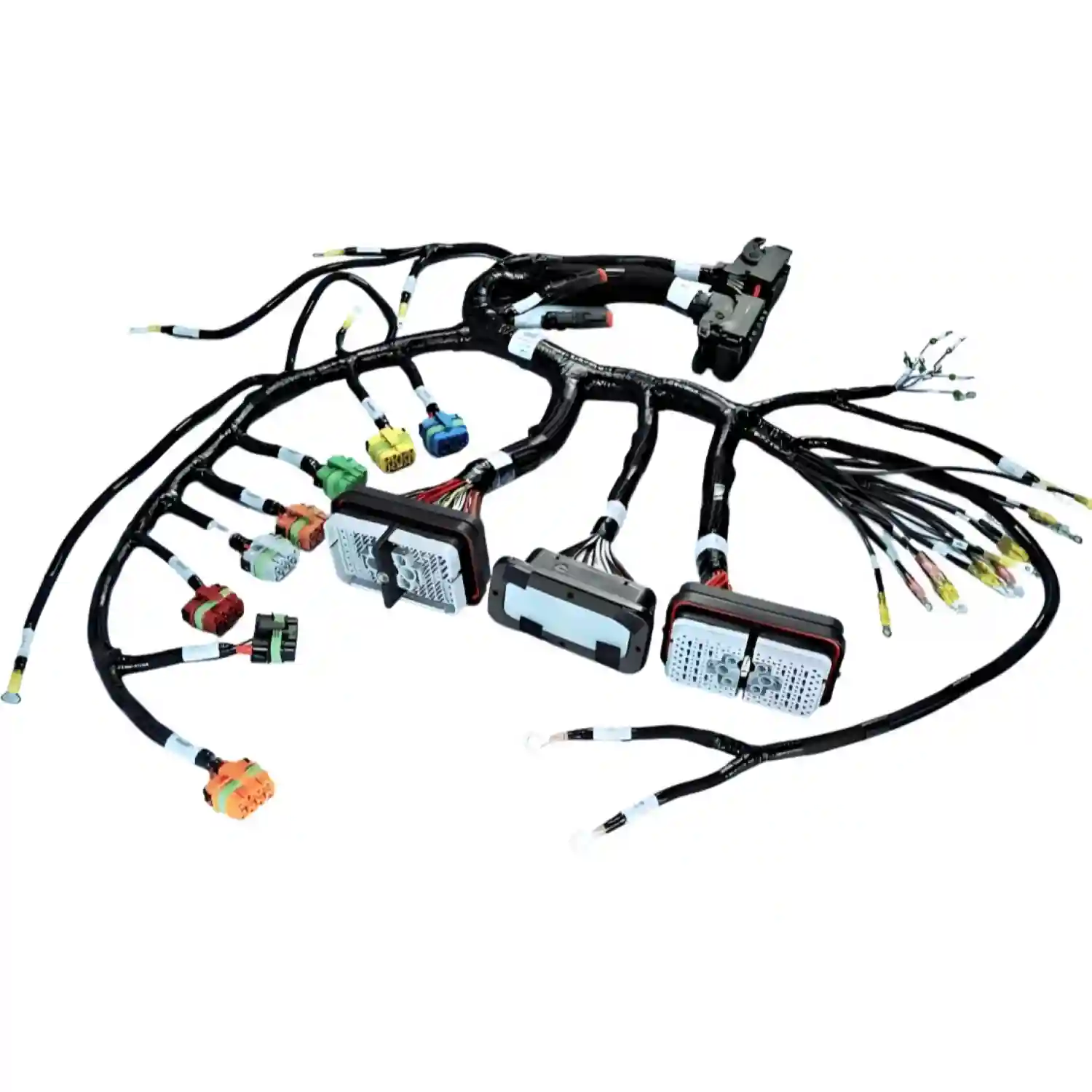
What This EV Capability Controls
The point of the page is not only to claim EV experience. It is to show what must be controlled when a vehicle harness moves into pilot and production.
HV Architecture Review Before Quote Release
We review voltage class, current path, connector family, shield termination, orange-cable definitions, and battery-pack interfaces before converting a quote into a build commitment.
Controlled High-Voltage Harness Build
Cutting, stripping, terminal loading, seal insertion, shielding, braiding, heat shrink, and overmold interfaces are documented around the released EV harness package.
Battery and Power Distribution Focus
The page is designed for programs involving battery packs, BDU/PDU links, inverter branches, HVIL circuits, and charging interfaces where one wrong cavity can stop a vehicle build.
Validation That Matches EV Risk
Continuity, pinout, hipot, insulation resistance, shield continuity, and visual checks are defined against the actual platform risk instead of generic bench testing.
Revision and Traceability Discipline
Approved alternates, cavity maps, labels, and inspection records are tied to the released revision so recurring lots do not drift from the approved sample.
Scale-Up for Pilot Through SOP
We support prototype, pilot, and recurring production planning so EV teams can move from sample approval into stable manufacturing.
EV Harness Production Controls
These are the control points that usually separate a qualified EV harness manufacturer from a supplier that can only make one acceptable sample.
| Checkpoint | Common Failure | Our Control |
|---|---|---|
| HV connector and terminal definition | The RFQ uses generic notes such as 2-pin HV connector or orange cable, leaving too much room for incorrect terminal, seal, CPA, or backshell assumptions. | We lock the exact connector family, terminal system, seal set, cable construction, shielding method, and approved alternates before production release. |
| Battery-pack branch management | A sample build works once, but branch breakout, sensor leads, HVIL circuits, or busbar-adjacent routing are not repeatable at pilot or production volume. | We document branch geometry, breakout protection, label positions, fixture support, and operator checkpoints so the battery harness stays consistent lot to lot. |
| Electrical isolation and shield integrity | Continuity-only checks miss insulation faults, shield opens, swapped cavities, or weak termination quality that can trigger EV faults in vehicle validation. | We translate the released EV harness definition into continuity, pinout, hipot, insulation resistance, shield, and retention checks where required. |
| Installation-ready packout | The harness passes electrical test but arrives with bent branches, unlabeled variants, or packaging that slows pilot-line installation and debug. | Protective caps, labels, bagging, serialization, and kitting rules are defined before shipment so receiving teams can install the correct variant without guesswork. |
Early validation matters because first approved parts become the reference for every later lot. Public background on first article inspection reflects the same principle: confirm the released build against specification before relying on wider output.
Technical Scope and Limits
This offer is for EV cable and harness programs that need production discipline. It is not a generic electrical manufacturing page.
Best-fit programs
Battery pack wiring harnesses, BDU/PDU harnesses, inverter and e-axle connections, charging-port cable sets, HVIL circuits, and mixed high-voltage plus low-voltage EV subassemblies.
Typical input package
Released drawing, BOM, connector and terminal part numbers, cable specification, cavity map, net list, annual volume forecast, test limits, and packaging rules.
Supported processes
Cutting, stripping, crimping, seal insertion, shielding, braiding, heat shrink, labels, overmold coordination, continuity, hipot, IR, pull-force, and packaging.
Quality framework
ISO 9001 process control with support for IATF 16949-aligned automotive programs, IPC/WHMA-A-620 workmanship expectations, and customer-specific EV validation requirements.
Volume range
Prototype harnesses, DV/PV pilot lots, launch support, scheduled replenishment, and recurring production without a forced MOQ.
Out of scope
PCB fabrication, SMT assembly, undocumented electrical redesigns, silent connector substitutions, and vehicle-level installation work outside cable and harness manufacturing.
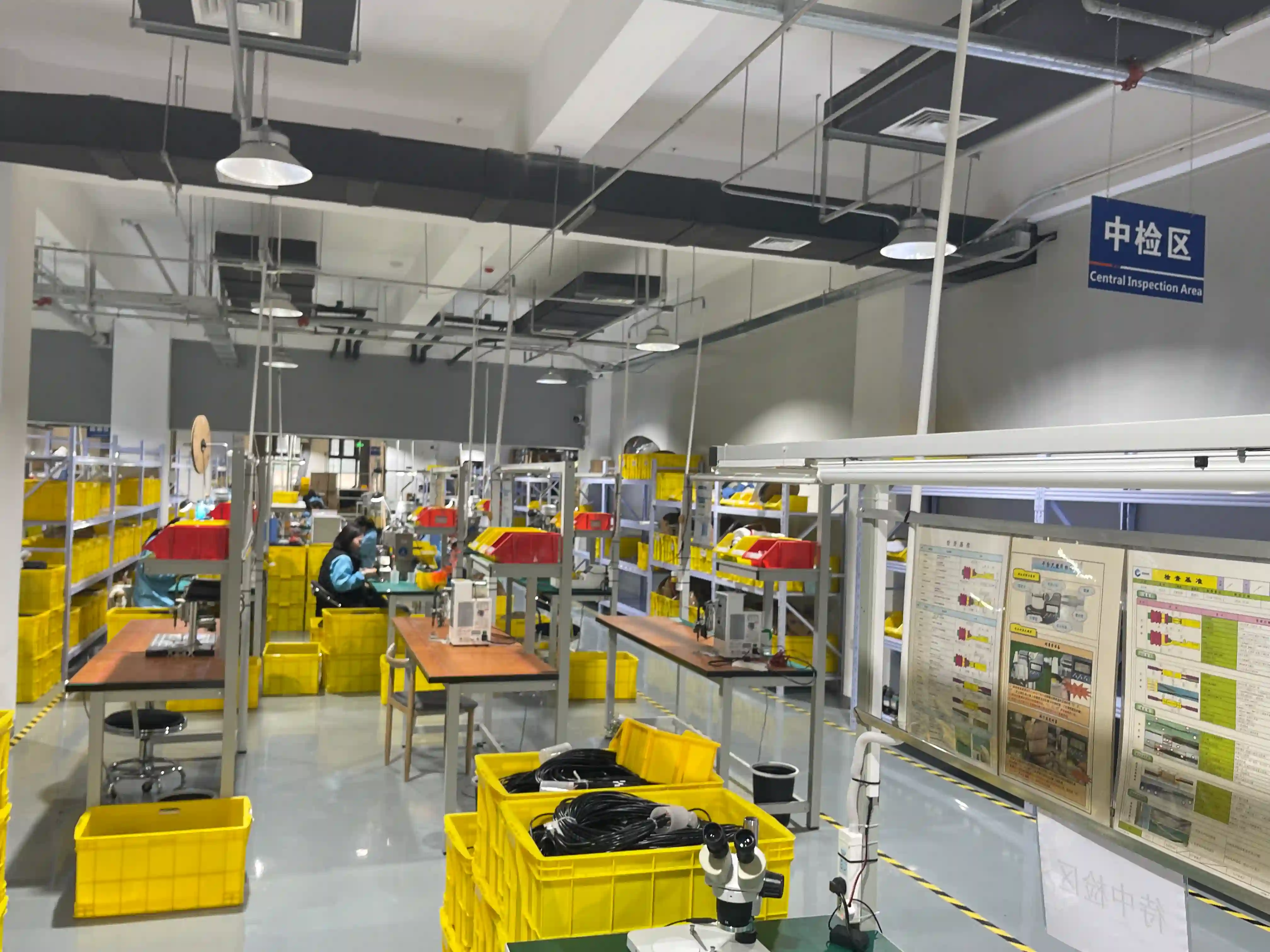
EV harnesses must arrive ready for pilot installation, not ready for bench-side rework
A battery or vehicle harness can pass basic continuity and still fail the real production test if branch geometry is unstable, labels are unclear, shield treatment is inconsistent, or the packout forces the receiving team to sort variants by hand. That is why this page connects termination control, strain-relief strategy, electrical validation, and installation-ready packaging into one manufacturing route.
Many EV programs also cross between prototype speed and automotive documentation discipline. That is why teams often pair this offer with our production-ready cable assembly support, wire harness tester setup, or clip-integrated automotive harness capability depending on the installation risk.
"In EV programs, the expensive mistake is rarely the copper alone. It is the undefined interface between the harness, the battery system, and the vehicle build sequence."OurPCB Engineering Team
EV Wire Harness Launch Workflow
This process is designed for commercial EV buyers comparing manufacturers and preparing a released harness package for scale.
RFQ and EV Architecture Review
We review the released package for voltage class, current path, connector family, BMS or HVIL requirements, sourcing risk, and target launch timing before quoting.
DFM and Material Closure
Cable construction, shielding, branch routing, retention features, labels, test assumptions, and approved alternates are closed before material commitment.
Sample or Pilot Harness Build
A production-intent sample or pilot lot proves the released route with defined fixtures, operator instructions, and inspection points.
Electrical Validation and Approval
The approval package can include continuity, pinout, hipot, insulation resistance, dimensional checks, pull-force records, and first-article evidence.
Launch and Replenishment Planning
We align batch size, safety stock, factory routing, and packaging logic with your pilot ramp, SOP timing, and service-parts demand profile.
Repeat Production Control
Approved EV harnesses move into revision-controlled manufacturing with lot traceability, stable testing, and packout rules matched to receiving and installation.
When This Page Is the Right Fit
Use this commercial page when you are screening a manufacturing partner and need to understand whether the supplier can carry EV-specific risk properly.
You are qualifying an EV wire harness manufacturer, not a generic harness shop
The buying problem here is whether the supplier can manage HV connectors, battery interfaces, traceability, and validation planning without vague assumptions.
You need battery-pack wiring discipline before pilot launch
Choose this path when one harness can affect pack safety, BMS communication, vehicle debug time, or pilot-line installation flow.
You are transferring an EV harness from a weak incumbent supplier
We review the sample, drawing, BOM, and test logic before copying the same hidden connector, label, or shield problems into a second source.
Your team needs prototype support that can scale into production
The page is built for buyers who want one manufacturing route that starts with sample approval and survives recurring production without drift.
Battery Pack and HV Routing Support
We support EV harness programs where battery integration, shield continuity, HV interlock logic, and serviceable packout have to work together under launch pressure.
Request EV RFQ ReviewBattery pack branches
BMS sensing, thermal monitoring, and controlled breakout routing.
Power distribution links
BDU, PDU, inverter, and e-axle harness subassemblies.
Charging interfaces
Vehicle-side cable sets and connectorized high-voltage transitions.
Pilot-line packout
Labeled, protected, installation-ready delivery for receiving teams.
EV Wire Harness Manufacturer FAQ
Short answers to the questions most teams ask while qualifying a high-voltage harness supplier.
An EV wire harness manufacturer must control high-voltage connector systems, insulation and shielding strategy, battery-pack interfaces, HVIL circuits, and installation-ready packaging with tighter revision discipline than many low-voltage harness programs. The key difference is not only materials. It is how the supplier defines electrical risk, traceability, and validation before the harness reaches pilot or production volume.
Yes. We support battery-pack-related harnesses including BMS sensing branches, HV interconnect subassemblies, BDU and PDU links, thermal-sensor leads, and charging-related cable sets. The exact scope depends on the released package, connector families, and test requirements, but battery-pack wiring is one of the main use cases this page is designed for.
Typical coverage includes continuity, pinout, shorts, insulation resistance, hipot where specified, shield continuity, visual checks, pull-force sampling, and fixture-based confirmation of branch or connector orientation. The correct mix depends on the vehicle architecture and your released acceptance criteria.
Yes. We support prototype and pilot lots without a forced MOQ. The practical requirement is not volume alone; it is whether the drawing, BOM, connector definitions, and test limits are stable enough to release a controlled build route.
The fastest quote includes the latest drawing revision, BOM, cable specification, connector and terminal part numbers, cavity map or net list, annual volume forecast, target ship dates, test requirements, and packaging instructions. Sample photos help, but released part definitions reduce EV launch risk far more than photos alone.
We reduce variation by locking released part definitions, documenting branch geometry and fixture assumptions, tying test programs to the approved revision, and controlling packout so the receiving team gets the same install-ready configuration every time. Approved alternates are documented explicitly instead of introduced silently during purchasing.
Related EV Services and Resources
EV & New Energy Wire Harness
See our broader EV industry coverage for battery, charging, and power electronics applications.
ServiceHigh Voltage Wire Harness
For harness programs focused on insulation, sealing, and HV routing requirements.
ServiceEV Charging Cable Assembly
For cable-centric charging interconnects rather than branch-heavy vehicle harnesses.
CapabilityAutomotive Wire Harness Clips
When routing retention and installation geometry are key buying concerns.
BlogEV High Voltage Cables
Background on EV voltage classes, insulation expectations, and cable selection issues.
BlogEV Battery Harness Case Study
See how a battery harness program moved from RFQ review into controlled delivery.
Real Project Experience
How we've handled similar wire harness and cable assembly projects
See de-identified project scenarios — supplier qualification, connector-shortage recovery, lead-time compression, and engineering spec lockdown — drawn from real production records.
Need an EV Harness Manufacturer Review?
Send your drawing, BOM, connector list, and target volumes. We will review manufacturability, testing scope, and launch risk before you commit the build.