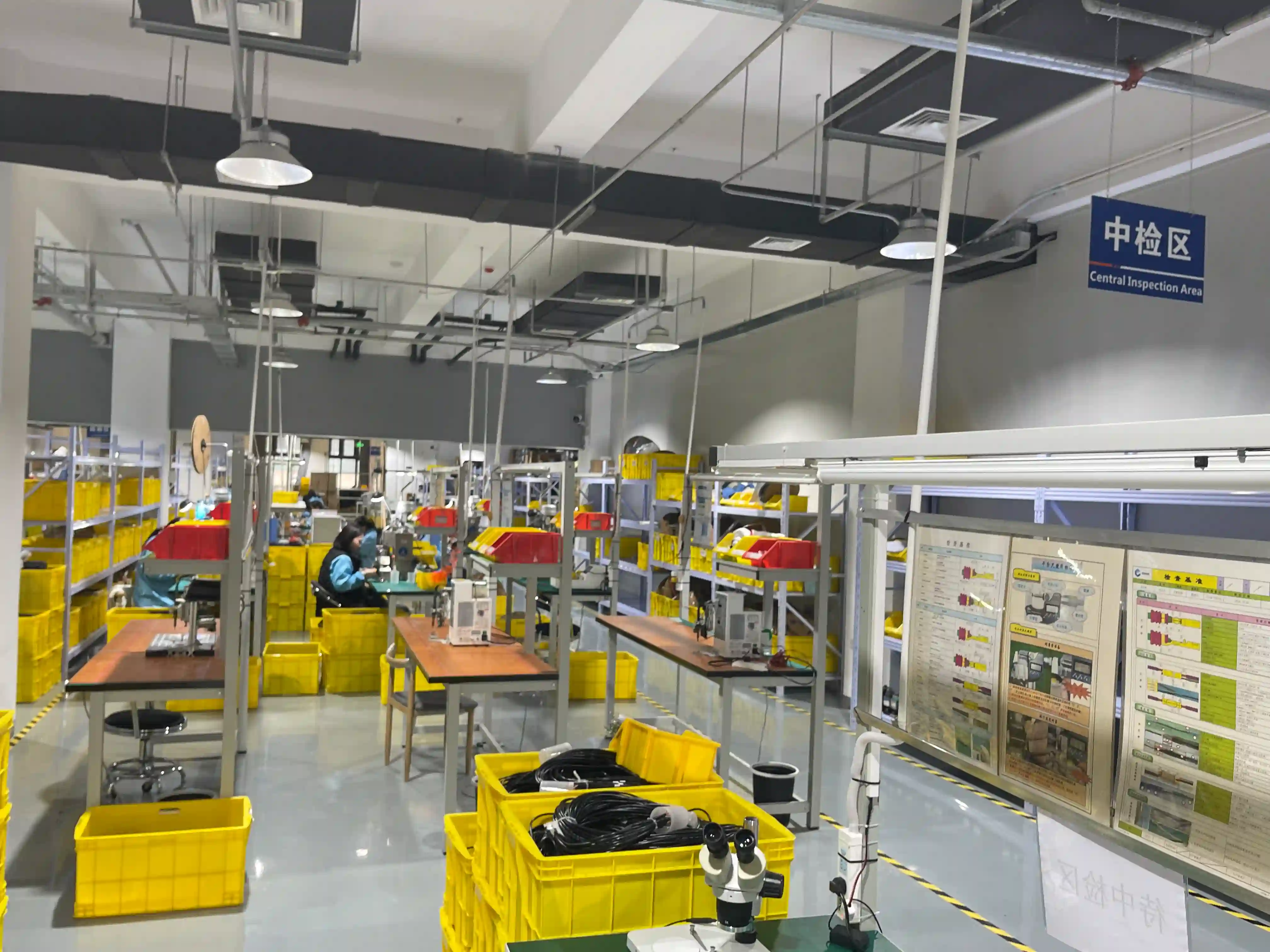
The global military cable assembly market is projected to exceed $8.5 billion by 2028, driven by increasing defense modernization programs, rising demand for ruggedized electronics, and the growing complexity of military platforms. For defense primes, Tier 1 suppliers, and program managers, choosing the right military cable assembly manufacturer is one of the most consequential supply chain decisions you will make. The wrong choice can lead to failed qualification testing, program delays, cost overruns, and -- in the worst case -- fielded failures that put warfighters at risk.
Military cable assemblies face challenges that commercial products never encounter: sustained operation at -65°C in arctic environments or +260°C near jet engines, constant vibration from tracked vehicles and rotary-wing aircraft, exposure to JP-8 fuel and hydraulic fluids, salt spray on naval platforms, electromagnetic interference from radar and electronic warfare systems, and nuclear radiation hardening for strategic applications. Every one of these environmental stresses must be addressed through specific material selections, manufacturing processes, and testing protocols defined by military specifications. Full traceability from raw material to delivered assembly is not optional -- it is a contractual requirement enforced through DCMA oversight and AS9100D quality management systems.
This guide covers everything you need to know about military cable assembly manufacturing: the key MIL-spec standards that govern design and production, critical material requirements for defense applications, the manufacturing process from incoming inspection through final acceptance, comprehensive testing and qualification protocols, and a practical checklist for evaluating military cable assembly manufacturers. Whether you are sourcing cable harnesses for a new weapons platform, qualifying a second source for an existing program, or transitioning from prototype to low-rate initial production, this guide will give you the technical foundation to make informed decisions.
$8.5B+
Global Military Cable Market
-65°C to +260°C
Operating Temperature Range
100%
Testing & Inspection Rate
25+ Years
Expected Service Life
"Choosing a military cable assembly manufacturer is not just about finding the lowest price per unit. It is about finding a partner who understands your program requirements, can navigate the complexity of military specifications, and has the quality infrastructure to deliver assemblies that will perform flawlessly for 25 or 30 years in the harshest environments on Earth. A single cable failure in a deployed military system can cost millions in maintenance, delay missions, and endanger lives. The manufacturer you choose is your first line of defense against that outcome."
OurPCB Engineering Team
Key Military Specifications for Cable Assemblies
Military cable assemblies are governed by a layered system of specifications that define materials, construction, performance, and testing. Understanding these specifications is essential for both design engineers specifying cable assemblies and procurement teams evaluating military wire harness manufacturers. Here are the five most critical standards every defense cable harness must address.
MIL-DTL-27500
The primary specification for shielded and jacketed aerospace electrical cables. This is the foundational standard for multi-conductor cable assemblies used in aircraft, missiles, spacecraft, and ground support equipment. It defines conductor configurations, shield types, jacket materials, and performance requirements.
- Temperature rating: -65°C to +200°C (some variants to +260°C)
- Defines shielding effectiveness and EMI/RFI attenuation requirements
- Specifies jacket materials: ETFE, PVDF, polyimide, and extruded PTFE
- All components must be sourced from QPL (Qualified Products List) manufacturers
- Covers wire gauges from 26 AWG to 4/0 AWG in various conductor counts
MIL-W-22759
The specification for individual hook-up wires with fluoropolymer insulation. These wires are the fundamental building blocks of every military cable harness. MIL-W-22759 covers ETFE (Tefzel), PTFE (Teflon), and cross-linked ETFE insulated conductors with nickel-plated or silver-plated copper.
- ETFE insulation rated to +200°C with outstanding abrasion resistance
- PTFE insulation rated to +260°C for extreme thermal environments
- Resistant to jet fuel (JP-8), hydraulic fluids (MIL-PRF-83282), and de-icing chemicals
- Low smoke and zero halogen for enclosed crew compartments
- Available with nickel-plated copper for high-temperature or silver-plated for high-conductivity
MIL-DTL-38999
High-performance circular connectors designed for severe environment applications. Available in Series I (bayonet coupling), Series II (threaded coupling), and Series III (breech coupling). These connectors provide environmental sealing, EMI shielding, and resistance to shock and vibration per MIL-STD-810.
- Up to 128 contacts per connector
- Composite, aluminum, or stainless steel shells
- 500+ mating cycles rated
MIL-STD-810
The Department of Defense standard for environmental engineering considerations and laboratory testing. MIL-STD-810H (current revision) defines 28 test methods covering temperature, humidity, altitude, vibration, shock, salt fog, sand/dust, fungus, and more. This standard is the benchmark for qualifying military hardware.
- 28 environmental test methods
- Tailored testing profiles for specific platforms
- Combined environment testing capabilities
SAE AS50881
The SAE standard for wiring aerospace vehicles (formerly MIL-W-5088). AS50881 defines the requirements for design, installation, and maintenance of electrical wiring interconnect systems (EWIS) on military and commercial aircraft. It covers wire routing, bundle sizing, harness protection, and grounding.
- Wire derating and bundle fill calculations
- Separation requirements for power and signal
- Clamp spacing, bend radius, and routing rules
These specifications form an interconnected framework. A typical military cable assembly references MIL-W-22759 for the individual wires, MIL-DTL-27500 for the cable construction, MIL-DTL-38999 for the connectors, SAE AS50881 for installation design, and MIL-STD-810 for environmental qualification. Understanding how these standards interact is essential for both designing and manufacturing compliant assemblies. For a broader look at how mil-spec compares to commercial approaches, see our detailed analysis of mil-spec vs commercial grade cable assemblies.
Critical Material Requirements for Military Cable Assemblies
Material selection is the foundation of military cable assembly reliability. Every component -- from conductor to connector to heat shrink -- must meet specific military material specifications and be sourced from QPL-listed suppliers. Using non-conforming materials is the single fastest way to fail a qualification audit. Here is what you need to know about the materials that go into a defense-grade cable harness.
Insulation Materials
PTFE (Teflon)
The gold standard for extreme temperature applications. PTFE provides the widest operating range of any wire insulation and is virtually inert to all chemicals encountered in military environments.
- Temperature: -65°C to +260°C
- Dielectric strength: 480 V/mil
- Resistant to all solvents and fuels
- Low friction coefficient (0.05-0.10)
ETFE (Tefzel)
The most widely used insulation in military aircraft wiring. ETFE offers an excellent balance of temperature performance, mechanical toughness, and weight savings compared to PTFE.
- Temperature: -65°C to +200°C
- Superior abrasion resistance vs PTFE
- 30% lighter than PTFE at same wall thickness
- Radiation resistant for nuclear applications
Polyimide (Kapton)
Ultra-thin insulation used where weight and space are absolute priorities. Kapton-insulated wire is standard in spacecraft, missiles, and high-density avionics bays. For more detail, see our Kapton vs Teflon insulation guide.
- Temperature: -269°C to +400°C
- Thinnest insulation wall available (1 mil)
- 40-50% weight savings vs PTFE
- Susceptible to arc tracking (requires careful routing)
Mil-Spec Material Comparison
| Property | PTFE | ETFE | Polyimide (Kapton) | PVDF (Kynar) |
|---|---|---|---|---|
| Max Temperature | +260°C | +200°C | +400°C | +175°C |
| Min Temperature | -65°C | -65°C | -269°C | -55°C |
| Abrasion Resistance | Good | Excellent | Fair | Good |
| Chemical Resistance | Excellent | Excellent | Good | Excellent |
| Weight (Relative) | Baseline | 30% lighter | 40-50% lighter | Similar |
| Arc Track Resistance | Excellent | Excellent | Poor | Good |
| Typical Applications | Engine bay, exhaust areas | General airframe, avionics | Spacecraft, missiles | Naval, submarine |
Conductors & Connectors
Conductor Requirements
- Nickel-plated copper -- Standard for high-temperature applications (+260°C), used in engine bays and hot zones
- Silver-plated copper -- Used where maximum conductivity is required, rated to +200°C
- Tin-plated copper -- Economy option for lower-temperature military applications to +150°C
- High-strength copper alloy -- For applications requiring flex life exceeding 10 million cycles
QPL Connector Requirements
- MIL-DTL-38999 Series III -- Primary choice for fighter aircraft, rotorcraft, and UAV applications
- MIL-DTL-26482 -- Miniature circular connectors for space-constrained avionics bays
- MIL-DTL-5015 -- Heavy-duty connectors for ground vehicles and support equipment
- MIL-DTL-83723 -- Rectangular connectors for rack-mount and LRU applications
All materials must be fully traceable to their original manufacturer lot. Material certifications (certs) must accompany every incoming shipment and be maintained on file for the life of the program -- typically 7 to 25 years depending on the contract. Using unauthorized or counterfeit materials is a federal offense under DFARS and can result in criminal penalties. For more on certification requirements, review our guide to the top 5 wire harness certifications.
Military Cable Assembly Manufacturing Process
Manufacturing military cable assemblies is fundamentally different from commercial production. Every step is documented, every component is verified, and every operation is performed by trained and certified operators working from detailed work instructions. Here is the end-to-end process that qualified military wire harness manufacturers follow.
Incoming Material Inspection & Verification
Every incoming material is inspected against its purchase order, specification, and material certification. Wire is verified for gauge, insulation type, and plating. Connectors are checked against the QPL listing. Heat shrink, lacing tape, potting compounds, and all consumables are verified for shelf life and specification compliance. Non-conforming materials are quarantined and dispositioned through the Material Review Board (MRB).
Work Order Release & Kit Preparation
The work order package includes the engineering drawing, bill of materials, process traveler, work instructions, and any special process requirements. A material kit is pulled and verified against the BOM. Each item in the kit is recorded by lot number and manufacturer on the traveler. The kit is physically segregated in the production area to prevent cross-contamination with commercial work.
Wire Preparation & Marking
Wires are cut to length per the drawing with specified tolerances (typically plus or minus 1/2 inch). Each wire is stripped using calibrated stripping tools set for the specific wire gauge and insulation type. Wire identification markings are applied using hot-stamp or laser marking per MIL-STD-681 requirements. Every marked wire is inspected for legibility and accuracy.
Assembly on Certified Jigs & Fixtures
Harnesses are built on form boards or assembly jigs that are dimensionally verified and revision-controlled. Operators follow the routing diagram, securing wires with lacing cord (MIL-T-43435) or cable ties per the drawing callout. Breakouts are measured and documented. Shield terminations, splice locations, and branch angles are all controlled by the work instruction. Any deviation requires engineering disposition.
Termination & Connector Assembly
Contacts are crimped using calibrated crimp tools with positioner settings verified per the contact manufacturer specification. Every crimp is force-monitored using a crimp force analyzer, and a sample from each setup undergoes destructive pull-test verification. Contacts are inserted into connectors using proper insertion/extraction tools. Solder terminations follow J-STD-001 with the Space Addendum for critical applications. Backshell installation and strain relief are completed per drawing requirements.
100% Electrical Testing
Every completed assembly undergoes full electrical testing: continuity on all conductors, insulation resistance measurement (minimum 500 megohms at 500VDC typical), dielectric withstand (hipot) testing at the voltage specified by the applicable standard (typically 1500-2000 VAC for 60 seconds), and resistance measurement on all conductors. Test results are recorded by serial number on the test data sheet and attached to the traveler.
Final Inspection & Documentation Package
A certified quality inspector performs 100% visual inspection under magnification, verifying workmanship against IPC/WHMA-A-620 Class 3 or the applicable specification. Dimensional verification confirms all critical dimensions. The documentation package is assembled: Certificate of Conformance, test data sheets, material certifications, process traveler with operator/inspector sign-offs, and any required first article reports (AS9102). The completed assembly is packaged per MIL-STD-2073 for shipping.
Testing & Qualification Requirements
Testing is where military cable assemblies truly differentiate from commercial products. The testing requirements for defense applications are exhaustive, and every assembly must pass 100% of specified tests before acceptance. Failures at any stage trigger a formal nonconformance process. Here is the full testing matrix that qualified military cable assembly manufacturers must execute.
Production Testing (100% of Assemblies)
| Test | Standard | Acceptance Criteria | Frequency |
|---|---|---|---|
| Continuity | MIL-STD-1344, Method 2016 | All conductors verified, zero opens/shorts | 100% |
| Insulation Resistance | MIL-STD-1344, Method 2003 | ≥500 MΩ at 500 VDC | 100% |
| Dielectric Withstand (Hipot) | MIL-STD-1344, Method 2007 | No breakdown at 1500-2000 VAC / 60 sec | 100% |
| Contact Retention (Pull Test) | MIL-STD-1344, Method 2013 | Per contact size (e.g., 10 lbs for size 20) | 100% |
| Visual / Dimensional | IPC/WHMA-A-620 Class 3 | Zero defects under 10x magnification | 100% |
| Crimp Force Monitoring | Manufacturer specification | Within validated force window | 100% |
Qualification & Environmental Testing
| Test | Standard | Typical Parameters | Purpose |
|---|---|---|---|
| Temperature Cycling | MIL-STD-810, Method 503 | -65°C to +200°C, 100+ cycles | Thermal fatigue resistance |
| Vibration | MIL-STD-810, Method 514 | 10-2000 Hz, platform-specific profile | Mechanical integrity under vibration |
| Mechanical Shock | MIL-STD-810, Method 516 | 40g, 11ms half-sine typical | Survivability under impact loads |
| Salt Fog / Spray | MIL-STD-810, Method 509 | 5% NaCl, 35°C, 48-96 hours | Corrosion resistance (naval applications) |
| EMI / RFI Shielding | MIL-STD-461 | Conducted and radiated emissions/susceptibility | Electromagnetic compatibility |
| Humidity | MIL-STD-810, Method 507 | 95% RH, 60°C, 240 hours | Moisture resistance and seal integrity |
| Fluid Immersion | MIL-STD-810, Method 504 | JP-8, hydraulic fluid, de-icing agents | Chemical compatibility |
| Sand & Dust | MIL-STD-810, Method 510 | Fine sand, 1.5 m/s wind velocity | Particle ingress protection |
Environmental qualification testing is typically performed on a sample basis during first article qualification, but the results qualify the design and manufacturing process for the life of the program. Any changes to materials, processes, or tooling trigger a requalification requirement. Learn more about specific testing methodologies in our complete guide to cable assembly testing methods.
"Our facility runs military and commercial production on physically separated lines with dedicated tooling, calibrated equipment, and trained operators certified to military workmanship standards. Every military assembly gets its own documentation package that traces every component back to the original mill certification. When a customer hands us a military drawing, we understand that we are not just building a cable -- we are building a trust chain that has to hold up under DCMA audit and, more importantly, under combat conditions."
OurPCB Engineering Team
How to Evaluate Military Cable Assembly Manufacturers
Not every cable assembly manufacturer that claims "military capability" can actually deliver defense-grade assemblies. The gap between a manufacturer that has built a few mil-spec prototypes and one that can sustain full-rate production with zero escapes is enormous. Here is the checklist that experienced defense procurement teams use to evaluate military wire harness manufacturers.
Certifications & Registrations
AS9100D Certification
The aerospace quality management standard. This is non-negotiable for any defense contract. Verify the certification is current and covers cable assembly manufacturing in the scope statement.
ITAR Registration
Registration with the Directorate of Defense Trade Controls (DDTC) under the International Traffic in Arms Regulations. Required for any manufacturer handling defense articles or technical data.
DFARS Compliance
Compliance with the Defense Federal Acquisition Regulation Supplement, including DFARS 252.225-7014 (domestic specialty metals) and DFARS 252.204-7012 (cybersecurity). Verify documented compliance procedures.
IPC/WHMA-A-620 Workmanship
Operators and inspectors must be certified to IPC/WHMA-A-620 Class 3 (or higher for space applications). Verify certification currency and training records. See our certifications page for more detail.
Manufacturing & Quality Capabilities
QPL-Listed Supply Chain
Verify the manufacturer sources wire, connectors, contacts, and consumables exclusively from QPL-listed vendors with documented approved supplier lists.
In-House Testing Capabilities
The manufacturer should have automated test equipment for continuity, hipot, insulation resistance, and crimp force analysis. Environmental testing can be outsourced to accredited labs, but electrical testing should be in-house.
Documented Quality Management System
Beyond AS9100D certification, look for documented procedures for nonconformance management, corrective action (8D/RCCA), calibration management, and supplier quality management. Ask to review the quality manual.
Military Program Experience
Ask for specific program references. A manufacturer with experience on F-35, Apache, Patriot, or similar programs understands the rigor required. New entrants are not necessarily disqualified, but they carry higher risk.
Red Flags to Watch For
Be cautious of manufacturers who cannot produce a current AS9100D certificate, do not have ITAR registration, cannot provide references from defense primes, or quote lead times that seem unrealistically short for mil-spec work. Also watch for manufacturers who propose "equivalent" non-QPL materials to reduce cost -- this is a compliance violation that will surface during DCMA audit or customer source inspection.
Industries & Applications
Military cable assemblies serve an extraordinarily diverse range of platforms and systems. Each application brings unique environmental challenges and specification requirements. Here are the primary sectors where defense-grade cable harnesses are essential.
Aerospace & Defense
Fighter aircraft, transport aircraft, rotorcraft, and UAV platforms. Cable assemblies must withstand extreme vibration, temperature cycling, and fluid exposure while meeting strict weight and EMI requirements.
- Engine bay harnesses (-65°C to +260°C)
- Avionics interconnect systems
- Flight control wiring per SAE AS50881
Naval Systems
Surface ships, submarines, and unmanned underwater vehicles. Naval cable assemblies face salt spray corrosion, pressure differentials, and extended deployment cycles with limited maintenance access.
- Submarine pressure hull penetrations
- Shipboard combat system wiring
- MIL-DTL-24643 shipboard cable
Ground Vehicles
Tanks, armored personnel carriers, tactical vehicles, and mobile command posts. Ground vehicle harnesses endure extreme shock, dust, mud, and wide temperature swings from desert to arctic deployments.
- Power distribution harnesses (high current)
- Turret slip ring assemblies
- IED-resistant shielded cables
Communications
Tactical radios, satellite communications, electronic warfare systems, and SIGINT equipment. Signal integrity and EMI/RFI shielding are paramount in communications cable assemblies.
- RF cable assemblies with controlled impedance
- Multi-layer shielded data cables
- TEMPEST-rated interconnects
Missile Systems
Guided missiles, rockets, and launch systems. Missile cable assemblies must survive extreme acceleration forces, aerodynamic heating, and long-term storage while maintaining instant reliability when called upon.
- Umbilical cable assemblies
- Seeker head wiring (high-temperature)
- 20+ year shelf life requirements
Space Applications
Military satellites, launch vehicles, and space station systems. Space-grade assemblies face vacuum outgassing requirements, radiation hardening, and extreme thermal cycling with zero possibility of field repair.
- NASA outgassing qualified (ASTM E595)
- Radiation-hardened conductors and insulation
- Thermal cycling: -180°C to +150°C
"We approach every military customer as a long-term partnership, not a transactional relationship. Defense programs run for decades, and the cable assemblies we build today may be in service for 25 or 30 years. That means we need to maintain tooling, documentation, material certifications, and manufacturing capability for the entire program lifecycle. When a customer comes to us with a military requirement, our first question is not about quantity or price -- it is about understanding the platform, the operating environment, and the mission. That knowledge shapes every decision we make, from material selection to test protocol to packaging. Our goal is to be the manufacturer that defense program managers can count on, year after year, to deliver assemblies that never fail in the field."
OurPCB Engineering Team
Frequently Asked Questions
What are typical lead times for military cable assemblies?
Lead times for military cable assemblies typically range from 10 to 20 weeks for production quantities. The primary drivers are QPL component procurement (some MIL-DTL-38999 connectors can have 16-24 week lead times from manufacturers like Amphenol and TE Connectivity), 100% testing requirements, and the comprehensive documentation package. First article units may take longer due to tooling fabrication and first article inspection report preparation. For programs requiring faster delivery, we recommend establishing long-lead material agreements and blanket purchase orders for critical components.
What is DFARS compliance and why does it matter for military cable assemblies?
DFARS (Defense Federal Acquisition Regulation Supplement) is a set of regulations that govern defense procurement. For cable assemblies, the most relevant clauses are DFARS 252.225-7014 (requiring domestic specialty metals -- meaning copper conductors and connector shells must be melted and manufactured in the United States or qualifying countries) and DFARS 252.204-7012 (requiring adequate cybersecurity for handling Controlled Unclassified Information). Non-compliance can result in contract termination, financial penalties, and debarment from future defense contracts. Every material in a DFARS-compliant assembly must have documented country-of-origin certification.
What is ITAR and does my cable assembly manufacturer need to be registered?
ITAR (International Traffic in Arms Regulations) controls the export of defense-related articles and services listed on the United States Munitions List (USML). If your cable assembly is designed for or incorporated into a defense article, your manufacturer must be registered with the Directorate of Defense Trade Controls (DDTC). ITAR registration means the manufacturer has acknowledged the regulations, implemented security protocols for technical data, and can legally handle defense articles. An unregistered manufacturer handling ITAR-controlled items is committing a federal violation with severe penalties.
What factors drive the cost of military cable assemblies?
Five primary factors drive military cable assembly cost: (1) Materials -- QPL-listed mil-spec wire and connectors cost 5-15x more than commercial equivalents. (2) Labor -- Certified operators working from detailed work instructions with 100% inspection take 3-5x longer than commercial assembly. (3) Testing -- 100% electrical testing with documented results adds significant per-unit cost. (4) Documentation -- The full traceability package (C of C, material certs, test data, traveler) can add 15-20% to unit cost. (5) Overhead -- Maintaining AS9100D certification, ITAR registration, calibrated equipment, and training programs creates fixed costs that are distributed across military production volume.
Can you manufacture small batch or prototype quantities of military cable assemblies?
Yes, small batch and prototype manufacturing is a core capability for military cable assembly work. Many defense programs start with 1-5 prototype units for design validation, then move to low-rate initial production (LRIP) quantities of 10-50 units before full-rate production. We maintain the same quality standards for a single prototype as we do for a 1,000-unit production run -- every assembly gets full testing and documentation regardless of quantity. The per-unit cost is higher at low volumes due to setup and material procurement overhead, but the quality level is identical.
Do you offer design support for military cable assemblies or only build to print?
We offer both build-to-print manufacturing and collaborative design support. For build-to-print, we manufacture exactly to your engineering drawing and specification. For design support, our engineering team can help with material selection, connector specification, routing optimization, EMI shielding design, and weight reduction. We can also perform design for manufacturability (DFM) reviews on existing designs to identify potential production issues before they become problems. Many customers engage us during the design phase to leverage our manufacturing expertise, which often results in assemblies that are easier to build, test, and maintain -- reducing total lifecycle cost.
Related Articles
Mil-Spec vs Commercial Grade Cable Assembly
Detailed comparison of military specification and commercial grade cable assemblies covering materials, testing, cost, and when to choose each grade.
Read more CertificationsTop 5 Wire Harness Certifications
Essential certifications for wire harness manufacturers including AS9100D, IATF 16949, IPC/WHMA-A-620, and their impact on quality and compliance.
Read more QualityCable Assembly Testing Methods
Comprehensive overview of electrical, mechanical, and environmental testing methods used to validate cable assembly performance and reliability.
Read moreAbout the Author
OurPCB Engineering Team specializes in military and aerospace cable assembly manufacturing. With over 15 years of combined experience building cable harnesses for defense programs across air, land, sea, and space platforms, the team has deep expertise in MIL-spec standards, QPL material sourcing, DFARS compliance, and the rigorous quality processes required for defense-grade production. Our engineers work directly with defense primes, Tier 1 suppliers, and government program offices to deliver cable assemblies that meet the highest standards of reliability and traceability.
Discuss your military cable assembly requirements with our engineering team