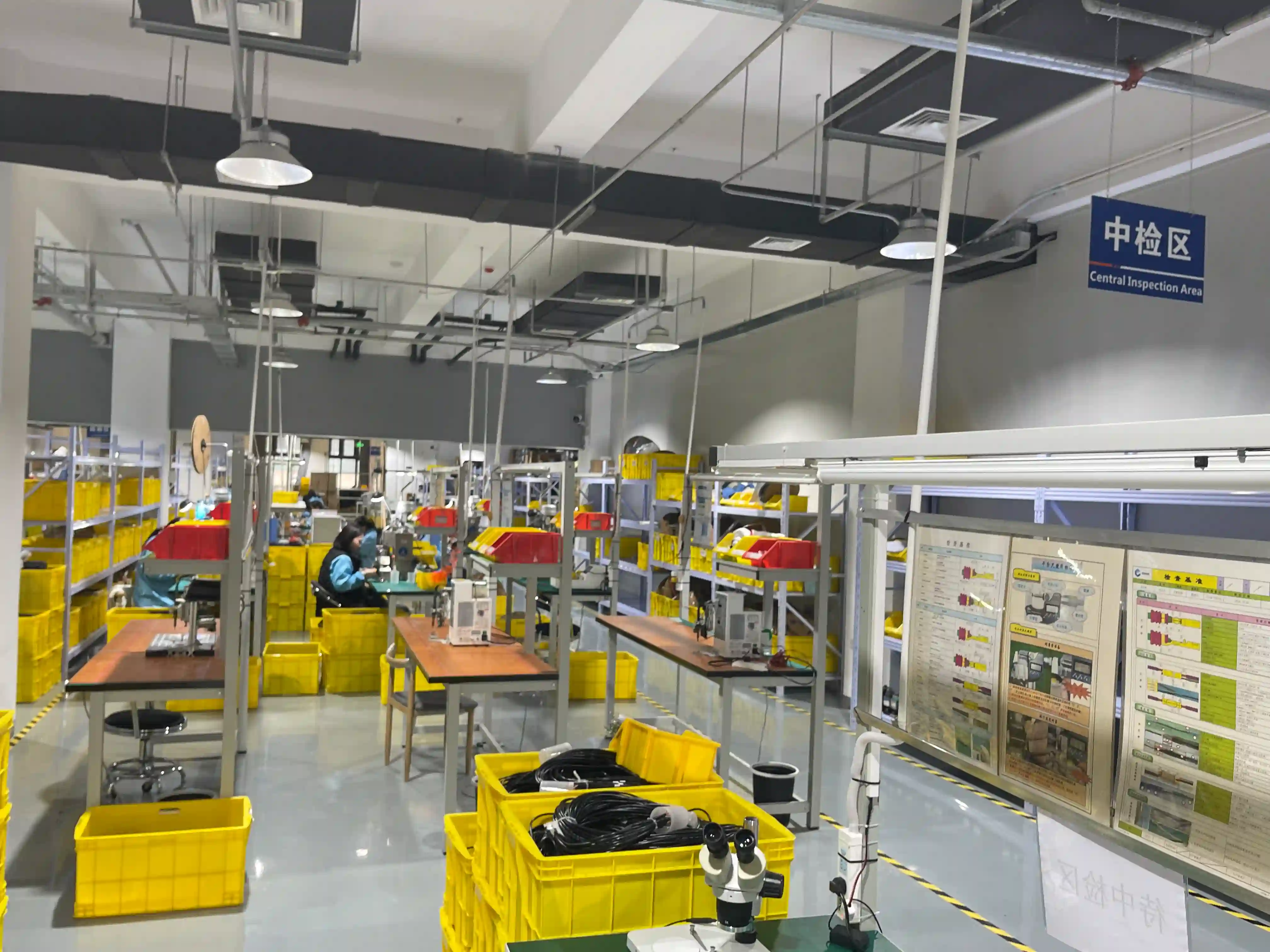
When specifying cable assemblies for a new project, one of the first decisions engineers face is whether to go mil-spec or commercial grade. It seems like a straightforward choice -- military applications need mil-spec, everything else uses commercial. But the reality is far more nuanced. Many commercial applications benefit from mil-spec materials, and many defense-adjacent projects can safely use commercial components with targeted upgrades.
The difference between these two grades affects every aspect of your cable assembly: the raw materials, manufacturing processes, testing protocols, documentation requirements, lead times, and -- most significantly -- cost. A mil-spec cable assembly can cost anywhere from 3x to 10x more than its commercial equivalent, and that premium needs justification. Understanding exactly what you get for that extra investment is critical to making the right engineering and business decision.
In this guide, we break down every meaningful difference between mil-spec and commercial grade cable assemblies, drawing on our experience manufacturing both grades across aerospace, defense, industrial, and commercial applications. Whether you are designing for a fighter jet or a factory floor, this comparison will help you specify exactly the right grade for your requirements -- nothing more, nothing less.
-65 to +260°C
Mil-Spec Temperature Range
3-10x
Cost Premium Over Commercial
100%
Mil-Spec Testing Rate
8-16 Weeks
Typical Mil-Spec Lead Time
"The decision between mil-spec and commercial is not about quality -- it is about requirements. A well-made commercial cable assembly can be just as reliable as a mil-spec one in the right environment. Mil-spec exists for extreme conditions: radical temperature swings, sustained vibration, chemical exposure, and situations where failure means loss of life. If your application does not face those conditions, you may be paying for capability you will never use."
OurPCB Engineering Team
What Is Mil-Spec Cable Assembly?
"Mil-spec" refers to cable assemblies manufactured in strict compliance with United States Department of Defense military specifications. These specifications define every aspect of the cable -- materials, construction methods, performance requirements, testing procedures, and documentation. The goal is absolute reliability in the harshest operating environments on Earth (and beyond).
Key Mil-Spec Standards
MIL-DTL-27500
The primary specification for shielded and jacketed aerospace cables. Covers multi-conductor cables with shields, jackets, and specific conductor configurations used in aircraft, missiles, and spacecraft.
- Rated for -65°C to +200°C (some variants to +260°C)
- Specifies shielding effectiveness requirements
- Defines jacket materials (ETFE, PVDF, polyimide)
- Requires QPL (Qualified Products List) listing
MIL-W-22759
Covers individual hook-up wires with fluoropolymer insulation. These wires are the building blocks of mil-spec harnesses, using ETFE (Tefzel), PTFE (Teflon), or polyimide (Kapton) insulation.
- ETFE insulation rated to +200°C
- PTFE insulation rated to +260°C
- Excellent chemical and fluid resistance
- Low smoke/toxicity in fire conditions
MIL-DTL-38999
High-performance circular connectors for harsh environments. Bayonet, threaded, and breech coupling styles.
MIL-DTL-5015
Industrial-grade circular connectors. Widely used in ground support equipment and military vehicles.
MIL-STD-810
Environmental testing standard covering temperature, humidity, vibration, shock, salt fog, and more.
All mil-spec components must be sourced from QPL-listed manufacturers, and the finished assemblies must pass 100% inspection and testing. Every wire, connector, contact, solder joint, and crimp terminal is individually verified. This level of rigor is what drives both the reliability and the cost of mil-spec assemblies. For more on testing protocols, see our testing and inspection capabilities.
What Is Commercial Grade Cable Assembly?
Commercial grade cable assemblies are designed for general industrial, consumer, and commercial applications. They follow industry standards from organizations like UL (Underwriters Laboratories), CSA (Canadian Standards Association), IEC, and IPC rather than military specifications. Commercial cables are optimized for cost efficiency while maintaining adequate performance for their intended operating environments.
Key Commercial Standards
UL / CSA Certifications
UL and CSA provide safety certifications for commercial wiring. UL 758 covers appliance wiring materials, UL 2556 covers wire and cable test methods, and UL/CSA/CE certifications ensure basic safety and performance.
- UL 758 - Appliance Wiring Material
- UL 2556 - Wire and Cable Test Methods
- CSA C22.2 - Canadian Electrical Safety
IPC / WHMA Standards
The IPC/WHMA-A-620 standard defines acceptance criteria for cable and wire harness assemblies. It provides three classes of quality, with Class 3 being the highest (approaching mil-spec levels of inspection).
- Class 1 - General Electronic Products
- Class 2 - Dedicated Service Electronic Products
- Class 3 - High-Performance Electronic Products
Commercial grade assemblies use materials like PVC (polyvinyl chloride), PE (polyethylene), TPE (thermoplastic elastomer), and standard nylon. These materials perform well in typical operating environments (-40°C to +105°C) and cost significantly less than their mil-spec counterparts. Testing is typically performed on a sample basis -- rather than 100% inspection, a statistical sample from each production lot is tested to verify compliance. This approach dramatically reduces manufacturing time and cost while still providing quality assurance for most applications.
Comprehensive Comparison: Mil-Spec vs Commercial Grade
| Parameter | Mil-Spec Grade | Commercial Grade |
|---|---|---|
| Temperature Range | -65°C to +260°C | -40°C to +105°C |
| Vibration Resistance | MIL-STD-810 (severe) | IEC 60068 (moderate) |
| Chemical Resistance | Fuels, hydraulics, de-icers | Basic oils and solvents |
| EMI Shielding | Defined per MIL-DTL-27500 | Application-specific |
| Testing Requirements | 100% inspection & testing | Sample-based (AQL) |
| Lead Time | 8-16 weeks | 2-6 weeks |
| Cost | 3-10x higher | Baseline |
| Traceability | Full lot traceability required | Basic batch records |
| Certification | QPL listing, DFARS compliant | UL, CSA, CE, IPC Class 2/3 |
| Typical Applications | Aircraft, missiles, spacecraft, naval vessels | Industrial, automotive, telecom, consumer |
Key Differences: A Deep Dive
1. Materials
The most fundamental difference between mil-spec and commercial cable assemblies is the materials used. Mil-spec materials are engineered for extremes, while commercial materials are optimized for the performance-to-cost ratio.
Mil-Spec Insulation Materials
- PTFE (Teflon) -- Rated to +260°C, outstanding chemical resistance, low friction, excellent dielectric properties
- ETFE (Tefzel) -- Rated to +200°C, lighter than PTFE, excellent abrasion resistance, radiation-resistant
- Polyimide (Kapton) -- Extremely thin insulation wall, high temperature, used in space applications
- PVDF (Kynar) -- Chemical resistance, low smoke generation, used in naval applications
- Kevlar -- Used as strength members for pull-through and strain relief
Commercial Insulation Materials
- PVC (Polyvinyl Chloride) -- Rated to +105°C, low cost, good flexibility, flame retardant
- PE (Polyethylene) -- Good dielectric properties, low cost, common in data cables
- TPE (Thermoplastic Elastomer) -- Flexible, recyclable, good cold-weather performance
- Nylon -- Abrasion resistant, commonly used as outer jackets
- Silicone -- Good for moderate high-temperature applications to +200°C
The choice of insulation material directly impacts temperature resistance, chemical compatibility, flexibility, and lifespan. Mil-spec fluoropolymer insulations like PTFE and ETFE are inherently more resistant to aging, UV exposure, and chemical attack than commercial PVC or PE. However, for applications operating within the commercial temperature range in benign environments, PVC and TPE offer excellent value. For a deeper comparison of insulation materials, read our guide on shielded vs unshielded cables.
2. Testing & Quality Control
This is perhaps the single biggest differentiator between mil-spec and commercial assemblies. The testing gap is enormous, and it accounts for a significant portion of the cost difference.
Mil-Spec Testing Protocol
- 100% continuity testing on every conductor
- 100% hipot (dielectric withstand) testing
- 100% insulation resistance measurement
- 100% visual inspection under magnification
- Crimp force monitoring on every termination
- Pull-test verification on every contact
- Environmental stress screening (temperature cycling)
Commercial Testing Protocol
- 100% continuity testing (industry standard)
- Sample-based hipot testing (AQL 0.65 - 2.5)
- Sample-based insulation resistance
- Visual inspection (spot-check or AQL)
- First-article crimp force validation
- Sample-based pull testing
- Environmental screening not standard
The testing difference means that mil-spec assemblies have effectively zero latent defects that reach the field. Every single assembly has been verified individually. Commercial assemblies rely on statistical quality control -- with a well-managed AQL of 0.65, you can expect about 6.5 defects per 1,000 units, which is acceptable for most commercial applications but unacceptable in defense. Learn more about testing methodologies in our top 10 wire harness failures guide.
3. Documentation & Traceability
Mil-spec assemblies require comprehensive documentation that tracks every component from raw material to finished product. This traceability chain is non-negotiable for defense contracts.
Mil-Spec Documentation Package (Typical)
Commercial assemblies typically include a Certificate of Conformance and basic test reports, but do not require the full traceability chain. This documentation difference alone can add 15-20% to the cost of a mil-spec assembly -- the labor hours spent on paperwork are significant.
4. Cost Analysis
The 3-10x cost multiplier for mil-spec comes from multiple compounding factors. Here is a typical breakdown of where the money goes:
Important Note on MOQ
Mil-spec components often have higher minimum order quantities and longer lead times (8-20 weeks for some QPL connectors). For low-volume prototype runs, this can push effective per-unit costs even higher. Plan ahead and consider using commercial equivalents for prototyping before transitioning to mil-spec for production.
A practical rule is to think about cost-benefit in terms of failure consequences, not just unit price. If a cable failure means a a substantial amount service call, commercial grade with good quality control makes perfect sense. If a cable failure means a a substantial amount million aircraft goes down or lives are at risk, the 5x cost premium for mil-spec is the cheapest insurance you will ever buy. The math is straightforward -- what does failure cost you?
OurPCB Engineering Team
When to Choose Mil-Spec vs Commercial
Choose Mil-Spec When:
- Aerospace or defense application with contractual requirements for mil-spec components
- Operating temperatures exceed -40°C or +105°C continuously
- Severe vibration, shock, or mechanical stress (MIL-STD-810 environments)
- Exposure to jet fuel, hydraulic fluid, de-icing chemicals, or other aggressive substances
- Failure could result in loss of life, mission failure, or catastrophic damage
- Government contract requires QPL-listed components or DFARS compliance
- Space, nuclear, or submarine applications with radiation or pressure extremes
Choose Commercial When:
- Standard industrial, automotive, or consumer electronic applications
- Operating temperature stays within -40°C to +105°C
- Cost is a primary concern and failure consequences are manageable
- Short lead times are required (2-6 weeks vs 8-16 weeks)
- Benign environment with minimal chemical or vibration exposure
- Consumer electronics, appliances, IT/telecom infrastructure
- UL, CSA, or CE certification is sufficient for regulatory compliance
"One approach we see working well for many customers is the hybrid strategy. Use mil-spec materials for the portions of the harness exposed to extreme conditions -- say, the engine bay section of an aircraft ground support unit -- and commercial grade for the cabin or control room portions. You get the protection where you need it without paying mil-spec prices for the entire assembly. It requires careful interface design, but the savings can be 40-60% compared to going full mil-spec."
OurPCB Engineering Team
Frequently Asked Questions
Can I use mil-spec wire in a commercial assembly to save money?
Yes, and this is actually a common hybrid approach. Using MIL-W-22759 wire with commercial connectors gives you the temperature and chemical resistance of mil-spec insulation at a fraction of the cost of a fully mil-spec assembly. The wire itself adds only a moderate premium (2-3x), while mil-spec connectors can be 10-30x more expensive than commercial alternatives.
What is the QPL (Qualified Products List) and why does it matter?
The QPL is a list maintained by the Defense Logistics Agency (DLA) of products that have been tested and qualified to meet military specifications. For defense contracts, only QPL-listed components are acceptable. Getting on the QPL requires extensive qualification testing by the manufacturer, which is why QPL components cost more -- that testing cost is amortized across production.
How long does it take to get mil-spec cable assemblies manufactured?
Typical lead times for mil-spec assemblies range from 8-16 weeks, compared to 2-6 weeks for commercial. The longer time comes from QPL component procurement (some connectors have 20+ week lead times), 100% testing requirements, and the detailed documentation package. Rush orders are possible but come with significant premium charges.
Is IPC/WHMA-A-620 Class 3 the same as mil-spec?
No, but it is close in terms of workmanship quality. IPC Class 3 requires the tightest manufacturing tolerances and most rigorous inspection criteria in the IPC system. However, it does not specify mil-spec materials, QPL components, or military testing protocols. Many aerospace companies use IPC Class 3 as a baseline and add mil-spec material and testing requirements on top.
Do IP67/IP68 ratings replace the need for mil-spec in harsh environments?
IP ratings address only ingress protection (dust and water). They do not cover temperature extremes, vibration, chemical resistance, or EMI shielding -- all of which are addressed by mil-spec standards. You can have an IP68-rated commercial assembly that would fail in a mil-spec environment due to temperature or chemical exposure. See our detailed comparison of IP ratings in our guide on IP67 vs IP68 vs IP69K ratings.
Can commercial cable assemblies be upgraded to meet some mil-spec requirements?
Absolutely. This is the hybrid approach we recommend for many customers. Common upgrades include: using ETFE or PTFE wire instead of PVC, adding 100% testing protocols, implementing full traceability documentation, and using higher-grade environmental sealing. Each upgrade adds cost but far less than going to a full mil-spec assembly.
External References
Related Articles
UL vs CSA vs CE Certification
Understanding commercial cable assembly certifications and which ones your product needs for different markets.
Read more QualityTop 10 Wire Harness Failures
The most common failure modes in cable assemblies and how proper specification prevents them.
Read more StandardsIP67 vs IP68 vs IP69K Ratings
Complete guide to ingress protection ratings and how they complement mil-spec environmental requirements.
Read moreAbout the Author
OurPCB Engineering Team specializes in both mil-spec and commercial cable assembly design. With over 15 years of combined experience manufacturing harnesses for aerospace, defense, industrial, and consumer applications, the team helps engineers specify the right grade for their requirements without over-engineering or under-specifying. Its pragmatic approach to mil-spec vs commercial decisions has helped dozens of companies optimize their cable assembly costs while maintaining the reliability their applications demand.
Get our engineering team's recommendation for your project