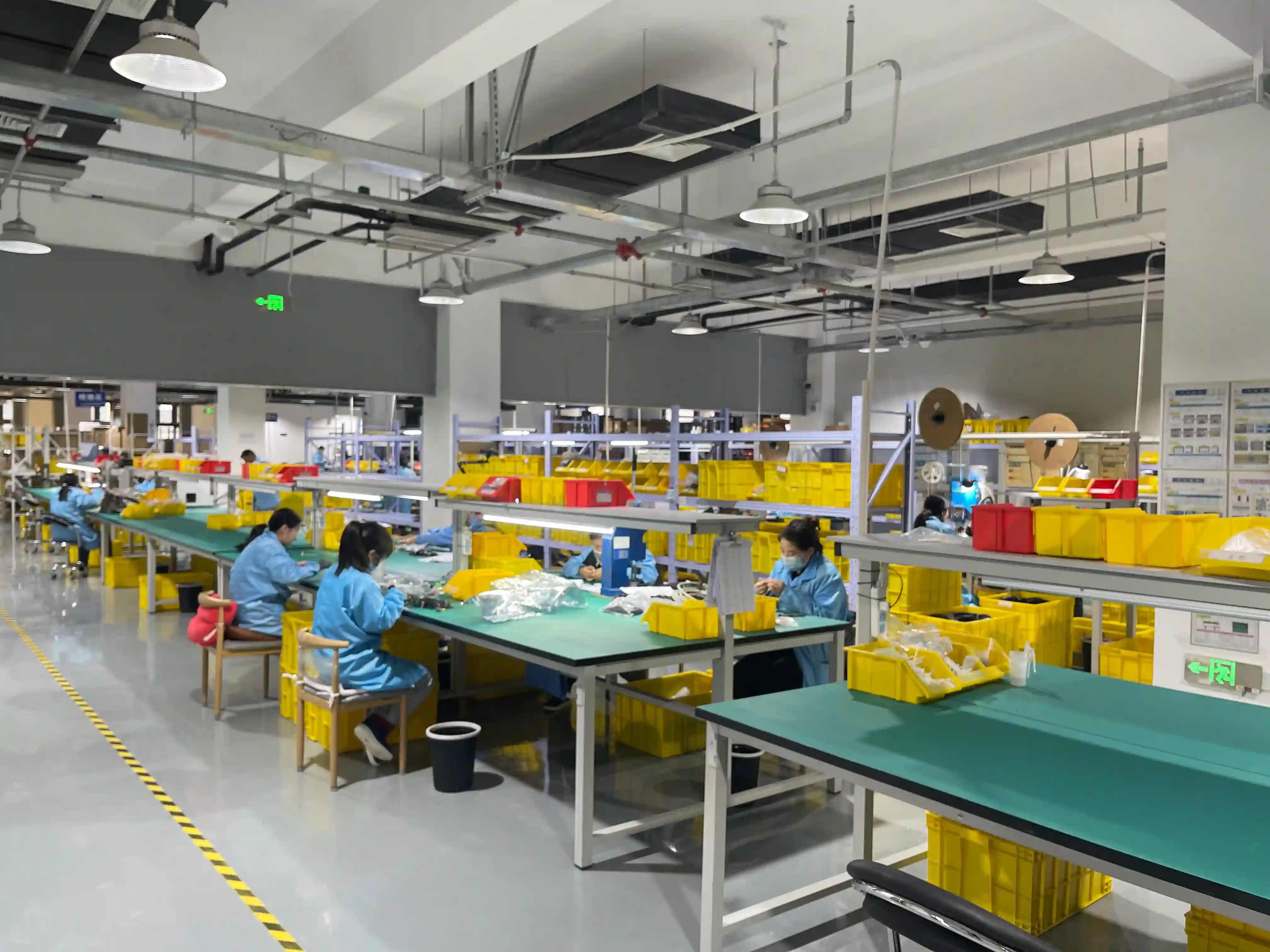
The global medical cable assembly market surpasses $4.2 billion and continues to grow at approximately 8% annually, driven by the proliferation of connected medical devices, minimally invasive surgical tools, and advanced diagnostic imaging systems. Every one of these devices depends on cable assemblies that must meet some of the most demanding regulatory and performance standards in any industry. A cable failure in a patient monitoring system, surgical robot, or life-support device is not an inconvenience -- it is a potential threat to patient safety.
Unlike commercial or even military cable assemblies, medical cables face a unique intersection of regulatory requirements. They must comply with FDA Quality System Regulations under 21 CFR Part 820, satisfy biocompatibility standards for patient-contact materials, withstand repeated sterilization cycles without degradation, and maintain electrical performance throughout a device lifecycle that may span 10 to 15 years. Failure to meet any one of these requirements can result in FDA warning letters, product recalls, or -- in the worst case -- patient harm.
This guide provides a comprehensive overview of what it takes to design, manufacture, and validate medical cable assemblies that meet FDA and international regulatory requirements. Whether you are an OEM engineer developing a new Class II diagnostic device or a procurement manager evaluating medical cable assembly manufacturers, the information here will help you understand the regulatory landscape, material requirements, manufacturing standards, and testing protocols that separate compliant medical cables from the rest.
$4.2B+
Medical Cable Market
ISO 13485
Required Certification
Class 7/8
Cleanroom Standards
10+ Years
Device Lifecycle
"Medical cable assembly is not simply a higher-quality version of commercial cable manufacturing -- it is a fundamentally different discipline. Every material choice, every process step, and every test must be documented, validated, and traceable back to the individual component level. We have seen companies attempt to 'upgrade' their commercial cable lines for medical work, and the gap between their existing systems and what FDA compliance actually requires is enormous. It starts with the quality management system and extends to every operator on the production floor."
OurPCB Engineering Team
FDA Regulatory Framework for Medical Cables
The U.S. Food and Drug Administration classifies medical devices -- and by extension their cable assemblies -- into three risk-based categories. The classification of the finished device determines the regulatory pathway and the level of scrutiny applied to every component, including the cable assemblies within.
Device Classification & Regulatory Pathways
| Classification | Risk Level | Regulatory Path | Cable Assembly Examples |
|---|---|---|---|
| Class I | Low Risk | General Controls (most exempt from 510(k)) | Exam table power cords, basic hospital bed cables, simple sensor leads |
| Class II | Moderate Risk | 510(k) Premarket Notification + Special Controls | Patient monitor cables, ultrasound transducer assemblies, ECG lead wires, infusion pump harnesses |
| Class III | High Risk | PMA (Premarket Approval) -- full clinical data | Implantable pacemaker leads, neurostimulator cables, cochlear implant electrode arrays |
21 CFR Part 820: Quality System Regulation (QSR)
All manufacturers of finished medical devices -- and contract manufacturers supplying critical components like cable assemblies -- must comply with 21 CFR Part 820, the FDA's Quality System Regulation. This is not a suggestion; it is a legally enforceable requirement. The QSR mandates a comprehensive quality management system covering:
Design Controls (Subpart C)
- Design input/output documentation
- Design review at each development phase
- Design verification and validation (V&V)
- Design transfer to manufacturing
- Design History File (DHF) maintenance
Production & Process Controls (Subpart G)
- Documented manufacturing procedures
- Process validation (IQ, OQ, PQ)
- Environmental and contamination controls
- Equipment calibration and maintenance
- Complete Device Master Record (DMR)
The 510(k) Process and Cable Assembly Documentation
For Class II medical devices -- the most common category for cable assemblies -- the 510(k) Premarket Notification pathway requires demonstrating that the device is "substantially equivalent" to a legally marketed predicate device. As a cable assembly supplier, your documentation directly supports the OEM's 510(k) submission. This includes:
- Complete material certifications and Certificates of Conformance (C of C) for all raw materials
- Biocompatibility test reports per ISO 10993 for patient-contact materials
- Process validation protocols and results (IQ/OQ/PQ)
- Risk analysis per ISO 14971 (FMEA, fault tree analysis)
- Electrical safety and EMC test data per IEC 60601-1
Biocompatible Materials & Sterilization Compatibility
Material selection for medical cable assemblies is governed by two primary concerns: biocompatibility for patient-contact applications and sterilization compatibility for reusable devices. The wrong material choice can result in cytotoxic reactions, sensitization, or material degradation that compromises device safety over its lifecycle.
Biocompatibility Standards: USP Class VI & ISO 10993
USP Class VI (United States Pharmacopeia) is the most stringent plastics classification for medical use, requiring materials to pass acute systemic toxicity, intracutaneous reactivity, and implantation testing in animal models. ISO 10993 provides a more comprehensive framework with 20+ parts covering cytotoxicity, sensitization, irritation, hemocompatibility, genotoxicity, and chronic toxicity, among other biological evaluations. Most FDA submissions for Class II and III devices require ISO 10993 testing.
Medical-Grade Insulation & Jacketing Materials
| Material | Biocompatibility | Temp Range | Sterilization Methods | Common Applications |
|---|---|---|---|---|
| Silicone (LSR/HCR) | USP Class VI, ISO 10993 | -60°C to +200°C | Autoclave, EtO, Gamma, E-beam | Patient-contact cables, implantable leads, surgical instrument cords |
| Medical TPE | USP Class VI, ISO 10993 | -40°C to +125°C | EtO, Gamma, E-beam | Reusable sensor cables, ECG leads, SpO2 cables |
| PTFE (Teflon) | Inherently inert, ISO 10993 | -200°C to +260°C | Autoclave, EtO, Gamma, E-beam | High-temp surgical cables, catheter wires, implantable leads |
| Medical PVC | DEHP-free formulations, ISO 10993 | -20°C to +105°C | EtO, Gamma (limited cycles) | Single-use cables, disposable patient leads, non-contact housings |
| Medical Polyurethane | USP Class VI, ISO 10993 | -40°C to +80°C | EtO, Gamma | Flexible endoscope cables, ultrasound transducer cords |
| FEP | Inherently inert, ISO 10993 | -200°C to +205°C | Autoclave, EtO, Gamma, E-beam | Minimally invasive surgical tools, electrosurgical cables |
Patient-Contact vs Non-Patient-Contact Materials
Patient-Contact (Direct/Indirect)
- Must pass full ISO 10993 biological evaluation
- USP Class VI certification required for most applications
- Sterilization validation mandatory
- Leachable and extractable studies may be required
- Examples: ECG electrodes, SpO2 finger clips, surgical instrument cables
Non-Patient-Contact
- Biocompatibility testing generally not required
- Standard medical-grade materials acceptable
- Must still meet electrical safety standards (IEC 60601)
- RoHS and REACH compliance still required
- Examples: internal device wiring, power supply cables, equipment interconnects
Sterilization Compatibility
Reusable medical cable assemblies must withstand hundreds or even thousands of sterilization cycles without material degradation, discoloration, cracking, or loss of electrical performance. The choice of sterilization method directly impacts material selection:
| Sterilization Method | Conditions | Compatible Materials | Considerations |
|---|---|---|---|
| Autoclave (Steam) | 134°C, 18 min, 2 atm | Silicone, PTFE, FEP, stainless steel | Highest temp exposure; degrades PVC, PU, and some TPEs |
| Ethylene Oxide (EtO) | 37-63°C, 1-6 hrs + aeration | All common medical polymers | Low temp, broad compatibility; long cycle time; EtO residual limits apply |
| Gamma Radiation | 25-50 kGy dose | Silicone, TPE, PU, PTFE (limited) | No heat; can yellow or embrittle some materials; dose mapping required |
| E-beam | 25-50 kGy dose, fast exposure | Similar to gamma | Faster than gamma; limited penetration depth; suitable for smaller assemblies |
| Hydrogen Peroxide Plasma | 50°C, 28-75 min | Most polymers except cellulose-based | Low temp; no toxic residuals; limited penetration of lumens |
Manufacturing Requirements for Medical Cable Assemblies
Manufacturing medical cable assemblies requires facilities, processes, and documentation systems that go far beyond standard commercial production. The FDA expects to see controlled environments, validated processes, and complete traceability from raw material receipt through finished goods shipment.
Cleanroom Production: ISO 14644
Many medical cable assemblies -- particularly those for patient-contact, implantable, or sterile-packaged applications -- must be manufactured in controlled cleanroom environments classified under ISO 14644-1. The required cleanliness class depends on the device risk level:
ISO Class 8 (100,000)
Suitable for most non-implantable medical cable assemblies. General environmental controls with particulate monitoring.
- Patient monitoring cables
- Diagnostic equipment wiring
- External device interconnects
ISO Class 7 (10,000)
Required for sterile-packaged and surgical device cable assemblies. Full gowning, HEPA filtration, positive pressure.
- Surgical instrument cables
- Sterile-packaged assemblies
- Catheter cable assemblies
ISO Class 5 (100)
The strictest environment for implantable device assembly. Laminar flow, full containment, continuous monitoring.
- Implantable leads and electrodes
- Neurostimulator components
- Active implant interconnects
ESD Controls & Environmental Monitoring
Electrostatic discharge (ESD) can damage sensitive medical electronics and cause latent failures that only manifest weeks or months after device deployment -- a particularly dangerous scenario in medical applications. Medical cable assembly facilities must implement:
- ANSI/ESD S20.20 compliant workstations with grounded mats, wrist straps, and ionizers
- Continuous temperature and humidity monitoring (typically 20-24°C, 30-60% RH)
- Particulate count monitoring with documented alarm thresholds and corrective actions
- Conductive or dissipative flooring, garments, and packaging materials throughout the facility
Traceability Requirements
FDA 21 CFR Part 820 requires complete traceability for medical devices. For cable assemblies, this means tracking every component from raw material lot to finished assembly serial number. A proper traceability system captures:
Complete Traceability Chain
Testing & Validation Protocols
Medical cable assemblies undergo testing regimes far more extensive than commercial or even military cables. The testing must validate not only electrical performance and mechanical durability, but also biological safety, electromagnetic compatibility, and sterilization resistance. Each test category maps to specific regulatory requirements.
Biocompatibility Testing (ISO 10993)
For any cable assembly component that contacts the patient or bodily fluids -- directly or indirectly -- a biological evaluation per ISO 10993-1 is required. The specific tests depend on the nature and duration of contact:
Cytotoxicity (ISO 10993-5)
In-vitro cell culture test to detect toxic leachables. Required for all patient-contact materials. Typically a 24-48 hour assay using L-929 mouse fibroblast cells.
Sensitization (ISO 10993-10)
Evaluates potential to cause allergic reactions. Guinea pig maximization test (GPMT) or local lymph node assay (LLNA). Required for prolonged or permanent contact.
Irritation (ISO 10993-10)
Assesses local tissue irritation from material extracts. Intracutaneous injection or dermal patch testing depending on contact type.
Hemocompatibility (ISO 10993-4)
Required when cable materials contact blood or blood pathway. Tests for hemolysis, thrombosis, coagulation effects, and complement activation.
Genotoxicity (ISO 10993-3)
Evaluates potential for DNA damage or mutations. Ames test (bacterial reverse mutation) and in-vitro chromosomal aberration assay.
Implantation (ISO 10993-6)
Required for implantable cable leads. Long-term tissue response evaluation at 2-week, 4-week, and 12-week intervals in animal models.
Electrical Safety Testing (IEC 60601-1)
IEC 60601-1 is the international standard for medical electrical equipment safety. Cable assemblies within medical devices must support the device's compliance with this standard, which includes:
- Dielectric withstand testing -- verifying insulation integrity at voltages up to 4 kV AC for patient-contact assemblies (Means of Patient Protection)
- Leakage current measurement -- earth leakage, enclosure leakage, and patient leakage current limits (10 µA normal condition for Type CF applied parts)
- Protective earth continuity -- resistance between protective earth terminal and all accessible conductive parts (<0.1 ohm at 25 A)
- Creepage and clearance distances -- minimum air gaps and surface distances between conductors based on working voltage and insulation type (overmolding can improve this)
EMC Testing (IEC 60601-1-2)
Medical devices must neither emit excessive electromagnetic interference nor be susceptible to it. Cable assemblies are often the primary pathway for conducted and radiated emissions. Testing per IEC 60601-1-2 (4th edition) includes:
Emissions Testing
- Radiated emissions (30 MHz - 1 GHz)
- Conducted emissions (150 kHz - 30 MHz)
- Harmonic current emissions
- Voltage fluctuations and flicker
Immunity Testing
- Electrostatic discharge (ESD) up to 8 kV contact
- Radiated RF immunity (3 V/m, 80 MHz - 2.7 GHz)
- Electrical fast transient (EFT) bursts
- Surge immunity (0.5-2 kV line-to-ground)
Mechanical & Flex Life Testing
Medical cables are subjected to repeated bending, pulling, twisting, and coiling throughout their service life. Flex life testing validates long-term durability:
- Bend cycling -- 10,000 to 100,000+ cycles at specified bend radius (typically 5x cable diameter) per IEC 60245
- Tensile pull testing -- minimum pull force without conductor breakage or connector separation per IEC 60227
- Torsion testing -- rotational stress cycles for cables used in articulating surgical instruments
- Connector mating cycle testing -- typically 500 to 5,000 mating cycles while monitoring contact resistance
Sterilization Validation
For reusable cable assemblies that undergo sterilization, the manufacturer must validate that the cable maintains its mechanical, electrical, and biocompatibility properties after the maximum expected number of sterilization cycles. This typically involves subjecting samples to 2x the expected cycle count and verifying all performance parameters remain within specification. Test reports must be included in the device's Design History File (DHF).
"Our medical cable assembly production line operates under a separate quality system with its own SOPs, trained operators, and dedicated cleanroom bays. We do not mix medical and commercial production because the contamination controls, documentation requirements, and inspection protocols are fundamentally different. Every solder joint, every crimp, every overmold on a medical cable is inspected and recorded individually. That level of scrutiny is what FDA compliance demands, and it is what patient safety requires."
OurPCB Engineering Team
How to Select a Medical Cable Assembly Manufacturer
Choosing the wrong cable assembly manufacturer for a medical device project can delay your FDA submission by months, add unexpected costs for re-validation, or -- worst of all -- result in a post-market quality failure. The following checklist covers the critical evaluation criteria:
ISO 13485 Certification
Non-negotiable. Verify that the manufacturer holds current ISO 13485:2016 certification from an accredited registrar (not self-declared). Request the certificate, check the scope statement to confirm it covers cable assembly manufacturing, and verify the expiration date. A manufacturer with ISO 9001 but not ISO 13485 lacks the medical-specific quality system elements -- design controls, risk management integration, and regulatory documentation -- that FDA auditors expect.
FDA Establishment Registration
Any facility manufacturing medical devices or components for the U.S. market must be registered with the FDA. Verify the manufacturer's registration on the FDA's online database. Contract manufacturers should be listed as such. This registration subjects the facility to unannounced FDA inspections, which provides an additional layer of quality assurance.
Cleanroom Capabilities
Confirm the manufacturer has cleanroom facilities certified to the ISO 14644 class your application requires. Ask for the most recent environmental monitoring reports, particulate count data, and certification dates. A cleanroom that is not routinely re-certified may have drifted out of specification.
Design for Manufacturability (DFM) Support
Medical cable assembly manufacturers should offer design review and DFM analysis as part of their engineering services. They should be able to recommend material substitutions, connector alternatives, and construction methods that improve manufacturability and reduce cost without compromising regulatory compliance. Ask for examples of DFM improvements they have made on previous medical projects.
Regulatory Documentation Support
Your cable assembly manufacturer should provide complete documentation packages that support your FDA submission: material certificates, biocompatibility test reports, process validation protocols (IQ/OQ/PQ), FMEA inputs, and Certificates of Conformance. Ask specifically what documentation is included as standard and what requires additional cost. The best manufacturers build this documentation into their standard process.
Supply Chain Documentation & Change Control
Medical device regulations require notification and often re-validation when component materials change. Your manufacturer must have robust change control procedures that include customer notification for any material, supplier, or process changes. Ask about their component obsolescence management process and their policy on single-source vs dual-source components.
Medical Device Cable Assembly Applications
Medical cable assemblies serve an exceptionally broad range of devices, each with distinct performance requirements. Understanding the specific demands of each application category is essential for proper design and material selection.
Surgical Instruments
- Electrosurgical pencil cables (high voltage, low leakage)
- Robotic surgery arm harnesses (high flex, shielded)
- Laparoscopic instrument cables (small diameter, sterilizable)
- Ultrasonic scalpel connections (piezoelectric drive cables)
Patient Monitoring
- ECG/EKG lead wire sets (5, 7, or 12-lead configurations)
- SpO2 pulse oximeter cables (optical sensor integration)
- Blood pressure transducer cables (low-noise, shielded)
- Capnography and respiratory monitoring lines
Imaging Systems
- MRI-compatible cable assemblies (non-ferromagnetic materials)
- CT scanner gantry slip ring connections (high-speed data)
- X-ray detector cables (radiation-resistant insulation)
- Ultrasound transducer cables (128+ coaxial channels)
Therapeutic Devices
- Defibrillator paddle cables (high energy, patient-safe)
- Infusion pump harnesses (reliable, long-life)
- Radiation therapy system cables (shielded, high reliability)
- Dialysis machine interconnects (fluid-resistant)
Diagnostic Equipment
- In-vitro diagnostic analyzer cables (chemical-resistant)
- Endoscope fiber optic and electrical harnesses
- Point-of-care testing device assemblies
- Clinical laboratory automation interconnects
Implantable Device Leads
- Pacemaker leads (biocompatible, hermetically sealed)
- Cochlear implant electrode arrays (micro-scale)
- Deep brain stimulation leads (chronic implant grade)
- Neurostimulator leads (flexible, fatigue-resistant)
For a detailed case study on how we approached a complex medical imaging cable assembly project, read our MRI-Compatible Cable Assembly Case Study, which walks through the full design, validation, and production process for a Class II patient monitoring system.
"Medical cable assembly is a long-term partnership, not a transactional purchase order. When we take on a medical device customer, we are committing to supporting that product through its entire lifecycle -- often 10 to 15 years of production. That means maintaining validated processes, managing component obsolescence, supporting design revisions, and providing documentation for regulatory audits throughout. We have seen medical programs that started as small prototype runs for clinical trials grow to high-volume annual production. The relationship built during prototyping directly determines how smooth the production scale-up will be."
OurPCB Engineering Team
Frequently Asked Questions
Related Articles
Medical Device Wire Harness: MRI-Compatible Case Study
How we designed and manufactured cable assemblies for a Class II patient monitoring device, navigating FDA compliance and EMI challenges.
Read more StandardsMil-Spec vs Commercial Grade Cable Assembly
Understanding the differences between military specification and commercial cable assemblies, and when each grade is appropriate.
Read more CertificationsTop 5 Wire Harness Certifications Every Buyer Should Know
From ISO 9001 to ISO 13485, understanding which certifications matter for your application and how to verify genuine compliance.
Read moreAbout the Author
OurPCB Engineering Team specializes in medical-grade cable assembly design and FDA-compliant manufacturing. With over 15 years of combined experience producing cable assemblies for Class II and Class III medical devices -- including patient monitoring systems, surgical instruments, and diagnostic imaging equipment -- the team helps OEM engineers navigate the complex intersection of regulatory compliance, biocompatibility requirements, and production scalability. Its hands-on approach to medical cable design has supported dozens of successful 510(k) submissions and device launches across the healthcare industry.
Discuss your medical cable assembly project with our engineering team