Top 7 Strain Relief Solutions for Cable Assemblies
Mechanical stress at cable termination points is the leading cause of field failures. From overmolding to cable glands, learn how to choose the right strain relief method to extend cable life and improve reliability.
For industry reference, see cable harness and IPC standards.
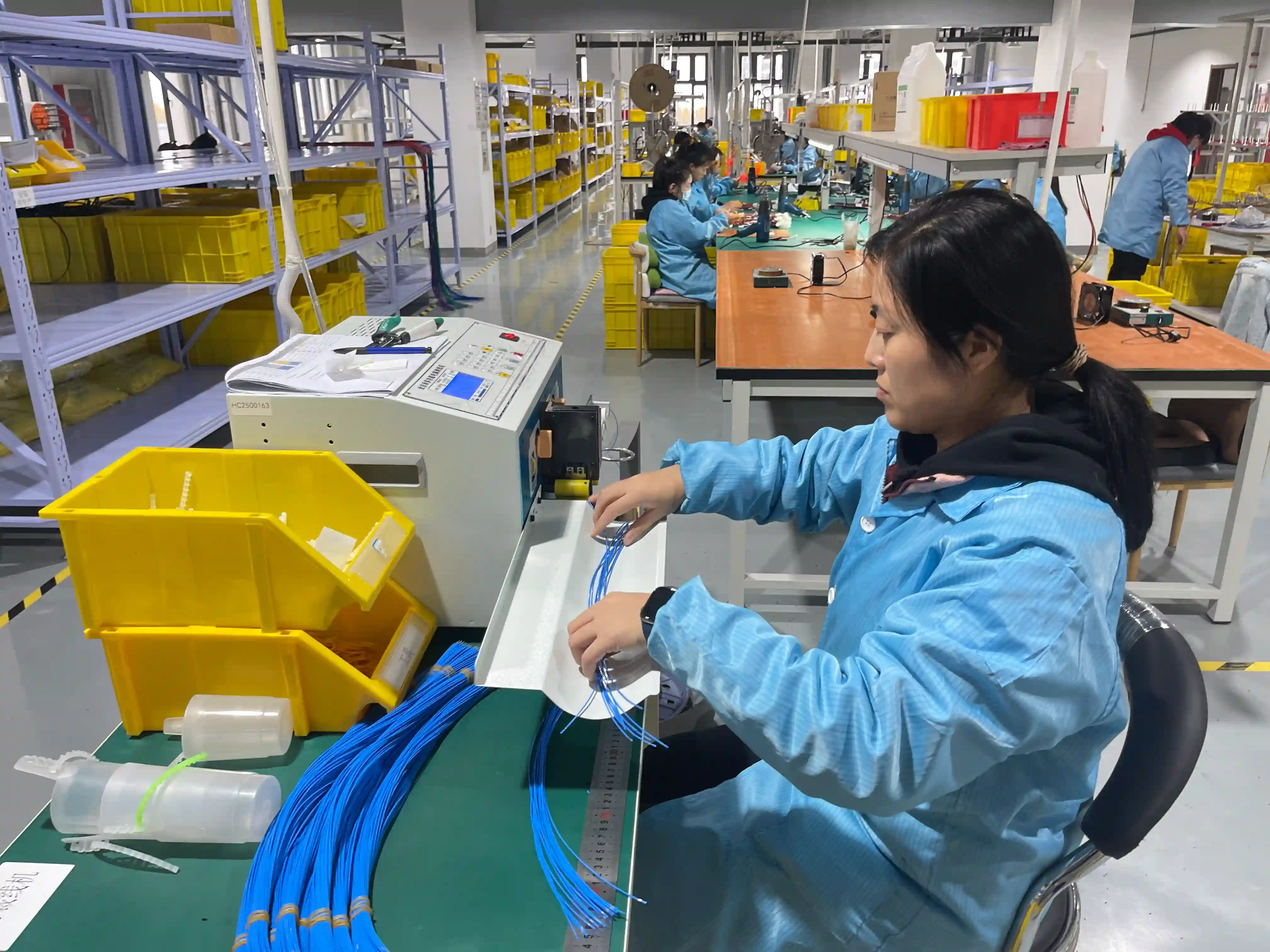
Proper strain relief protects the vulnerable connection point where cable meets connector
Cable assemblies fail at termination points more than anywhere else. The junction between a flexible cable and a rigid connector creates a stress concentration zone—every pull, bend, and vibration focuses force on this vulnerable area. Without proper strain relief, even premium cables can fail prematurely.
In this guide, we compare seven strain relief methods, from simple heat shrink boots to precision overmolding. Each approach offers different tradeoffs in protection level, cost, IP rating capability, and suitability for various applications. Understanding these options helps you specify the right solution for your cable assembly requirements.
Quick Comparison
| Method | IP Rating | Flex Protection | Cost |
|---|---|---|---|
| Overmolding | Up to IP68 | Excellent | $$$ |
| Cable Glands | Up to IP68 | Good | $$ |
| Molded Boots | IP65-67 | Good | $$ |
| Heat Shrink | IP54-65 | Moderate | $ |
| Cable Clamps | None | Good | $ |
| Bend Limiters | None | Excellent | $ |
| Spiral Wrap | None | Moderate | $ |
Overmolding
Premium Protection, Professional Appearance
How It Works
- Thermoplastic injected around cable-connector junction
- Creates permanent, seamless bond
- Custom tooling shapes the strain relief profile
Protection Level
- IP67/IP68 water and dust protection achievable
- Excellent pull strength (50+ lbs typical)
- Chemical and abrasion resistance
Overmolding is the premium strain relief solution, creating a permanent, factory-sealed bond between cable and connector. Thermoplastic or thermoset materials are injection molded directly onto the assembly, resulting in a seamless, professional appearance with maximum protection.
The gradual transition from rigid connector to flexible cable eliminates the stress concentration point that causes most failures. Learn more about our overmolding capabilities and material options.
Advantages
- Best-in-class strain relief performance
- Hermetic seal for harsh environments
- Professional, branded appearance
- Custom colors and logos possible
Considerations
- Higher tooling cost for custom molds
- Not field-repairable
- Minimum volume requirements for economics
- Longer lead time than simpler methods
Cable Glands (Cord Grips)
Industrial Standard for Panel Entry
How It Works
- Threaded fitting mounts to panel or enclosure
- Internal seal grips and seals around cable
- Field-installable and replaceable
Protection Level
- IP66/IP67/IP68 ratings available
- EMI/RFI shielded versions available
- ATEX/IECEx versions for hazardous areas
Cable glands (also called cord grips or cable connectors) are the standard solution for cables entering enclosures and control panels. They provide both strain relief and environmental sealing at the entry point, with options for virtually any requirement.
Available in metal (brass, stainless steel, aluminum) or plastic (nylon, polyamide), cable glands can achieve IP68 ratings for underwater applications. EMC versions include grounding features for shielded cables.
Cable glands are essential to reliable industrial installations. Properly installed glands protect every enclosure entry, while cables routed through unprotected holes are vulnerable to abrasion, strain, and avoidable downtime.
Best For
- Control panel and enclosure entries
- Industrial machinery installations
- Field-serviceable applications
- Hazardous area installations (ATEX)
Limitations
- Requires panel cutout (not cable-only applications)
- Cable OD must match gland range
- Bulkier than some alternatives
Molded Boots (Backshells)
Standard Connector Protection
Molded boots are pre-formed rubber or plastic covers that slip over connector backshells, providing strain relief and some environmental protection. They're the standard solution for RJ45, USB, HDMI, and similar standard connectors where overmolding isn't cost-effective.
Available in straight, 45°, and 90° configurations to accommodate various routing requirements, boots are typically retained by the connector housing or an integrated snap feature.
Best For
- Network cables (RJ45)
- AV cables (HDMI, DisplayPort)
- Standard connector types
- Cost-sensitive high-volume applications
Limitations
- Lower IP rating than overmolding
- Can loosen over time/handling
- Limited to standard connector sizes
Heat Shrink Tubing
Versatile, Cost-Effective Protection
Types Available
- Standard polyolefin (2:1, 3:1 shrink ratio)
- Adhesive-lined (moisture seal)
- Heavy-wall (abrasion protection)
- Molded shapes for transition areas
Protection Level
- Moderate strain relief
- IP54-65 with adhesive-lined
- Good abrasion protection
Heat shrink tubing is the most versatile and cost-effective strain relief option for many applications. When heated, the tubing shrinks to conform tightly around the cable-connector junction, providing support and protection. Adhesive-lined versions add moisture sealing capability.
For enhanced strain relief, multi-layer configurations or purpose-molded transition shapes provide better mechanical support than simple tubing. Heat shrink is commonly combined with other methods as an outer protective layer.
Heat shrink is often underestimated. Engineers sometimes specify overmolding when adhesive-lined heat shrink would meet the requirement at lower cost. The key is understanding what level of protection you actually need. For indoor applications without significant flex requirements, properly applied heat shrink can provide durable protection.
Cable Clamps & Saddles
Simple Mechanical Restraint
Cable clamps provide pure mechanical strain relief by securing the cable to a fixed point, preventing pulling forces from reaching the connector. They're simple, effective, and allow cable replacement when needed—unlike permanent solutions like overmolding.
Available in P-clips, saddle clamps, cushion clamps (vibration dampening), and adjustable designs, cable clamps are essential for securing cables within enclosures and along routing paths.
Common Types
P-Clips
Single cable hold
Saddle Clamps
Through-bolt mount
Cushion Clamps
Vibration isolation
Adhesive Mounts
No-drill installation
Bend Radius Limiters
Preventing Over-Bending Failures
Bend radius limiters (also called flex limiters or bend protectors) physically prevent cables from bending tighter than their rated minimum bend radius. This is critical for fiber optic cables, coaxial cables, and any application where sharp bends cause signal degradation or conductor damage.
The tapered spring design provides progressive resistance as the bend tightens, guiding the cable into a smooth arc rather than a sharp kink. They're essential for robotic cable applications and continuous flex installations.
Best For
- Fiber optic cable assemblies
- Coaxial (RF) cables
- Robotic arm cables (continuous flex)
- High-value cables where damage is costly
Limitations
- No environmental protection
- Adds length to cable entry
- Must match cable OD range
Spiral Wrap & Loom
Flexible Bundle Protection
Spiral wrap tubing wraps around cables in a helical pattern, providing abrasion protection and moderate strain relief while maintaining flexibility. Unlike solid conduit, spiral wrap allows cable breakouts at any point along its length—ideal for wire harness applications.
Available in polyethylene, nylon, and PTFE materials, spiral wrap is particularly useful for bundling multiple cables together while protecting them from rubbing, pinching, and environmental exposure.
Most harness designs benefit from combining methods: overmolding or glands at connectors for the critical junction protection, with spiral wrap along the cable runs for abrasion and bundle management. The best strain relief strategy is rarely a single solution; it identifies each stress point and addresses it appropriately.
Strain Relief Selection Guide
Need IP67/IP68 environmental sealing?
Choose overmolding for cable-level sealing or cable glands for panel entry applications.
High-volume, cost-sensitive application?
Choose molded boots for standard connectors or heat shrink for custom assemblies.
Continuous flex or robotics application?
Choose bend radius limiters combined with appropriate stranded wire conductors.
Field-serviceable requirements?
Choose cable glands or cable clamps— avoid permanent solutions like overmolding.
Frequently Asked Questions
What causes cable failures at termination points?
The junction between flexible cable and rigid connector creates a stress concentration. Repeated bending, pulling forces, and vibration fatigue the conductors and insulation at this point. Without strain relief, individual conductor strands break progressively until connection fails, often within the first 10,000 to 50,000 flex cycles on unmanaged motion paths. Learn more in our top 10 wire harness failures guide.
Can I combine multiple strain relief methods?
Yes, and it's often the best approach. A typical combination might include overmolding at connectors, cable clamps along the route, and spiral wrap for abrasion protection. Each method addresses different failure modes. In production, we often pair a molded exit with support points every 150 to 300 mm so the cable still respects the minimum bend radius recommended by IPC/WHMA-A-620 and the cable datasheet.
How do I test strain relief effectiveness?
Standard tests include pull testing (IPC/WHMA-A-620 specifies minimum pull forces), flex testing (cycles to failure), and environmental exposure followed by electrical testing. We can help specify appropriate testing for your application.
What bend radius should I design around for moving cables?
For continuous flex, a conservative starting point is 7.5 to 10 times the cable outer diameter, while static routing may allow 5 times diameter depending on the construction. Always verify the cable maker's limit because servo and robotic cables often publish a stricter dynamic bend radius than general-purpose UL styles.
When should I use overmolding instead of heat shrink alone?
Use overmolding when you need repeatable pull relief, sealed exits, or ingress targets such as IP67 or IP68. Adhesive-lined heat shrink is effective for lighter-duty transitions, but once the cable sees high vibration, operator pull loads, or washdown exposure, a molded boot usually gives a more stable process.
Related Articles
Overmolding vs Potting
Compare two approaches to cable assembly encapsulation.
IP67 vs IP68 vs IP69K Ratings
Understanding environmental protection ratings for cables.
Top 7 Design Mistakes
Common errors including inadequate strain relief.
Top 10 Wire Harness Failures
How strain relief failures compare to other failure modes.
Need Strain Relief Engineering Support?
Our engineers help you select and specify the right strain relief solution for your application—from simple heat shrink to custom overmolding.