A wire harness that works perfectly on the bench can fail catastrophically in the field. Temperature extremes crack insulation. Salt fog corrodes terminals. Vibration loosens crimps. Humidity breeds mold and tracking paths. Environmental testing simulates years of these real-world stresses in weeks, revealing weaknesses before your harness reaches a customer.
Yet most engineering teams either skip environmental testing entirely or run the wrong tests for their application. The result is predictable: warranty claims, recalls, and customer trust erosion that costs 10 times more than the testing would have. According to data from the IPC/WHMA-A-620 standard body, up to 85% of wire harness field failures could have been caught by appropriate environmental qualification testing.
This guide covers the seven essential environmental tests, the standards that govern them, how to build a test plan for your specific industry, and how to read the results. Whether you're designing a harness for an automotive under-hood application or an industrial control cabinet, you'll know exactly which tests to specify and what pass/fail criteria to expect.
Teams often invest heavily in continuity, hipot, and insulation-resistance testing while treating environmental testing as optional. Electrical tests confirm that a harness works at the time of test; environmental qualification evaluates whether it will continue working after exposure to real operating stresses.
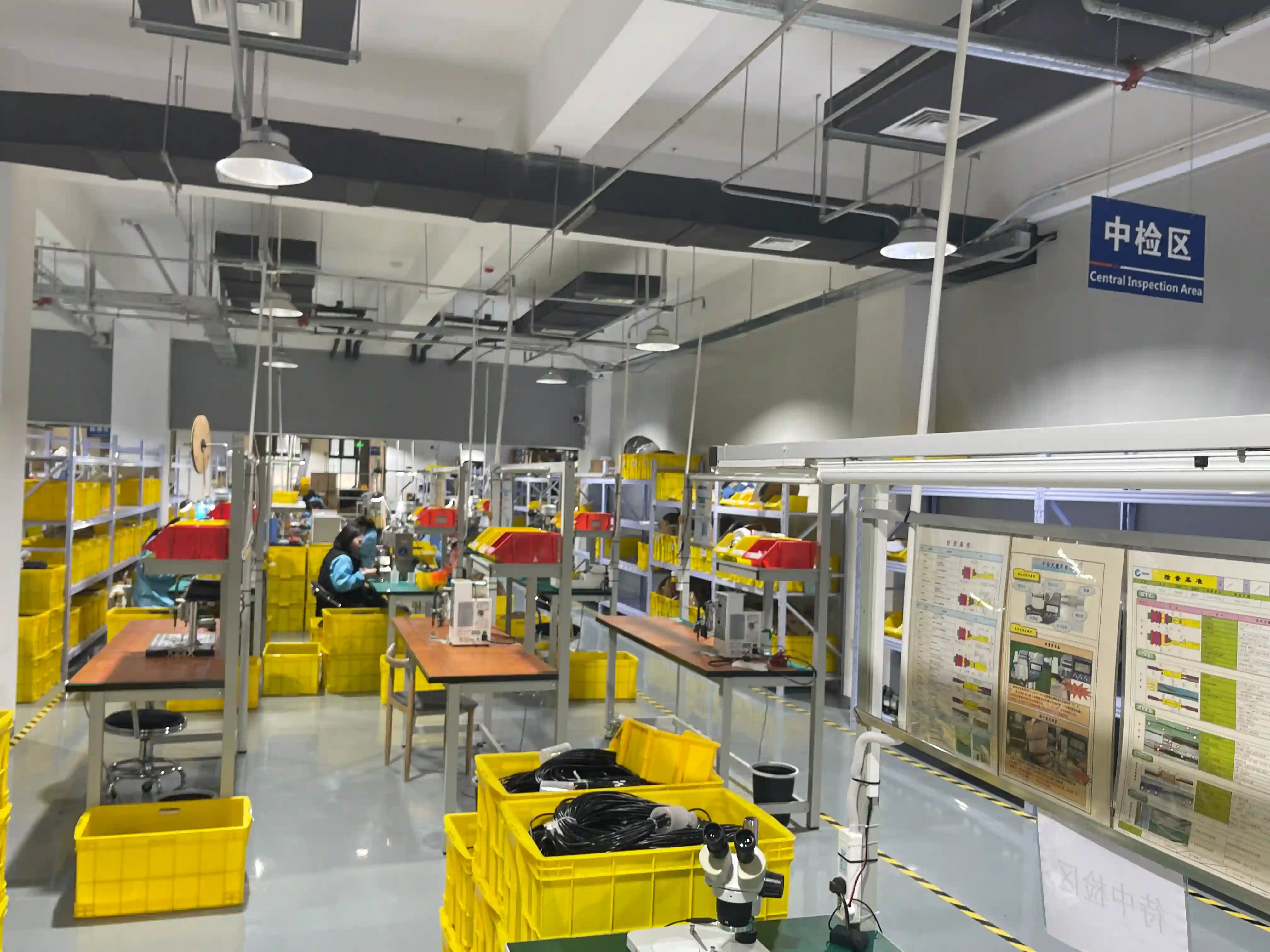
What Is Wire Harness Environmental Testing?
Environmental testing subjects wire harness samples to accelerated versions of real-world conditions—extreme temperatures, corrosive atmospheres, mechanical vibration, and humidity—to predict long-term reliability. The goal is to compress years of operational exposure into days or weeks of controlled laboratory testing.
Unlike production-level electrical testing (continuity, hipot) which verifies every unit, environmental testing is a qualification activity performed on representative samples. It answers the fundamental question: will this design survive its intended operating environment for its expected service life?
When Environmental Testing Is Required
Mandatory
- • Automotive OEM harnesses (USCAR, LV214)
- • Aerospace & defense (MIL-STD-810, DO-160)
- • Medical devices (IEC 60601 series)
- • Marine & offshore (IEC 60945)
- • Railway rolling stock (EN 61373)
Strongly Recommended
- • Outdoor industrial equipment
- • EV charging infrastructure
- • Renewable energy systems
- • Any harness exposed to temperature swings >40°C
- • Applications with vibration or mechanical shock
7 Essential Environmental Tests for Wire Harnesses
1. Temperature Cycling (Thermal Shock)
Temperature cycling exposes the harness to alternating extreme high and low temperatures, simulating daily or seasonal temperature swings. The rapid transitions stress solder joints, crimp connections, and insulation materials due to differential thermal expansion between metals and plastics.
| Parameter | Typical Range | Notes |
|---|---|---|
| Temperature range | −40°C to +125°C | Automotive under-hood typical |
| Ramp rate | 5–15°C/min | Faster = more stress on materials |
| Dwell time | 30–60 min per extreme | Allows full thermal equilibrium |
| Cycle count | 100–1,000 cycles | More cycles = longer service life simulation |
| Pass criteria | <10% change in contact resistance | No cracking, delamination, or discoloration |
Key insight: Thermal shock (transition in <10 seconds using a two-chamber system) is more aggressive than thermal cycling (gradual ramp). Automotive OEMs typically require thermal shock for under-hood components and thermal cycling for cabin components.
2. Salt Spray (Corrosion) Testing
Salt spray testing exposes the harness to a fine mist of 5% sodium chloride solution at 35°C, simulating years of exposure to road salt, coastal air, or industrial pollutants. It's the primary test for evaluating corrosion resistance of connectors, terminals, and exposed metal surfaces.
| Duration | Simulates | Typical Application |
|---|---|---|
| 48 hours | ~2 years mild exposure | Indoor equipment, occasional splash |
| 96 hours | ~5 years moderate exposure | Industrial outdoor, light coastal |
| 336 hours | ~10 years road salt exposure | Automotive underbody, marine |
| 500+ hours | ~15+ years severe exposure | Offshore, naval, heavy industrial |
Common mistake: Evaluating salt spray results by visual appearance alone. Contact resistance change is the real failure criterion—a connector can look clean but have invisible corrosion films that increase resistance by 500%.
3. Vibration Testing
Vibration testing subjects the harness to controlled mechanical oscillations that simulate engine vibration, road-induced forces, or machinery resonance. It reveals connector unseating, terminal fretting, wire fatigue at tight bend radii, and inadequate strain relief.
| Parameter | Random Vibration | Sinusoidal Vibration |
|---|---|---|
| Frequency range | 10–2,000 Hz | 10–500 Hz sweep |
| Acceleration | 3–30 Grms | 2–10 G peak |
| Duration | 8–24 hours per axis | 2–4 hours per axis |
| Axes tested | X, Y, Z (all three) | X, Y, Z (all three) |
| Best simulates | Real-world broadband vibration | Specific resonance frequencies |
Pass criteria: No intermittent opens or shorts during test (monitored via real-time continuity), contact resistance change <20%, no physical damage to connectors, splices, or insulation. Wire break at a sharp bend radius is the most common vibration failure mode.
4. Humidity & Moisture Resistance Testing
Humidity testing evaluates a harness's ability to withstand prolonged exposure to high moisture levels. The standard “85/85” test (85°C at 85% relative humidity) is the most widely used profile. It accelerates moisture ingress, corrosion, and insulation degradation. This test is distinct from IP rating validation, which tests water resistance under pressure.
85°C
Test temperature
85% RH
Relative humidity
1,000 hrs
Typical duration
Pass criteria: Insulation resistance >100 MΩ after test, no visible corrosion on terminal surfaces, no tracking paths on insulation, connector seals remain functional.
5. Thermal Aging (Long-Term Heat Exposure)
Thermal aging holds the harness at an elevated constant temperature for extended periods, typically 1,000–3,000 hours. Unlike temperature cycling, it doesn't involve rapid transitions. Instead, it accelerates the chemical degradation of insulation materials—plasticizer migration in PVC, oxidation in polyethylene, and embrittlement in lower-grade materials.
The test temperature is chosen based on the wire's rated temperature class. For a wire rated at 105°C, the aging test might run at 135°C to accelerate degradation (per Arrhenius equation, roughly doubling the degradation rate for every 10°C increase). Material selection is critical—see our comparison of PVC, TPE, and silicone and Kapton vs Teflon for high-temperature options.
Pass criteria: Insulation remains flexible (no cracking when wrapped around a mandrel 2× wire diameter), dielectric strength >75% of initial value, no color change indicating decomposition.
6. Chemical Resistance Testing
Chemical resistance tests expose the harness to fluids it may encounter during its service life. The specific chemicals depend on the application. Automotive harnesses are tested against engine oil, transmission fluid, brake fluid, coolant, gasoline, diesel, and windshield washer fluid. Industrial harnesses may face cutting oils, solvents, or cleaning agents.
| Industry | Chemicals Tested | Exposure Duration |
|---|---|---|
| Automotive | Engine oil, ATF, brake fluid, coolant, fuel | 24–168 hours immersion |
| Industrial | Hydraulic oil, cutting fluid, solvents | 24–72 hours immersion |
| Medical | IPA, hydrogen peroxide, bleach | Per IEC 60601 cleaning cycles |
| Marine | Saltwater, diesel, bilge water | 168–500 hours immersion |
Pass criteria: No swelling, cracking, or discoloration of insulation. Tensile strength reduction <15%. No degradation of connector sealing surfaces.
7. Mechanical Stress: Flex, Bend & Abrasion Testing
Mechanical stress tests evaluate the harness's ability to withstand physical handling and dynamic motion. Flex cycling is essential for robotic and automation applications where cables undergo millions of bend cycles. Cold bend tests verify insulation flexibility at low temperatures. Abrasion tests simulate wire-on-metal contact in routing channels.
Flex Cycling
Repeating bend at specified radius. Dynamic cables: 1M–10M+ cycles. Standard cables: 10K–50K cycles.
Cold Bend
Bend wire around mandrel at −40°C. Insulation must not crack or delaminate from conductor.
Abrasion
Steel blade drawn across insulation under load. Must withstand specified number of strokes before conductor exposure.
Running tests in isolation can miss failures caused by combined stresses. A connector that passes salt spray alone may fail when vibration micro-cracks the plating that protects against corrosion. Combined-environment testing reveals interactions that single-environment tests can miss.
Environmental Testing Standards: USCAR vs LV214 vs IEC 60068
Different industries and regions follow different testing standards. Knowing which standard applies determines your test profiles, durations, and pass/fail criteria. Here's how the major standards compare for wire harness applications.
| Standard | Region / Scope | Key Focus | Used By |
|---|---|---|---|
| USCAR (SAE/USCAR-2) | North America, Automotive | Connector performance validation | Ford, GM, Stellantis |
| LV214 / VW 80000 | Europe, Automotive | E/E component environmental testing | BMW, VW, Audi, Mercedes |
| IEC 60068 | International, General | Environmental testing procedures | Industrial, consumer electronics |
| ISO 16750 | International, Automotive | Road vehicle environmental conditions | Global automotive OEMs |
| MIL-STD-810 | US, Military / Defense | Environmental engineering for military hardware | DoD, defense contractors |
| DO-160 | International, Aerospace | Airborne equipment environmental test | Aerospace OEMs, MROs |
Which Tests Does Your Application Need?
Not every application requires every test. The table below maps common application environments to the tests typically required. Use this as a starting point—your specific OEM or certification body may impose additional requirements.
| Application | Temp Cycle | Salt Spray | Vibration | Humidity | Thermal Age | Chemical | Flex/Bend |
|---|---|---|---|---|---|---|---|
| Auto — Under-Hood | Required | Required | Required | Required | Required | Required | Recommended |
| Auto — Cabin | Required | Recommended | Required | Required | Recommended | Optional | Optional |
| Aerospace | Required | Required | Required | Required | Required | Required | Required |
| Marine / Offshore | Required | Required | Required | Required | Recommended | Required | Recommended |
| Medical Device | Required | Optional | Recommended | Required | Required | Required | Recommended |
| Industrial Controls | Required | Recommended | Required | Required | Recommended | Recommended | Optional |
| EV / High Voltage | Required | Required | Required | Required | Required | Required | Required |
DV vs PV Testing: Design Validation vs Production Validation
Environmental testing happens at two distinct stages in the product lifecycle. Understanding the difference prevents over-testing (wasting budget) or under-testing (shipping an unvalidated design).
| Aspect | DV (Design Validation) | PV (Production Validation) |
|---|---|---|
| Purpose | Proves the design can meet requirements | Proves production tooling replicates DV results |
| Sample source | Prototype or pre-production samples | Production-line units (from final tooling) |
| Typical sample size | 3–5 units per test | 10–30 units per test |
| Test severity | Full specification + margin | Full specification (no added margin) |
| When it happens | Before production tooling investment | After production setup, before mass production |
| Typical timeline | 4–8 weeks | 2–4 weeks |
How to Prepare Your Wire Harness for Environmental Testing
Before sending samples to a test lab, review this checklist to maximize first-pass success. Failing environmental testing due to a preventable design oversight wastes 4–8 weeks of schedule and thousands in retesting costs.
Select materials rated for your target environment
If your operating range includes − 40°C, verify that every material—insulation, connector housings, seals, and adhesives—is rated to that temperature. A single PVC component in a −40°C application will crack and fail the entire harness.
Specify connectors with appropriate plating
Gold plating (≥0.76μm) provides the best corrosion resistance for signal contacts. Tin plating is acceptable for power contacts in less aggressive environments. Nickel underplate prevents base metal diffusion.
Ensure adequate strain relief at all transition points
Vibration failures nearly always occur where wire transitions from flexible cable to rigid connector. Use proper strain relief boots, cable ties at specified intervals, and minimum bend radius compliance.
Seal all connector interfaces for moisture protection
For humidity and salt spray testing, connectors must have proper interfacial seals, wire seals on every cavity, and cavity plugs on empty positions. A single missing seal voids the entire IP rating.
Document everything with your DFM checklist
Record material lot numbers, crimp dimensions (height/width), pull test values, and visual inspection results before testing. Post-test analysis requires a clear baseline. Use our wire harness DFM checklist as a starting point.
What Happens When You Skip Environmental Testing
The cost of skipping environmental testing is always higher than the cost of performing it. Here are real-world scenarios that illustrate the consequences.
Automotive Under-Hood Corrosion
An engine harness connector with inadequate sealing passed bench testing but developed corrosion-induced high resistance after 18 months of road salt exposure. The resulting engine misfire affected 45,000 vehicles, requiring a field service campaign costing $12.3M.
A 480-hour salt spray test would have caught the sealing deficiency for ~$3,000 in testing costs.
Industrial Robot Vibration Failure
A robot arm harness experienced intermittent communication dropouts after 6 months. Root cause: wire fatigue at an under-spec bend radius, exacerbated by continuous vibration. The downtime cost each affected manufacturer $15,000–$25,000 per incident in lost production.
24 hours of random vibration testing would have identified the bend radius failure for ~$2,500.
Cost Comparison: Testing vs Field Failure
$2K–$15K
Full environmental test program
$50K–$500K
Single product recall or field campaign
$1M+
Major automotive recall (per OEM data)
Test scope should be based on acceptable field-failure risk rather than arbitrary cost reduction. A strong approach is to run the full qualification program on the initial design, then use the resulting data to justify any reduced testing on later revisions.
Frequently Asked Questions
How much does wire harness environmental testing cost?
Individual tests range from $500–$3,000 per test depending on duration and complexity. A comprehensive qualification program covering temperature cycling, salt spray, vibration, and humidity typically costs $5,000–$15,000 for a standard wire harness. Complex automotive or aerospace programs with combined environment testing may reach $25,000–$50,000. These costs are a fraction of a single field failure or recall event.
How long does environmental testing take?
Individual tests range from 48 hours (basic salt spray) to 3,000 hours (extended thermal aging). A typical automotive qualification program runs 6–8 weeks when tests are sequenced. Running tests in parallel on separate samples can compress the timeline to 4–5 weeks. Factor this into your project schedule—environmental testing is often the longest lead-time item in the qualification process.
Can I do environmental testing in-house?
Some tests (basic temperature cycling, flex testing) can be performed in-house with commercially available chambers starting at $10,000–$30,000. However, salt spray cabinets, vibration tables with full spectral control, and combined environment systems require $100,000+ in equipment plus calibration and operator training. Most companies use accredited third-party labs (A2LA, NVLAP, or ISO 17025 certified) for qualification testing and reserve in-house equipment for screening and lot acceptance tests.
What is the difference between thermal cycling and thermal shock?
Thermal cycling uses a single chamber with controlled temperature ramps (typically 5–15°C per minute). Thermal shock uses a two-chamber system where samples are physically transferred between hot and cold chambers, achieving transitions in under 10 seconds. Thermal shock is more aggressive and reveals failures faster, but it's also more expensive to run. Automotive OEMs typically require thermal shock for engine compartment components and standard thermal cycling for cabin-mounted harnesses.
Do I need salt spray testing for indoor applications?
Generally no, unless the indoor environment has elevated humidity, chemical exposure, or the product will be stored or shipped through salt-belt regions. Industrial equipment in food processing, chemical plants, or coastal facilities may need salt spray testing even though the harness is technically “indoors.” Evaluate the full lifecycle exposure—including transportation, storage, and maintenance conditions—not just the installed operating environment.
What happens if my harness fails environmental testing?
First, perform root cause analysis: identify the failure mode (which component failed, where, and how). Common fixes include upgrading connector plating, changing insulation materials, adding strain relief, or improving sealing. After design changes, retest only the failed tests—you don't need to repeat tests that already passed unless the design change could affect those results. Consult the DFM checklist to prevent common design-related test failures.
References & Standards
[1] IPC/WHMA-A-620 Requirements and Acceptance of Cable and Wire Harness Assemblies — Industry standard for wire harness quality, testing, and inspection requirements.
[2] IEC 60068 — Environmental Testing Standards — International standard series defining environmental test procedures for electronic and electrotechnical products.
[3] SAE/USCAR-2 Performance Specification for Automotive Electrical Connector Systems — North American automotive connector testing standard used by Ford, GM, and Stellantis.
[4] MIL-STD-810 — Environmental Engineering Considerations — U.S. military standard for environmental testing of defense equipment.
Related Articles
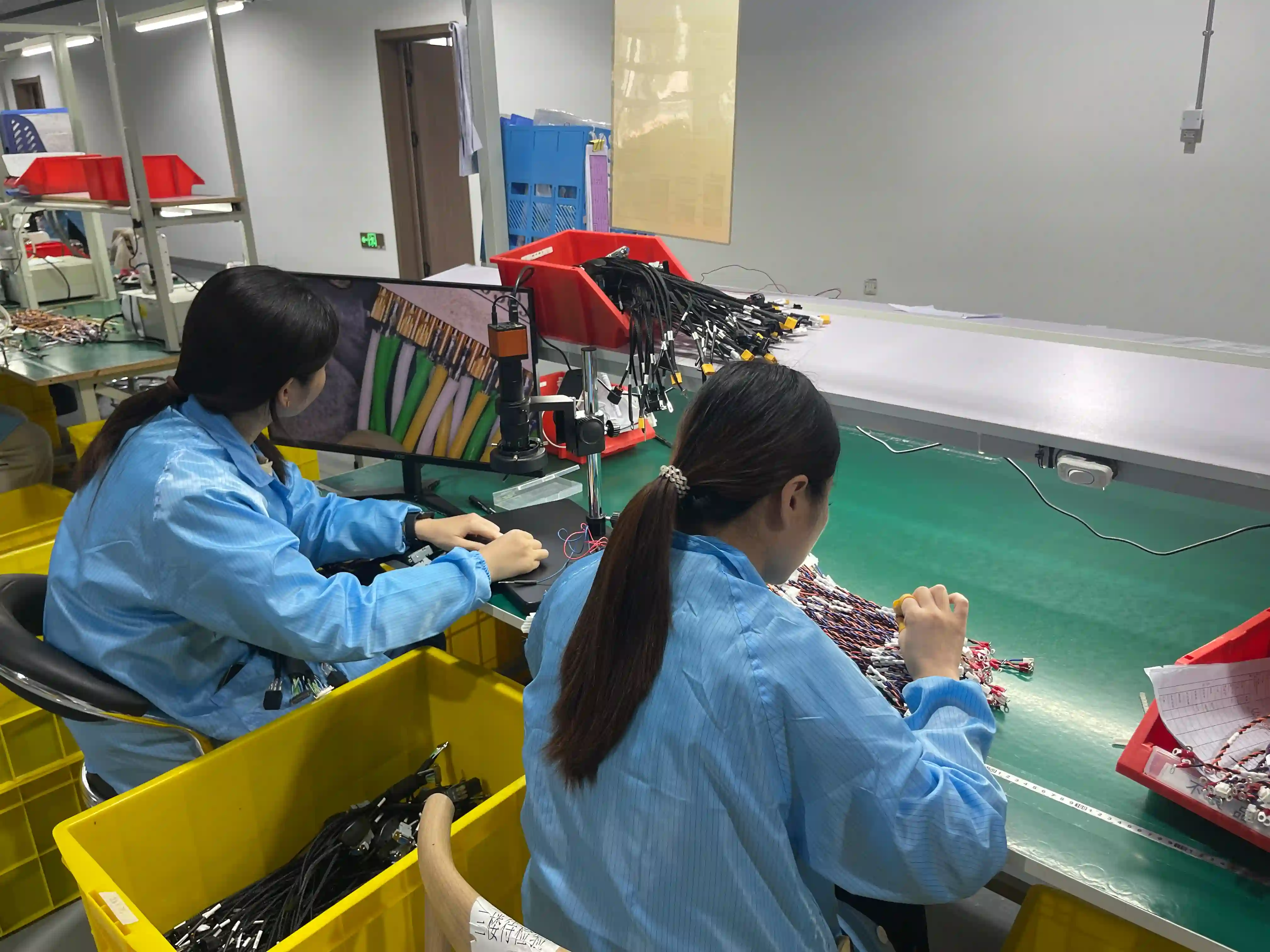
Wire Harness Testing Methods: Continuity, Hipot & More
Essential electrical and mechanical testing methods for wire harness quality assurance.
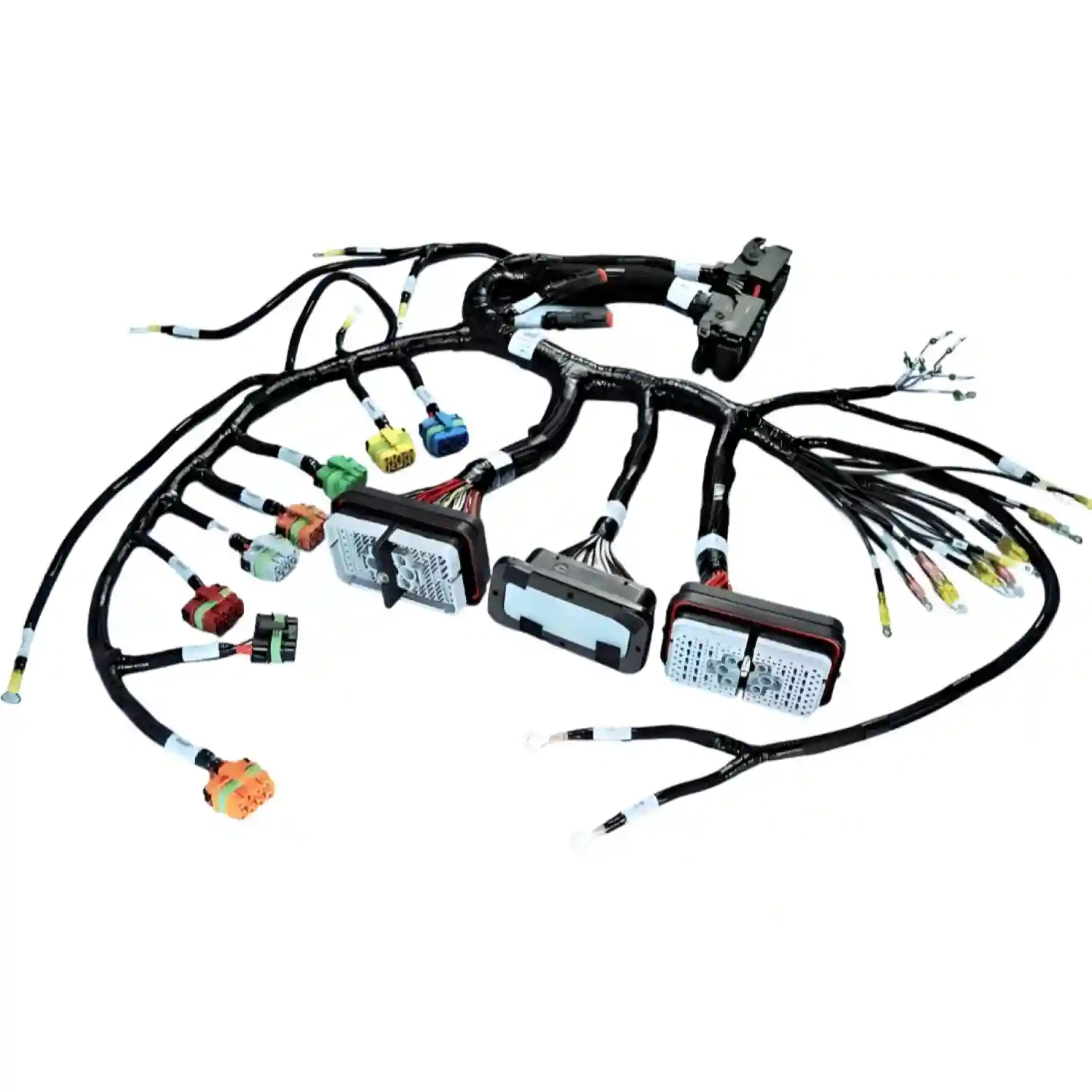
IP67 vs IP68 vs IP69K: Waterproof Rating Comparison
Understand ingress protection ratings for cable assemblies in harsh environments.
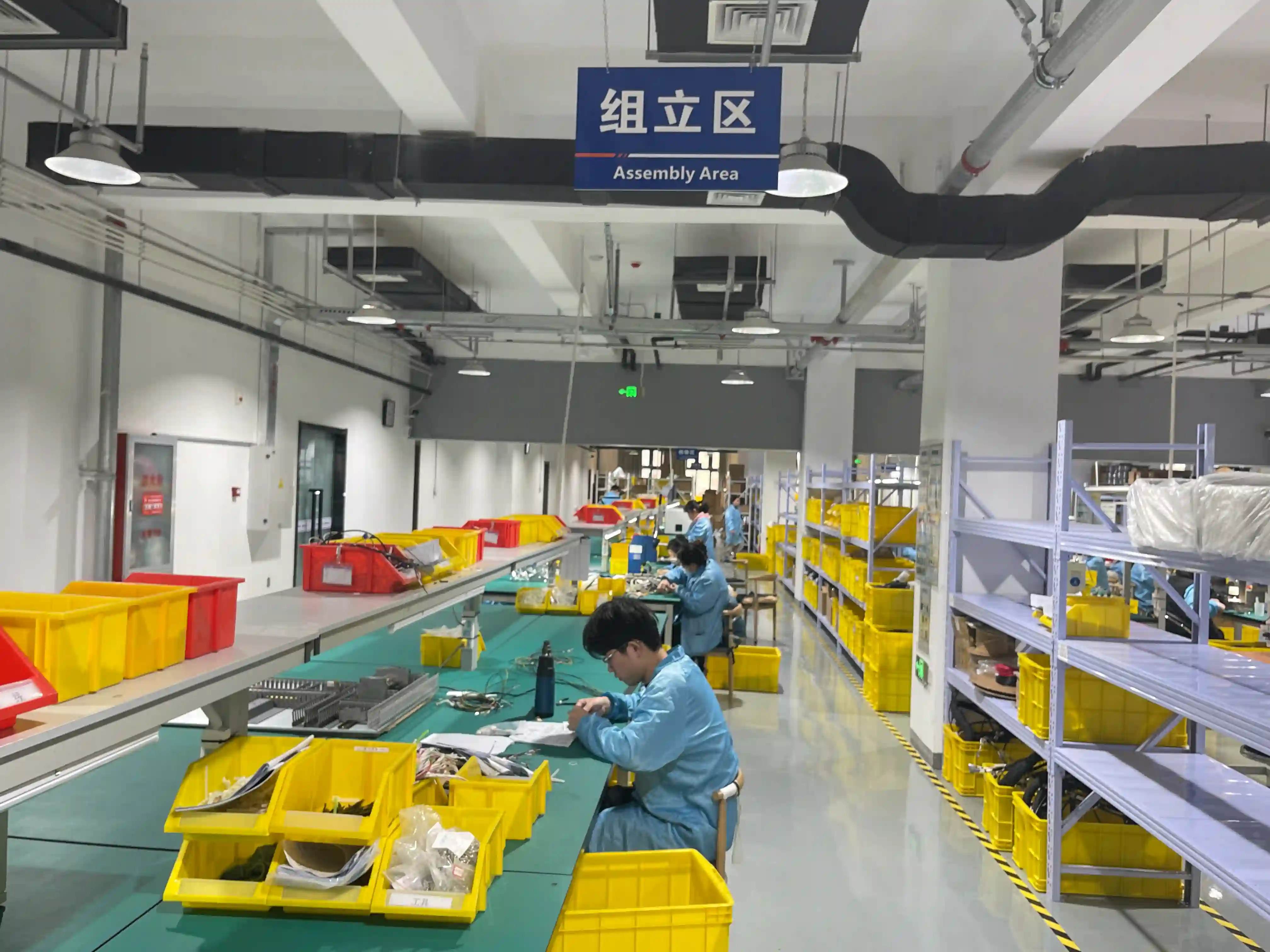
Wire Harness DFM Checklist: 15 Design-for-Manufacturability Rules
Proven DFM rules to reduce production costs and eliminate rework.
About the Author
OurPCB Engineering Team supports wire harness design, environmental qualification, and reliability engineering for automotive, aerospace, and industrial applications.