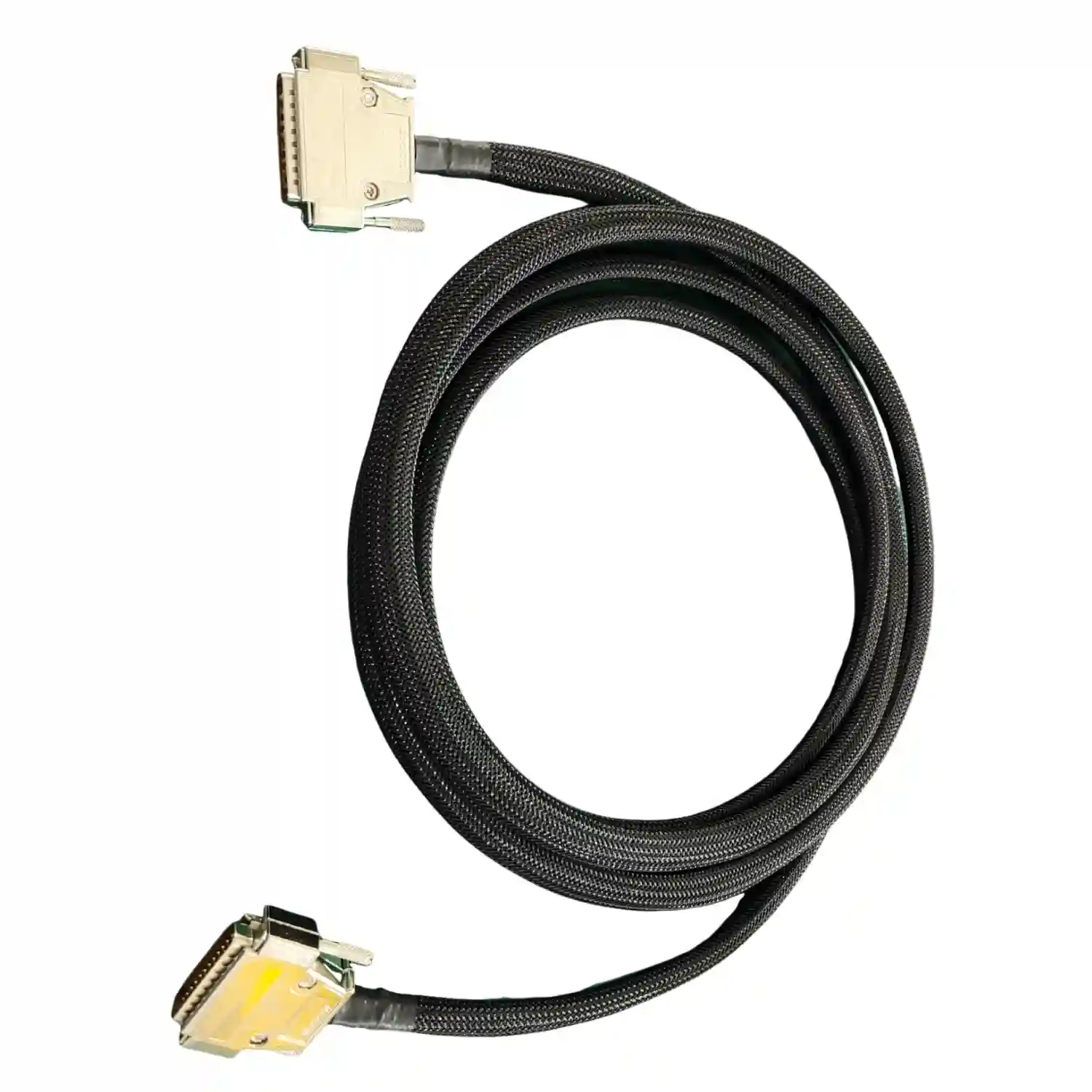
The marine environment is arguably the most destructive operating condition for any electrical system. Salt spray corrodes bare copper in weeks. UV radiation degrades standard PVC insulation within a single boating season. Constant vibration from engines and wave impact loosens connections that would survive decades on land. And moisture finds every microscopic gap in a connector seal, turning a $50 wiring mistake into a $50,000 engine failure.
The global marine wiring harness market continues to grow as boats become more electronically sophisticated—from NMEA 2000 navigation networks to lithium battery management systems and electric propulsion. Whether you're wiring a 20-foot center console or an offshore supply vessel, the fundamentals of marine harness design remain the same: protect every conductor from salt, seal every connection from water, and build in enough durability to outlast the vessel itself.
This guide covers everything you need to specify, design, and source marine-grade wire harnesses and waterproof cable assemblies—from ABYC compliance and material selection to waterproofing strategies and how to evaluate a marine wire harness manufacturer.
$2.8B
Marine Wiring Market
IP68/IP69K
Protection Rating
1000+
Hours Salt Spray Resistance
20+
Years Expected Lifespan
Marine service combines salt, UV, vibration, and moisture, and a failure at sea can be life-threatening. Every design decision in a marine harness should account for the worst-case scenario: full salt spray at 35°C, continuous UV exposure, and constant mechanical stress from wave action.
Marine Environment Challenges for Wire Harnesses
Before specifying any marine harness, you need to understand exactly what your wiring will face. The marine environment presents six distinct threats that compound each other—a phenomenon that makes marine wiring far more demanding than any single environmental factor in isolation.
Salt Spray Corrosion
Airborne salt particles create a conductive electrolyte film on every exposed surface. Bare copper develops green verdigris within weeks. Galvanic corrosion accelerates wherever dissimilar metals meet. ASTM B117 salt spray testing (1,000+ hours) is the standard benchmark for marine-grade components.
UV Degradation
Standard PVC and polyethylene insulation becomes brittle and cracks under constant UV exposure. Marine-grade jackets require UV stabilizers (carbon black or HALS additives) to maintain flexibility. Expect 2,000+ hours of accelerated UV testing per ASTM G154 for deck-level wiring.
Constant Vibration
Engine vibration, wave slamming, and hull flexing create fatigue stress on every wire and connection point. Solid-core wire work-hardens and fractures. Crimp connections loosen. Solder joints crack. Marine harnesses demand stranded conductors, strain relief at every termination, and vibration-resistant mounting.
Moisture Ingress
Beyond direct water exposure, humidity levels in bilges and engine compartments frequently exceed 95% RH. Moisture wicks along cable jackets through capillary action, bypassing connector seals. Heat shrink with adhesive lining and IP68-rated connectors are essential at every junction.
Temperature Cycling
Engine compartments reach 80°C+ while deck-level wiring endures sub-zero conditions in northern waters. Thermal expansion and contraction stress solder joints, connector housings, and insulation adhesion. Materials must maintain properties across -40°C to +105°C for engine room harnesses.
EMI & Stray Current
Marine electronics operate in close proximity to high-current motors, alternators, and radio transmitters. Stray currents through the hull accelerate galvanic corrosion of through-hull fittings. Proper shielding and grounding per ABYC E-11 standards prevent both signal degradation and corrosion damage.
ABYC Standards & Compliance for Marine Wire Harnesses
The American Boat and Yacht Council (ABYC) publishes the most widely referenced voluntary standards for marine electrical systems in North America. While not legally mandatory for all vessels, ABYC compliance is required by most marine insurance carriers and is considered the industry benchmark for safe marine wiring practices. The U.S. Coast Guard also references ABYC standards in its regulations for inspected commercial vessels.
Key Standards Overview
| Standard | Scope | Key Requirements | Applies To |
|---|---|---|---|
| ABYC E-11 | AC & DC Electrical Systems | Wire sizing, overcurrent protection, connections, grounding, color coding | All boats with electrical systems |
| ABYC E-13 | Lithium Battery Systems | BMS wiring, disconnect requirements, thermal runaway protection | Boats with lithium batteries |
| ABYC TE-4 | Lightning Protection | Grounding conductors, bonding system, protection zone | All boats (recommended) |
| USCG 33 CFR | Federal Regulations | Navigation lights, ignition protection, bilge ventilation wiring | All US-registered vessels |
| NMEA 2000 | Marine Network Protocol | CAN bus backbone, drop cables, connector specs, termination | Networked marine electronics |
| CE / RCDs (EU) | European Recreational Craft | ISO 13297 electrical systems, ISO 10133 DC systems | Boats sold in EU/UK markets |
ABYC E-11 Wire Color Coding
ABYC E-11 specifies a mandatory color coding system for marine DC wiring to prevent dangerous cross-connections. This is non-negotiable for any marine wire harness manufacturer:
- Green or Green/Yellow Stripe — DC grounding (bonding)
- Yellow/Red Stripe — Starting circuit
- Brown/Yellow Stripe or Yellow — Bilge blower
- Dark Gray — Navigation lights, tachometer
- Brown — Generator armature, alternator charge
- Orange — Accessory feed, common feed
- Purple — Ignition, instrument feed
- Red — DC positive (main power)
- Black or Yellow — DC negative (return)
For AC wiring, ABYC mandates standard NEC-style color coding: black (hot), white (neutral), and green (ground). Our wire harness manufacturing process includes 100% color verification at the wire preparation stage to ensure ABYC compliance before assembly begins.
Material Selection for Marine Wire Harnesses
Material choices make or break a marine harness. The difference between a harness that lasts 2 years and one that lasts 20 years comes down to specifying the right conductor, insulation, jacketing, and connectors from the start. Here is what works—and what does not—in saltwater environments.
Tinned Copper vs. Bare Copper Conductors
This is the single most important material decision in marine harness design. Tinned copper wire costs approximately 15-25% more than bare copper, but the corrosion protection it provides is not optional for saltwater applications. Copper remains the preferred conductor for marine use—aluminum is rarely used due to galvanic corrosion concerns in saltwater.
| Property | Tinned Copper | Bare Copper |
|---|---|---|
| Corrosion Resistance | Excellent — tin layer prevents oxidation | Poor — oxidizes rapidly in salt air |
| Salt Spray Endurance | 1,000+ hours per ASTM B117 | Under 200 hours before degradation |
| Solderability | Excellent — tin promotes solder flow | Good when new, degrades as oxide layer forms |
| Conductivity | ~98% of bare copper (negligible difference) | 100% IACS reference standard |
| Cost Premium | 15-25% higher | Baseline |
| Marine Suitability | Required for all saltwater applications | Not recommended — freshwater only |
Marine-Grade Insulation Materials
The insulation and jacket materials protect conductors from moisture, UV, abrasion, and chemical exposure. Standard PVC insulation fails in marine environments within 2-3 years. Here are the materials proven for marine service:
| Material | Temp Range | UV Resistance | Oil/Fuel Resistance | Best Application |
|---|---|---|---|---|
| Cross-Linked PE (XLPE) | -40°C to +125°C | Excellent | Good | Boat wire standard (UL 1426) |
| TPE (Thermoplastic Elastomer) | -50°C to +105°C | Excellent | Excellent | Engine room, fuel system wiring |
| Silicone Rubber | -60°C to +200°C | Excellent | Moderate | Exhaust proximity, high-temp zones |
| Tinned Copper Braid + XLPE | -40°C to +105°C | Excellent | Good | EMI-sensitive marine electronics |
| Standard PVC | -20°C to +80°C | Poor | Poor | NOT suitable for marine use |
Corrosion-Resistant Connectors
Connector selection is equally critical. Marine connectors must resist salt spray corrosion, maintain seal integrity under vibration, and provide reliable electrical contact over thousands of mating cycles in wet conditions.
- Deutsch DT/DTM Series — Environmentally sealed, vibration-resistant, IP67/IP68 rated. The workhorse of marine wiring. Gold-plated contacts available for signal circuits.
- Amphenol Harsh Environment — Stainless steel shells, IP68/IP69K ratings, ideal for deck-mounted and underwater applications.
- TE Connectivity Deutsch HD/HDP Series — High-density configurations for engine harnesses and helm panels with full environmental sealing.
- Molex MX150 Marine — Sealed, corrosion-resistant housings designed specifically for marine engine management systems.
- NMEA 2000 Certified Connectors — Micro-C (M12 5-pin) connectors meeting the NMEA 2000 backbone and drop cable specifications.
For any connector used in marine applications, specify gold or tin-plated contacts (never bare copper or silver), and ensure the housing material is rated for UV and salt spray exposure. Our connector selection guide covers additional options suitable for marine environments.
Waterproofing & Sealing Strategies
A marine wire harness is only as reliable as its weakest seal. Even a single point of moisture ingress can propagate corrosion along the entire harness through capillary action. Here is a systematic approach to achieving reliable IP68 protection in marine applications.
IP Ratings for Marine Applications
The IP (Ingress Protection) rating system quantifies how well a connector or enclosure resists dust and water. For marine applications, the minimum acceptable ratings are:
- IP65 — Helm console interiors, covered instrument panels (water jet protection, no immersion)
- IP67 — Above-deck wiring, navigation light connections (temporary immersion to 1m for 30 minutes)
- IP68 — Bilge area, through-hull penetrations, engine room (continuous immersion beyond 1m, manufacturer-specified depth)
- IP69K — Commercial vessel deck wash areas, offshore platforms (high-pressure, high-temperature washdown at 80°C / 100 bar)
Sealing Methods for Marine Harnesses
1. Adhesive-Lined Heat Shrink Tubing
Dual-wall heat shrink with a hot-melt adhesive lining is the primary sealing method for wire-to-connector junctions, splices, and branch points. When heated, the outer wall shrinks while the inner adhesive melts and flows to fill gaps. This provides both mechanical strain relief and an IP68-rated moisture barrier.
2. Cable Glands & Bulkhead Fittings
Where harnesses pass through bulkheads, transoms, or equipment enclosures, marine-grade cable glands with neoprene or EPDM sealing inserts maintain the watertight integrity of the penetration. Specify 316 stainless steel or nickel-plated brass glands for saltwater applications—standard zinc-plated glands will corrode within months.
3. Overmolded Connectors
For production marine harnesses, overmolded cable assemblies provide the most reliable and repeatable sealing. The thermoplastic overmold (typically TPE or TPU) bonds directly to the cable jacket and connector housing, eliminating any potential moisture path. This is the preferred method for OEM marine engine harnesses and NMEA 2000 backbone cables.
4. Potting Compounds
For junction boxes, sensor terminations, and underwater connections, potting with marine-grade epoxy or silicone encapsulant provides the highest level of protection. Two-part polyurethane potting compounds rated for saltwater immersion are standard for subsea applications rated to 300+ meters depth.
5. Design Best Practices
- Drip loops — Route cables with a downward loop before entering any connector or enclosure so water runs off rather than wicking in
- Vertical orientation — Mount connectors facing downward whenever possible to prevent water pooling in the mating face
- Redundant sealing — Use both connector-level sealing and cable-level sealing for critical circuits (engine management, navigation, safety)
- Service access — Design harness routing for inspection and replacement without requiring hull modification
The core engineering principles for recreational and commercial marine harnesses are identical—tinned copper, sealed connections, UV-stable jackets—but the scale and redundancy requirements differ dramatically. Each marine harness should be tested to the standard and risk level its application demands.
Marine Wire Harness Applications
Marine wire harnesses serve a diverse range of applications, each with unique environmental and performance requirements. Here are the six primary marine sectors we design and manufacture harnesses for.
Recreational Boats
Engine management, navigation lighting, instrument panels, bilge pump circuits, stereo systems, and live well pumps. ABYC E-11 compliance required for insurance and resale value.
- UL 1426 marine wire
- Deutsch DT connectors
- IP67 minimum rating
Commercial Vessels
Main engine harnesses, generator controls, HVAC systems, fire suppression wiring, and communication backbone. Redundant circuits required for safety-critical systems per SOLAS regulations.
- USCG approved materials
- IP68 sealed connections
- Flame-retardant jackets
Offshore Platforms
Drilling equipment control, safety shutdown systems, hazardous area (ATEX/IECEx Zone 1/2) wiring, subsea umbilicals, and platform communication networks.
- ATEX/IECEx certification
- IP69K deck equipment
- 316 stainless connectors
Naval & Military
MIL-SPEC harnesses for combat systems, radar and sonar cabling, degaussing systems, and nuclear/biological/chemical (NBC) hardened compartment wiring. MIL-DTL-24643 and MIL-C-24640 specifications.
- MIL-SPEC qualified
- EMI/RFI shielded
- Low smoke zero halogen
Marine Electronics
NMEA 2000 network harnesses, chartplotter interconnects, radar pedestal cables, fish finder transducer wiring, AIS antenna cables, and satellite communication system harnesses.
- NMEA 2000 certified
- Shielded signal cables
- Gold-plated contacts
Underwater ROVs
Tether cables, thruster motor harnesses, camera and lighting power/data cables, manipulator arm wiring, and depth sensor connections. Rated for continuous submersion to 300+ meters.
- Pressure-rated to depth
- Polyurethane potted
- Neutral buoyancy option
How to Select a Marine Wire Harness Manufacturer
Not every wire harness manufacturer has the materials, testing equipment, or engineering expertise for marine applications. A manufacturer that excels at automotive or industrial harnesses may produce marine harnesses that fail within the first season because they do not understand the unique demands of saltwater environments. Here is what to look for when evaluating a marine wire harness supplier.
Marine Manufacturer Evaluation Checklist
Additional factors to evaluate include the manufacturer's experience with your specific vessel type, their quality management system (ISO 9001 minimum, IPC/WHMA-A-620 preferred), lead times for marine-specific materials like tinned copper and XLPE wire, and their willingness to support iterative design changes during sea trials. A strong marine harness supplier functions as an engineering partner, not just a build-to-print vendor.
Marine harness sourcing should prioritize lifecycle reliability rather than the lowest unit price. Tinned copper, adhesive-lined heat shrink, properly sealed connectors, and sound workmanship reduce warranty and vessel-downtime risk in a corrosive environment.
Frequently Asked Questions
Why is tinned copper required instead of bare copper for marine wire harnesses?
Bare copper oxidizes rapidly in salt air, forming copper oxide and copper chloride compounds that increase resistance and weaken terminations. Tinned copper has a protective tin layer that prevents direct salt-copper contact, maintaining conductivity and crimp integrity for 20+ years in marine environments. ABYC E-11 strongly recommends tinned conductors for all boats, and most marine insurance carriers require it. The 15-25% cost premium over bare copper is negligible compared to the cost of rewiring a corroded harness.
What ABYC requirements apply to marine wire harness design?
ABYC E-11 is the primary standard, covering wire sizing (based on current capacity and voltage drop), overcurrent protection (fuses or breakers within 7 inches of the power source), color coding, connection methods (crimped connections preferred over solder per E-11), and grounding/bonding requirements. ABYC E-13 adds requirements for lithium battery system wiring, including disconnect switches and BMS communication harnesses. All wire must be stranded (never solid) and rated to UL 1426 (boat cable) or equivalent.
What are typical lead times for custom marine wire harnesses?
Prototype quantities (1-10 units) typically require 2-3 weeks including engineering review, material procurement, and assembly. Production quantities (50+ units) generally ship in 3-5 weeks after prototype approval. Lead times can extend to 6-8 weeks if specialized marine connectors (Deutsch, Amphenol) or custom overmolding tooling is required. We recommend starting the design process at least 8 weeks before sea trial dates to allow for iteration. Contact our team for current lead time estimates on your specific requirements.
How many hours of salt spray testing should a marine harness pass?
The industry benchmark is 1,000 hours per ASTM B117 (neutral salt fog at 35°C, 5% NaCl concentration). This correlates roughly to 10-15 years of coastal marine exposure. For offshore platforms and commercial vessels, 2,000-3,000 hours may be specified. Military specifications (MIL-STD-810) require additional cyclic salt fog testing that alternates between salt spray and drying phases, which more closely simulates real-world marine conditions. We perform salt spray testing on connector samples from each production lot for quality verification.
Can marine wire harnesses be made in custom lengths and configurations?
Absolutely. Every vessel has a unique layout, and marine harnesses are almost always custom-designed. We build harnesses from single-circuit battery cables (2 AWG to 4/0 AWG) up to complete engine room harnesses with 100+ circuits. Custom features include specific branch lengths, labeled circuit identification, pre-installed grommets for bulkhead penetrations, and vessel-specific connector configurations. Our process starts with your wiring diagram or, if you do not have one, our engineering team can create a harness design from your equipment specifications. Submit your requirements for a custom quote.
How much more do marine wire harnesses cost compared to standard automotive harnesses?
Marine wire harnesses typically cost 30-60% more than equivalent automotive harnesses due to three primary factors: (1) tinned copper conductors instead of bare copper (15-25% premium), (2) marine-grade insulation (XLPE/TPE instead of standard PVC), and (3) higher-specification connectors with enhanced sealing. The increased material cost is partially offset by lower volume surcharges since marine harnesses are typically produced in smaller quantities. For a typical 50-circuit engine harness, expect $150-400 for marine-grade versus $100-250 for automotive-grade construction. The cost difference eliminates itself when you factor in the expense of a single corrosion-related failure at sea.
Related Articles
About OurPCB Engineering Team
OurPCB Engineering Team supports wire harness and cable assembly manufacturing for recreational boats, commercial fishing vessels, offshore platforms, and naval applications. The team specializes in marine-grade harness solutions built for long-term saltwater reliability.