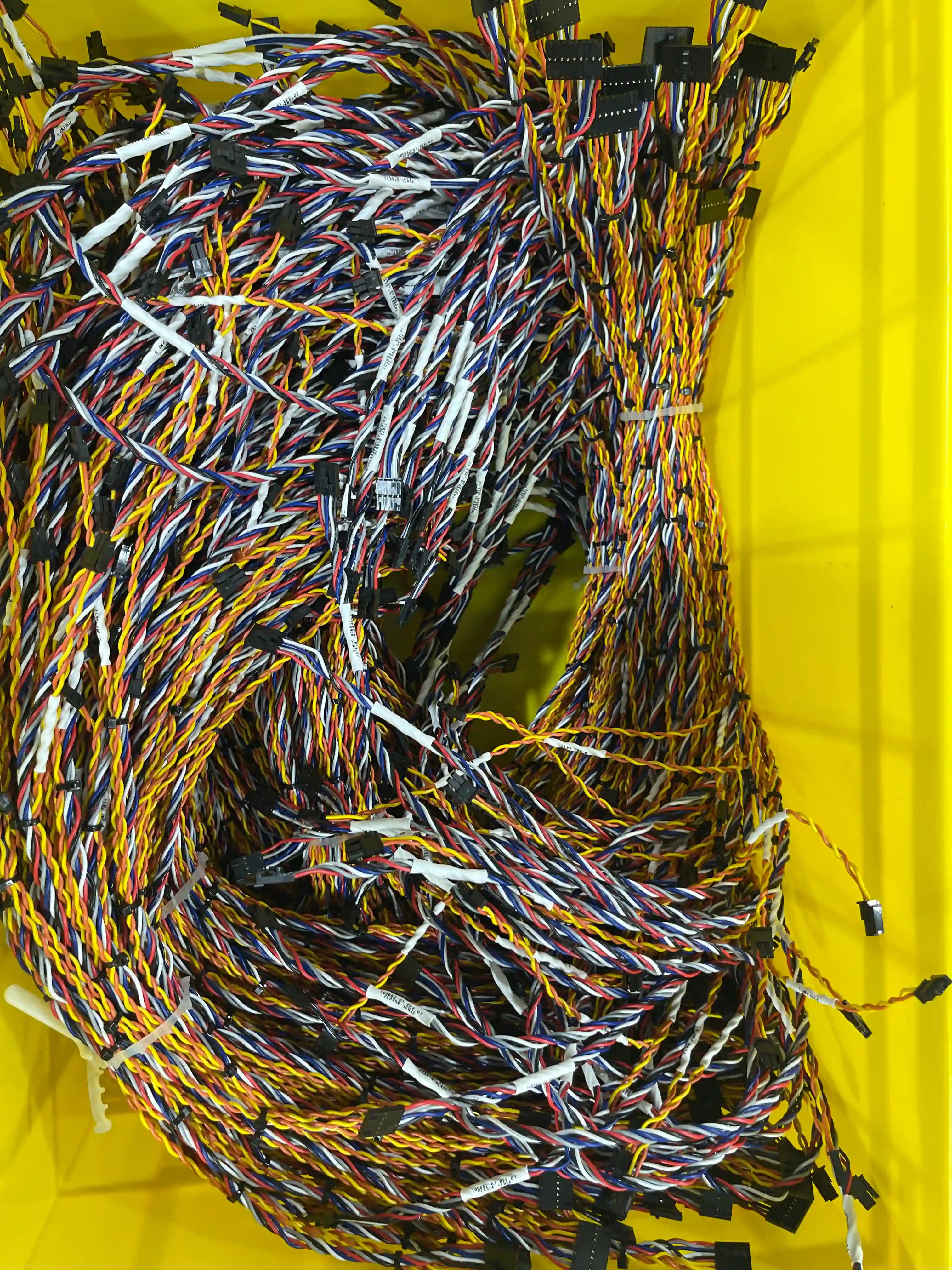
A single misidentified wire can cause a short circuit, destroy an ECU, or create a safety hazard that costs thousands in recalls. Wire color coding is the first line of defense against wiring errors — yet there is no single global standard. Different regions, industries, and OEMs use different color schemes, creating a minefield for engineers working on international projects.
This guide covers every major wire color coding standard: IEC 60445 (international), SAE J1128 (automotive), NEC (North America), JIS (Japan), and GB/T (China). You'll learn how to read stripe combinations, avoid regional color conflicts, and implement a color management system that prevents errors across your supply chain.
Why Color Coding Matters: By the Numbers
Of field wiring errors traced to color misidentification
Unique wire IDs possible with base colors + stripe combinations
Standard base colors used in most international wire coding systems
Major regional standards that conflict with each other on color meanings
"The most dangerous assumption in wire harness manufacturing is that color meanings are universal. A black wire is ground in automotive but live/hot in US residential wiring. We've seen entire batches rejected because an engineer designed against the wrong regional standard. Always verify the applicable standard before you specify a single wire color."
OurPCB Engineering Team
IEC 60445: The International Standard
IEC 60445 (formerly IEC 60446) is the most widely adopted wire color standard globally. Published by the International Electrotechnical Commission, it defines color identification for conductors in AC and DC power systems. Most European, Asian, and South American countries base their national codes on this standard.
AC Power Wiring (IEC 60445)
| Function | Color | Abbreviation | Notes |
|---|---|---|---|
| Protective Earth (PE) | Green/Yellow | GNYE | Mandatory worldwide — never use for any other purpose |
| Neutral (N) | Blue | BU | Light blue preferred; reserved for neutral only |
| Line 1 (L1) | Brown | BN | Single-phase and three-phase systems |
| Line 2 (L2) | Black | BK | Three-phase systems |
| Line 3 (L3) | Grey | GY | Three-phase systems |
Critical Rule: Green/Yellow Is Sacred
The green/yellow combination is reserved exclusively for protective earth (PE) conductors under IEC 60445. Using it for any other purpose violates international safety codes and can result in electrocution hazards. Neither green nor yellow alone should be used where confusion with PE is possible.
NEC: North American Standard (US & Canada)
The US National Electrical Code (NEC/NFPA 70) and Canadian Electrical Code (CEC) define wire colors differently from IEC. The key conflict: black is live (hot) in North America but neutral-adjacent in IEC systems. This single difference causes the most cross-border wiring errors.
| Function | 120V Single Phase | 208/240V Three Phase |
|---|---|---|
| Ground | Green or bare copper | Green or bare copper |
| Neutral | White or grey | White or grey |
| Line 1 (Hot) | Black | Black |
| Line 2 | Red (240V split-phase) | Red |
| Line 3 | — | Blue |
Note that NEC uses blue as a hot line conductor in three-phase systems — directly conflicting with IEC, where blue is strictly neutral. This is the single most common source of international wiring confusion.
Regional Color Code Comparison: Where Standards Collide
The table below shows how the same wire color means completely different things depending on which standard you follow. This is why cross-referencing the applicable standard is critical for any wire harness design project.
| Wire Color | IEC 60445 (EU/International) | NEC (US/Canada) | JIS (Japan) | GB/T (China) |
|---|---|---|---|---|
| Black | Line 2 (L2) | Line 1 (Hot) | Ground (Earth) | Line 2 (L2) |
| Blue | Neutral (N) | Line 3 (Hot) | Not specified | Neutral (N) |
| Red | Not standard (varies) | Line 2 (Hot) | Line 1 (L1) | Line 3 (L3) |
| White | Not specified | Neutral (N) | Line 2 (L2) | Not specified |
| Green | PE (with yellow) | Ground | Ground (Earth) | PE (with yellow) |
| Brown | Line 1 (L1) | Not standard | Not standard | Line 1 (L1) |
Dangerous Conflicts
Blue is neutral in IEC countries but a hot (live) conductor in the US three-phase system. Black is hot in the US but used for Line 2 in IEC and as ground in Japan. Never assume a wire's function from its color alone — always reference the applicable standard for the target market.
Automotive Wire Color Coding: SAE J1128 & OEM Standards
Automotive wiring follows different conventions than building wiring. SAE J1128 provides the framework, but each OEM (GM, Ford, Toyota, VW) adds its own proprietary color scheme on top. The 12 base colors are standardized; the meanings are not.
Common Automotive Color Assignments
| Color | Typical Function | SAE Abbreviation |
|---|---|---|
| Red | Battery positive / ignition power | RD |
| Black | Ground / negative | BK |
| Yellow | Constant battery power (memory keep-alive) | YE |
| Blue | Antenna / amplifier signal | BU |
| Green | Lighting circuits (exterior) | GN |
| White | Speaker / audio circuits | WH |
| Orange | Illumination / dimmer | OG |
| Bright Orange | High-voltage EV/hybrid circuits (>60V) | OG (HV) |
EV High-Voltage Standard
Bright orange insulation is mandatory for all high-voltage EV and hybrid circuits above 60V. This is specified by ISO 6469, SAE J1742, and regional safety regulations. The bright orange warns technicians and first responders of lethal voltage levels inside the vehicle.
OEM-Specific Color Differences
Each automaker uses its own color coding for subsystems beyond the basic power/ground scheme. A pink wire in a GM vehicle may serve a completely different function than pink in a Toyota. Always reference the OEM-specific wiring diagram — never cross-reference between manufacturers.
GM / General Motors
- Dark blue = headlight circuits
- Pink = fuel pump / ignition feed
- Tan = brake circuits
Ford
- Light green = right turn signal
- Yellow = left turn signal
- Pink = power distribution
Toyota / Japanese OEMs
- White/Black stripe = ground
- Blue/Yellow stripe = airbag circuits
- Red/White stripe = ignition
Stripe Combinations: Expanding Beyond 12 Base Colors
Modern vehicles contain 1,500–3,000+ individual wires. With only 12 base colors available, stripe (tracer) combinations are essential for unique wire identification. A two-color system (base + stripe) can produce over 200 unique combinations.
How Stripe Coding Works
Naming Convention
Wire colors are described as Base/Stripe. For example:
- RD/WH = Red base with white stripe
- GN/YE = Green base with yellow stripe
- BU/OG = Blue base with orange stripe
Stripe Types
- Single stripe — One continuous line along wire length
- Double stripe — Two parallel stripes for additional combinations
- Dash stripe — Intermittent dashes instead of continuous line
- Ring mark — Periodic colored bands at intervals
| Standard | Base Colors | Stripe Colors | Max Unique IDs |
|---|---|---|---|
| SAE J1128 | 12 colors | 12 colors | 132 (single stripe) |
| DIN 72551 (German OEMs) | 13 colors | 13 colors | 156 (single stripe) |
| JASO (Japanese OEMs) | 11 colors | 11 colors + dash | 200+ (with dash variants) |
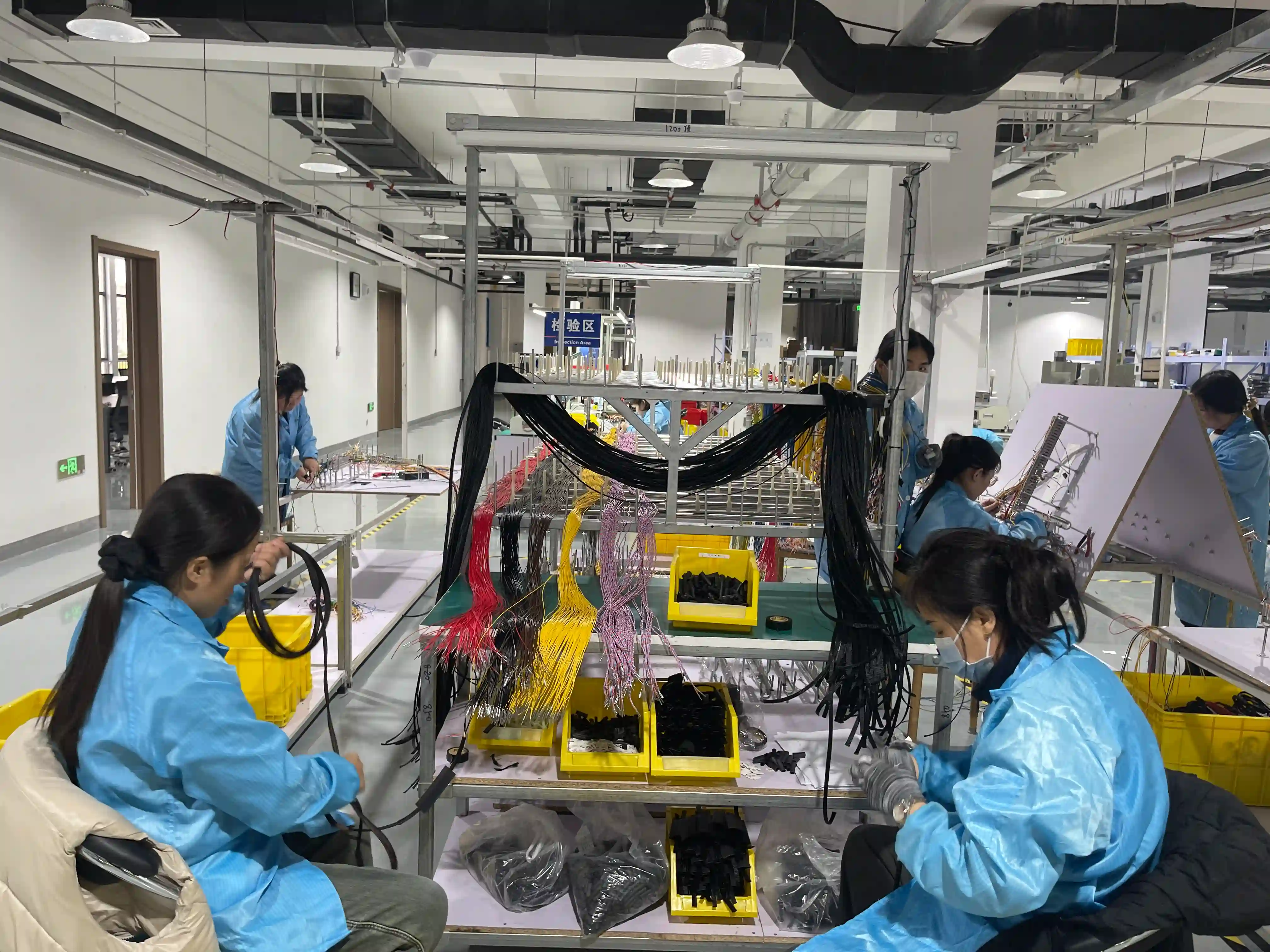
"When we manufacture harnesses for export, we maintain separate color coding databases for each target market. A harness destined for Germany follows DIN 72551, while the same functional design for Japan follows JASO standards. The engineering is identical — the colors are completely different. This is where a qualified manufacturer saves you from costly compliance failures."
OurPCB Engineering Team
Industrial & Control Panel Color Coding
Industrial control panels and industrial control cable assemblies follow additional color conventions beyond basic power wiring. These are defined by IEC 60204-1 (Safety of Machinery) and NFPA 79 (Industrial Machinery).
| Circuit Type | IEC 60204-1 | NFPA 79 (US) |
|---|---|---|
| AC Power | Black | Black (ungrounded) |
| AC Control | Red | Red |
| DC Power / Control | Blue | Blue |
| Interlock (safety) | Orange | Orange |
| Neutral | Light blue | White |
| Protective Earth | Green/Yellow | Green or Green/Yellow |
Note that orange is universally used for interlock/safety circuits in industrial settings — a rare point of agreement between IEC and NFPA standards. This consistency helps technicians quickly identify safety-critical wiring during maintenance.
DC Wiring Color Standards
DC systems — including automotive, solar, telecommunications, and battery-powered equipment — have their own color conventions. These are particularly important for battery cable assemblies and EV applications.
| Function | IEC (International) | NEC (US) | Automotive (SAE) |
|---|---|---|---|
| Positive (+) | Brown | Red | Red |
| Negative (−) | Grey | Black | Black |
| Ground | Green/Yellow | Green | Black (chassis ground) |
7 Common Color Coding Mistakes (and How to Avoid Them)
1. Assuming Black = Ground Everywhere
Black is ground in automotive (SAE) and in Japan (JIS), but it's a hot conductor in the US (NEC) and Line 2 in Europe (IEC). Always verify against the target standard.
2. Mixing OEM Color Codes Between Manufacturers
A pink wire in a GM vehicle serves a completely different function than pink in Ford. Never cross-reference OEM wiring diagrams between manufacturers.
3. Using Green/Yellow for Non-Earth Conductors
Green/yellow is reserved exclusively for protective earth under IEC 60445. Using it for signal or power wires violates international safety codes and creates electrocution hazards.
4. Ignoring Color Fading in Harsh Environments
UV exposure, high temperatures, and chemical exposure cause wire insulation colors to fade. In marine and outdoor applications, supplement color coding with printed labels or laser marking.
5. Not Documenting Stripe Orientation
RD/WH (red base, white stripe) and WH/RD (white base, red stripe) are two completely different wire IDs. Ensure schematics specify base color first, stripe color second.
6. Using Aftermarket Wires Without Verifying Colors
Third-party replacement wiring may use different color assignments than OEM originals. A mismatched red wire (OEM = battery, aftermarket = accessory) can damage electronic control units.
7. Skipping Color Verification During Incoming Inspection
Wire color can vary between batches from the same supplier. Always perform incoming inspection to verify colors match your specification before starting production.
"In our facility, we use a digital color verification system at incoming inspection. Every spool of wire is checked against a calibrated color reference before it enters production. This catches supplier batch variations that the human eye might miss — especially between similar shades like dark blue and violet. It's a small investment that prevents very expensive assembly errors downstream."
OurPCB Engineering Team
Best Practices for Color Code Management
Documentation
- Create a project-specific color code legend on every schematic
- Include the applicable standard (IEC/NEC/SAE) in drawing title blocks
- Maintain a master wire list with color assignments for each circuit
- Use supplemental labeling for complex harnesses with 50+ wires
Manufacturing
- Verify wire colors against physical reference samples, not digital images
- Store wire spools in UV-protected areas to prevent color fading
- Use color-coding on assembly boards to match wire to connector cavity
- Implement go/no-go color checks at every assembly station
Quality Control
- Add wire color to continuity test pass/fail criteria
- Photograph completed harnesses for color verification records
- Train operators on similar-looking color pairs (grey vs silver, blue vs violet)
- Use spectrophotometer measurements for critical safety circuits
International Projects
- Identify the target market's standard before design starts
- Never translate colors 1:1 between standards — map function, not color
- Include standard references (IEC/NEC/JIS) in supplier specifications
- Request color samples from wire suppliers for cross-border projects
Frequently Asked Questions
Is there a single universal wire color code standard?
No. There is no single global standard for wire color coding. IEC 60445 is the most widely adopted internationally, but the US follows NEC/NFPA 70, Japan uses JIS, and China uses GB/T. Each defines different color-to-function mappings. Always verify the applicable standard for your target market.
What does a bright orange wire mean in an EV or hybrid vehicle?
Bright orange insulation indicates a high-voltage circuit above 60V in electric and hybrid vehicles. This is mandated by ISO 6469 and SAE J1742 to warn technicians and first responders of lethal voltage. Never cut, splice, or modify bright orange wires without proper HV training and de-energization procedures.
How many unique wires can stripe combinations create?
With 12 base colors and 12 stripe colors (excluding same-color combinations), single-stripe coding creates 132 unique identifiers under SAE J1128. Adding double stripes, dash patterns, and ring marks expands this to 200+ unique wire IDs — sufficient for most modern vehicle harnesses.
Can I use any color for signal wires in my custom harness?
For signal and data wires, most standards allow manufacturer-defined colors as long as you avoid reserved colors: green/yellow (PE), blue (neutral in IEC), and white/grey (neutral in NEC). Document your color assignments in a wire list and include the legend on all schematics.
What should I do if wire colors have faded and I can't identify them?
Never guess. Use a multimeter to measure voltage, continuity, or resistance to confirm each wire's function. Check the wiring schematic and trace circuits from known termination points. For future prevention, use UV-resistant insulation materials and supplement color coding with printed labels or laser-marked identification.
Why do GM, Ford, and Toyota use different color codes?
Each OEM developed its wiring color scheme independently over decades of vehicle evolution. While SAE J1128 standardizes the available colors and wire specifications, it does not mandate which color serves which vehicle function. This means each manufacturer assigns colors based on their own engineering conventions and legacy systems.
References & Standards
- 1. IEC 60445:2021 — Basic and safety principles for man-machine interface, marking and identification. IEC 60446 (Wikipedia)
- 2. SAE J1128 — Low-Tension Primary Cable, Society of Automotive Engineers. SAE International
- 3. NEC/NFPA 70 — National Electrical Code, Article 310 (Conductors for General Wiring). NFPA
- 4. IEC 60204-1:2016 — Safety of machinery – Electrical equipment of machines.
- 5. ISO 6469 — Electrically propelled road vehicles – Safety specifications (high-voltage orange marking).
Related Articles
Wire Harness Labeling & Marking Guide
Complete identification methods beyond color coding
Read MoreHow to Read a Wire Harness Schematic
Symbols, drawing conventions, and wire color references
Read MoreEV High-Voltage Cables: 400V vs 800V
Orange HV cable standards and safety requirements
Read More