A single missed open circuit or shorted wire can ground an aircraft, stall a production line, or trigger a vehicle recall. Continuity testing is the first—and most fundamental—line of defense against these failures, yet it's often treated as a simple “go/no-go” check rather than the engineered process it should be.
Modern wire harnesses can contain hundreds or thousands of individual circuits. Testing them demands more than a multimeter and a steady hand. This guide covers the full spectrum of continuity testing: from the physics behind each method to practical equipment selection, standards compliance, and the elusive art of catching intermittent faults that slip through standard tests.
Wire points tested in 3 seconds by modern automated testers
Industry average defect rate without automated testing
Achievable defect rate with proper test programs
Vehicles recalled due to a single faulty wiring harness
What Is Continuity Testing?
Continuity testing verifies that an electrical path exists between two intended points in a wire harness. At its simplest, it answers the question: “Is this wire connected from Point A to Point B?” But in production environments, continuity testing encompasses far more than basic connectivity.
A comprehensive continuity test program verifies three things simultaneously: that every intended connection is present (no opens), that no unintended connections exist (no shorts or miswires), and that the resistance of each connection falls within specification (no high-resistance joints).
Continuity Testing vs Other Electrical Tests
Continuity Test
Low voltage (typically 3–5V). Verifies connections exist and measures resistance. Safe, non-destructive.
Hipot (Dielectric) Test
High voltage (500–1,500V DC). Verifies insulation integrity between conductors. Stresses insulation to prove isolation.
Insulation Resistance (IR) Test
Medium voltage (50–500V). Measures insulation resistance in megohms. Identifies degradation trends over time.
In production, continuity testing is almost always performed as part of a broader test sequence. The typical order is: continuity first (catch wiring errors), then insulation resistance (check insulation quality), then hipot (stress-test insulation to rated voltage). Running continuity first prevents applying high voltage to a miswired harness—which could damage components or create safety hazards. For a complete overview of all testing methods, see our wire harness testing methods guide.
Visual inspection is not sufficient even for a simple harness because crossed wires can look normal. Every harness should receive continuity testing, especially where a miswire could create a safety hazard.
4 Core Continuity Test Methods Compared
Not all continuity tests are created equal. The method you choose determines your measurement accuracy, test speed, and ability to detect marginal connections. Here's a detailed comparison of the four primary methods used in wire harness production.
| Method | Voltage | Accuracy | Speed | Best For | Limitations |
|---|---|---|---|---|---|
| 2-Wire Point-to-Point | 3–5V DC | ±0.5–1.0Ω | Fast | Go/no-go checks, simple harnesses | Lead resistance included in measurement |
| 4-Wire Kelvin | 3–5V DC | ±0.001–0.01Ω | Moderate | Crimp resistance, bonding, low-resistance circuits | More complex fixturing required |
| Insulation Resistance | 50–500V DC | 1–100 MΩ | Moderate | Detecting insulation degradation | Cannot detect pinhole defects |
| Hipot (Dielectric Withstand) | 500–2,100V DC | 0.1µA sensitivity | Slow | Safety-critical insulation verification | Can damage marginal insulation; requires safety protocols |
2-Wire Point-to-Point Testing
The most common method in production. A low-voltage signal (typically 3–5V DC) is applied between two test points, and the tester measures the total resistance of the circuit path. If the resistance is below the threshold (typically 1–5Ω), the circuit passes. If it's above or shows an open, the circuit fails.
The key limitation: the measurement includes the resistance of the test leads, fixture contacts, and probe-to-pin interfaces. For harnesses with short wire runs where the actual wire resistance is only 0.1–0.5Ω, the fixture contact resistance can exceed the wire resistance itself, making it impossible to detect a marginal crimp or cold solder joint.
4-Wire Kelvin Testing
The gold standard for precision resistance measurement. It uses two wires to force a known current through the circuit and two separate wires to measure the voltage drop across the device under test. Because the sense wires carry negligible current, the voltage drop across the probe contacts is eliminated from the measurement.
This method is essential for verifying crimp quality on power circuits where a high-resistance crimp could cause overheating under load. Aerospace programs require 4-wire Kelvin testing for all bonding and grounding measurements—a typical single-aisle aircraft requires approximately 800 bonding measurements per wing and 400 per engine. For more on crimp quality, see our crimping best practices guide.
Insulation Resistance (IR) Testing
Measures the resistance between conductors that should be isolated from each other. A DC voltage (typically 50–500V) is applied between conductors, and the resulting leakage current is measured. Insulation resistance values are expressed in megohms (MΩ) or gigohms (GΩ).
IR testing catches degraded insulation that a standard continuity test would miss. It's particularly important for harnesses exposed to moisture, chemicals, or extreme temperatures. Values trending downward over time indicate insulation aging that will eventually lead to failure.
Hipot (Dielectric Withstand) Testing
The most aggressive insulation test. High voltage is applied between conductors to verify that insulation can withstand voltages well above normal operating levels. A leakage current exceeding the threshold (typically measured in microamperes) indicates insulation breakdown. Hipot testing is mandatory for UL, CSA, and CE certified products and is required per IPC/WHMA-A-620 for safety-critical applications.
Equipment Selection: Manual vs Automated
The choice between manual and automated testing isn't just about budget. It's about volume, complexity, traceability, and the defect rate you're willing to accept.
| Factor | Manual (Multimeter) | Semi-Automated | Fully Automated |
|---|---|---|---|
| Investment | $100–$500 | $5,000–$25,000 | $25,000–$150,000+ |
| Test Speed | 2–5 min per harness | 30–60 sec per harness | 3–10 sec per harness |
| Test Points | 1 at a time | 32–128 | 128–1,024+ |
| Accuracy | Operator-dependent | Repeatable ±0.1Ω | Repeatable ±0.001Ω |
| Data Logging | None or manual | Basic CSV/USB | Full SPC integration |
| Operator Skill | High | Medium | Low (fixture-guided) |
| Best Volume | <50 units/month | 50–500 units/month | 500+ units/month |
When to Use Automated Testing
- Production volume exceeds 100 harnesses per month
- Harness has more than 20 test points
- Customer requires serialized test data traceability
- Safety-critical or automotive PPAP applications
- Target defect rate below 1%
When Manual Testing Is Acceptable
- Prototype and first-article builds
- Low-volume specialty harnesses (<50/month)
- Field troubleshooting and repair
- Simple harnesses with fewer than 10 circuits
- Incoming inspection spot-checks
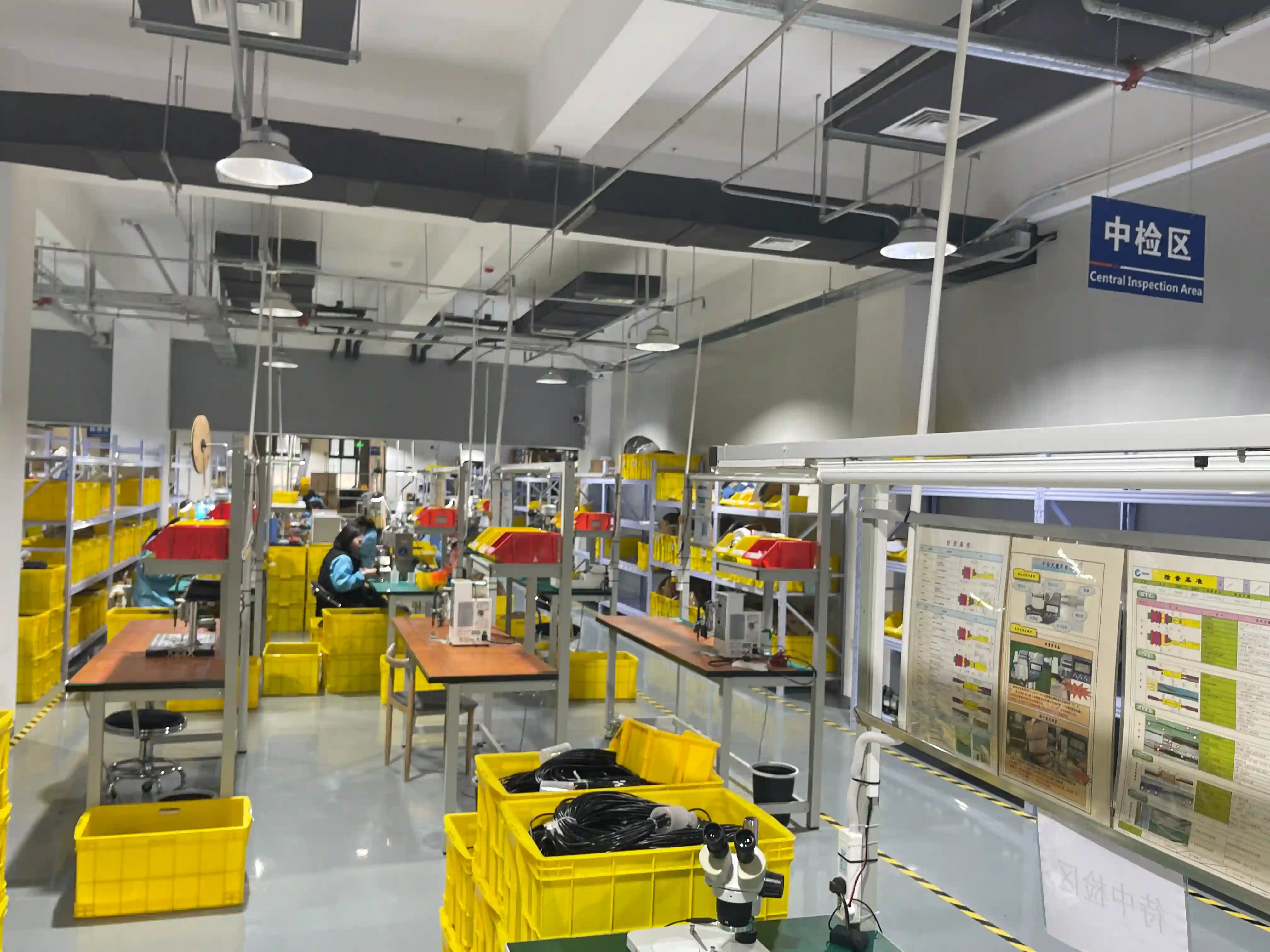
Automated-test ROI should compare equipment, fixture, programming, and maintenance costs against throughput, labor, escape risk, and the consequences of field failures. The calculation must use the program's actual volumes and defect data.
Industry Standards & Pass/Fail Criteria
Knowing what to test is only half the equation. You also need to know what constitutes a pass. Here are the primary standards governing wire harness continuity testing and their specific requirements.
| Standard | Scope | Continuity Requirement | Hipot Requirement |
|---|---|---|---|
| IPC/WHMA-A-620D | General wire harness | 100% point-to-point, resistance per customer spec | When specified by customer |
| SAE AS50881 | Aerospace wiring | 100% continuity + 4-wire bonding tests | 500V DC min, 1-minute dwell |
| USCAR-2/USCAR-21 | Automotive connectors | Contact resistance <5 mΩ initial | Per OEM specification |
| IEC 60204-1 | Industrial machinery | Protective bonding circuit continuity | 1,000V AC or 1,500V DC for 1 second |
| UL 2238 | Wire harness assemblies | 100% continuity verification | 1,500V AC or 2,120V DC |
Common Standards Mistake
Many manufacturers use a generic “5Ω pass/fail threshold” for all circuits. This is too loose for low-resistance power circuits (where a 2Ω crimp joint could cause dangerous heating) and unnecessarily tight for high-resistance sensor circuits (where 10Ω of wire resistance is expected). Always calculate your expected circuit resistance based on wire gauge, length, and number of connection points, then set the pass/fail threshold at 110–120% of the theoretical value. For guidance on wire selection, review our wire and cable selection guide.
Detecting Intermittent Faults: The Hidden Challenge
The most frustrating defect in wire harness testing is the intermittent fault—a connection that passes static testing on the bench but fails in service under vibration, temperature change, or physical flex. Standard continuity tests miss these defects because they only capture a single-point-in-time measurement.
Root Causes of Intermittent Faults
Cold Solder Joints
Contact moved before solder solidified. Creates a weak joint that makes contact under gravity but opens under vibration.
Improperly Seated Pins
Connector pin not fully locked into housing. Makes contact at rest but backs out under thermal cycling or mechanical stress.
Contaminated Contacts
Flux residue, oil, or oxide film on connector contacts. Creates variable contact resistance that changes with temperature and humidity.
Poor Crimps
Insufficient crimp compression, wrong tool setting, or wire strands outside crimp barrel. Passes pull test but has unstable resistance.
Detection Techniques
Flex testing during continuity measurement
Gently flex and manipulate the harness while the tester monitors continuity in real-time. Any momentary break triggers a fail. Some automated testers have a "wiggle test" mode that flags resistance changes as small as 0.1Ω.
Thermal cycling with continuous monitoring
Subject the harness to temperature extremes while continuously measuring resistance on all circuits. Intermittent connections often appear at temperature transitions when materials expand and contract at different rates.
Vibration testing with real-time data capture
Mount the harness on a vibration table while logging resistance data at high sample rates. Industrial testers can sample at 1,000+ Hz to catch sub-millisecond dropouts that standard testers miss.
Extended soak testing
Run continuous monitoring for 24–48 hours under simulated operating conditions. This catches time-dependent failures like creep relaxation in crimps or slow corrosion under condensation conditions.
For a comprehensive look at environmental stress testing methods that complement continuity testing, see our wire harness environmental testing guide.
Common Failure Modes & Root Causes
Understanding why harnesses fail continuity testing helps you fix the root cause rather than just re-testing until a borderline unit happens to pass. Here are the four primary failure sources identified across production environments.
| Failure Mode | Typical Symptom | Root Cause | Fix |
|---|---|---|---|
| Open Circuit | Infinite resistance on expected connection | Broken wire, unseated pin, missing crimp | Re-crimp, re-seat pin, replace wire |
| Short Circuit | Low resistance between unconnected circuits | Insulation damage, solder bridges, pinched wire | Re-route, repair insulation, remove bridge |
| Miswire | Correct resistance but wrong pin-to-pin mapping | Wires inserted in wrong cavities | Rework wiring per schematic; add poka-yoke |
| High Resistance | Continuity present but resistance above spec | Poor crimp, corroded contact, wrong wire gauge | Re-crimp with calibrated tools; clean contacts |
| Reversed Polarity | Passes continuity but power/ground swapped | Wires reversed at one connector | Full netlist test catches this; visual inspection misses it |
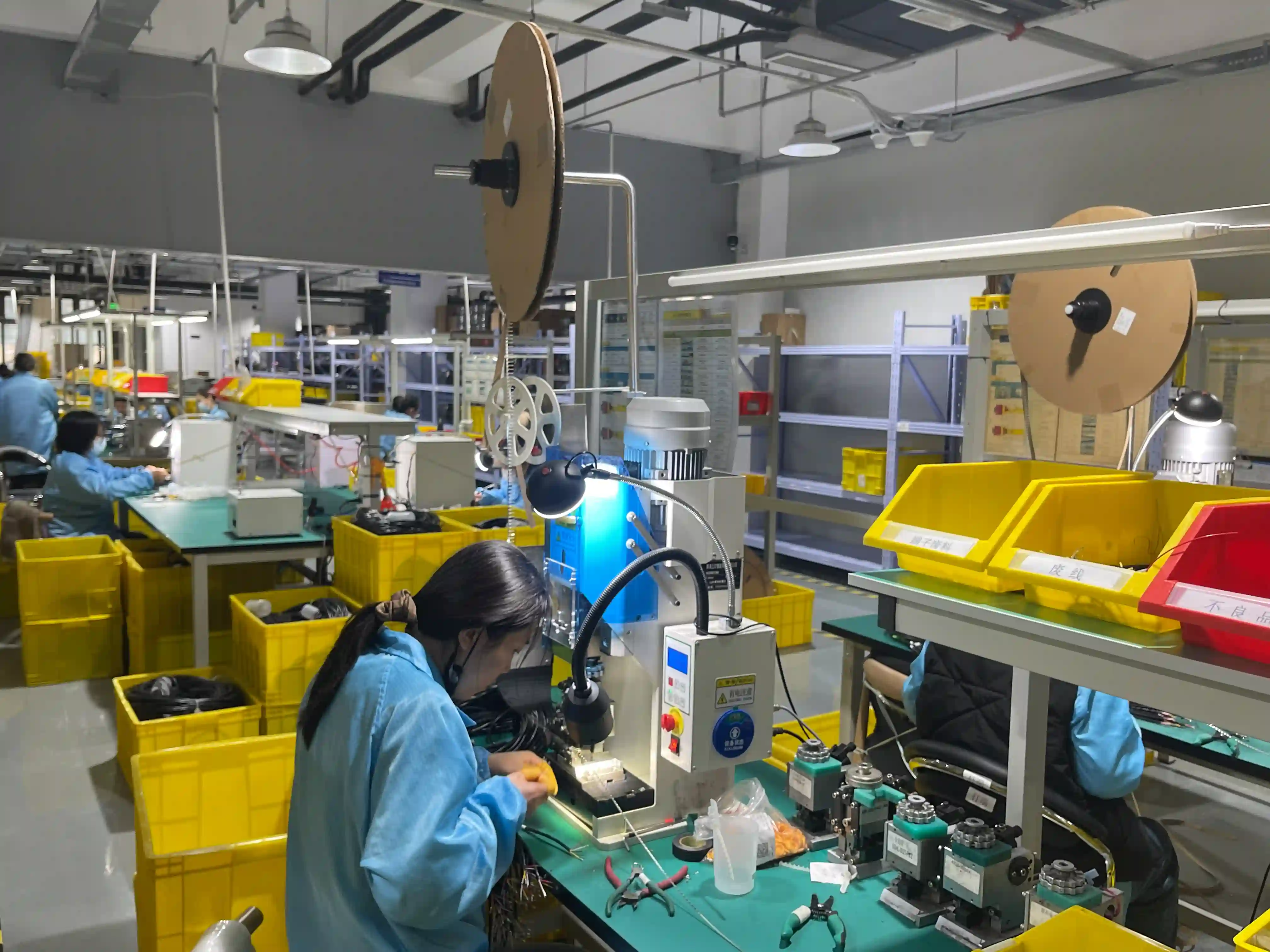
A continuity test program must remain synchronized with the released harness revision. Every engineering change notice should trigger a controlled program update and verification with a known-good sample before production resumes.
Building an Automated Test Program
An automated test program is only as good as its setup. Here's a step-by-step process for building a robust production continuity test that catches defects without creating false failures.
Build the netlist from the schematic
Import the wire list or netlist from your design tool. Every pin-to-pin connection in the schematic must appear in the test program. Every pin that should NOT be connected must be verified as isolated.
Set resistance thresholds per circuit
Calculate expected resistance for each circuit: R = (wire length × resistance per foot for that gauge) + (N connections × contact resistance per connection). Set pass/fail at 120% of calculated value. Never use a blanket threshold for all circuits.
Design and validate the test fixture
The fixture must make reliable, repeatable contact with every test point. Spring-loaded pogo pins are standard for production. Verify fixture contact resistance is below 50 mΩ and consistent across all positions.
Create and verify a golden sample
Build a known-good harness, verify it manually with 4-wire Kelvin measurement on every connection, and use it as the reference standard. The golden sample must pass 100% of tests with margin. Store it in a controlled environment.
Run a known-bad validation
Create intentional defects (open, short, miswire, high-resistance) and verify the tester catches each one. If any defect passes, the test program has a gap. This step is critical and often skipped.
Implement SPC data collection
Log every test result with serial number, date, time, and all resistance values. Track Cpk on critical circuits. A Cpk dropping below 1.33 is an early warning of a process drift before failures start appearing.
For tips on reducing overall production costs while maintaining test quality, see our top 8 cost saving tips for cable assemblies. And for guidance on what to look for in a testing-capable supplier, check our top 10 quality inspection points guide.
Frequently Asked Questions
What is the difference between continuity testing and hipot testing?
Continuity testing uses low voltage (3–5V) to verify that intended connections exist and measure their resistance. Hipot (dielectric withstand) testing uses high voltage (500–2,100V) to verify that insulation between conductors can withstand voltage stress without breaking down. Continuity checks for proper connections; hipot checks for proper isolation. Both are essential—continuity should always be performed first, because applying high voltage to a miswired harness can damage components or create safety hazards.
How much does an automated wire harness tester cost?
Entry-level semi-automated testers (32–64 test points, basic continuity only) start at $5,000–$10,000. Mid-range systems with 128–256 test points, hipot capability, and data logging run $15,000–$50,000. High-end production systems with 512–1,024+ test points, 4-wire Kelvin, full SPC integration, and custom fixturing typically cost $50,000–$150,000. Major brands include Cirris, CableEye (CAMI Research), DIT-MCO, and Dynalab.
Can I use a multimeter for production continuity testing?
For prototype verification and low-volume work (<50 units/month with fewer than 10 circuits), a quality digital multimeter is adequate. However, for production testing, a multimeter has critical limitations: no ability to test all circuits simultaneously (missing miswires), no automated data logging, operator-dependent accuracy, and no isolation testing capability. IPC/WHMA-A-620 Class 3 (high reliability) specifically requires automated or semi-automated testing for production harnesses.
What resistance threshold should I use for pass/fail?
Never use a single blanket threshold for all circuits. Calculate the expected resistance for each circuit based on wire gauge (AWG), wire length, and number of connection points. For example, 10 feet of 22 AWG wire has approximately 0.16Ω of wire resistance. Add 5–10 mΩ per crimp connection and 2–5 mΩ per connector contact. Set your pass/fail threshold at 110–120% of the calculated total. For power circuits under 1Ω total, use 4-wire Kelvin measurement for accurate results.
How do I troubleshoot false failures on my automated tester?
False failures (units that fail testing but are actually good) are almost always caused by fixture issues, not harness issues. Check: (1) pogo pin spring force—worn springs reduce contact pressure and increase resistance, (2) fixture cleanliness—flux residue and debris on contact points, (3) fixture alignment—pins not centered on connector contacts, (4) cable from fixture to tester—damaged or intermittent fixture wiring. Run your golden sample daily; if it starts failing, the problem is the fixture, not production.
Does IPC/WHMA-A-620 require 100% continuity testing?
Yes. IPC/WHMA-A-620D requires 100% electrical testing (continuity and, where specified, hipot) for all classes. Class 1 (general electronic) allows the manufacturer to determine the test method. Class 2 (dedicated service) and Class 3 (high reliability) require documented test procedures, recorded results, and traceability to the specific harness serial number. For more on this standard, see our complete IPC/WHMA-A-620 guide.
References & Standards
[1] IPC/WHMA-A-620D Requirements and Acceptance of Cable and Wire Harness Assemblies — Industry standard defining continuity testing requirements for all wire harness classes.
[2] Cirris — Testing for Intermittent Errors in Cable and Harness Assemblies — Technical guidance on detecting and preventing intermittent faults in production testing.
[3] Wiring Harness News — Continuity and HiPot Testing in Wire Harness and Cable Assemblies — Industry publication covering testing methods, equipment selection, and best practices.
[4] SAE AS50881 — Wiring Aerospace Vehicle — Aerospace wiring standard requiring 4-wire Kelvin bonding measurements and dielectric testing.
Related Articles
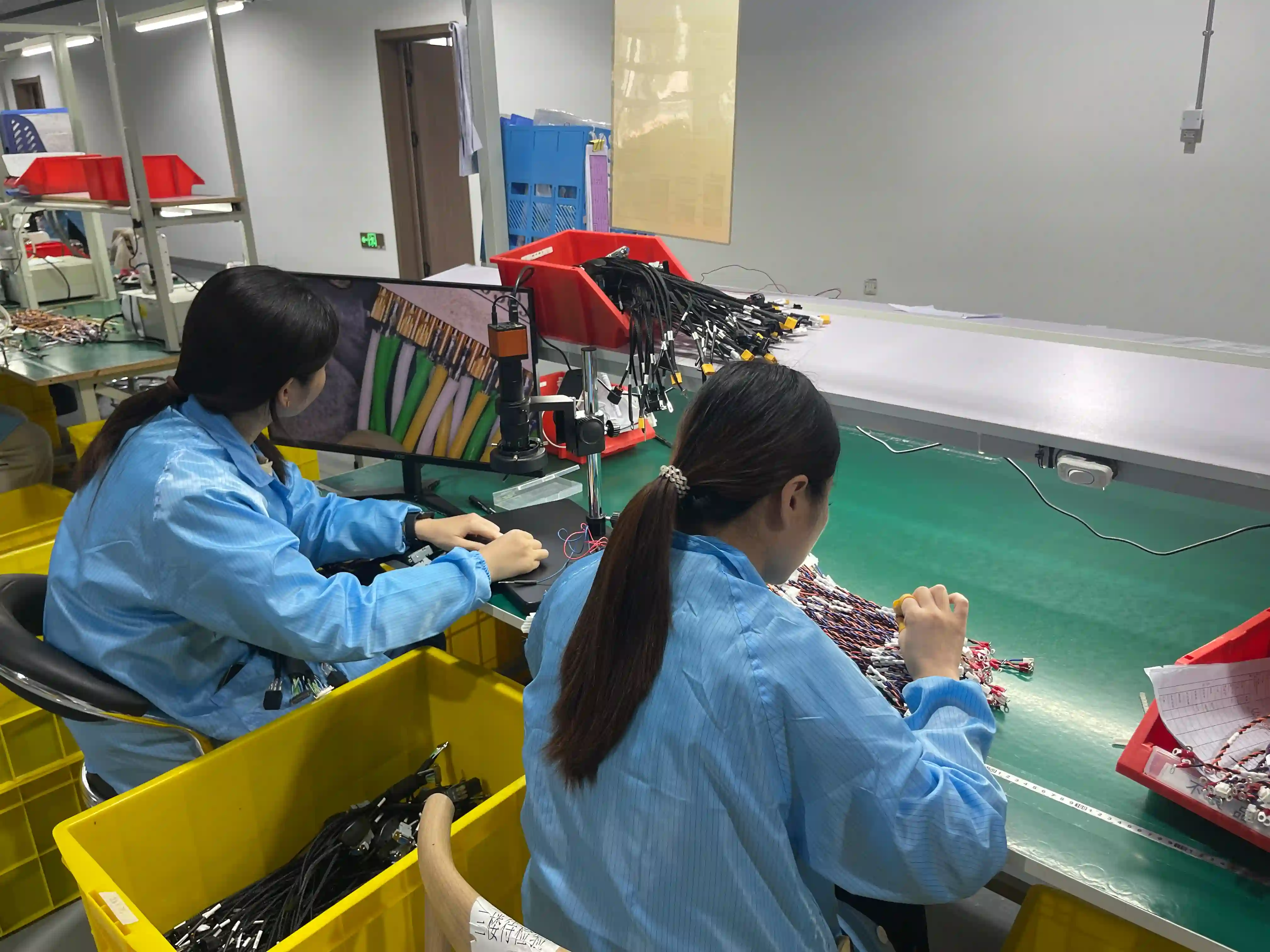
Wire Harness Testing Methods: Continuity, Hipot & More
Complete overview of electrical and mechanical testing methods for wire harness quality assurance.
Wire Harness Crimping Best Practices
Crimp quality directly affects continuity test results. Master proper crimping techniques.
Top 10 Quality Inspection Points for Cable Assemblies
Essential quality checkpoints including electrical testing requirements.
About the Author
OurPCB Engineering Team brings over 15 years of combined experience in wire harness design, production testing, and quality systems. The team has implemented automated test programs for automotive, aerospace, medical device, and industrial harness production lines, achieving defect rates below 0.3% across high-volume programs.