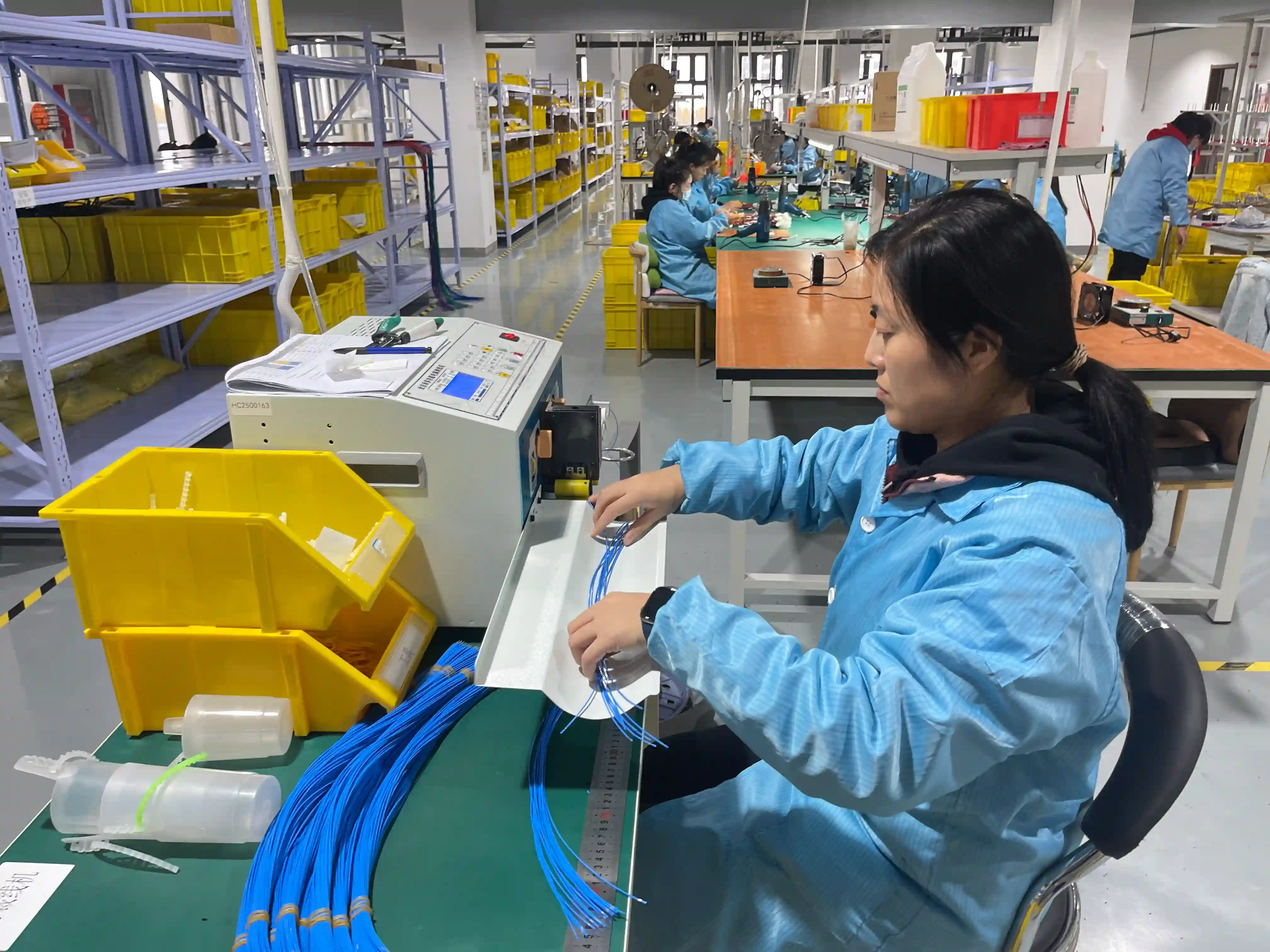
Poor wire selection can derail a project. An undersized conductor can overheat, while unsuitable insulation can crack at the application's minimum temperature. These are not merely technical defects; they can lead to recalls and safety incidents.
Whether you're designing a custom wire harness, building a cable assembly, or specifying components for a new product, understanding wire selection fundamentals will save you time, money, and headaches.
Understanding the AWG Wire Gauge System
American Wire Gauge (AWG) is the standardized system used in North America to measure wire diameter. Here's the counterintuitive part that trips up newcomers: higher numbers mean thinner wires. A 24 AWG wire is thinner than a 14 AWG wire.
This backwards-seeming convention dates back to the drawing dies used in wire manufacturing. A wire drawn through more dies (higher gauge) becomes thinner. Once you internalize this, wire sizing becomes intuitive.
| AWG | Diameter (mm) | Area (mm²) | Max Amps (Chassis) | Typical Use |
|---|---|---|---|---|
| 26 AWG | 0.40 | 0.13 | 2A | Signal wiring, ribbon cables |
| 24 AWG | 0.51 | 0.20 | 3.5A | Data cables, low-power devices |
| 22 AWG | 0.64 | 0.33 | 5A | General electronics |
| 20 AWG | 0.81 | 0.52 | 7.5A | Automotive accessories |
| 18 AWG | 1.02 | 0.82 | 10A | Power cords, speakers |
| 16 AWG | 1.29 | 1.31 | 15A | Extension cords, appliances |
| 14 AWG | 1.63 | 2.08 | 20A | Residential circuits (15A breaker) |
| 12 AWG | 2.05 | 3.31 | 25A | Kitchen/bathroom circuits (20A) |
| 10 AWG | 2.59 | 5.26 | 35A | Electric dryers, water heaters |
| 8 AWG | 3.26 | 8.37 | 50A | EV charging, subpanels |
| 6 AWG | 4.11 | 13.30 | 65A | High-power industrial |
Important Note
These ampacity ratings assume chassis wiring at room temperature. Bundled wires, high ambient temperatures, or enclosed spaces require derating—sometimes significantly.
Wire selection mistakes commonly result from underestimating current draw or ignoring voltage drop. Designs should account for inrush current, peak demand, and appropriate engineering headroom rather than nominal load alone.
The 5 Critical Wire Selection Factors
Every wire selection decision comes down to five fundamental factors. Miss any one of these, and your design could fail. Let's break down each one with practical guidance for wire harness applications.
1. Current Capacity (Ampacity)
The maximum current a wire can safely carry without overheating. This is non-negotiable—undersized wires cause fires. The wire's cross-sectional area directly determines its current capacity.
Quick Rules:
- • Calculate maximum current, not average current
- • Add 20-25% safety margin for continuous loads
- • Consider inrush current for motors and capacitive loads
- • Derate for bundling: 3-6 wires = 80%, 7-15 wires = 70%
2. Voltage Drop & Wire Length
All conductors have resistance. Longer runs mean more voltage lost as heat. For automotive 12V systems, even small drops are significant. The solution is upsizing the wire gauge for long runs.
Voltage Drop Formula:
V_drop = (2 × Length × Current × Resistance) / 1000
Keep voltage drop under 3% for most applications. Critical electronics may require less than 1%.
3. Operating Temperature Range
Both ambient temperature and self-heating affect wire performance. The insulation's temperature rating must exceed the worst-case operating temperature. This is especially critical in automotive applications near engines.
| Environment | Temp Range | Recommended Wire |
|---|---|---|
| Office/Indoor | 0°C to 40°C | PVC (60-80°C) |
| Engine Bay | -40°C to 125°C | XLPE, Silicone (150°C+) |
| Exhaust Area | -40°C to 200°C | PTFE, Fiberglass (200°C+) |
| Arctic/Outdoor | -60°C to 50°C | Silicone, TPE |
4. Flexibility & Bend Radius
Will the wire move during operation? Need to route through tight spaces? Flexibility requirements determine whether you need solid or stranded construction, and how fine the stranding should be.
Solid Core
Fixed installations
In-wall wiring, terminal blocks
Stranded (7-19)
General purpose
Most harness applications
5. Environmental Protection
The operating environment dictates insulation requirements. Oil exposure, UV radiation, moisture, chemicals—each demands specific protection. Our sleeving and protection services address these challenges.
Chemical Resistance:
- • Oil/Fuel: FEP, ETFE, TPE
- • Acids: PTFE, Fluoropolymers
- • Solvents: Cross-linked polymers
Physical Protection:
- • Abrasion: Nylon, braided sleeving
- • UV: XLPE, specialized compounds
- • Moisture: Sealed jackets, IP ratings
Conductor Materials: Copper vs Aluminum
Copper dominates the wire harness industry for good reasons, but aluminum has its place. Understanding the trade-offs helps you make informed decisions—especially when cost or weight is critical.
| Property | Copper | Aluminum | Winner |
|---|---|---|---|
| Conductivity | 100% (reference) | 61% | Copper |
| Weight (density) | 8.96 g/cm³ | 2.70 g/cm³ | Aluminum |
| Cost (relative) | Higher | ~60% of copper | Aluminum |
| Flexibility | Excellent | Good (work hardens) | Copper |
| Corrosion | Forms protective patina | Oxidizes (insulating) | Copper |
| Termination | Standard crimps/solder | Requires special treatment | Copper |
Choose Copper When:
- Space is limited (smaller gauge for same current)
- High reliability is critical
- Standard termination methods needed
- Flexing or vibration present
Consider Aluminum When:
- Weight reduction is priority (aerospace, EVs)
- Large gauge power cables (4 AWG and larger)
- Fixed installation (minimal movement)
- Cost reduction is critical
Common Insulation Types & Their Applications
Insulation isn't just about preventing shorts—it's the interface between your wire and the operating environment. The right insulation extends service life; the wrong choice leads to premature failure.
| Type | Temp Rating | Key Properties | Best For |
|---|---|---|---|
| PVC | 60-80°C | Low cost, good flexibility | General indoor, consumer products |
| PE (Polyethylene) | 80°C | Low dielectric constant | High-frequency cables, coax |
| XLPE | 90-125°C | Heat/moisture resistant | Automotive, outdoor, underground |
| TPE/TPR | -40 to 105°C | Flexible in cold, oil resistant | Automotive, robotics |
| Silicone | -60 to 200°C | Extreme temp, ultra flexible | Engine bay, medical, aerospace |
| PTFE (Teflon) | -200 to 260°C | Chemical inert, thin wall | Aerospace, high-temp, harsh chem |
| FEP | -200 to 200°C | Similar to PTFE, easier process | Electronics, plenum cables |
| Nylon Jacket | 90°C | Abrasion/fuel resistant | Over-jacketing for harsh enviro |
Our manufacturing capabilities include working with all these insulation types. We can recommend the optimal choice based on your application requirements.
The cheapest wire that meets a specification is not necessarily the best value. Total cost includes installation labor, potential failures, warranty exposure, and field replacement, so insulation quality should be evaluated on lifecycle performance.
Wire Selection by Application
Different industries have developed wire specifications optimized for their unique challenges. Here are recommendations for major application areas we serve.
Automotive
Extreme temperature swings, vibration, oil/fuel exposure, and decades of service life create demanding requirements.
Recommendations:
- • Wire: GXL/TXL cross-linked polyethylene, 18-10 AWG typical
- • Connectors: Deutsch, TE Connectivity, Molex
- • Protection: Braided loom, split tubing
- • Standard: SAE J1128 for primary wire
Medical Devices
Biocompatibility, sterilization compatibility, and ultra-reliability are paramount. Even minor failures can have life-threatening consequences.
Recommendations:
- • Wire: Silicone or FEP insulated, fine stranded (40+ strands)
- • Material: Medical-grade silicone, PTFE for implants
- • Shielding: EMI/RFI shielding for signal integrity
- • Standard: IEC 60601-1, ISO 13485 certified assembly
Industrial Control
Factory floors present noise, oil exposure, and mechanical stress. Reliability and EMI immunity are critical for continuous operation.
Recommendations:
- • Wire: Oil-resistant PVC or TPE, stranded
- • Connectors: M12/M8 circular, terminal blocks
- • Cable: Shielded twisted pair for signals
- • Protection: Conduit, cable tray, strain relief
Robotics & Automation
Continuous flexing, tight bend radii, and millions of flex cycles require specialized high-flex cables that resist conductor fatigue.
Recommendations:
- • Wire: High-flex rated (10+ million flex cycles)
- • Conductor: Extra-fine stranding (rope lay)
- • Jacket: PUR (polyurethane) for abrasion resistance
- • Design: Drag chain rated, neutral bend axis
7 Common Wire Selection Mistakes to Avoid
Sizing Only for Average Current
Peak current matters more than average. A motor that draws 2A running may pull 10A at startup. Size for the worst case.
Ignoring Voltage Drop on Long Runs
A 12V system with 3% voltage drop has only 11.64V at the load. LEDs dim, motors slow, electronics malfunction. Use a voltage drop calculator to verify every run over 10 feet — even small losses add up in complex harnesses.
Using Indoor Wire Outdoors
Standard PVC insulation degrades in UV light and cracks in freezing temperatures. Outdoor applications need UV-stabilized, weatherproof cables.
Solid Wire in Moving Applications
Solid core wire work-hardens and breaks when repeatedly flexed. Any application with movement needs stranded conductors.
Mixing Copper and Aluminum Without Proper Termination
Direct copper-aluminum connections corrode due to galvanic action. Use anti-oxidant compound and approved connectors.
Bundling Without Derating
Wires in bundles generate cumulative heat. A 10A wire in a bundle of 20 might only safely carry 6A. Always derate for bundling.
Choosing Wire Only by Cost
The cheapest wire often means the most expensive failures. Consider total lifecycle cost including installation, reliability, and potential warranty claims.
Quick Reference: Wire Selection Decision Tree
Calculate Maximum Current
Include peak, inrush, and add 20-25% safety margin
Select Initial AWG Size
Use ampacity tables, accounting for ambient temp and bundling
Check Voltage Drop
Calculate for actual run length. Upsize if drop exceeds 3%
Select Insulation Type
Match to temperature range and environmental exposures
Choose Construction
Solid for fixed, stranded for general, fine-strand for high flex
Specify Protection
Add sleeving, conduit, or jacketing based on physical hazards
Need Help Selecting the Right Wire?
Wire selection requires application data and sound engineering judgment. Our engineering team supports custom harness projects across multiple industries and can help validate the specification.
FAQ
How much current can 18 AWG wire safely carry in a harness?
In many chassis-wiring scenarios 18 AWG is used around 10 A, but the real answer depends on bundle size, ambient temperature, insulation rating, and allowed voltage drop. Verify the actual condition instead of using a single table number.
When should I choose fine-stranded wire instead of standard stranded wire?
If the harness will see repeated flexing, vibration, or motion beyond roughly 1 million cycles, move to a finer strand construction such as Class K or better. Standard stranded wire is fine for static routing but not for robotic or hinge applications.
What voltage drop limit should I design around?
For many DC control and power circuits, 3% is the common design target, while sensitive electronics may need 2% or less. Automotive cranking circuits and long battery runs often justify a separate worst-case calculation at minimum supply voltage.
How do I choose wire insulation for high-temperature equipment?
Start with the actual hot-zone temperature, then add margin. PVC often stops at 80°C, XLPE commonly reaches 125°C, and silicone or PTFE can support 150°C to 200°C depending on the standard and routing environment.
Which standards should I reference when specifying custom wire and cable?
That depends on the market: UL 758 or UL 62 for many North American constructions, IEC 60227 or IEC 60502 in other regions, and IPC/WHMA-A-620 for workmanship once the conductors enter a cable assembly or wire harness build.
"Wire & Cable Selection Guide: From AWG to Application only becomes production-ready after measurable validation. That usually means 100% continuity, a defined insulation threshold such as 500 VDC, and one application-specific check tied to IEC 60529, UL, or the customer's own spec."