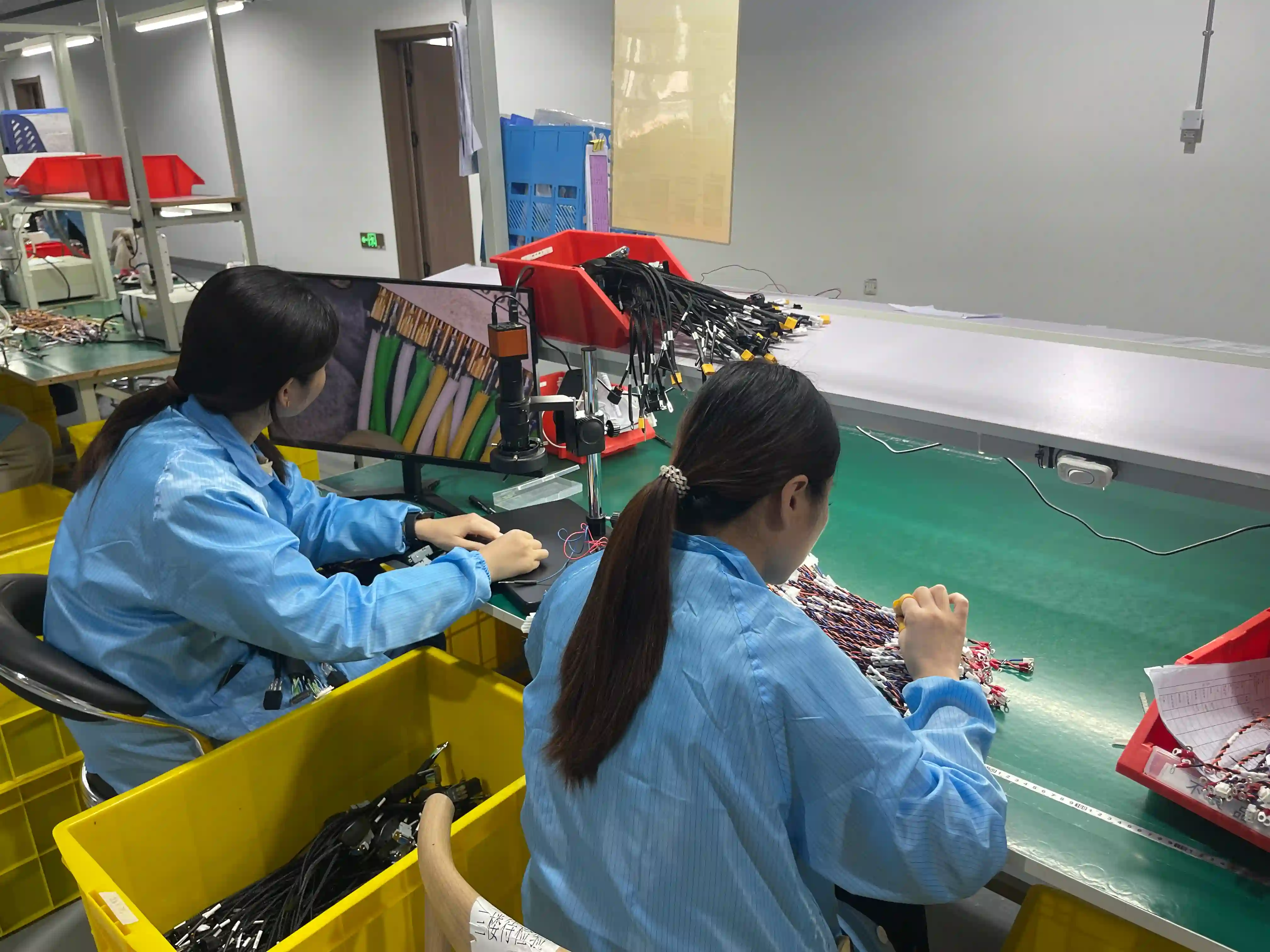
Quality inspection isn't just about catching defects—it's about preventing them from reaching your customers and the field. A comprehensive inspection program catches problems early, reduces rework costs, and builds the quality records needed for traceability and continuous improvement.
This guide covers the ten inspection points every wire harness and cable assembly should pass before shipment. Whether you're a buyer auditing a supplier or a manufacturer building your QC program, these checkpoints represent industry best practices.
Visual
2 checkpoints
Electrical
2 checkpoints
Mechanical
4 checkpoints
Documentation
2 checkpoints
"The best inspection programs catch defects at the earliest possible point. A wire nick caught during visual inspection costs pennies to fix. The same defect found during customer installation costs thousands in returns, rework, and damaged relationships."
OurPCB Engineering Team
The 10 Inspection Points in Detail
Visual Inspection (Workmanship)
Standard
IPC/WHMA-A-620
Equipment
Magnification (10x-20x), lighting, inspection mirror
Pass/Fail
Per IPC-620 Class 2 or Class 3 as specified
Comprehensive visual examination of all assembly aspects against workmanship standards. This catches the majority of defects before they reach testing.
What to Check
- Wire routing matches drawing/sample
- No nicks, cuts, or damaged insulation
- Proper bundling and lacing
- Label placement and legibility
- Overall cosmetic appearance
Common Defects
- Insulation damage from stripping
- Incorrect wire colors/positions
- Missing or misaligned labels
- Poor bundling/lacing
- Contamination or debris
Continuity Testing
Standard
Per customer specification
Equipment
Continuity tester, cable analyzer, multimeter
Pass/Fail
Typically <1Ω for signal, <100mΩ for power
Verifies that all electrical paths are complete and connections are correct. The most fundamental electrical test for any cable assembly.
What to Check
- All circuits complete from end to end
- No opens (missing connections)
- No shorts (unintended connections)
- Correct pinout per wiring diagram
- Resistance within specification
Common Defects
- Open circuits from cold solder joints
- Shorts from stray wire strands
- Crossed wires (wrong pinout)
- High resistance connections
- Intermittent connections
Hi-Pot (Dielectric Withstand) Testing
Standard
UL, IEC, customer specification
Equipment
Hipot tester (AC or DC), safety interlock system
Pass/Fail
No breakdown at test voltage, leakage <specification
Applies high voltage between conductors and/or to ground to verify insulation integrity. Critical for safety-rated assemblies.
What to Check
- Insulation withstands test voltage
- No breakdown or flashover
- Leakage current within limits
- All circuits tested per plan
- Test equipment calibrated
Common Defects
- Insulation breakdown
- Excessive leakage current
- Damaged insulation from assembly
- Contamination causing leakage
- Insufficient creepage distance
Crimp Quality Inspection
Standard
IPC-620, manufacturer spec
Equipment
Crimp height micrometer, pull tester, cross-section tools
Pass/Fail
Per terminal manufacturer specification
Verifies crimp connections meet mechanical and electrical requirements. Poor crimps are a leading cause of field failures.
What to Check
- Crimp height within tolerance
- Proper wire/terminal engagement
- No cracks or cold flow
- Insulation grip position correct
- Cross-section appearance (destructive)
Common Defects
- Over-crimped (crushed strands)
- Under-crimped (loose strands)
- Missing strands in crimp barrel
- Bellmouth incorrect
- Insulation in conductor crimp
Pull Force Testing
Standard
UL 486, IPC-620
Equipment
Calibrated pull force tester, fixtures
Pass/Fail
Per UL 486 or manufacturer spec for wire gauge
Measures the force required to separate a terminated wire from its connector or splice. Validates crimp quality and wire retention.
What to Check
- Terminal retention meets minimum
- Wire doesn't slip from terminal
- Consistent results across samples
- Both conductor and insulation grips tested
- Test per wire gauge specification
Common Defects
- Low pull force (poor crimp)
- Wire slippage under load
- Strand breakage before spec met
- Insulation grip failure
- Terminal damage during test
Dimensional Verification
Standard
Drawing specification
Equipment
Measuring tape, go/no-go fixtures, CMM for critical
Pass/Fail
Per drawing tolerances (typically ±10mm or ±1%)
Confirms that all physical dimensions meet drawing requirements—lengths, breakout points, connector positions.
What to Check
- Overall length ± tolerance
- Branch/breakout locations
- Connector-to-connector distances
- Loop lengths where specified
- Strain relief positions
Common Defects
- Incorrect overall length
- Breakout point mislocated
- Insufficient slack in service loops
- Connector offset from specification
- Cumulative tolerance stack-up
Connector Seating Verification
Standard
Connector manufacturer spec
Equipment
Probing tools, torque wrench, visual aids
Pass/Fail
Audible/tactile click, terminal flush with housing
Ensures all terminals are fully seated in connector housings and that secondary locks are engaged.
What to Check
- All terminals fully seated
- TPA/secondary lock engaged
- Seal/grommet properly positioned
- Connector shells fully mated
- Backshell properly torqued
Common Defects
- Partially seated terminals
- TPA not fully engaged
- Missing seals or grommets
- Connector halves not latched
- Backshell cross-threaded
Solder Joint Inspection
Standard
IPC J-STD-001, IPC-620
Equipment
Stereo microscope (10x-45x), inspection camera
Pass/Fail
Per IPC J-STD-001 Class 2 or Class 3
Examines solder connections for proper wetting, fillet formation, and absence of defects. Critical for PCB terminations and wire-to-terminal soldering.
What to Check
- Proper wetting on all surfaces
- Adequate fillet size and shape
- No cold joints or disturbed solder
- No solder bridges or balls
- Flux residue acceptable
Common Defects
- Cold solder joint (grainy appearance)
- Insufficient solder (dewetting)
- Excessive solder (bridging risk)
- Solder balls or splatter
- Damaged component from heat
Environmental Sealing Verification
Standard
IP rating specification
Equipment
Pressure tester, dunk tank, visual inspection
Pass/Fail
Per IP rating requirements (e.g., IP67 = 1m/30min)
Confirms that sealing features (grommets, potting, heat shrink) provide required environmental protection.
What to Check
- Seal/grommet properly compressed
- Heat shrink fully recovered
- Potting void-free and cured
- O-rings/gaskets positioned correctly
- Backshell seal integrity
Common Defects
- Seal pinched or cut
- Incomplete heat shrink recovery
- Voids in potting compound
- Missing or incorrect O-ring
- Adhesive not fully cured
Documentation & Traceability
Standard
ISO 9001, customer requirements
Equipment
QMS system, document control procedures
Pass/Fail
All required documents complete and accurate
Verifies all required documentation is complete and accurate, enabling traceability and quality records retention.
What to Check
- Test data recorded and filed
- Lot/serial numbers traceable
- Certificate of conformance ready
- Material certifications on file
- Inspection stamps/signatures complete
Common Defects
- Missing test records
- Incomplete traceability data
- Unsigned inspection documents
- Material certs not matching lot
- Revision mismatch with drawing
100% electrical testing is non-negotiable for any cable assembly. Visual inspection catches many defects, but only electrical testing confirms the assembly will actually work. Programs can encounter perfect-looking harnesses fail continuity testing due to invisible cold joints.
OurPCB Engineering Team
Test Equipment Overview
| Test | Equipment | Typical Cost | Calibration |
|---|---|---|---|
| Continuity | Cable Analyzer | $2,000-$50,000 | Annual |
| Hi-Pot | Dielectric Tester | $3,000-$15,000 | Annual |
| Pull Force | Force Gauge/Tester | $1,000-$5,000 | Annual |
| Crimp Height | Micrometer | $200-$500 | Annual |
| Visual | Stereo Microscope | $500-$3,000 | N/A |
| Dimensional | CMM/Fixtures | $5,000-$100,000 | Annual |
IPC/WHMA-A-620 Class Comparison
Understanding IPC classes helps you specify appropriate quality levels. Learn more about certifications and what they mean.
| Aspect | Class 1 | Class 2 | Class 3 |
|---|---|---|---|
| Visual Defects | More allowed | Limited | Very limited |
| Solder Joints | Functional | Standard electronics | High reliability |
| Crimp Inspection | Visual only | Visual + sample pull | 100% pull test |
| Documentation | Minimal | Standard | Comprehensive |
| Typical Application | Consumer | Industrial | Aerospace/Medical |
| Cost Impact | Baseline | +10-15% | +20-30% |
Recommended Inspection Flow
In-Process
During assembly
Visual
100% workmanship
Electrical
100% continuity/hipot
Final
Dimensional + docs
Ship
With CoC
"Documentation isn't just paperwork—it's insurance. When a customer asks why their assembly failed two years later, proper records let you trace back to the specific operator, material lot, and test results. Without traceability, you're guessing. With it, you can pinpoint root causes."
OurPCB Engineering Team
Frequently Asked Questions
Is 100% testing necessary for all assemblies?
Continuity testing should always be 100%. For other tests, frequency depends on application criticality, volume, and customer requirements. Safety-critical applications typically require 100% hipot testing.
What certifications should my supplier have?
At minimum, ISO 9001. For automotive, require IATF 16949. Aerospace needs AS9100. Medical requires ISO 13485. See our certification guide.
How often should test equipment be calibrated?
Most test equipment requires annual calibration to a traceable standard (NIST in the US). Critical applications may require more frequent calibration. Always verify calibration status before accepting test results.
What's the difference between IPC Class 2 and Class 3?
Class 3 has tighter acceptance criteria for all inspection points—smaller allowable defects, more rigorous testing requirements, and comprehensive documentation. It typically adds 20-30% to manufacturing cost.
Which inspection records should a qualified harness supplier keep on file?
At minimum, keep first-article results, crimp height checks, pull-force data, tester logs, and calibration records tied to NIST-traceable equipment. For regulated programs, retaining those records for 7 to 10 years is a common customer or standard-driven requirement.
Related Articles
Quality You Can Trust
Our quality program includes all 10 inspection points with full documentation and traceability. Request a factory tour or quality audit—we welcome scrutiny.