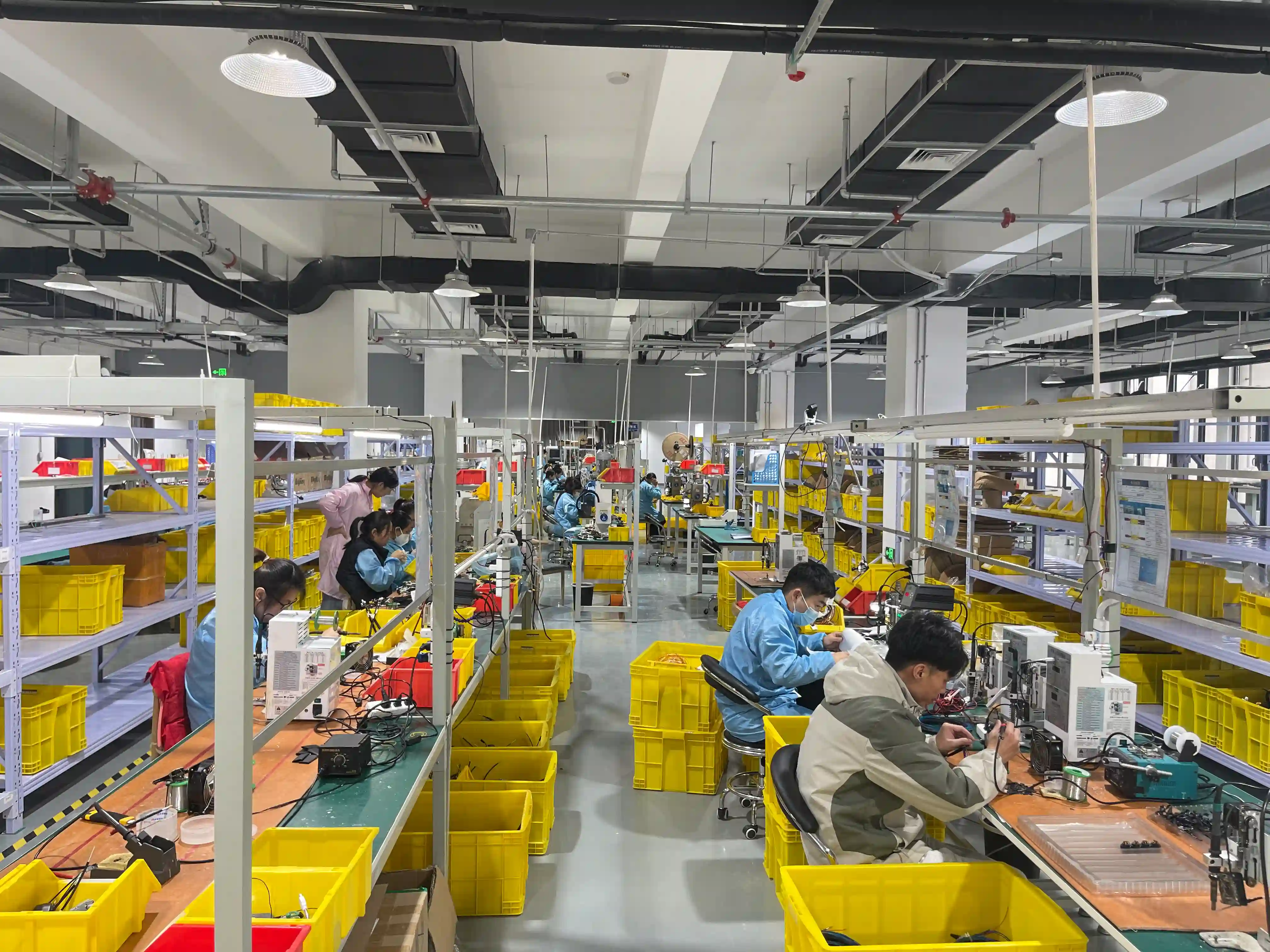
Companies often make the same costly mistakes when selecting cable assembly suppliers. The allure of low prices or quick delivery promises often blinds buyers to warning signs that experienced procurement professionals spot immediately. This guide shares the red flags procurement teams should recognize before placing an order.
Whether you're sourcing wire harnesses for automotive applications, medical device cables, or industrial control systems, these warning signs apply universally. Recognizing them early can save you from quality disasters, delivery failures, and damaged customer relationships.
Quick Severity Reference
Critical (4)
Walk away immediately. No quality system, unrealistic pricing, audit resistance, inadequate testing, financial instability.
High (4)
Proceed with extreme caution. Communication issues, missing certifications, no sample capability, no IP protection.
Medium (2)
Monitor closely. High turnover suggests problems but may be manageable with proper oversight and contracts.
The cheapest quote rarely produces the lowest total cost. Quality corrections, expedited replacement parts, and customer recovery can erase initial savings. Supplier due diligence requires time upfront but reduces these downstream costs.
The 10 Red Flags in Detail
No Documented Quality Management System
A supplier without ISO 9001 certification or documented quality procedures is gambling with your product quality.
Warning Signs
- No incoming material inspection records
- Missing process control documentation
- No calibration certificates for test equipment
- Absence of non-conformance tracking
- No documented corrective action process
Question to Ask
"Can you provide your ISO 9001 certificate and quality manual?"
Potential Consequence
20-30% higher defect rates compared to certified suppliers
Unrealistically Low Pricing
If a quote is 30%+ below market rate, something is being compromised—materials, labor standards, or testing.
Warning Signs
- Using non-compliant or counterfeit materials
- Skipping critical testing steps
- Subcontracting to unqualified facilities
- Poor labor conditions affecting quality
- Hidden fees added after production starts
Question to Ask
"Please provide a detailed cost breakdown including materials, labor, and testing."
Potential Consequence
Counterfeit components cause 15-20% of electronic failures
Poor Communication and Response Times
Slow responses during quoting predict worse communication during production crises.
Warning Signs
- More than 48 hours to acknowledge inquiries
- Vague or incomplete answers to technical questions
- No dedicated point of contact assigned
- Time zone gaps without coverage plan
- Language barriers without technical translation
Question to Ask
"Who will be my dedicated account manager and what are your response time commitments?"
Potential Consequence
Communication issues cause 40% of supplier relationship failures
Reluctance to Allow Factory Audits
Any reputable manufacturer welcomes audits. Resistance suggests hidden problems.
Warning Signs
- Only offering virtual tours with restricted views
- Requiring excessive advance notice (4+ weeks)
- Limiting audit scope or areas accessible
- No third-party audit reports available
- Claiming 'confidentiality' for basic processes
Question to Ask
"Can we schedule an unannounced factory visit within the next two weeks?"
Potential Consequence
Hidden subcontracting discovered in 35% of suppliers avoiding audits
Missing or Outdated Certifications
Expired certifications or inability to provide current documentation indicates compliance issues.
Warning Signs
- ISO certificates older than 3 years
- No industry-specific certifications (IATF, AS9100, ISO 13485)
- Unable to provide UL/CSA agency listings
- No RoHS/REACH compliance documentation
- Missing conflict minerals declarations
Question to Ask
"Provide current copies of all quality and compliance certifications."
Potential Consequence
Non-compliant products face import bans and legal liability
High Employee Turnover
Constant workforce changes mean inconsistent quality and lost institutional knowledge.
Warning Signs
- Different contacts every time you call
- New operators on your production line
- Management changes within last 12 months
- Unable to provide turnover statistics
- Training records show constant re-training
Question to Ask
"What is your annual employee turnover rate and average operator tenure?"
Potential Consequence
High turnover correlates with 2-3x higher defect rates
No Sample or Prototype Capability
Inability to produce quality samples suggests they cannot handle your production requirements.
Warning Signs
- Refusing to provide samples before order
- Samples differ significantly from production units
- Long lead times for simple samples (8+ weeks)
- No engineering support for sample development
- Charging excessive fees for basic prototypes
Question to Ask
"Can you provide 5-10 samples matching our specifications within 2 weeks?"
Potential Consequence
Sample quality issues predict 80% of production problems
Limited Testing Equipment
Without proper test equipment, quality is just a hope, not a guarantee.
Warning Signs
- No continuity/hipot testing capability
- Missing pull force testing equipment
- No environmental test chambers
- Outdated or uncalibrated instruments
- Outsourcing all testing to third parties
Question to Ask
"Provide a list of all test equipment with calibration certificates."
Potential Consequence
Untested products have 10x higher field failure rates
No Intellectual Property Protection
Without NDA processes and data security, your designs may end up with competitors.
Warning Signs
- Reluctance to sign non-disclosure agreements
- No visitor policy or access controls
- Customer drawings visible in open areas
- Sharing reference designs with competitors
- No secure file transfer systems
Question to Ask
"What is your policy for protecting customer intellectual property?"
Potential Consequence
IP theft costs manufacturers billions annually
Financial Instability Signs
A supplier in financial trouble will cut corners, delay shipments, and may disappear mid-production.
Warning Signs
- Requesting larger upfront payments (>50%)
- Frequent ownership or name changes
- Downsizing production capacity
- Delayed payments to their suppliers
- Recent major customer losses
Question to Ask
"Can you provide financial references and credit reports?"
Potential Consequence
Supplier bankruptcy can halt your production for months
How to Evaluate Communication Quality
| Metric | Good Supplier | Red Flag Supplier |
|---|---|---|
| Initial Response | Same business day | 3+ days or no response |
| Quote Turnaround | 2-5 business days | 2+ weeks |
| Technical Questions | Detailed, specific answers | Vague or deflecting |
| Point of Contact | Dedicated project manager | Different person each time |
| Problem Resolution | Proactive with solutions | Blames others, makes excuses |
| Documentation | Written confirmations | Verbal-only commitments |
Difficult communication during supplier evaluation is a warning sign because response quality may deteriorate further after production begins. Buyers should resolve these concerns before their schedules depend on the supplier.
Certification Requirements by Industry
Different industries require different certifications. Here's what to expect from qualified suppliers. For more details, see our guide on wire harness certifications.
| Industry | Required Certs | Recommended Certs | Agency Listings |
|---|---|---|---|
| Automotive | IATF 16949, ISO 9001 | IPC/WHMA-A-620 | UL, SAE |
| Aerospace | AS9100, ISO 9001 | NADCAP, IPC J-STD | Boeing D6, Airbus |
| Medical | ISO 13485, FDA registration | ISO 14971 | UL 60601, IEC 60601 |
| Industrial | ISO 9001 | IPC/WHMA-A-620 | UL, CE |
| Telecom | ISO 9001, TL 9000 | IPC/WHMA-A-620 | UL, CSA, CE |
| Consumer | ISO 9001 | ISO 14001 | UL, CE, FCC |
Supplier Pre-Qualification Checklist
Use this checklist before moving forward with any cable assembly supplier:
Certifications
- ISO 9001 current
- Industry-specific certs valid
- UL/agency listings verified
- RoHS/REACH declarations
Capabilities
- Equipment list matches needs
- Test capabilities adequate
- Sample quality acceptable
- Capacity for volume
Systems
- Quality manual reviewed
- Traceability demonstrated
- Change control process
- Document control system
Business Health
- Financial references checked
- Insurance certificates valid
- Customer references contacted
- Third-party audit reviewed
Understanding Pricing: What's Normal vs. Suspicious
| Cost Component | Typical Range | Red Flag Range | What They're Cutting |
|---|---|---|---|
| Materials | 40-60% of total | <30% of total | Non-compliant or counterfeit parts |
| Direct Labor | 20-30% of total | <15% of total | Untrained workers, poor conditions |
| Testing/QC | 5-10% of total | <2% of total | Skipping tests, sample-only testing |
| Overhead/Profit | 15-25% of total | <10% of total | Unsustainable, hidden fees coming |
| Tooling | Amortized or separate | "Included" at low price | Shared/generic tooling, quality issues |
The best time to discover problems is before signing a contract, not after your production line is depending on parts that aren't coming. Every hour spent on due diligence reduces the risk of crisis management later. Thorough supplier qualification is a practical safeguard.
What Quality Suppliers Do Differently
During Quotation
- Ask clarifying questions about your application
- Provide detailed cost breakdowns
- Suggest design improvements proactively
- Identify potential manufacturability issues
- Offer to involve their engineers early
During Production
- Send first article inspection reports unprompted
- Proactively communicate any issues
- Provide production progress updates
- Include full test data with shipments
- Own mistakes and offer solutions
Frequently Asked Questions
How many suppliers should I evaluate before choosing?
Evaluate at least 3-5 suppliers for any significant project. This gives you pricing benchmarks, reveals which capabilities are standard vs. exceptional, and provides negotiating leverage. For critical applications (medical, aerospace), consider 5-7 suppliers.
Should I always choose the certified supplier even at higher cost?
For regulated industries (automotive, aerospace, medical), certifications are non-negotiable. For general industrial applications, a supplier actively working toward certification may be acceptable if they demonstrate strong quality systems. Learn more about essential certifications.
What if a supplier shows one red flag but excels elsewhere?
Medium-severity red flags may be manageable with proper contracts and oversight. However, any critical red flag (no quality system, audit resistance, financial instability) should disqualify the supplier regardless of other strengths.
How do I verify certifications are legitimate?
Check certificates directly with the issuing body. ISO certificates can be verified through the certification body's database. UL listings are verifiable at the public UL certification database. For industry-specific certs, contact the issuing organization directly.
Is it worth paying for a third-party audit?
For orders over $50,000 annually or critical applications, a third-party audit ($3,000-$10,000) is excellent insurance. Firms like SGS, Bureau Veritas, and Intertek provide standardized supplier assessments.
Related Articles
Ready to Work with a Trusted Supplier?
We welcome your due diligence. Get our certifications, request a factory audit, and see why leading companies trust us with their cable assembly needs.