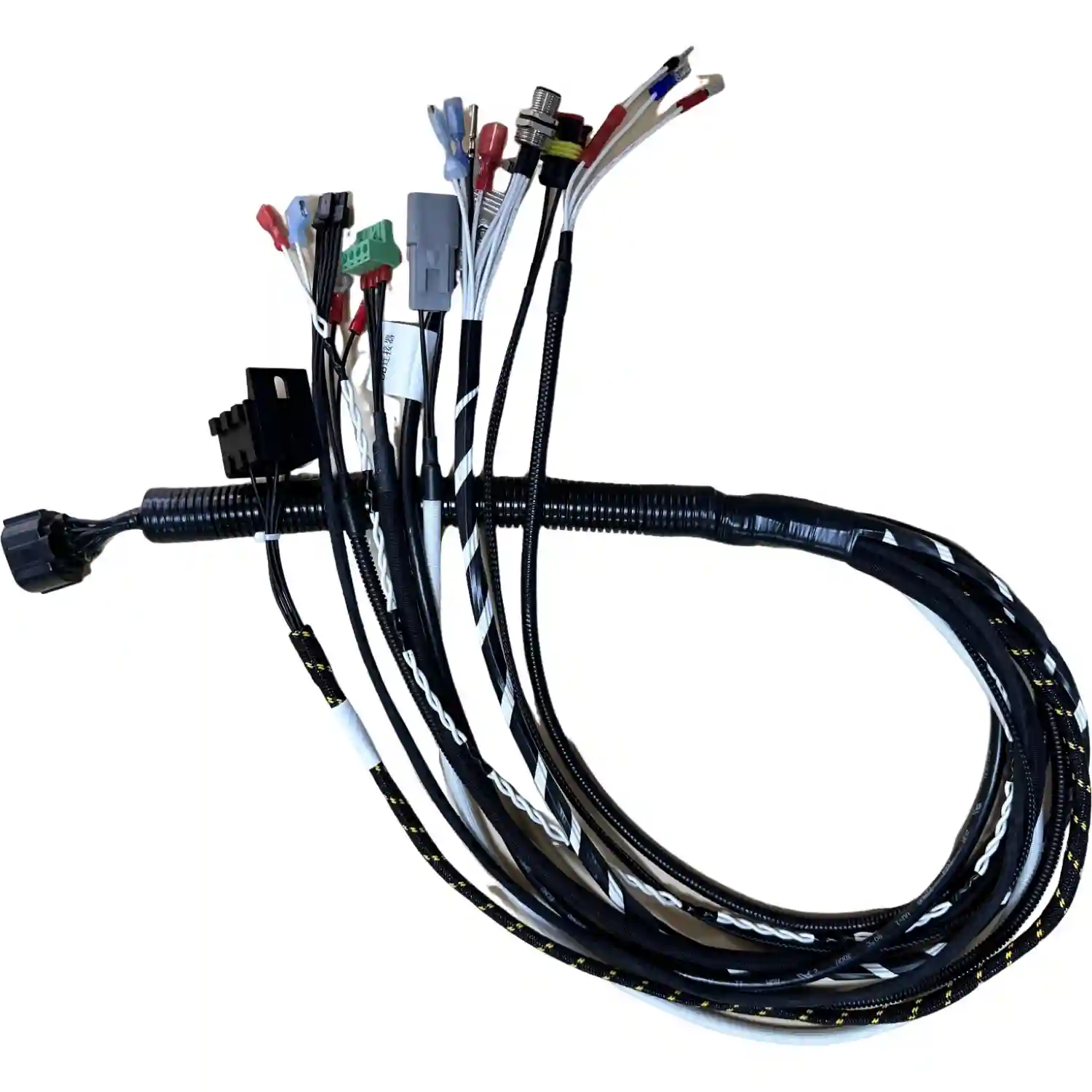
Minimum order quantity is one of the most misunderstood parts of buying a custom cable assembly or wire harness. Buyers often ask, "What is your MOQ?" as if it should have one fixed answer. In reality, MOQ is a financial and operational boundary created by setup time, material packaging, tooling, testing, and release risk. The same supplier may quote 1 piece for a prototype, 25 pieces for a pilot build, and 250 pieces for a production release using the exact same drawing.
The economic logic is similar to economic order quantity and other inventory planning models: small lots reduce inventory exposure, but larger lots spread fixed cost across more units. In cable assembly, that fixed cost includes engineering review, crimp tooling setup, cut-and-strip programming, fixture prep, inspection paperwork, and first article approval. If you ignore those factors, you either overbuy inventory or underbuy and pay a high unit price.
Common range for custom prototype requests
Typical pilot-lot range before production release
Common unit-price premium for one-off builds versus repeat lots
Typical window to recommend the right MOQ when RFQ data is complete
MOQ is an economic calculation. If a program needs 3 hours of setup and only 2 finished cables, the unit price will look expensive no matter how cooperative the factory wants to be.
What MOQ Really Means in Cable Assembly
In standard catalog products, MOQ usually means the smallest quantity a seller is willing to ship. In custom manufacturing, MOQ is more nuanced. It can mean the smallest commercially sensible quantity, the minimum lot that absorbs setup cost, or the minimum purchase required by upstream materials. That distinction matters. A supplier may physically build one cable, but the real commercial breakpoint could be 25 pieces because terminals are packed in strips, labels require serialized setup, or the test fixture takes 45 minutes to configure.
This is why buyers should separate three questions. First: what is the smallest quantity the factory can build? Second: what is the smallest quantity that produces a rational unit price? Third: what is the best quantity for qualifying the program before committing to volume? Those answers are rarely identical. Teams that collapse them into one number often make the wrong decision.
A mature supplier working under disciplined quality systems such as ISO 9001 and workmanship controls aligned to IPC practices will usually explain this openly. Good suppliers quote the low-volume option, the pilot-lot option, and the expected production release size so the buyer can see where the cost breaks occur instead of guessing.
Questions Buyers Should Ask
- What is the minimum build quantity for prototypes?
- At what quantity does pricing improve materially?
- Which materials or tools are driving the minimum?
- Is annual forecast enough to support a smaller first PO?
Common Buyer Mistakes
- Asking for 1 piece when 10 validation samples would answer more engineering questions
- Comparing prototype price to production price as if the setup burden were identical
- Ignoring test, labeling, and packaging requirements during the first quote cycle
- Hiding annual demand, which makes the supplier price maximum risk into the first order
MOQ Range Comparison Table
The best MOQ depends on what you are trying to learn or release. The table below is a practical framework for matching quantity to program stage instead of defaulting to a random number.
| Order Type | Typical Quantity | Main Cost Driver | Best Use |
|---|---|---|---|
| Prototype fit check | 1-3 pcs | Engineering review, setup labor, available materials | Mechanical validation and connector orientation checks |
| Functional prototype | 5-20 pcs | Test preparation, sample iteration, small material buffers | Electrical validation and early lab testing |
| Pilot build | 25-100 pcs | FAI, work instruction cleanup, process repeatability | Pre-production verification and customer approval |
| Standard production | 100-500 pcs | Material reels, labor efficiency, schedule batching | Stable monthly or quarterly replenishment |
| Tooled or overmolded program | 250-1,000+ pcs | Tool amortization, molding setup, fixture utilization | Programs with durable forecast and frozen design |
| High-volume release | 1,000+ pcs | Dedicated line planning, annual agreements, supplier commits | Automotive, appliance, and repeat OEM demand |
Most disputes around MOQ happen because the buyer wants prototype flexibility while the supplier is quoting with production economics. The fix is not to argue about one number. The fix is to request separate quantity bands. Ask for pricing at 1 piece, 10 pieces, 50 pieces, and the expected production release. Once those breakpoints are visible, the best decision is usually obvious.
A 20-piece pilot lot often provides more process information than a 2-piece sample, but it does not lock you into full production. That middle band is where many teams save money by validating the process before scaling it.
Why Minimums Exist Even When Suppliers Say No MOQ
Pages like our no-MOQ program are useful because they communicate flexibility. But flexibility should not be confused with identical economics at every quantity. A supplier can accept a 1-piece job and still need to recover the same engineering labor, machine setup, crimp validation, and inspection time that would also exist on a 50-piece run.
The most common hidden minimums come from upstream purchasing rather than assembly. Connector families may come in reel or bag multiples. Specialty cables can require minimum footage. Labels and packaging often have print setup charges. If the program includes overmolding, potting, or custom test fixtures, the practical MOQ can rise sharply until the design stabilizes. That is why programs with custom overmolding, sealed automotive connectors, or special medical documentation rarely behave like a simple cut-and-crimp sample order.
Material minimums are often the hidden MOQ
Suppliers do not always impose MOQ because they want to. Connector packaging, reel multiples, tape-and-reel seals, custom jacket extrusions, and overmold compounds can force a practical minimum long before assembly labor becomes the issue.
Setup time matters even for a one-piece order
Print review, tooling selection, cut-length programming, sample labeling, and electrical test setup can consume 1 to 4 hours before the first unit is complete. That cost has to land somewhere, which is why 1 piece is possible but rarely cheap.
Forecast quality changes supplier flexibility
A supplier is more willing to accept a low first release when annual demand and revision control look credible. Forecast confidence lowers risk on stocking wire, terminals, labels, and protective materials for future releases.
Process maturity reduces the penalty of low volume
When the drawing is stable, test criteria are fixed, and tooling is already qualified, repeat lots of 25 to 50 pieces are far easier to support than a brand-new 25-piece job with open questions.
Where the First-Order Cost Usually Goes
How to Choose Prototype, Pilot, and Production Quantities
The right answer depends on the decision you need to make next. If you only need to verify fit, order 1 to 3 samples. If you need functional testing across multiple units, 5 to 20 is usually more rational. If you are trying to release a stable process, validate work instructions, and prove your packaging and test flow, a pilot lot of 25 to 100 pieces is usually the most efficient band.
For teams preparing for scale, the transition from sample to pilot deserves the same discipline as the transition covered in our guide to prototype-to-production transfer. Pilot quantities are where routing errors, labeling confusion, weak inspection points, and documentation gaps usually surface. Buying too few parts at that stage often creates false confidence because the sample lot passes while the repeatable process is still unproven.
The final production MOQ should be built around annual usage and release cadence. A program consuming 2,400 assemblies per year may work best with 200-piece monthly releases, 600-piece quarterly releases, or a hybrid approach depending on lead times, warehouse cost, and revision risk. The best answer is the one that balances setup efficiency with inventory exposure, not the one with the lowest theoretical unit price.
Prototype
Use the smallest quantity that answers the immediate engineering question. For many custom builds that means 1 to 10 pieces, especially when drawings may still change.
Pilot Lot
Use 25 to 100 pieces when you need repeatability data, operator feedback, FAI, and customer approval before volume launch.
Production
Set release size using annual demand, safety stock, component lead time, and forecast confidence instead of copying the pilot quantity.
If the first PO is small but the annual volume is significant, state that clearly. A supplier will price 20 pieces very differently when they know the next 12 months likely require additional units and the drawing is under revision control.
How Buyers Should RFQ for Better MOQ Outcomes
Better MOQ decisions begin with better RFQs. The supplier cannot recommend the right quantity band if the quote request contains only a sketch and a target price. Include connector part numbers, conductor specs, target environment, test requirements, labeling, and annual forecast. If you already have a structured package, our RFQ template and wire harness RFQ guide make this easier.
Ask for at least three quote bands: prototype, pilot, and expected production release. That forces the economics into the open. It also reveals whether the practical MOQ is driven by labor, materials, or tooling. If the 1-piece and 10-piece price barely change but the 50-piece price drops sharply, the program is probably setup-heavy. If the unit price barely improves even at 100 pieces, the BOM itself may be dominated by expensive connectors or custom cable.
Buyers who do this well usually spend less over the life of the program. They avoid false savings from ultra-small orders, and they avoid waste from overbuying before the design is stable. They also make it easier for the supplier to support rapid prototyping when speed matters and transition cleanly into production once the part is frozen.
MOQ RFQ Checklist
MOQ Negotiation Mistakes to Avoid
The weakest MOQ negotiations focus only on lowering the quantity number. The stronger approach is to remove the reason that high minimums exist in the first place. If tooling cost is the issue, ask whether the pilot lot can share existing applicators. If material minimums are the issue, ask whether an approved alternate wire or common connector family can reduce exposure. If uncertainty is the issue, offer a realistic annual forecast and a scheduled release plan instead of requesting a one-time low quantity with no visibility.
Buyers who treat MOQ as a joint planning problem usually get better commercial outcomes than buyers who treat it as a contest. The practical target is not merely the lowest possible first order. It is the lowest-risk path to prove the design, protect cash, and establish a repeatable production model. In many cases, that means accepting a slightly larger pilot lot now so the program avoids expensive resets, emergency buys, and requalification delays later.
Frequently Asked Questions
What is a typical MOQ for custom cable assembly orders?
There is no universal MOQ. Simple prototype jobs can start at 1 to 5 pieces, while production orders with custom tooling, special connectors, or overmolding often land in the 25 to 500 piece range. Programs with dedicated applicators, molded components, or annual release schedules can move above 1,000 pieces per shipment.
Can I really order one custom cable assembly?
Yes, if the supplier supports prototype work and the BOM uses available materials. The real question is cost, not physical possibility. A 1-piece order may carry the same setup effort as a 25-piece build, so unit price can be 2x to 6x higher than a small pilot lot.
Why do some cable assembly suppliers say they have no MOQ?
No-MOQ claims usually mean the supplier accepts low quantities, not that economics disappear. You still pay for setup, engineering review, crimp tooling changeover, test preparation, and any minimum material buys. A no-MOQ supplier is offering flexibility, but pricing still reflects the real labor and component burden.
How should I choose prototype, pilot, and production quantities?
For first-fit checks, 1 to 3 pieces is often enough. For functional verification, many teams buy 5 to 20 pieces. Pilot builds commonly run 25 to 100 pieces so FAI, operator instructions, packaging, and test flow can be proven before volume release. Production quantities should follow annual demand, release cadence, and component lead times rather than an arbitrary round number.
Does annual volume matter more than the first purchase order quantity?
Often yes. A supplier may accept a first PO of 20 pieces if the annual forecast is 2,000 pieces and the program looks stable. Forecast visibility helps justify tooling, buffer inventory, and pricing assumptions. A single 20-piece order with no repeat demand usually prices very differently.
What information should I send to get an MOQ recommendation?
Provide drawings, connector part numbers, wire specs, estimated annual volume, target release size, test requirements, packaging rules, and whether the build needs FAI or validation samples. With that information, a supplier can separate one-time NRE from repeatable production cost and recommend the right quantity band within 24 to 72 hours.
Related Reading
Wire Harness RFQ Guide
Build a better quote package so pricing and MOQ assumptions are clear from the start.
Read articlePrototype to Production Transition
Move from sample builds to stable releases without surprise cost or process drift.
Read articleFirst Article Inspection for Cable Assembly
Use FAI to validate process readiness before committing to larger production lots.
Read article