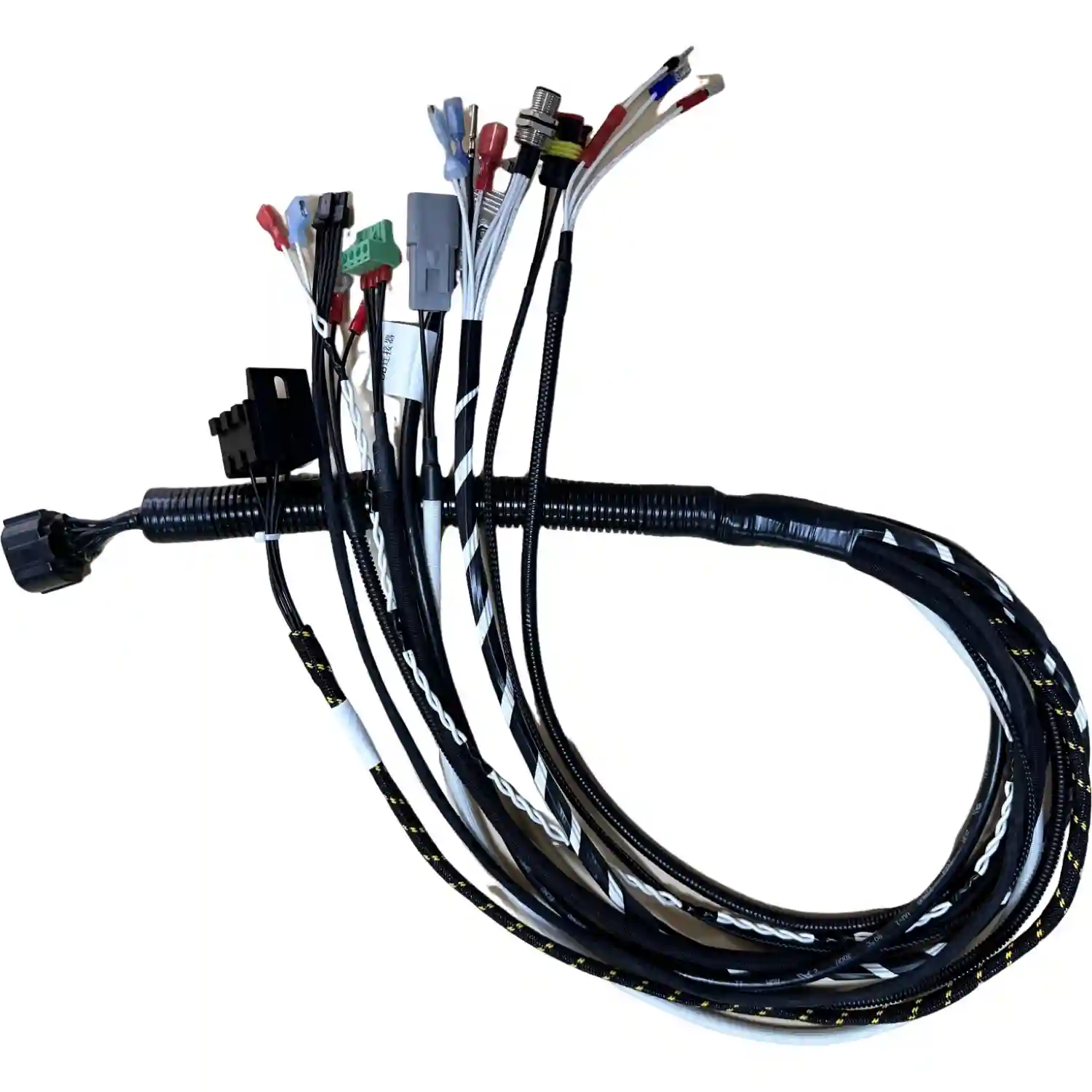
The hardest part of a wire harness program is often not the first sample. It is the moment when a prototype that worked on an engineer's bench has to become a product that operators can build every day, buyers can source without surprises, and quality teams can release without subjective judgment. That transition is where schedules slip and hidden costs appear.
On this site, we already cover rapid wire harness prototyping, design-for-manufacturability through our DFM checklist, and release evidence in our first article inspection guide. This article connects those pieces into one production transition workflow. Teams often borrow structure from PPAP, FMEA, and ISO 9000 principles to make that handoff disciplined.
Phases from prototype sample to full production
Typical pilot builds before release
Recommended final electrical test at launch
Target time to capture prototype lessons into documents
"A prototype can survive with tribal knowledge. Production cannot. If the operator needs verbal coaching on pin orientation, strip length, or pull test limits, the design is not released no matter how good the sample looked."
Why Prototype-to-Production Transitions Fail
Most failures are not caused by one dramatic technical error. They come from small assumptions that are acceptable in prototyping but dangerous in production. A prototype technician can compensate for a missing wire list, hand-adjust a crimp setup, or remember that one connector seal must be lubricated before insertion. A production line with multiple operators and multiple shifts cannot depend on memory like that.
The common pattern looks like this: the engineering sample passes, demand increases, purchasing orders long-lead components, and then the factory discovers the drawing is ambiguous, the test fixture is incomplete, or the planned takt time never included rework and inspection. At that point, the program is fighting three problems at once: design clarity, process repeatability, and supply continuity.
The fix is to treat transition as a formal phase rather than an automatic consequence of a successful sample. Prototype teams should ask whether the released definition is clear enough for a new operator to build the product correctly on day one. If the answer is no, the work is still in development.
Prototype Behaviors
- Engineer-approved substitutions to save time
- Manual fit adjustments and one-off routing choices
- Bench testing based on engineering judgment
- Low-volume purchasing from readily available stock
Production Risks
- Uncontrolled alternates create fit or compliance drift
- Hidden routing tricks become repetitive assembly defects
- Undefined pass or fail criteria create inconsistent releases
- Long-lead sourcing exposes BOM weaknesses after launch
The 6-Phase Release Model
A strong transition plan separates prototype intent from production evidence. The phase model below is not bureaucracy for its own sake. It is a way to make sure design knowledge becomes factory knowledge. Programs with higher regulatory or field-failure risk may expand each phase, but almost every harness launch follows this logic.
| Phase | Primary Target | Required Inputs | Release Evidence |
|---|---|---|---|
| Engineering prototype | Prove fit, connector mating, and basic function | Preliminary BOM, drawing, sample labels, basic test notes | Major issues identified within 24-72 hours |
| Design validation build | Confirm routing, bend radius, strain relief, and testability | Updated drawing, DFM notes, inspection points, fixture concept | Critical design risks reduced before tooling spend |
| Pilot build | Check repeatability with released materials and operators | Controlled BOM, work instruction, tester limits, packaging draft | Cycle time and defect data captured on first lot |
| First article approval | Approve the exact production configuration | FAI report, dimensional checks, photos, traceability records | 1-5 samples formally accepted by customer or QA |
| Production validation | Prove process capability at planned volume | Control plan, training records, calibrated tools, backup sources | Stable yield and material flow at target takt |
| Mass production | Ship repeatable units with controlled changes | Revision lock, ECN workflow, final QC plan, lot traceability | 100% test and documented change management |
"The jump from prototype to pilot is where numbers start to matter. If you cannot state the crimp height window, the pull-force requirement, the test program revision, and the allowed alternates, you do not have a production package yet."
Notice that every later phase adds stronger evidence, not just more volume. A pilot build is valuable because it exposes what the prototype team never needed to document. It measures real assembly time, how often terminals are mis-inserted, whether labels survive handling, and whether packaging protects the harness after shipment. That evidence should feed directly into the control plan and operator training package.
The 5 Release Gates That Matter
Freeze the commercial definition
Before anyone scales the build, confirm the customer part number, annual volume, shipment lot size, and approved alternates. Prototype teams often work with temporary descriptions, but production purchasing needs one released commercial target. If 2 connector families are still under evaluation, the program is not ready for production scheduling.
Close DFM and routing issues
Prototype builds reveal routing conflicts, impossible crimps, seal damage risk, and weak strain relief points. Those findings must be translated into drawing updates and operator instructions. A harness that only works in the hands of a senior prototype technician is not a released product.
Validate test coverage
Moving from bench checks to volume production usually means converting tribal knowledge into an executable test plan. Define continuity, hipot, insulation resistance, shielding continuity, or RF checks with numerical limits. If an operator cannot tell the difference between pass and fail in under 60 seconds, your test method is not ready.
Approve first article and pilot evidence
A first article inspection should confirm the exact released configuration, not an approximate sample. Use pilot lots to capture real assembly time, rework rate, torque misses, and material shortages. Many teams align these reviews with APQP or PPAP-style thinking even when the customer does not explicitly require that documentation.
Standardize training and tooling
Production quality depends on repeatable setup. Document crimp applicators, stripping windows, tester programs, fixture orientation, label placement, and pack-out sequence. One undocumented fixture shim or one untrained second shift can undo a successful prototype program in a week.
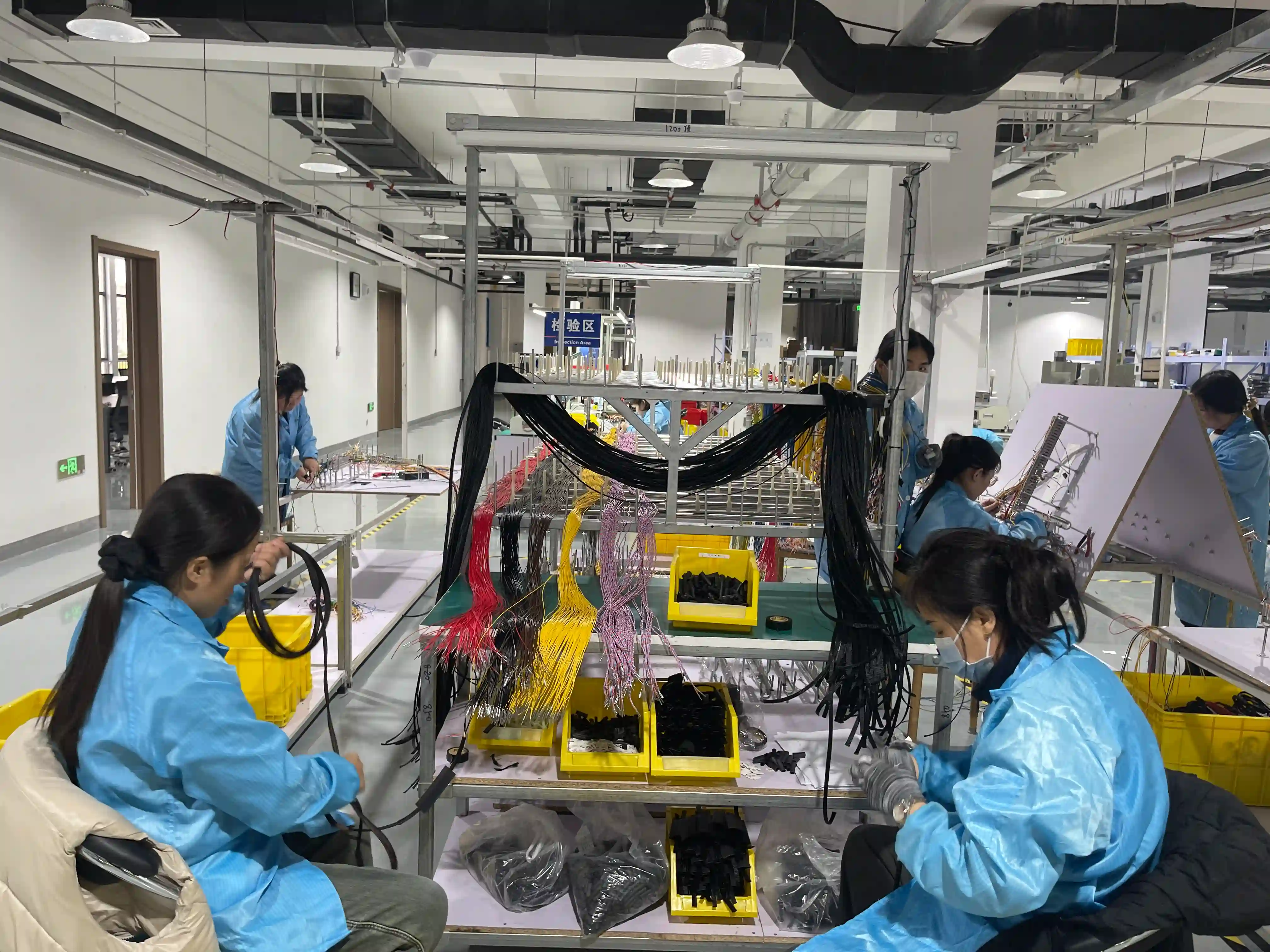
A practical rule is: if a pilot lot produces more than 2 recurring defects per 100 pieces, the process needs another correction loop before scale-up. It is cheaper to delay launch by 3 days than to sort 3,000 units in the field.
Prototype vs Production Requirements
The table below summarizes the mindset change. Prototype success is about proving that a harness can be built. Production success is about proving it can be built repeatedly at the right cost, quality level, and lead time.
| Area | Prototype Standard | Production Standard |
|---|---|---|
| BOM control | Temporary substitutes may be accepted | Approved alternates and revision lock required |
| Work instructions | Senior technician knowledge may fill gaps | Operator-readable instructions with photos required |
| Testing | Bench verification or engineering review | Validated tester with numerical pass/fail limits |
| Tooling | Hand tools and temporary fixtures acceptable | Calibrated tools and repeatable fixtures required |
| Quality records | Basic sample notes | Traceability, FAI, and lot records retained |
| Supply planning | Spot buys from stock | Forecasted lead times and risk-managed sourcing |
Practical Launch Plan
If you need a working checklist, use this sequence. First, collect all prototype findings within 24 hours of sample approval. Second, convert those findings into controlled documents: drawing updates, crimp specs, routing photos, tester revisions, and packing instructions. Third, run a pilot lot using production-intent materials and labor rather than a special engineering team. Fourth, perform first article review and close any corrective actions. Finally, release the first production order only after tooling, training, and incoming material plans are verified.
Buyers should also protect schedule by sending a complete RFQ package, aligning pilot testing with the factory's test capability, and deciding early whether rapid samples from a 48-hour prototype workflow must be converted into a different production setup. Keeping the same supplier from prototype through launch usually reduces revision loss because the team that learned the first issues also builds the control plan.
Production Transition Checklist
- Freeze drawing revision, BOM, wire list, and approved alternates.
- Add numerical acceptance criteria for continuity, hipot, pull force, and visual defects.
- Run 1 to 3 pilot builds with production-intent tools, operators, and packaging.
- Complete FAI and capture corrective actions before lot release.
- Train operators on the exact released revision and verify backup coverage on second shift.
- Launch volume production only after material lead times and ECN handling are defined.
Frequently Asked Questions
What is the difference between a wire harness prototype and a production release?
A prototype proves fit and basic function, while a production release proves repeatability. Production release usually requires controlled drawings, approved BOMs, validated test instructions, and at least 1 approved first article build before volume orders start.
How many pilot builds are typically needed before wire harness mass production?
Most programs need 1 to 3 pilot or pre-production builds. Low-risk revisions may release after 1 successful pilot, while automotive, medical, or defense programs often need 2 or 3 builds with documented corrective actions and test data.
What documents should be frozen before moving a cable assembly into production?
Freeze the released drawing, BOM, wire list, label file, packing spec, workmanship standard, test procedure, and revision history. If you use IPC/WHMA-A-620, the acceptance class and any customer deviations should be written into the work instruction before release.
When should first article inspection happen during prototype-to-production transition?
First article inspection should happen after the configuration is frozen but before full production launch. Many teams inspect 1 to 5 samples, review dimensional and electrical results, and require formal approval before scheduling the first production lot.
What usually causes delays when scaling a harness from prototype to production?
The biggest delays are incomplete drawings, missing test limits, unapproved substitute parts, long-lead connectors, and unrealistic labor assumptions. Even a 2 mm routing change or a 10 N pull-force miss can trigger rework if the process was never validated in pilot builds.
Can the same supplier handle both rapid prototypes and production wire harnesses?
Yes, and that is often the fastest path if the supplier has both prototype agility and production controls. The key is whether the factory can convert prototype knowledge into standardized tooling, training, traceability, and 100% test coverage for the released revision.
Related Resources
First Article Inspection for Cable Assembly
Use FAI to approve the exact released configuration before launch.
Read moreWire Harness DFM Checklist
Catch manufacturability issues before pilot builds consume schedule.
Read moreWire Harness Testing Methods
Turn engineering checks into production-ready acceptance tests.
Read more