Table of Contents
Quick Answer: What Is a Butt Splice?
A butt splice is an inline wire-to-wire connector that joins two stripped conductors end-to-end inside one compression barrel. In wire harness production, it is typically used for lead repair, wire-length adjustments, branch consolidation, or engineering changes that must preserve a compact harness profile.
The hardware itself is only part of the decision. A reliable splice depends on conductor size, strand class, insulation OD, terminal barrel design, and the crimp profile produced by the tool. That is why our teams treat butt splices the same way we treat terminals on a connector: as a validated termination process, not as a generic repair accessory. If you need a broader foundation on crimp process control, review our guides to crimping capability, crimping best practices, and continuity testing.
From a standards perspective, butt splices fall into the broader world of crimped electrical terminations. They are also one variant of an electrical connector, which means the same basic rules apply: controlled material, controlled tooling, controlled inspection, and no guessing.
"A butt splice is acceptable only when the splice barrel, wire gauge, and die cavity were validated as one set. If any one of those three changes, the old pull-force data and IPC/WHMA-A-620 visual acceptance no longer protect you."
Tooling Match
Choose the splice family and the die set together. A good connector with the wrong die still fails.
Environment
Moisture, coolant, and salt exposure usually justify adhesive-lined heat shrink splices.
Verification
Define continuity, pull test, and visual criteria before the first production lot starts.
Rework Limits
Do not re-crimp a rejected barrel. Replace it and document the cause.
Butt Splice Types Chart
The easiest way to create harness risk is to specify only "butt splice" on the drawing. The splice family changes cost, tooling, environmental performance, and allowable rework flow. Use the table below to narrow the options before sourcing.
| Splice Type | Best Use | Sealing | Gauge Fit | Main Risk |
|---|---|---|---|---|
| Uninsulated butt splice | Controlled factory builds with added sleeve or overmold | None by itself | Tight gauge-specific fit | Wrong die or missing secondary insulation step |
| PVC insulated butt splice | Low-cost panel wiring and dry indoor service | Basic insulation only | Color-coded AWG ranges | Sleeve can split if over-crimped |
| Nylon insulated butt splice | General industrial harnesses needing tougher insulation | Better abrasion resistance than PVC | Color-coded AWG ranges | False confidence if moisture sealing is still needed |
| Heat shrink butt splice | Automotive, marine, outdoor, and washdown harnesses | Adhesive-lined environmental seal | Color-coded AWG ranges | Insufficient heat leaves voids at the wire entry |
| Step-down butt splice | Joining dissimilar wire gauges in one controlled splice | Depends on sleeve design | Different gauge on each end | Procurement error if only one wire size is listed |
| Closed-barrel seamless splice | Higher pull force and repeatable production compression | Usually paired with separate sealing | Narrow gauge window | Needs exact tooling and conductor prep |
How to Choose the Right Butt Splice
Start with wire gauge and strand count, not connector color. Many catalog parts use the familiar red, blue, and yellow insulation bands, but those are only a shorthand for a stated wire range. A 22 AWG high-strand silicone lead and a 22 AWG low-strand PVC lead can behave differently in the same barrel because the conductor pack fills the crimp zone differently.
Environment comes next. A dry control cabinet, a rooftop HVAC unit, and an underhood automotive harness may all use inline splices, but the sealing requirement is completely different. If the harness will see salt spray, coolant mist, washdown, or condensation, a heat shrink splice with adhesive lining is usually the safer release choice. If the program later adds braid, overmolding, or a sealed enclosure, an uninsulated or seamless splice plus a separate protection step may be more efficient.
Finally, confirm what the control plan will verify. Some buyers need only continuity and visual inspection, while others require pull testing, cross-sections, and full traceability. If the splice is inside a sealed branch or overmold, you only get one chance to make it right before the assembly becomes expensive to open.
"On outdoor and mobile equipment, the real choice is rarely butt splice versus no butt splice. It is sealed splice versus an unsealed failure path. If the program expects 500-hour salt spray or repeated thermal cycling, the sealing decision belongs in the drawing, not in the operator's judgment."
Crimping Process Controls That Actually Matter
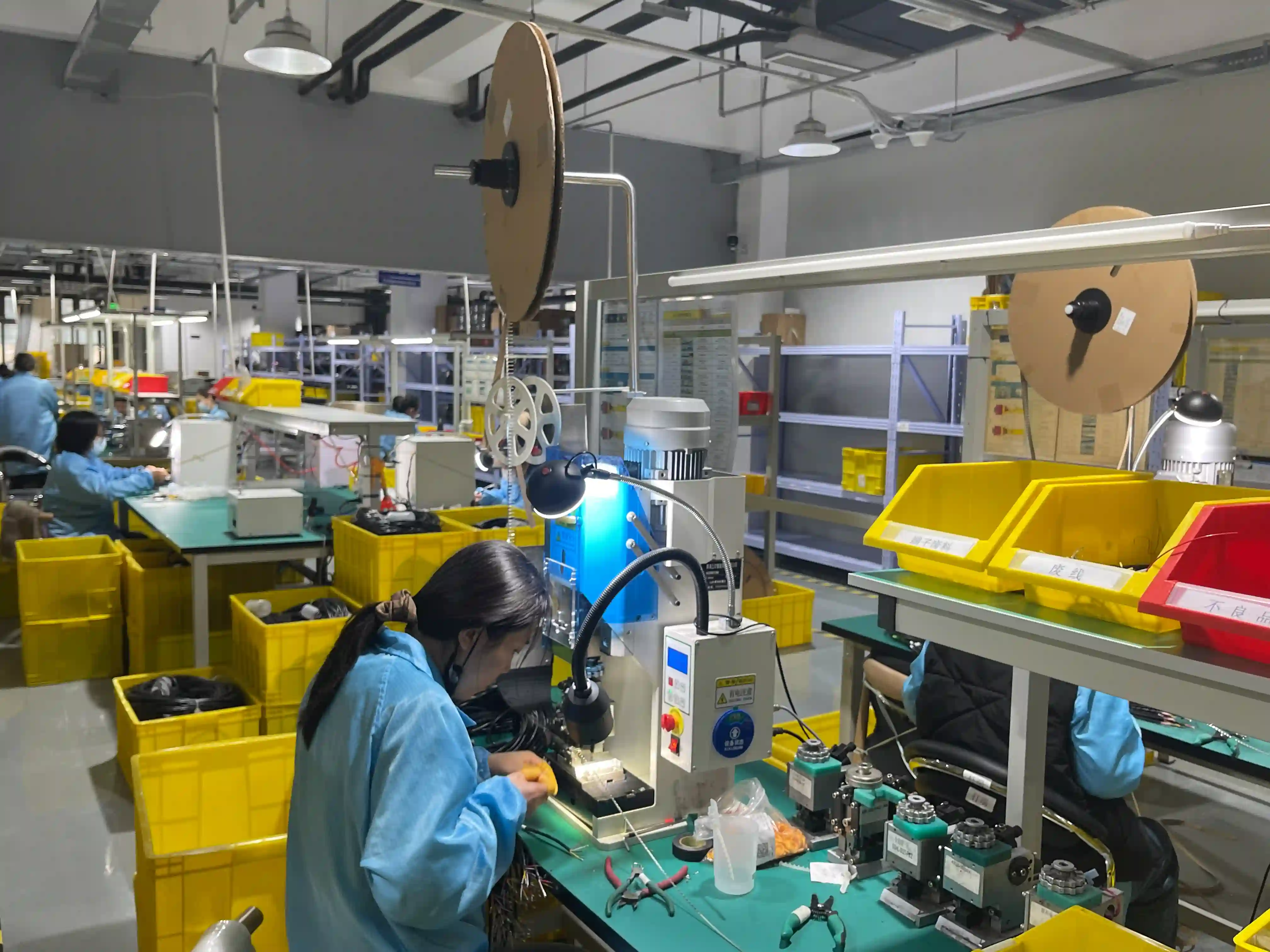
Good butt splices are made before the crimp tool closes. Strip length must place the conductor fully inside the barrel without exposing bare copper outside the sleeve. The conductor ends should meet near the center of the splice, not overlap into each other and not stop short of the compression zone. Operator training matters here because most defects come from insertion error, not from dramatic tool failure.
Tool selection matters just as much. Hand tools can be acceptable for prototype and service work, but production harnesses benefit from ratcheting tools or applicators with a defined die cavity and calibration schedule. When we qualify a splice process, we pair the connector part number, wire family, die cavity, and test method in one released setup. We do not assume that "same color" means equivalent compression across brands.
After crimping, verify continuity and inspect the barrel position on both sides. Where the risk justifies it, add the same verification discipline you would use for other mechanical joints, including pull-force testing. For high-reliability builds, many teams also define sample frequencies at first article, shift change, tool change, and material lot change.
"If a splice can spin in the barrel after crimping, the debate is over. It is a reject. Rotation tells you the compression did not create stable mechanical retention, no matter what the ohmmeter says in that moment. We want first-article retention data and periodic verification every 30 to 60 minutes on production runs."
When Heat Shrink Butt Splices Are Worth the Extra Cost
Heat shrink butt splices solve two different problems at once: conductor termination and environmental sealing. The adhesive flow around the wire entry helps block water ingress, but only if the heating process is controlled. Excessive heat can discolor insulation or thin the sleeve. Insufficient heat leaves channels where moisture can travel directly to the copper strands.
For programs already using protective tubing, compare the total process, not just the connector price. A standard splice plus separate heat shrink tubing may be slower and harder to control than one adhesive-lined splice, especially in shorter branch legs. On the other hand, if the harness later receives potting, a backshell, or an overmold, the premium splice may not add enough value.
Inspection and Test Checks Before Release
- Confirm both wires are fully inserted and centered near the barrel midpoint.
- Check for missing strands, insulation pinch, sleeve splits, or exposed conductor.
- Verify continuity and resistance trend against the approved control plan.
- Run pull-force or retention checks at the defined sampling frequency.
- For sealed splices, inspect adhesive flow and sleeve recovery at both wire exits.
The inspection plan should reflect application risk. For an indoor appliance harness, continuity plus visual criteria may be enough. For an automotive or outdoor cable assembly, the same splice may justify vibration exposure, thermal cycling, or salt-spray review at the validation stage. A failed inline splice often behaves like an intermittent wiring fault, which makes field diagnosis slow and expensive.
Common Sourcing Mistakes With Butt Splices
Avoid These
- Buying by color code only without checking exact AWG and insulation range.
- Mixing connector brands while keeping the old die and pull-test data.
- Using unsealed splices in moisture paths because the harness will be taped later.
- Re-crimping a failed splice instead of cutting it out and replacing it.
Specify These
- Full splice part number, wire gauge range, and approved alternate list.
- Tool model or die cavity and calibration expectation.
- Sealing requirement and visual acceptance criteria.
- Inspection plan covering continuity, retention, and any sample destructive tests.
Frequently Asked Questions
What is a butt splice used for in a wire harness?
A butt splice joins two wires end-to-end in a straight line, usually when a harness branch needs repair, a lead must be extended, or two cut lengths must be joined inside a controlled assembly. In production, the splice barrel and wire gauge must match exactly; even a 2 AWG-size mismatch can reduce pull force and raise resistance.
Are heat shrink butt splices better than standard insulated butt splices?
Heat shrink butt splices are usually better when the harness sees moisture, salt spray, washdown, or engine-compartment contamination because the adhesive sleeve adds environmental sealing. For dry indoor equipment, a standard insulated splice can be sufficient and cheaper by 20% to 40%, provided the crimp height and pull force still meet the released spec.
Can you use one butt splice for different wire gauges?
Only within the connector's approved range. A 22-18 AWG butt splice is not interchangeable with a 16-14 AWG splice, even if the smaller wire appears to crimp. Manufacturers release range limits for a reason: strand fill, barrel compression, and insulation support all change quickly outside that range.
How do you inspect a butt splice after crimping?
Inspect wire insertion depth, centered barrel compression, insulation position, sleeve damage, and color-code match first. Then verify continuity and, where the control plan requires it, perform pull testing or crimp cross-sections. Many production lines sample pull force at first article plus periodic checks every 30 to 60 minutes.
When should a butt splice be rejected?
Reject the splice if strands are missing, wire is not fully inserted, the crimp is off-center, the sleeve is split, adhesive sealing is incomplete, or the splice can be rotated by hand after crimping. On higher-reliability harnesses, any nicked conductor strands or re-crimp attempt on the same barrel is also a reject condition.
Are butt splices acceptable for automotive and medical cable assemblies?
Yes, but only when the drawing, work instruction, and validation plan explicitly allow them. Automotive harnesses often specify sealed heat shrink splices and vibration testing, while medical programs may require documented traceability and process validation under ISO 13485 controls. The application, not the connector name, decides acceptability.