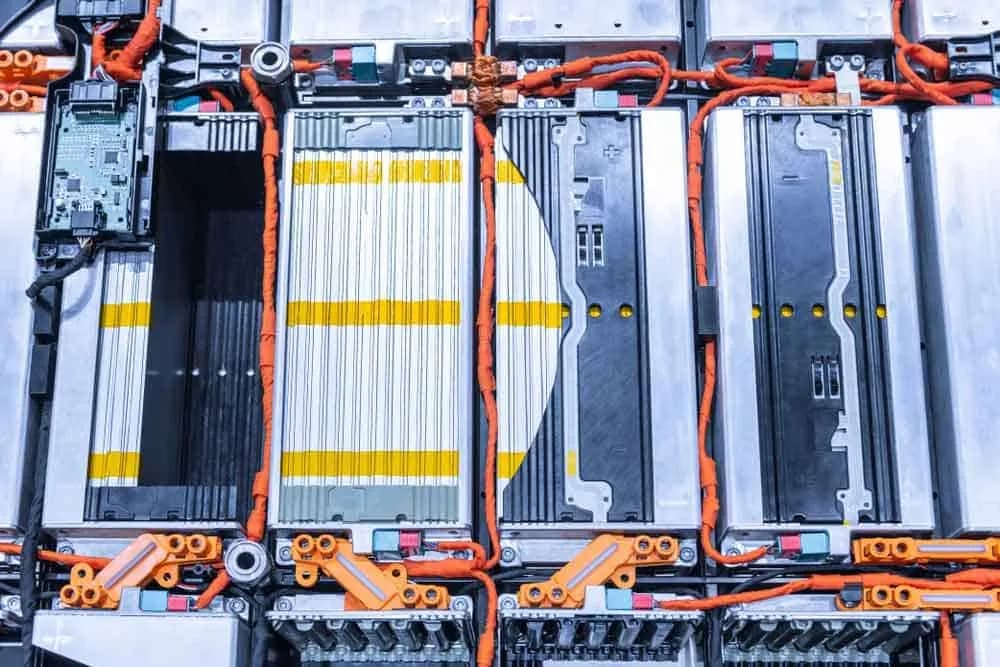
Electric, ICE, and hybrid vehicles have similar interior and exterior features, but that’s where the similarities end. The core of EVs, including the electric car wire harness, differs significantly from those of the other two because it handles battery power at higher voltages.
Let’s analyze these differences and the quality control/testing requirements for these electric car wire harnesses.
Do Electric Cars Have Wiring Harnesses?
In addition to the standard wiring harness structure in an ICE vehicle, EVs have additional wires to connect the electrical system.
EVs run on batteries, which power motors to spin the wheels. This system also includes inverters for converting the direct current from the batteries to alternating current to run the motors. Plus, there is the wire from the charging port to the batteries.
This additional system requires thick wires to transmit electric current to the different parts, making the wire harness network significantly larger and heavier.
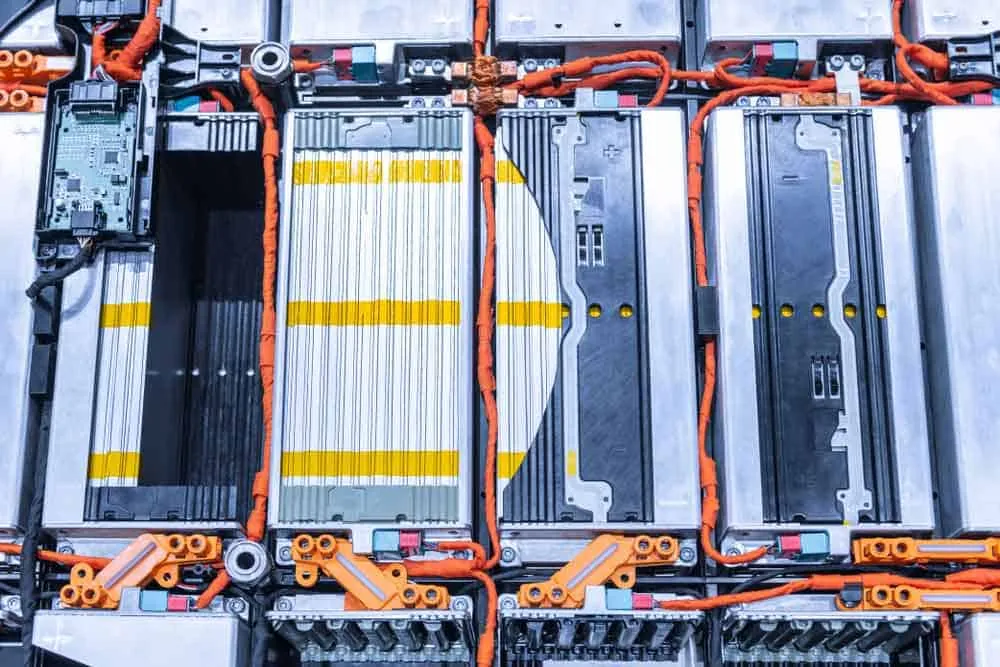
An EV battery pack with thick wires (orange insulation) interconnecting the cells
What Wires Are In Electric Vehicles?
Electric vehicles have two primary wire types: battery cables and charging wires. The battery cables interconnect the cells and external components like inverters to power the motors.
On the other hand, the charging wires connect the car to an external power supply point to refill the batteries.
These wires differ from the ones in regular ICE, HEV, and PHEV cars in power capacity terms. The cables should be able to handle 400-800V, meaning their gauge must be low. PHEV wires, in comparison, transmit about 100-200V, meaning they need thinner, lighter wires.
An icon depicting the PHEV car model
Following suit is the insulation. Most EV cables feature silicone rubber insulation (orange material) with electromagnetic noise shielding to prevent signal disruption.
As vehicles advance, they host more electronic components like sensors and modules. Shielding prevents signal disruption on the wires controlling mechanical systems like motors and actuators from control units.
Other common insulation materials are PVC, TPU, XLPE, and cross-linked fluoroelastomers. PVC has a temperature resistance of 90-105°C, while TPU and XLPE take it up to 125°C.
Silicone and cross-linked fluoroelastomers have the highest temperature resistance rating (200°C). But silicone is better at electrical insulation and weather resistance, making it the preferred choice.
EV vs. ICE vs. HEV: How Does the Wire Harness Design Differ?
EVs have a simpler powertrain design and structure than conventional vehicles. It features a battery module, inverter (DC-to-AC converter), electric motors, and a charger.
The system has fewer moving parts than the engine, transmission, and driveshaft combo in ICE vehicles.
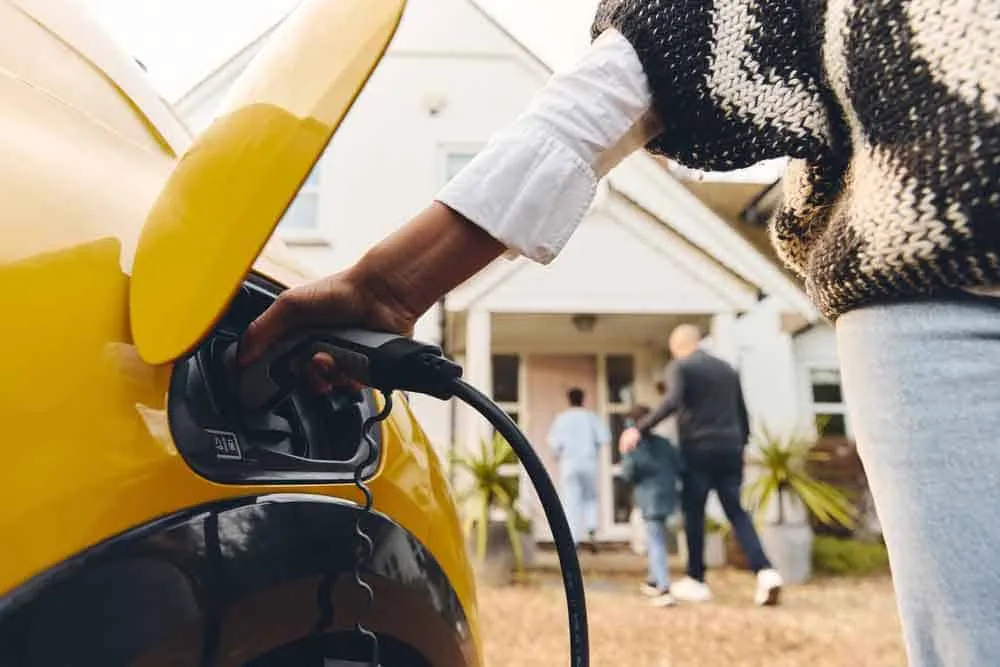
An electric car plugged into a charging station.
Hybrid electric vehicles are more complex than EVs because they contain electric and ICE drivetrains.
However, the EV wire harness design/structure is more complex than in ICE and hybrid cars. The high-voltage battery pack-inverter-motor connection requires a unique and shielded high-voltage wire harness.
Some hybrid vehicles recharge using electric power generated by an internal combustion engine, while others have a plug-in mechanism. Both options have smaller battery pack assemblies, meaning the cars have lower-voltage cables that typically handle 100-200V.
Cars that run purely on internal combustion engines come last when considering complexity because they only have 12V batteries. And they have alternators that generate current at about 14.5V maximum.
This setup requires thinner wires and a less complicated design because there is little to no interference from the highest-voltage power lines.
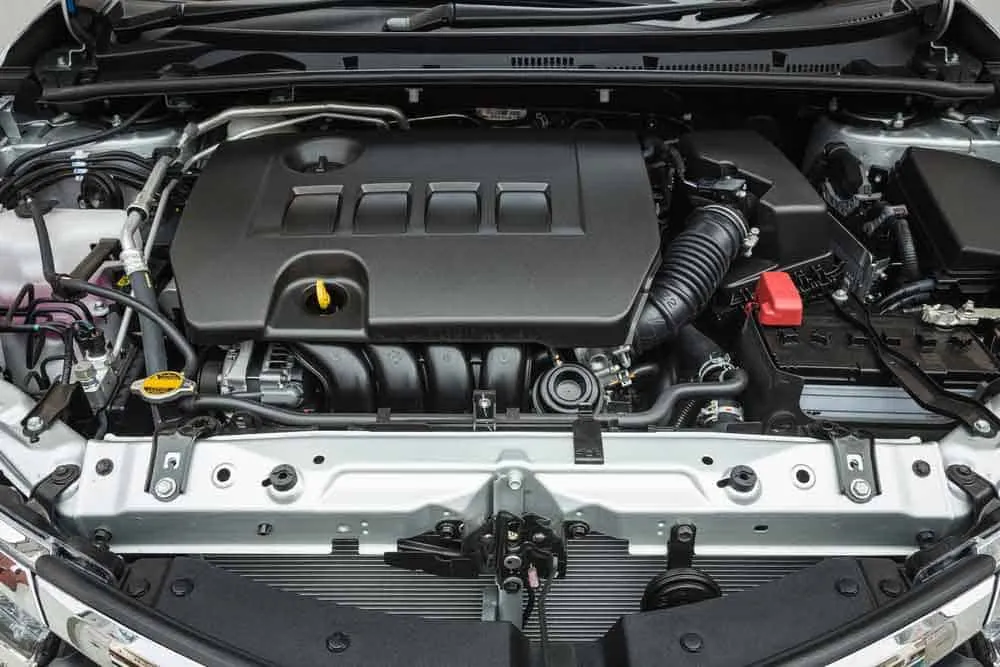
An ICE vehicle with a 12V battery
Quality Control and Testing Requirements for Electric Car Wire Harnesses and Cables
Since they are incredibly complex, automotive cables for electric vehicles require rigorous quality control checks and tests before certification and installation. These requirements must include the following.
Heat Age Testing
EV wire harness materials should last tens of thousands of hours when installed and used in these cars.
Therefore, for a battery harness to pass this test, it should at least pass a heat age test, which takes about 3,000 hours at a specific temperature. The wires should not age or wear in this oven-aging process.
Thermal Resistance (Burn-In Test)
Thermal resistance testing closely relates to heat-age testing. It involves exposing the wire harness to multiple heating and cooling cycles over several days.
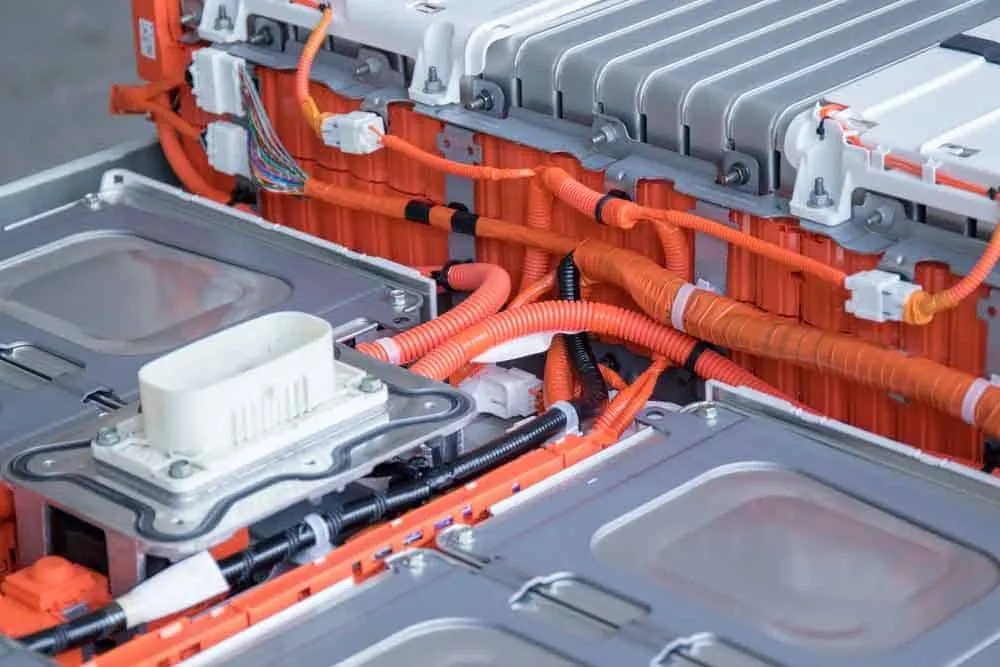
EV wire harnesses
After that, the cable harness’s physical and electrical properties get tested to check whether it retains its factory-rated performance.
Tensile Strength
This test involves stretching the electrical cable harnesses to determine how far they can reach before snapping into two.
You must strip some of the insulation to make the harness as vulnerable as possible to match wear conditions during use. The wire harness assembly must meet the elongation and break strength requirements.
Spark Testing
Spark testing is critical to ensuring the insulation is intact. It involves passing the wires through a curtain of energized metal beads with a voltage of up to 10,000V.
Any fault or weakness in the insulation will cause sparking as the voltage enters the conductors in the high-voltage cable.
Adherence Testing
This test also measures the insulation strength. However, it is physical because it involves checking the force required to peel the insulation from the copper conductor.
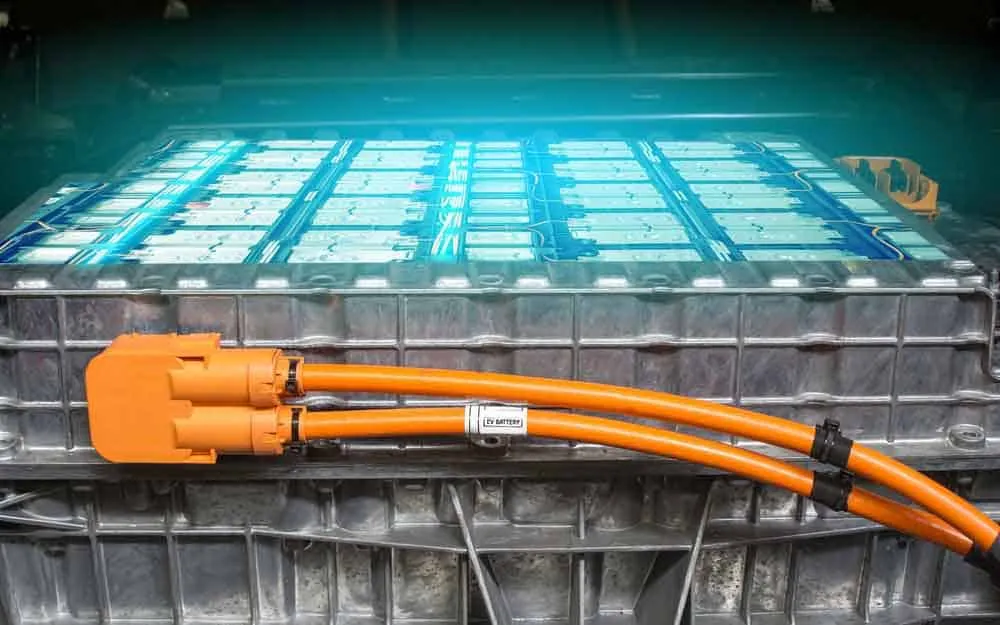
A lithium battery pack with two thick wires
The test also helps determine the most suitable stripping and cutting tools for handling the cables during installation or repairs.
Scrape Testing
When scrape testing, you continuously rub a charged metal conductor on the cable’s insulator and note when shorting or conduction will occur.
Abrasion Testing
Abrasion testing also involves rubbing the wire’s insulator, but this process uses sandpaper instead of a charged metal conductor. The test measures the abrasion it takes to chew through the insulation.
Pinching and Crush Testing
As the name suggests, this test measures the force required to pinch and crush the wire.
Chemical Tolerance Testing
Like ICE vehicles, EVs have fluids to control various functions, such as braking. Chemical tolerance testing involves exposing the wiring harnesses to these chemicals and measuring their impact on the insulation.
Diameter Measurement
Diameter measurement is technically not a test. It involves using laser sensors to measure the thickness of the cable to determine if it will fit in spaces with tight tolerances.
Developed Products for HEVs That Are Applicable to EVs
HEVs and EVs have battery packs to store charge. But hybrid cars have tinier battery packs that run the electrical system at lower voltages. EVs have significantly larger batteries that increase the charge capacity to increase the driving range.
The battery technology is the same (lithium-ion), but the capacity differs because HEVs can recharge on the go. They don’t need large capacities.
Another shared feature between the two is the motor(s). Both vehicle types use induction AC motors due to their high efficiency.
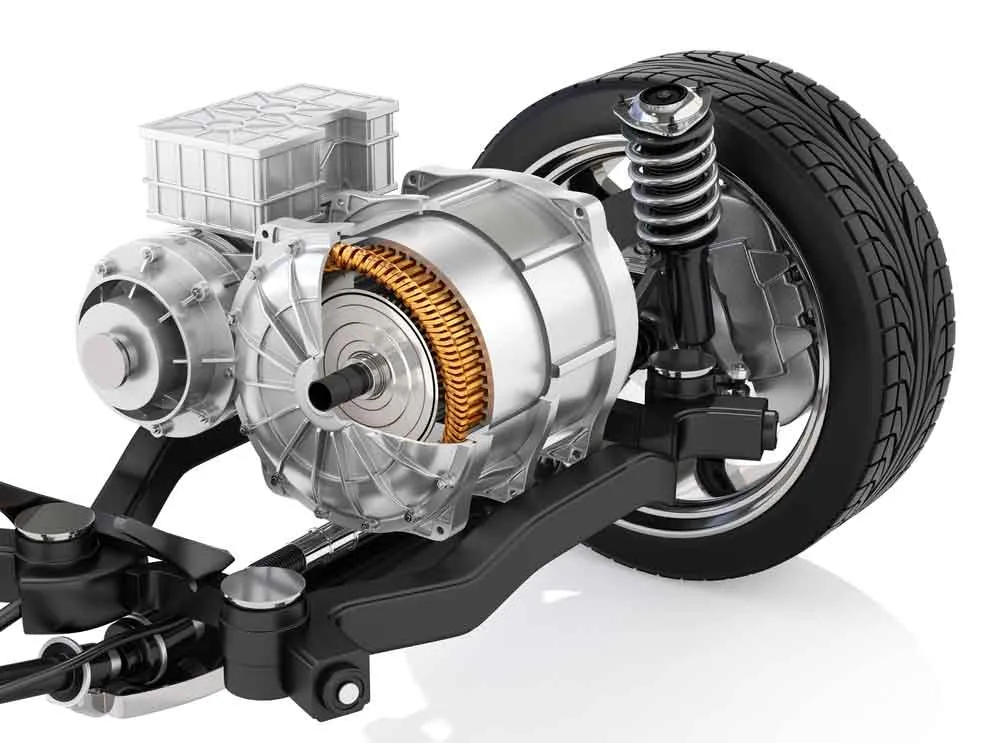
A cutaway view of an EV motor
These motors enable the regenerative braking function, which converts kinetic energy from the wheels to electricity to recharge the batteries. So, when you brake the vehicle, the motor switches to an alternator to capture this energy.
Hybrid and electric vehicles experience minimal brake pad wear because of this regenerative braking feature.
Design for Manufacturing (DFM) and Certification Considerations
When designing EV wire harnesses for volume production, OEM buyers and procurement engineers must consider DFM principles to optimize assembly, reduce cost, and ensure reliability. Key DFM aspects include minimizing connector types, standardizing wire gauges, and designing for automated assembly. Additionally, compliance with automotive certifications is critical: IATF 16949 (or ISO/TS 16949) for quality management, UL 758 for appliance wiring material, and USCAR-2 for connector performance. These certifications ensure the harness meets rigorous durability, safety, and performance standards required for high-volume EV production. For example, UL 758 covers temperature ratings up to 200°C, while USCAR-2 specifies mechanical and electrical tests for connectors under vibration and thermal cycling. Partnering with a certified manufacturer ensures your EV wire harness meets these requirements, reducing risk and time-to-market.
Summary
EV wire harnesses differ significantly from those in their ICE and HEV/PHEV counterparts. These wires have a lower-gauge conductor and thicker, shielded insulation for error-free high-voltage power transmission. Should you need these cables for your project, contact us for further details.
An earlier version of this article first appeared on autowiringpro.com. This version has been rewritten and updated for OEM and procurement audiences.