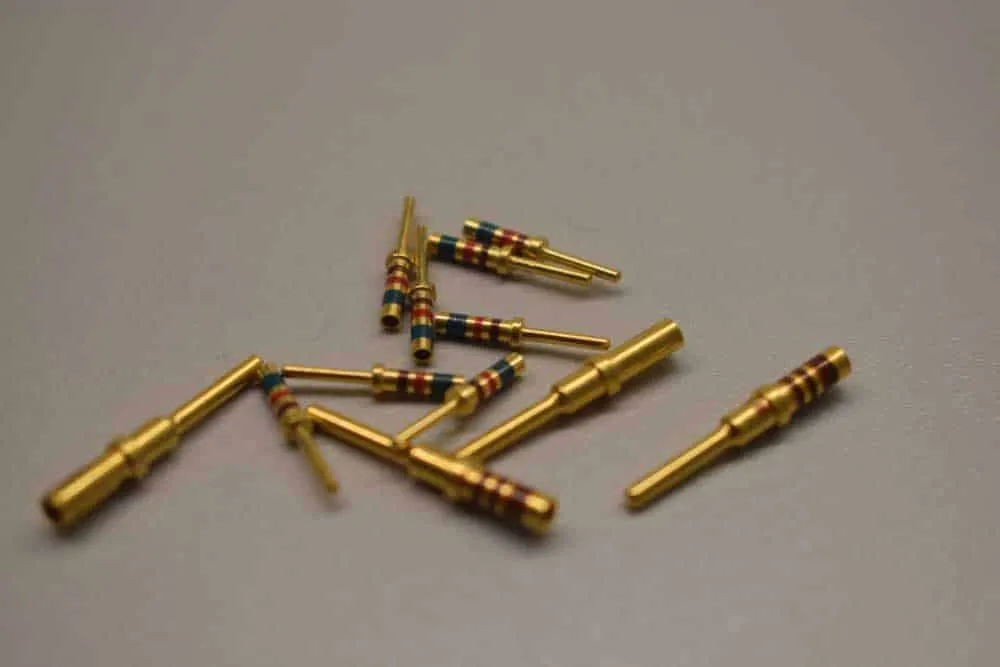
Defining Military-Spec Cable Assemblies
For OEMs and system integrators operating in defense, aerospace, and high-reliability industrial sectors, standard commercial wire and cable assemblies often fall short. Military-grade cable harnesses, engineered to stringent MIL-Spec and industry standards, provide the robust interconnect solutions required for mission-critical platforms subjected to extreme vibration, temperature, and EMI conditions. This article outlines the essential specifications, components, and selection criteria for military cable assemblies across demanding applications.
MIL-Spec Wire and Cable Types
MIL-Spec wire and cable are distinct from commercial high-temperature or hook-up wire because they carry specific designations governed by performance-based specification sheets. These wires are engineered for internal equipment wiring, airframe harnesses, point-to-point interconnects, and antenna systems in military vehicles and aircraft. Common insulation systems include PTFE, ETFE, polyimide tape, and PVC compounds, selected for high dielectric strength, thermal stability, and resistance to cut-through and abrasion. Procurement engineers can reference standards such as SAE AS22759, M16878, M5086, and others to specify conductor materials, voltage ratings, and temperature classes that align with the operational envelope.
MIL-Spec Wire Standards
The following wire specifications are commonly referenced by OEM design engineers when selecting conductors for high-reliability harnesses.
M16878
This category covers wires with insulation such as PTFE, ETFE, PVC, and polyalkene. These wires are available in multiple voltage ratings and temperature classes, suitable for a broad range of military electronics applications.
SAE AS 22759 (M227559)
Designed for aerospace and high-performance military systems, this specification encompasses wires for engine controls, airframe harnesses, and areas exposed to fluids and moisture. It is a go-to standard for EV and aerospace OEMs requiring lightweight, high-temperature conductors.
M5086
A general-purpose wire with a tin-plated copper conductor, PVC insulation, and an optional nylon jacket. It offers good resistance to abrasion, chemicals, and impact, making it suitable for ground support equipment and industrial military electronics.
M13486
Low-tension wire designed for ground vehicles such as tanks and trucks. It remains flexible at low temperatures and resists moisture and abrasion. Multiple variants are available for different voltage and environmental requirements.
M25038
Engineered for extreme environments involving direct flame exposure and high vibration. This wire is often specified for critical aircraft circuits where fire survivability is essential.
MIL-Spec Connectors for Rugged Interconnects
MIL-Spec connectors are engineered as circular, rectangular, or nano-miniature shell enclosures that protect pin-and-socket contacts from moisture, dust, EMI, and mechanical stress. These connectors are essential for reliable signal and power distribution in aerospace, defense, and increasingly in heavy-duty EV and off-highway OEM platforms.
Key Connector Specifications
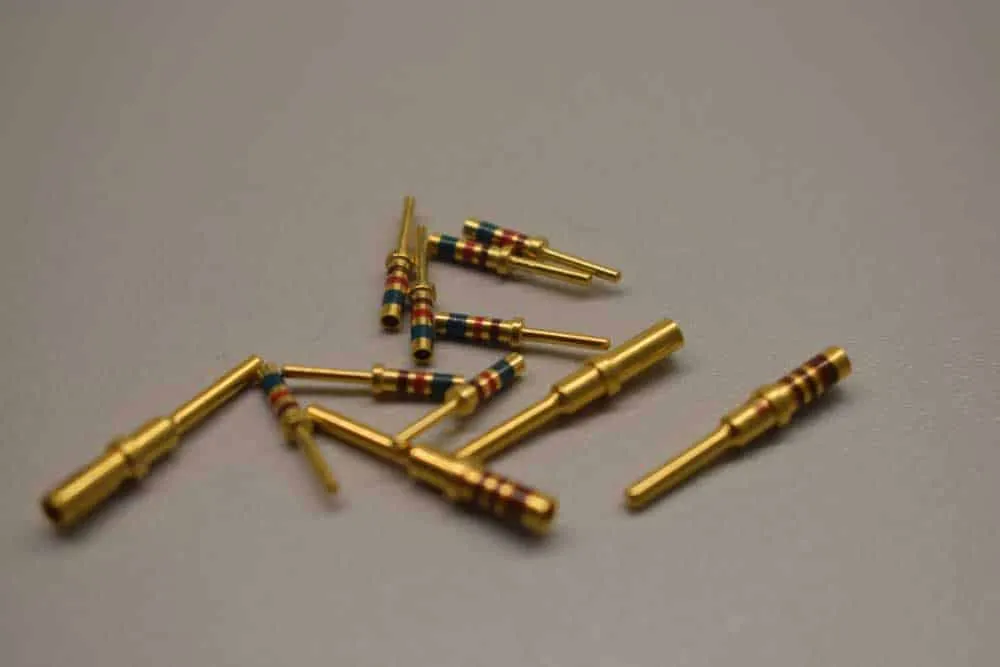
MIL-C and MIL-DTL-series connectors provide standardized interfaces with crimp or solder contacts. Contacts are typically copper alloy with gold plating to ensure low contact resistance and corrosion immunity. Below are the primary specifications OEM buyers should consider.
MIL-C-5015
The most widely adopted cylindrical connector standard for military and commercial industrial interconnects. Available in multiple shell sizes and contact arrangements.
MIL-C-26482
Covers two series of miniature circular connectors with quick-disconnect, environment-resistant features. Hermetic receptacles are available; intermateability differs between power and shielded contact versions.
MIL-C-22992
Heavy-duty cylindrical connectors rated for high power (up to -55°C to +125°C). Commonly used in ground support and industrial military applications.
MIL-C-27599
High-density, environment-resistant bayonet connectors rated for -65°C to +175°C. Intermateable with MIL-C-38999 series I and II.
MIL-C-26550
Miniature, circular connectors resistant to extreme environments, originally for advanced missiles and spacecraft. Provides resilient or hard face inserts.
MIL-C-38999
Similar to MIL-C-27599 but with threaded coupling options. Widely used in modern aerospace systems.
MIL-C-81703
Three series of circular connectors, environment-resisting, with either removable crimp or non-removable solder contacts.
MIL-DTL-32139
DSCC joint-service specification for nano-miniature plastic and metal connectors, ideal for weight-sensitive UAV and satellite applications.
MIL-DTL-5015
Evolved from the MIL-C-5015, incorporating rear accessory threads, blending features with MIL-C-83723 and MIL-C-26482 for aerospace.
MIL-DTL-38999
High-density, environment-resistant circular connectors with threaded, bayonet, or breech coupling; rated -65°C to +200°C. Four series cover multiple contact retention systems.
MIL-DTL-83723
Circular environment-resisting connectors with accessories, using crimp or solder contacts.
RoHS Compliant
A European directive (2011/65/EU) restricting hazardous substances such as lead, mercury, cadmium; critical for OEMs exporting to EU markets.
ARINC Other
ARINC standards define avionics connectors for commercial and military aircraft, ensuring interchangeability and reliability in communication and navigation systems.
Critical Performance Characteristics
Military-grade harnesses are differentiated by several key attributes that address the demands of defense and high-reliability applications.
Ruggedization
MIL-Spec harness assemblies are built with certified materials and processes to ensure mechanical and electrical integrity under shock, vibration, temperature extremes, and chemical exposure. OEMs benefit from traceable lot codes and full material certifications.
Miniaturization
Space and weight constraints in modern aerospace and EV platforms drive the adoption of smaller conductor gauges, high-density connectors, and lightweight shielding. MIL-Spec wiring enables thinner wall insulation and dense connector pin counts, reducing harness mass without compromising performance.
Microwave and RF
Teflon-based insulation and precision gold-plated contacts minimize signal loss and provide effective EMI shielding. These properties are essential for RF systems, antenna feeds, and high-speed data links in defense electronics.
High Cost
The cost premium of MIL-Spec assemblies reflects the use of specialized materials, rigorous testing, and compliance documentation. However, for mission-critical systems, the total cost of ownership is offset by increased reliability, longer service life, and reduced risk of failure.
Key Application Domains
Military-spec harnesses are utilized in:
- Space force and satellite systems
- Avionic suites and flight control
- Remote weapon stations
- Military ground vehicles (tanks, trucks, mobile command posts)
- Submersibles and naval platforms
- Field communication shelters
- EMI-sensitive electronic warfare equipment
- Airborne navigation and communication systems
Decision Criteria: When to Specify MIL-Spec Assemblies
Procurement and engineering teams should evaluate the following factors to determine if MIL-Spec harnesses are warranted for a given platform.
Criticality: If cable failure would result in system loss, safety risk, or mission failure, MIL-Spec reliability is mandatory. Redundancy alone may not suffice in high-consequence environments.
Environmental Conditions: Assess exposure to extreme temperatures, humidity, salt spray, fuels, and solvents. MIL-Spec insulation and jacketing materials offer superior resistance.
Vibration and Motion: Continuous flexing or high-G vibration necessitates robust connector retention and strain relief, which are standard in MIL-DTL series connectors.
RFI/EMI Radiation: Applications near high-power emitters or requiring low-noise signal integrity benefit from MIL-Spec shielding effectiveness validated by testing.
Design for Manufacturing (DFM) and Certification Considerations
When transitioning from prototype to production, OEMs must address manufacturability and certification requirements to ensure consistent quality and compliance. Adhering to industry-recognized standards streamlines procurement and assembly processes.
For workmanship and acceptance criteria, IPC/WHMA-A-620 is the prevailing standard for cable and wire harness assemblies. It defines requirements for crimping, soldering, connectorization, and strain relief that are directly applicable to MIL-Spec harness production. Certification to this standard demonstrates a supplier’s capability to produce repeatable, high-reliability assemblies.
In the automotive sector, particularly for EV platforms utilizing high-voltage interconnects, ISO 9001 certification is typically required. While not a direct replacement for MIL-Spec, it complements quality management systems and is often mandated by OEMs. Aerospace primes and defense contractors widely require AS9100 certification, which extends ISO 9001 with specific controls for traceability, risk management, and product safety. For medical-grade equipment derived from military technology, ISO 13485 ensures that harnesses meet regulatory requirements for patient-connected devices. Selecting a harness manufacturer that holds these certifications simplifies the onboarding process and reduces supply chain risk.
Conclusion
Military cable assemblies are a cornerstone of high-reliability interconnect systems, governed by an extensive library of MIL standards. For OEMs seeking a partner with deep expertise in producing MIL-Spec wire harnesses—from initial design to full-rate production—engage with our engineering team to discuss your next program's requirements.
An earlier version of this article first appeared on autowiringpro.com. This version has been rewritten and updated for OEM and procurement audiences.