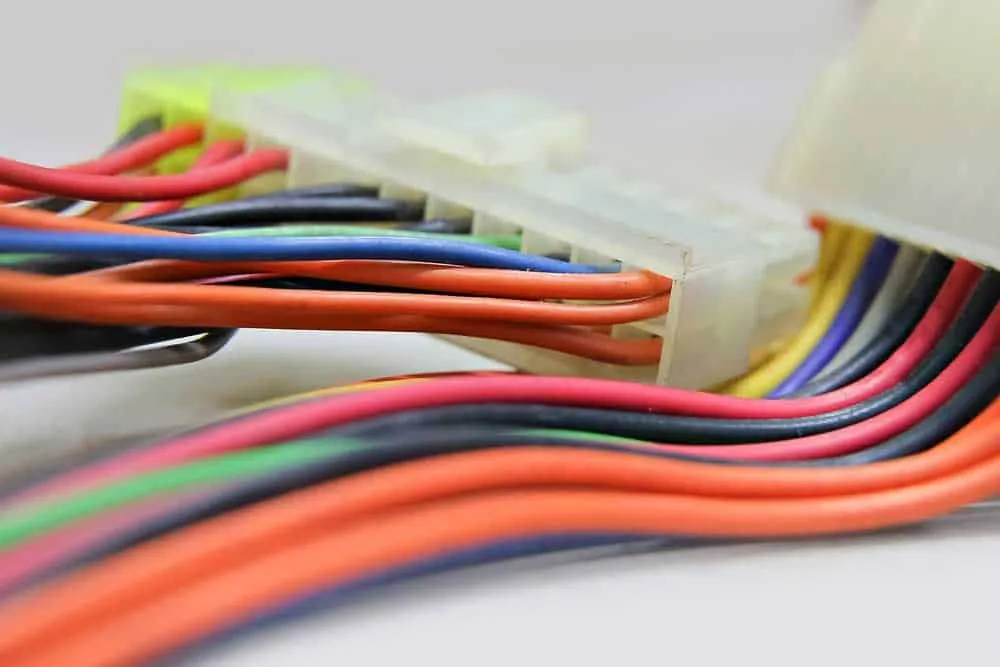
In today’s interconnected devices, wire harness assemblies are the backbone of electrical systems in automotive, aerospace, medical equipment, and industrial automation. For OEMs and procurement professionals, selecting the right manufacturing partner is critical to ensuring quality, scalability, and compliance. This guide outlines the essentials of custom wire harness production and how to qualify a supplier that meets your engineering and business demands.
What Is a Wire Harness Assembly?
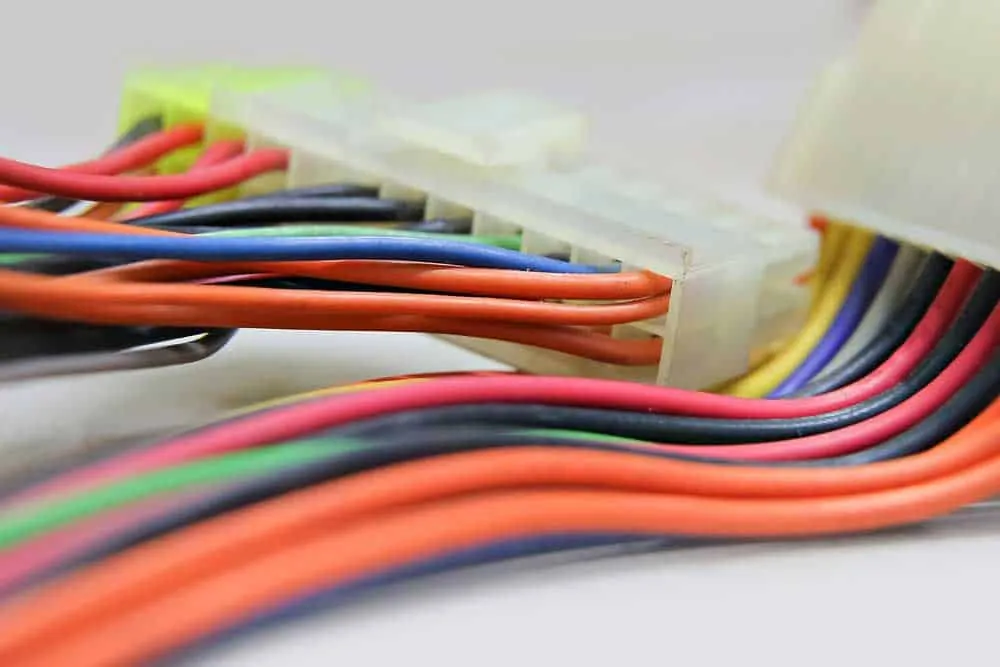
A wire harness—also called a wiring loom or cable harness—is an organized set of wires, cables, connectors, and protective components designed to transmit power or signals within a system. By consolidating individual conductors into a single, pre-assembled unit, a harness simplifies installation, reduces assembly errors, and enhances reliability. Even a basic harness contains at least three distinct subcomponents; complex versions incorporate hundreds of terminations, shielding, and active electronics.
Wire Harnesses vs. Cable Assemblies
While the terms are often used interchangeably, wire harnesses and cable assemblies serve different functions and are built to different requirements:
| Feature | Wire Harness | Cable Assembly | |---------|--------------|----------------| | Shape | Multiple branches with varied terminations at each end | Typically two ends, often straight or coiled | | Applications | Automotive, aerospace, industrial machinery, robotics | Construction, IT/telecom, medical devices, outdoor equipment | | Purpose | Organizes internal wiring for power and signal distribution within enclosures | Provides robust external connections, often with heavy-duty jackets for environmental protection |
The Custom Wire Harness Manufacturing Process
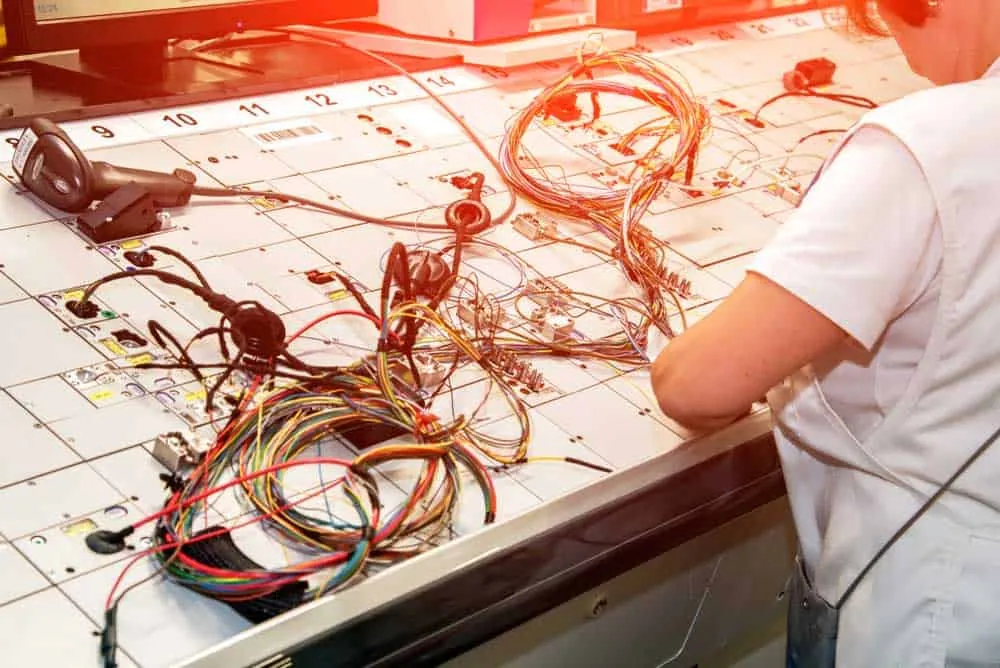
A structured process ensures each harness meets precise electrical, mechanical, and environmental specifications.
Design
Engineers collaborate with your team to create a detailed design package that includes schematics, connector pinouts, bill of materials (BOM), and routing paths. At this stage, component selection—from wire gauge to insulation material—is optimized for performance and cost.
Prototyping
A physical prototype is built and tested under expected operating conditions. This validates the design and identifies any interference, thermal, or signal issues before full-scale production begins.
Production and Assembly
Once the design is locked, materials are sourced and the assembly process is launched. Although automation is used for cutting, stripping, and crimping, much of harness assembly remains manual or semi-automated due to the need for customization and complex routings. Typical steps include:
- Wire cutting: Wires are cut to exact lengths using automated machines.
- Stripping and termination: Insulation is stripped, and terminals or connectors are attached via crimping or soldering.
- Assembly: Wires are routed on a form board, bundled with protective sleeving, tape, or conduit, and secured with ties or clamps.
Testing
Every harness undergoes electrical testing—continuity, hipot, and sometimes functional testing—to verify correct wiring and insulation integrity. Prototype-level testing is repeated on production units to guarantee consistency.
Strategic Benefits of Partnering with a Specialized Manufacturer
Outsourcing wire harness production to a dedicated supplier offers OEMs several competitive advantages:
- Access to expertise: Specialized manufacturers bring decades of experience, allowing them to anticipate design issues and recommend improvements.
- Cost savings: Lower labor rates, bulk material purchasing, and efficient processes reduce total acquisition cost.
- Scalability: External partners can ramp up production quickly without requiring you to invest in additional capacity.
- Focus on core competencies: By delegating harness assembly, your engineering and operations teams can concentrate on product innovation and final integration.
- Supply chain resilience: A qualified partner manages inventory and can hold buffer stock to accommodate demand fluctuations.
Qualifying a Custom Wire Harness Manufacturer: Key Questions
To ensure a successful, long-term engagement, procurement teams should evaluate potential partners on the following criteria:
Equipment and Process Capability
Does the manufacturer use modern wire processing machines (automated cutting, stripping, crimping) and maintain an organized assembly floor? Manual-only processes often lead to higher variability and longer lead times.
Delivery Performance
Can they consistently meet your required lead times, even during volume spikes? Ask about their track record with on-time deliveries and their use of inventory strategies like blanket orders, Kan-Ban, or vendor-managed inventory.
Quality Certifications
ISO 9001 is a baseline; for regulated industries, verify additional certifications (e.g., IATF 16949, AS9100, ISO 13485) and compliance with IPC/WHMA-A-620 workmanship standards. Request documented quality control plans and evidence of continuous improvement.
Commercial Flexibility
Are they open to favorable payment terms, such as net-30 or early payment discounts? Do they accept blanket orders that allow phased deliveries against a single commitment?
Customization and Design Support
Can they produce harnesses exactly to your specifications, including custom wire lengths, connector orientations, and specialized labeling? A capable partner will also offer value-added services like overmolding, potting, or laser marking.
Scalability and Buffer Capacity
Inquire about their ability to handle volume surges. Do they maintain finished goods inventory for your part numbers, or can they ramp quickly by adding shifts?
Our Manufacturing Approach
At Cable Harness Assembly, we follow a rigorous, transparent process to deliver harnesses that meet the most demanding requirements.
Information Gathering and Design Review
We start with your complete design package—BOM, connector pinouts, assembly drawings, and test specifications. Our engineers review these documents for manufacturability, suggesting alternative components if lead times or costs can be improved without compromising performance.
Material Procurement and Assembly Documentation
After BOM approval, we procure all materials from trusted, certified suppliers. We then create detailed work instructions, including visual aids and assembly board layouts, to ensure consistency on the production floor.
Production and Quality Assurance
Our skilled technicians assemble each harness on custom form boards, following the documented process. Completed assemblies are tested 100% for electrical continuity and, where specified, for high-voltage insulation resistance. Final inspection includes dimensional checks and label verification.
Design for Manufacturing (DFM) and Certification Considerations
Integrating design for manufacturing (DFM) principles early in product development reduces cost, improves reliability, and accelerates time-to-market. Our engineering team collaborates with your design engineers to optimize wire routing, connector selection, and assembly processes, ensuring seamless integration into your final product.
Certifications are non-negotiable in regulated industries. For automotive applications, we adhere to ISO 9001 quality management systems and build harnesses in compliance with IPC/WHMA-A-620 Class 2 or 3. Aerospace programs require AS9100-certified facilities and rigorous traceability, while medical devices demand ISO 13485 conformity and biocompatibility assessments. We align our processes with these standards to deliver assemblies that meet your most stringent requirements.
By embedding DFM and the appropriate certification framework, we ensure that every harness not only fits mechanically and electrically but also withstands the operational, environmental, and regulatory demands of its intended market.
Conclusion
A custom wire harness is not a commodity; it is a safety-critical component that must be designed and manufactured with precision. Partnering with an experienced, certified supplier is the most effective way to secure high-quality assemblies that align with your production goals. For OEMs in automotive, aerospace, medical, or industrial sectors, evaluating a manufacturer’s technical capabilities, certifications, and commercial terms—as outlined in this guide—will help you build a reliable supply chain that supports your long-term success.
An earlier version of this article first appeared on autowiringpro.com. This version has been rewritten and updated for OEM and procurement audiences.