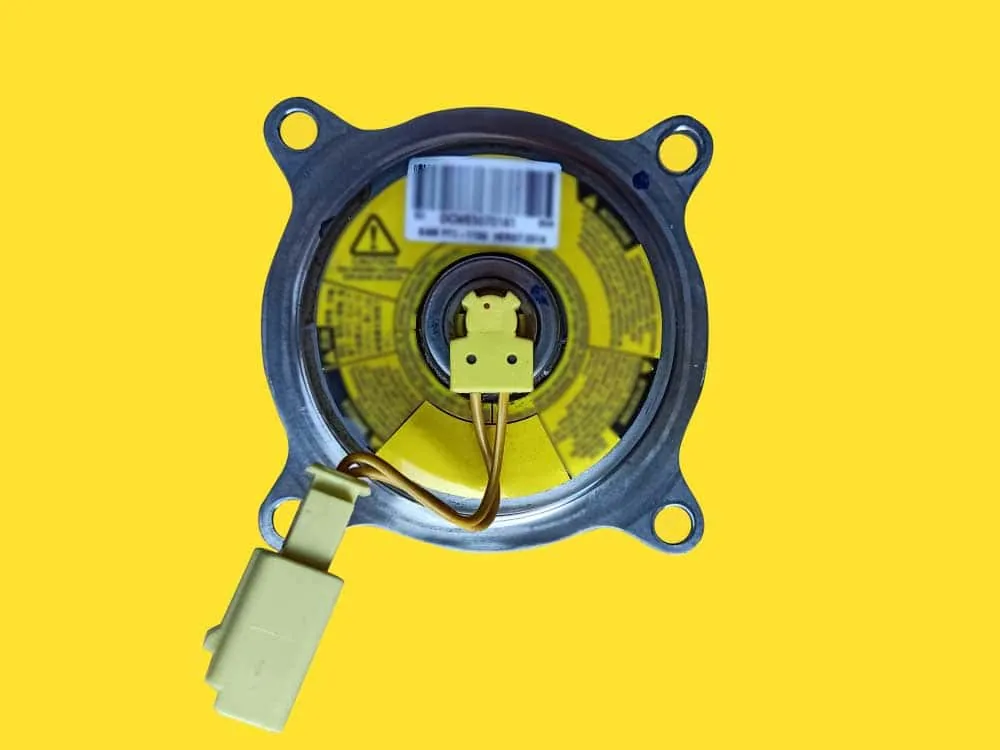
Airbag systems are vital safety components in modern vehicles, and the airbag wire harness is the critical electrical pathway that carries the deployment signal from the crash sensors to the inflator. Because an airbag harness is a safety-critical assembly, every conductor, connector, and crimp must perform on the first and only time it is ever asked to fire. This article examines the key elements of airbag wiring harness design, manufacturing, connector selection, testing, and integration for automotive OEMs and Tier-1 suppliers.
- How Airbags Work
- Airbag Wiring Components
- Airbag Squib Connectors, Shorting Clips, and Connector Locking
- Importance of Proper Air Bag Wiring Harness Design and Manufacturing
- Importance of Proper Airbag System Wiring Harness Installation and Integration
- Testing and Traceability for Airbag Harnesses
- Design for Manufacturing (DFM) and Certification Considerations
- Wrap Up
How Airbags Work
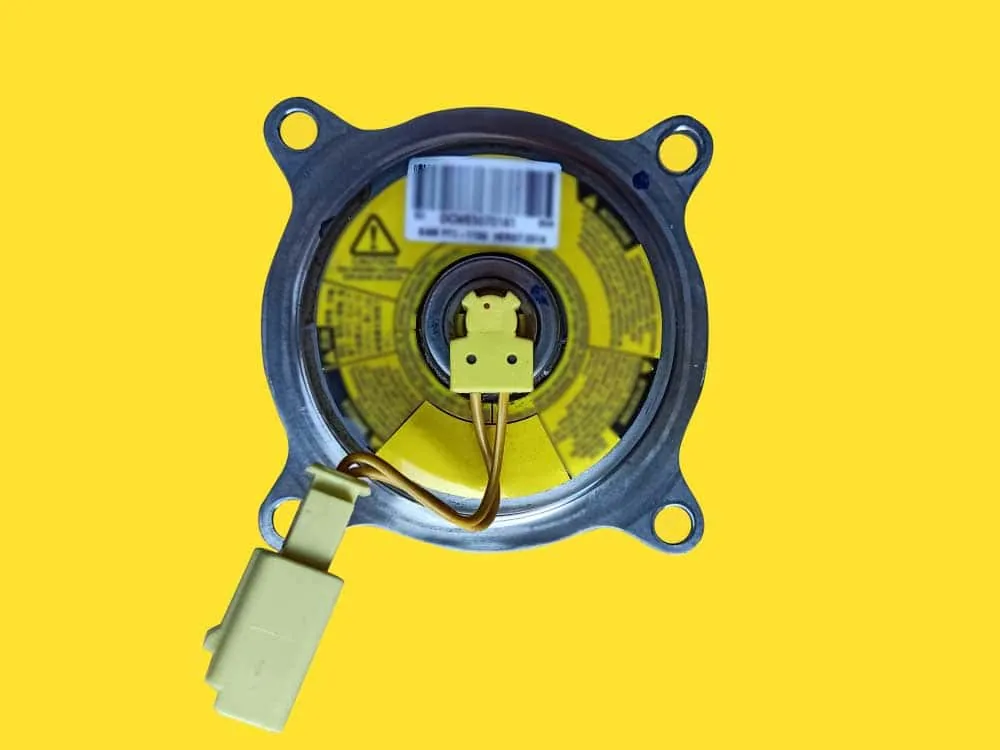
Airbag deployment relies on an electrically triggered chemical reaction to rapidly inflate a fabric cushion. Crash sensors detect severe deceleration and send a signal through the harness to the inflator, which ignites a propellant—historically sodium azide, now often guanidine nitrate—to produce nitrogen gas. This process must occur within milliseconds to protect occupants.
During deployment, sodium azide breaks down into sodium metal and nitrogen gas (2NaN3 → 2Na + 3N2). Potassium nitrate and silicon dioxide are present to neutralize corrosive byproducts. Modern systems also employ compressed gas or hybrid systems for side-curtain airbags.
Reaction Time
Sensor data processing and deployment decision occur within 10-30 milliseconds, with full inflation in 60-80 ms—faster than a human blink. This extreme speed demands ultra-reliable signal transmission through the harness.
Airbag Components
- Airbag inflator (chemical reactor)
- Airbag module (housing)
- Diagnostic module (control unit)
- Airbag fabric
- Crash sensors
- Impact sensors
- Airbag cushion
- Cable harness
Airbag Wiring Components
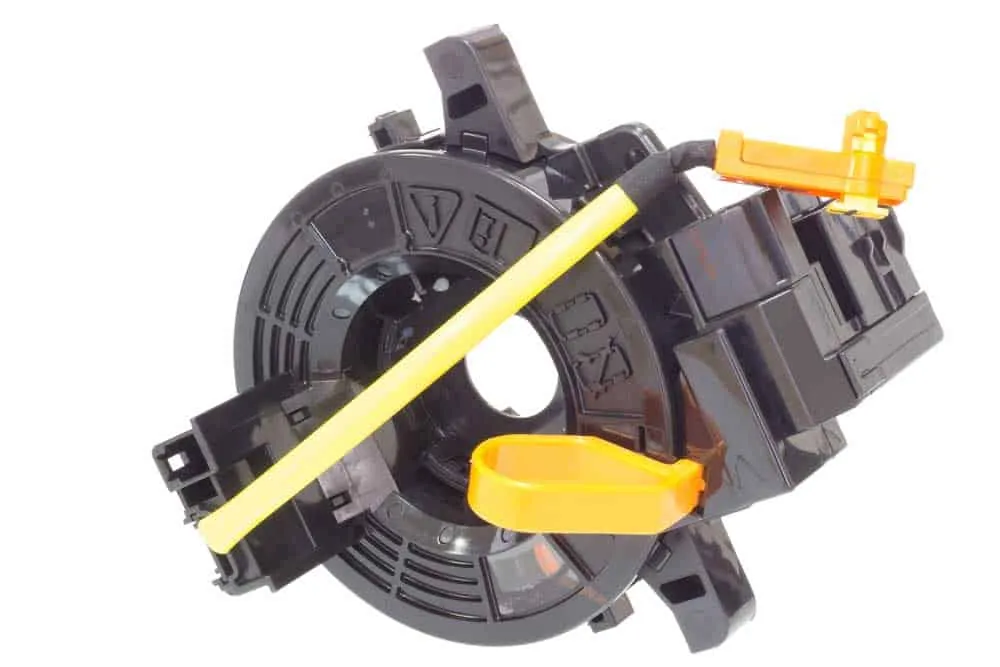
The airbag harness interconnects all electrical system elements. Below are its critical components, each engineered for fail-safe operation.
Wires
Conductors that transmit low-voltage signals and power to the inflator. They require high-temperature resistance, chemical stability, and abrasion protection.
Wiring Connectors
Terminals, sockets, and plugs that ensure secure mating. They must resist pull-out and maintain contact integrity under vibration and crash conditions.
Sensor Connectors
The system incorporates crash, impact, seatbelt, and MEMS (Micro-Electro-Mechanical Systems) sensors for severity measurement. Additional sensors may monitor gyroscopes, wheel speed, seat occupancy, and brake pressure.
Each sensor requires a dedicated connector with precise signal fidelity.
Airbag Inflator Connector
This connector delivers the electrical trigger to the inflator’s initiator, creating a reliable high-energy circuit for rapid propellant ignition.
Airbag Module Connector
Enables communication between the control unit and the module, coordinating deployment timing and diagnostic feedback.
Locking Mechanisms
Critical connectors feature secondary locking devices to prevent disconnection under shock, eliminating a single point of failure.
Backup Power Supply
A frontal impact may sever the main battery cable. A capacitor-based backup supply ensures deployment energy remains available, integrated into the harness design.
Clips and Retainers
Routable fixation points that secure the harness along the vehicle structure, preventing chafing and entanglement.
Service Loops
Extra wire length provision allows for in-vehicle repairs without full harness replacement, decreasing service costs.
Diagnostic Ports
Standardized interfaces (typically via OBD-II) enable system checks and software updates, requiring robust, accessible connectors.
Sheath
High-durability insulation protects conductors from thermal, mechanical, and chemical stress throughout the vehicle’s service life.
Airbag Squib Connectors, Shorting Clips, and Connector Locking
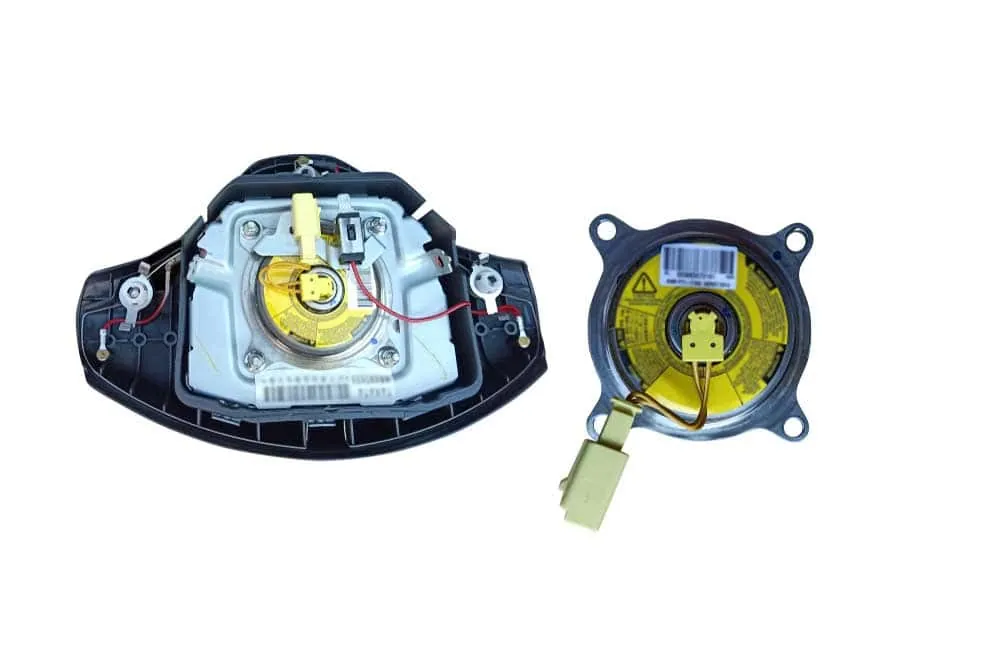
The single most safety-defining part of an airbag harness is the squib connector — the interface that feeds the firing pulse to the inflator's initiator (the "squib"). These connectors carry design features that distinguish an airbag wiring harness from an ordinary automotive circuit, and building them correctly is where assembly discipline matters most.
Shorting Clip / Shorting Bar
Squib connectors contain a spring-loaded shorting clip that automatically bridges the two squib pins the moment the connector is unmated. Shorting the initiator loop bleeds off any stray charge or induced voltage during service, transport, or assembly, preventing an inadvertent deployment while a technician is working on the vehicle. When the connector is fully seated, the mating housing lifts the shorting bar and re-establishes the live firing circuit. The harness assembler must verify this make/break behavior, because a clip that fails to lift leaves the airbag permanently shorted (no-fire), and one that fails to short creates a live-handling hazard.
CPA and TPA Retention
Airbag squib connectors are typically keyed and color-coded (commonly yellow) and use a Connector Position Assurance (CPA) slide plus Terminal Position Assurance (TPA) to guarantee the connector is fully latched and every terminal is fully inserted. These secondary locks are what prevent back-out under the vibration, thermal cycling, and shock that a deployment event or a decade of driving imposes. Twisted-pair — and often shielded — squib leads reduce the EMI coupling that could otherwise induce a false trigger.
Assembly Implications
Because these features are load-bearing for occupant safety, an airbag harness cannot be treated as a commodity build. Terminals must be crimped to a validated crimp height, squib leads twisted to a controlled lay length, and every CPA/TPA engaged and inspected. This is the level of process control that safety-critical harness assembly to IPC/WHMA-A-620 is designed to enforce, and it is the same rigor we apply to automotive wire harness programs across the vehicle.
Importance of Proper Air Bag Wiring Harness Design and Manufacturing

A precisely designed and manufactured harness is non-negotiable for airbag system integrity. The following factors highlight its criticality from an OEM perspective.
Ensures Vehicle Occupant Safety
The harness must transmit the deployment signal without latency or distortion. Failure to do so results in non-deployment, directly endangering occupants. Rigorous validation ensures signal paths remain uncompromised.
Eliminates False Deployment
EMI and vibration can induce spurious signals. Shielding, twisted-pair wiring, and proper grounding are essential design elements to avoid inadvertent inflation, which can cause injury.
Enhances System Reliability
Vehicles may operate for a decade without a crash. Harness materials must resist aging, temperature extremes, moisture, and corrosive agents to maintain 100% readiness.
Ensures Compliance With Safety Standards
Regulations such as FMVSS 208 (US) and ECE R94 (EU) mandate airbag performance. Harness design directly impacts compliance through consistent signal timing and integrity.
Cuts Costs
Optimized material selection and streamlined manufacturing processes reduce per-unit cost while preserving quality—a vital competitive factor in high-volume production.
Enables Seamless System Integration
Modern vehicles contain up to 100 ECUs. The airbag harness must coexist with CAN/LIN networks and high-power circuits without cross-talk or interference.
Importance of Proper Airbag System Wiring Harness Installation and Integration
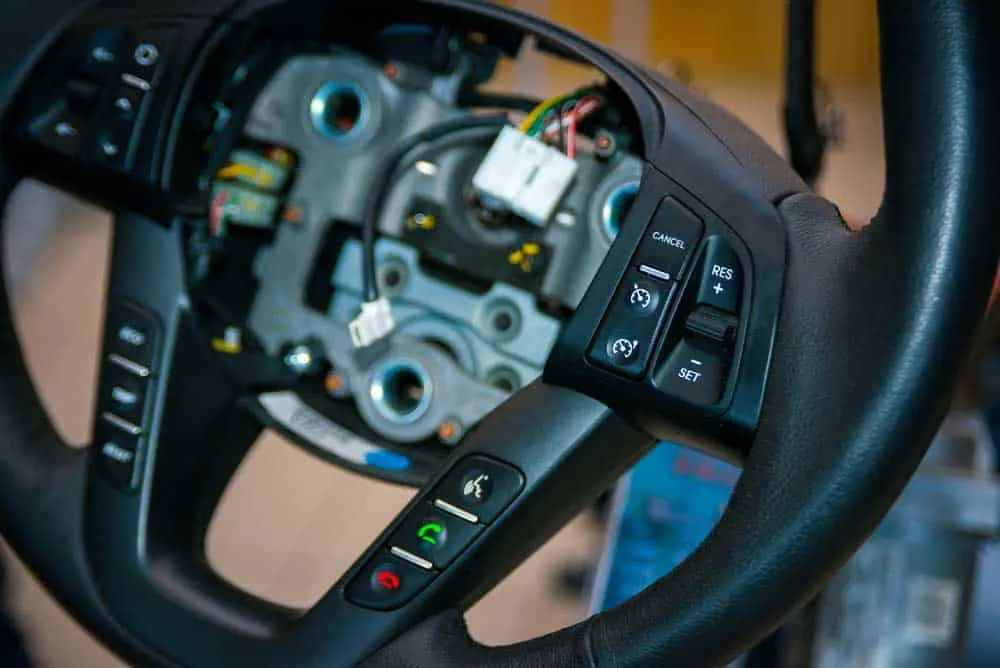
Installation and integration practices directly affect field performance and serviceability.
Simplifies Serviceability
Clear labeling, color-coding, and connector polarization minimize human error during maintenance. Proper routing allows easy access without disrupting adjacent systems.
Enables Quick Testing and Validation
A well-installed harness accelerates end-of-line diagnostics and reduces false failures, improving first-pass yield and time-to-delivery.
Testing and Traceability for Airbag Harnesses
For a safety-critical assembly, testing is not a sampling exercise — every airbag harness is verified. The goal is to prove, before the part leaves the line, that the firing circuit is continuous, correctly terminated, and free of shorts or mis-wires.
100% Electrical Test
Each airbag harness is checked on an electrical test fixture for continuity, correct point-to-point routing, and the absence of shorts between circuits. The squib loop resistance is measured against a specified window, because a resistance that drifts high (poor crimp) or low (partial short) both compromise reliable deployment. Insulation resistance and hipot (dielectric withstand) testing confirm the sheath and connector insulation will not break down over the vehicle's life.
Crimp Validation
Terminations are the most common failure mode in any wire harness, so crimp quality is validated with pull-force testing and periodic crimp-height and cross-section (micro-section) checks. A validated crimp process is what keeps squib and sensor terminals within contact-resistance limits under vibration.
Full Traceability
Airbag harnesses require lot-level traceability: wire, terminals, connectors, and shorting-clip housings are recorded so any suspect batch can be contained and, if necessary, recalled. Serial or date-lot marking on the assembly ties each harness back to its material certificates and test records — a requirement that flows directly from the automotive quality system.
Design for Manufacturing (DFM) and Certification Considerations
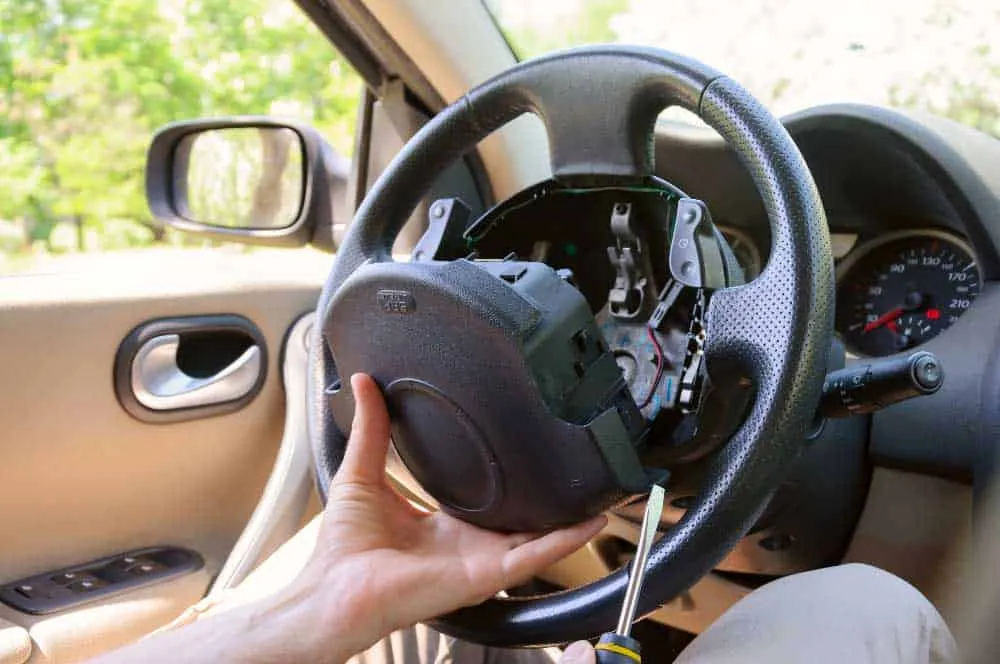
To ensure airbag harnesses meet the rigorous demands of automotive safety, Design for Manufacturing (DFM) principles and certification to industry standards are essential.
The IPC/WHMA-A-620 standard defines the acceptability of cable and wire harness assemblies. Building to this standard means soldering, crimping, and connector mating meet documented workmanship requirements, minimizing the risk of field failures on a part that only gets one chance to work.
For automotive applications, adherence to IATF 16949 is expected for production and service parts. This quality management standard focuses on defect prevention, PPAP/APQP discipline, and continuous improvement throughout the supply chain, ensuring the full material traceability and consistency an airbag wire harness demands.
The same DFM rigor carries over to adjacent safety-critical sectors — for example, ISO 13485-governed medical restraint and patient-transport wiring — where controlled processes, revision-locked documentation, and 100% test are equally non-negotiable. As an assembler, we build airbag and other safety-critical harnesses to the customer's drawing, standard, and validated process rather than a stock catalog part, providing a versatile partnership for demanding harness programs.
Wrap Up
As airbag systems evolve with advanced sensor suites and adaptive deployment, the airbag harness remains the foundational safety link. Investing in precision design, controlled manufacturing, thorough testing, and meticulous integration ensures not only compliance but also a competitive advantage in the automotive supply chain. For OEM and Tier-1 programs — from a single airbag wire harness variant to a full automotive wiring build — contact our engineering team with your drawing, connector list, or BOM for a DFM review.
An earlier version of this article first appeared on autowiringpro.com. This version has been rewritten and updated for OEM and procurement audiences.