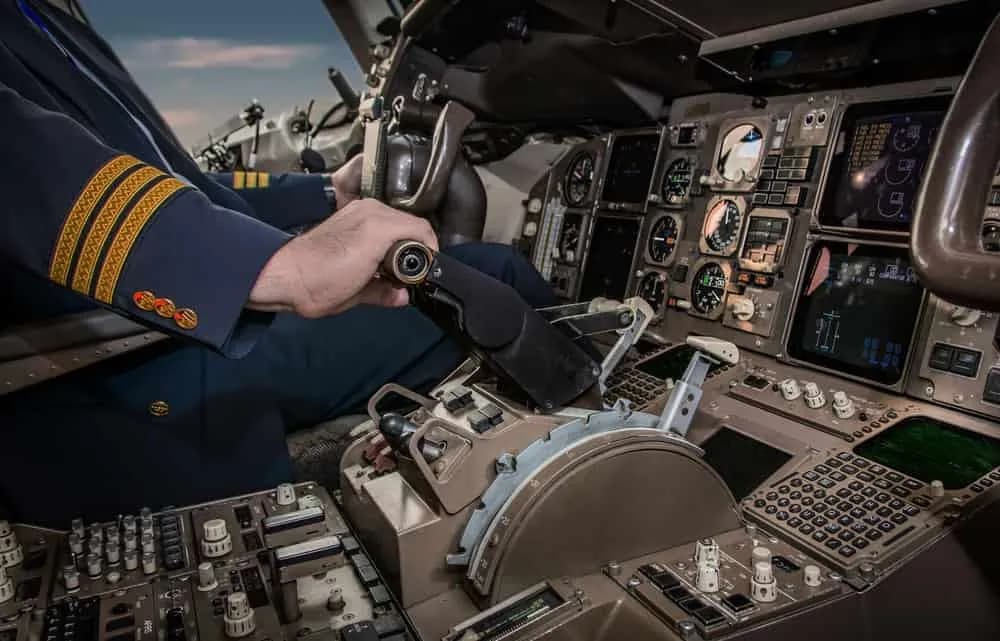
At Cable Harness Assembly, we deliver mission-critical aerospace wiring harnesses engineered for the extreme environments encountered in commercial, military, and space platforms. Our assemblies power and transmit signals to flight controls, avionics, landing gear, and engine systems, ensuring reliability when it counts.
Understanding Aerospace Wire Harnesses
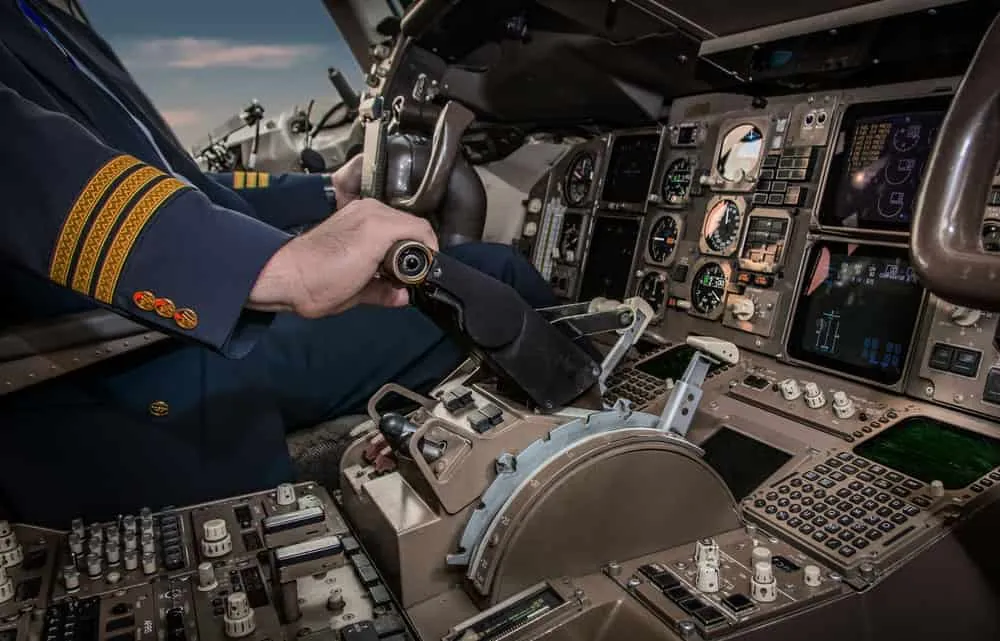
An aerospace wiring harness integrates multiple cables and connectors within a rugged outer jacket—typically a high-temperature, chemical-resistant thermoplastic. This protective layer shields conductors from jet fuel, hydraulic fluids, and temperature extremes, maintaining signal integrity throughout the aircraft’s service life.
The Business Case for Fly-by-Wire Systems

Modern aircraft rely on fly-by-wire technology to replace heavy mechanical linkages with electrical signal transmission. This shift reduces weight, improves fuel efficiency, and increases payload capacity. Our lightweight harness designs directly support these advantages, helping OEMs achieve performance targets while lowering operating costs.
Component Selection for Aerospace Wire Harnesses
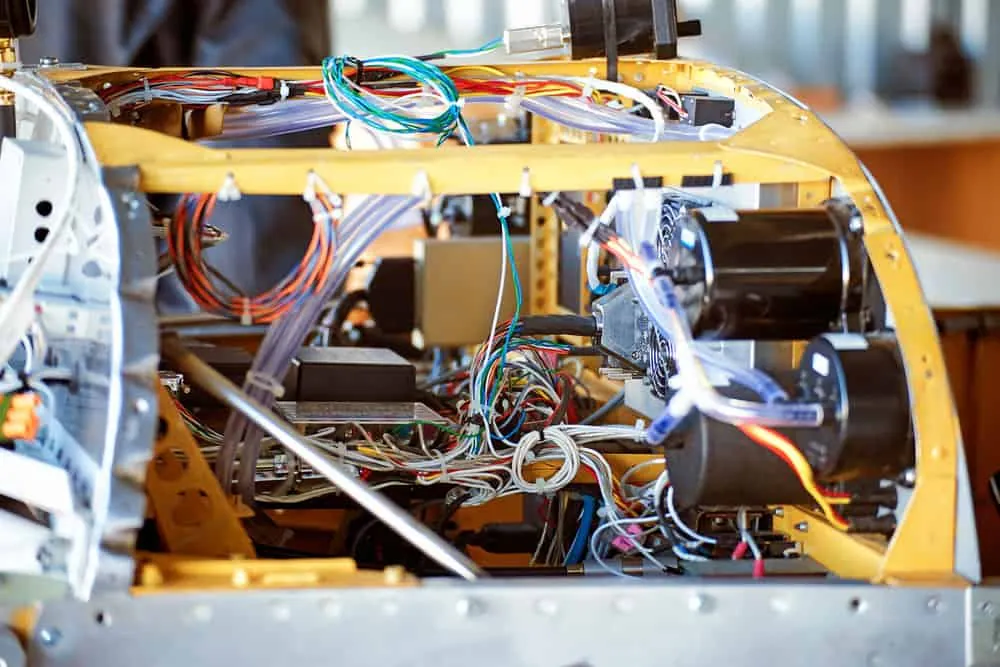
When sourcing components for aerospace wire harnesses, procurement teams must navigate a landscape of government, military, and OEM specifications. We help our customers manage this complexity by maintaining approved vendor lists and full traceability on every part.
Standard Components
For both military and commercial aircraft, only components from certified suppliers are acceptable. Military programs demand MIL-SPEC parts, while commercial platforms adhere to ARINC and FAA guidelines. Our supply chain is pre-vetted to ensure full compliance.
Non-Standard Components
Non-standard components are modified commercial-off-the-shelf items that meet stringent aerospace requirements. OEMs often define proprietary standards, creating sole-source dependencies. We work directly with these manufacturers to secure competitive pricing and consistent availability.
Off-The-Shelf Components
Off-the-shelf components offer cost advantages through volume production. Our engineering team qualifies these parts for use in non-critical paths where OEM approval is not required, reducing lead times and total system cost.
Wire Material Selection: Balancing Conductivity and Weight
Weight is the paramount concern in aerospace design. While copper offers superior conductivity and tensile strength, aluminum’s lower density often makes it the preferred conductor for long wire runs. Our harnesses weigh up to 40% less when using aluminum, directly contributing to fuel savings and extended range.
We optimize conductor selection based on current-carrying requirements, voltage drop limits, and environmental factors, ensuring that every harness meets the electrical and mechanical demands of its application.
Optimizing Wire Gauge for Weight and Performance
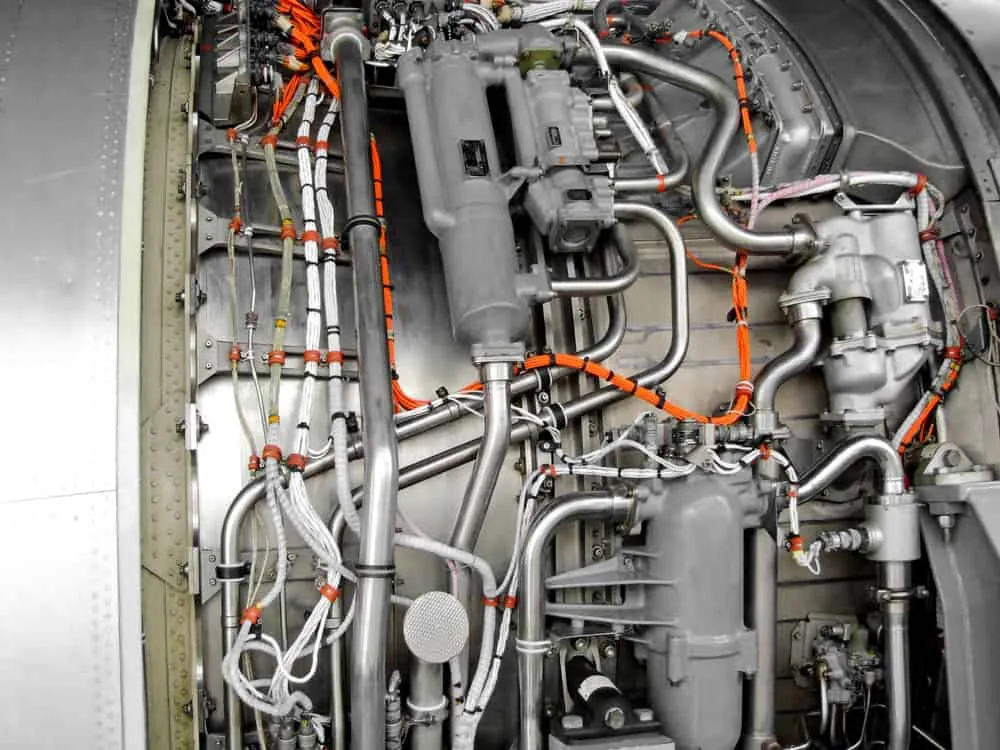
Determining the correct wire gauge begins with system-level schematics that identify signal types (analog, digital, RF) and current loads. Our engineers analyze these diagrams to select the smallest gauge that safely carries the required current, shaving grams that compound across large assemblies.
We also specify twisted pairs, shielded cables, and other specialty constructions where electromagnetic interference (EMI) protection is critical, ensuring data integrity for fly-by-wire and avionics buses.
Rigorous Testing Protocols for Aerospace Harnesses

Before delivery, each harness undergoes automated testing using high-voltage wiring analyzers. Our test programs apply precise currents and voltages across all points, simulating operational stress to catch latent defects.
Insulation Resistance (Megohm Test)
This test verifies that no short circuits exist between conductors by measuring insulation resistance. A passing value exceeds 100 megaohms, confirming adequate dielectric separation. Failures trigger root-cause analysis and rework prior to shipment.
Continuity Test
Continuity checks confirm that every conductor provides a low-resistance path from end to end. Our analyzers apply 0.5 amps for a minimum of 0.2 seconds at constant voltage, verifying that all crimps, splices, and connectors are sound.
Design for Manufacturing (DFM) and Certification Considerations
Integrating design for manufacturing principles early in development reduces costs and lead times. Our engineering team collaborates with your design staff to optimize harness layouts for automated cutting, stripping, and crimping, while maintaining compliance with IPC/WHMA-A-620 Class 3 requirements. We review formboard layouts, connector orientations, and service loops to simplify installation and improve maintainability.
For aerospace programs, adherence to AS9100 quality management systems is mandatory, with full traceability from raw material to finished assembly. We also support compliance with FAA 14 CFR Part 21 and EASA Part 21 for airworthiness certification. Customers in defense sectors benefit from our experience with MIL-DTL-45204 and MIL-STD-1553 data bus harnesses.
In adjacent industries, we apply IATF 16949 for automotive high-voltage electric vehicle harnesses and ISO 13485 for medical device assemblies, ensuring that best practices from one sector inform quality in another. This cross-domain expertise allows us to offer robust, certifiable solutions regardless of program requirements.
Conclusion
Aerospace wiring harnesses demand a rare combination of lightweight design, uncompromising reliability, and full regulatory compliance. At Cable Harness Assembly, we bring decades of experience to every project, from prototype to full-rate production. Our disciplined manufacturing processes, coupled with comprehensive testing and DFM support, make us the partner of choice for OEMs, Tier-1 integrators, and prime contractors. Contact our team to discuss your next aerospace wire harness requirement.
An earlier version of this article first appeared on autowiringpro.com. This version has been rewritten and updated for OEM and procurement audiences.