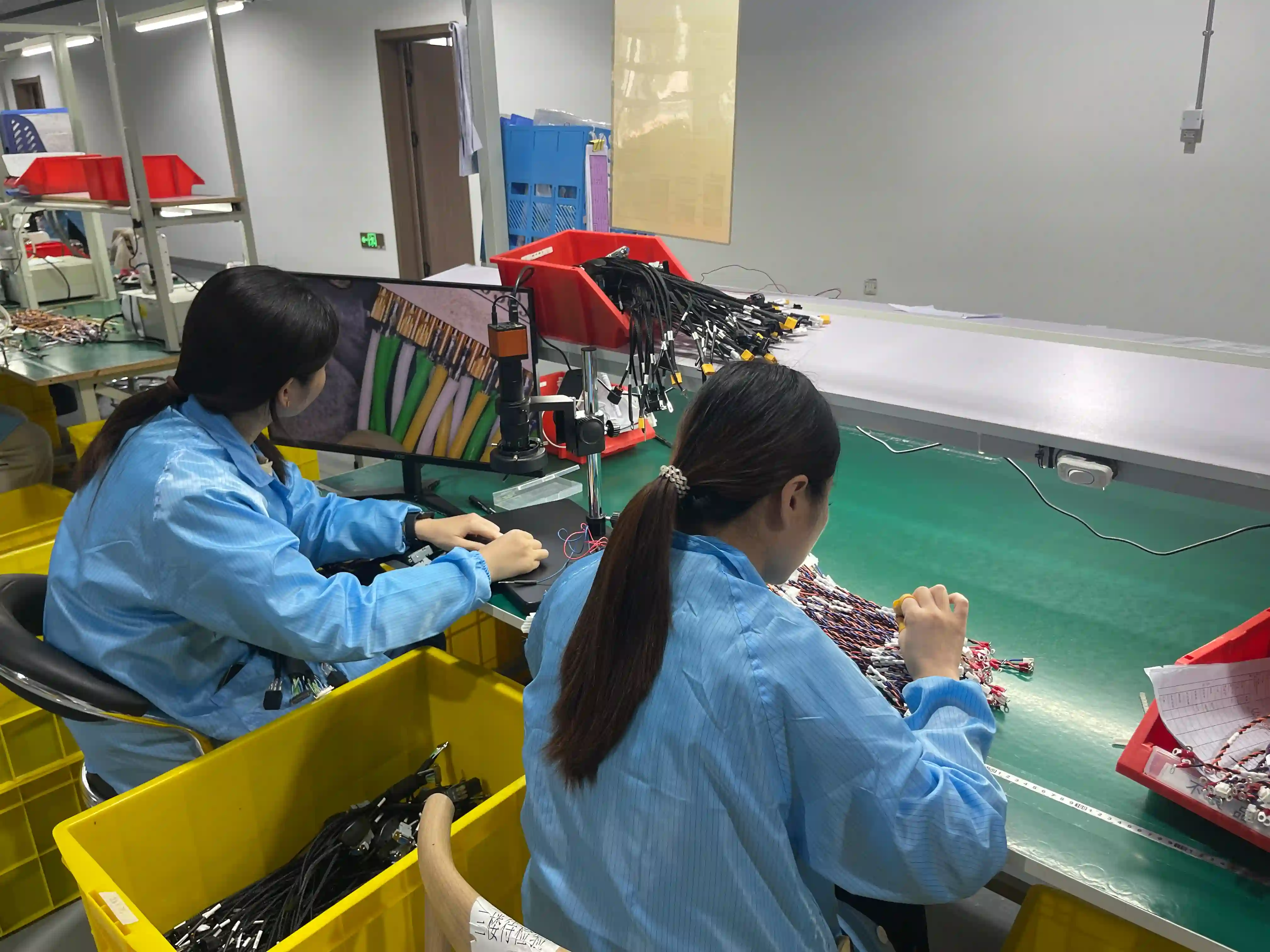
Poor grounding causes up to 35% of all electrical failures in automotive and industrial wire harness systems. From flickering dashboard lights to corrupted sensor data, grounding problems are among the most difficult faults to diagnose — and the easiest to prevent with proper design.
This guide covers everything you need to know about wire harness grounding: topology selection, wire sizing calculations, chassis bonding methods, applicable standards, and the 8 most common mistakes that lead to ground faults. Whether you're designing automotive harnesses, industrial control cables, or medical device assemblies, proper grounding is the foundation of electrical reliability.
Of electrical failures caused by poor grounding
Maximum acceptable ground contact resistance
Noise increase from daisy-chain vs star grounding
Warranty claims from improper routing/grounding
Why Wire Harness Grounding Matters
Every electrical circuit requires a complete path for current to flow. The ground connection provides this return path. In a wire harness, grounding serves three critical functions: circuit completion (return current path), safety (fault current dissipation), and signal integrity (reference voltage for sensors and ECUs).
A ground connection with just 0.5Ω of resistance on a 10A circuit creates a 5V drop — enough to cause an ECU to misread sensor data, dim headlights, or trigger fault codes. In high-current EV applications, even 0.1Ω of ground resistance at 100A generates 10W of heat, creating a fire risk in confined harness bundles.
Ground vs. Grounding vs. Bonding
Ground is the reference point (0V). Grounding is connecting to earth for safety. Bonding is connecting metallic parts together to equalize potential. In wire harness design, all three matter — but they serve different purposes and must not be confused.
Poor grounding is a common cause of wire harness field failures. An inexpensive ring terminal with poor chassis contact can disable an otherwise functional system, so grounding components and interfaces are not appropriate places to cut cost.
Grounding Topology: Star vs Daisy-Chain
Ground topology determines how multiple circuits share a common return path. The two primary approaches — star and daisy-chain — have dramatically different performance characteristics. Choosing the wrong topology is the root cause of most EMI and noise problems in wire harness systems.
| Parameter | Star Topology | Daisy-Chain Topology |
|---|---|---|
| How it works | Each circuit has its own dedicated ground wire to a single point | Multiple circuits share a common ground wire in series |
| Noise isolation | Excellent — no shared impedance | Poor — 300% more noise |
| Wire usage | Higher — more individual wires needed | Lower — shared return wires |
| Best for | ECUs, sensors, safety-critical circuits | Lighting, non-critical loads |
| Ground loop risk | Minimal | High |
| Fault isolation | One circuit failure doesn't affect others | One disconnection breaks all downstream circuits |
Design Rule
Use star topology for all safety-critical, sensor, and ECU circuits. Reserve daisy-chain topology only for non-critical loads like interior lighting or seat heaters where noise coupling is acceptable. Many OEMs now mandate star grounding for all ADAS and powertrain circuits.
Ground Wire Sizing & Selection
Ground wires must carry the full return current of the circuit they serve. Under-sizing ground wires is a common mistake — the ground wire should be equal to or larger than the largest supply wire in the circuit. For high-current applications, add a 30% margin to account for voltage drop over length.
| Application | Typical Current | Min Ground Wire (AWG) | Recommended (AWG) |
|---|---|---|---|
| Sensor signals | < 1A | 20 AWG | 18 AWG |
| ECU / controller | 1–5A | 16 AWG | 14 AWG |
| Lighting circuits | 5–15A | 14 AWG | 12 AWG |
| Motor / actuator | 15–40A | 10 AWG | 8 AWG |
| Engine / chassis main ground | 40–100A | 6 AWG | 4 AWG |
| EV battery / HV systems | 100–400A | 2 AWG | 1/0 AWG |
For voltage drop calculation, use the formula: Vdrop = I × R × 2L / 1000, where I is current in amps, R is resistance in Ω/km for the wire gauge, and L is one-way length in meters. Keep voltage drop under 0.5% for 12V systems and 0.25% for signal circuits. Our voltage drop calculator can help you verify your wire sizing.
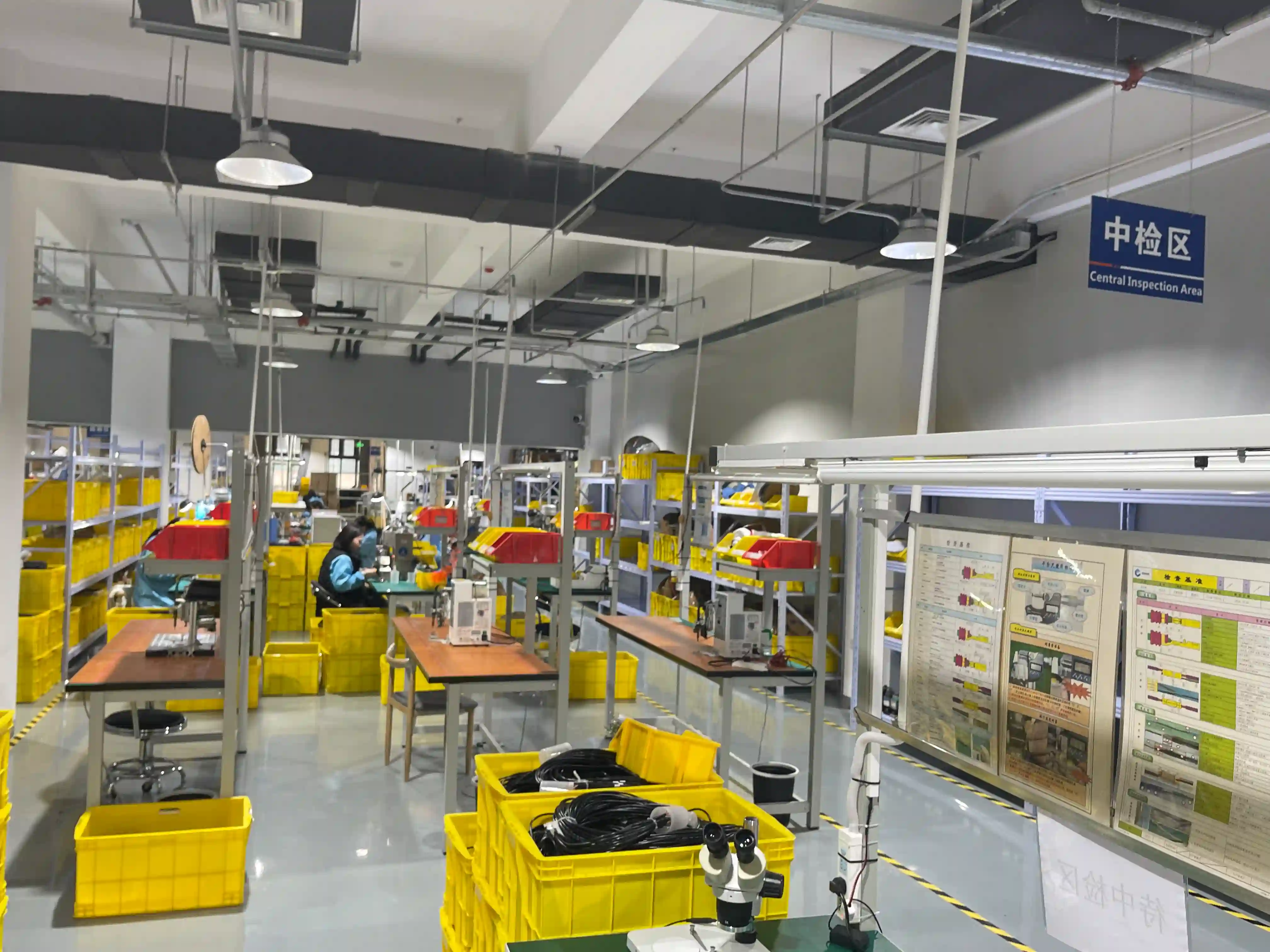
Quality inspection team verifying ground connection resistance on wire harness assemblies
Chassis Bonding Techniques
The chassis bond — where the ground wire meets bare metal — is the single most failure-prone point in any grounding system. A powder-coated or painted surface adds 2–5Ω of contact resistance, compared to the target of < 0.01Ω for a proper bond. Surface preparation is non-negotiable.
Surface Preparation Requirements
Correct Methods
- Remove paint/coating in a circle 2× the ring terminal OD
- Use serrated (star) lock washers to bite through surface oxidation
- Apply conductive anti-seize compound on aluminum chassis
- Torque fasteners to specification and mark with witness paint
Common Failures
- Bolting ring terminal over paint or e-coat
- Using flat washers instead of serrated lock washers
- Stacking multiple ring terminals without proper contact area
- No corrosion protection after assembly in exposed environments
After assembly, protect the bond with conformal coating or heat-shrink tubing to prevent corrosion. In marine or outdoor applications, use dielectric grease on the terminal face and seal with adhesive-lined heat shrink. Standard flat washers increase resistance by 300% after just one year in humid environments.
Stacking several ring terminals on one unprepared chassis bolt adds contact resistance at every layer. Limit the number of terminals per ground stud and use a dedicated ground distribution block for more complex systems.
Standards: SAE, IPC, NEC & MIL-STD
Multiple standards govern wire harness grounding depending on your industry. Understanding which standards apply — and where they overlap — is essential for compliance and certification.
| Standard | Scope | Key Grounding Requirements | Industry |
|---|---|---|---|
| IPC/WHMA-A-620 | Cable & wire harness assemblies | Ground wire crimp integrity, contact resistance limits, visual inspection criteria | All industries |
| SAE J1128 | Low-voltage automotive wire | Wire sizing for ground return, voltage drop limits, conductor specifications | Automotive |
| SAE J1742 | Connections for automotive wiring | Terminal-to-chassis contact resistance < 5mΩ, pull-test requirements | Automotive |
| NEC Article 250 | Grounding & bonding | Equipment grounding conductor sizing, bonding jumper requirements | Building / industrial |
| MIL-STD-1310 | Shipboard bonding & grounding | Bond resistance < 1mΩ for RF, < 10mΩ for power, corrosion control | Military / marine |
| IEC 60364-5-54 | Earthing & protective conductors | Protective conductor sizing, earth electrode resistance | International / EU |
EMI Shielding & Ground Separation
In modern harness systems, separating analog grounds, digital grounds, and power grounds is critical for signal integrity. Mixing ground types creates ground loops — circulating currents that inject noise into sensitive circuits. A single ground loop in an automotive CAN bus harness can corrupt communication and trigger false fault codes.
Ground Separation Rules
- Separate analog sensor grounds from digital ECU grounds — connect both to chassis at a single, common point only
- Keep power ground wires at least 50mm (2 inches) from signal ground wires within the harness bundle
- Use shielded cables with properly terminated drain wires for all signal circuits above 100kHz
- Terminate shield drain wires at one end only (typically the receiver end) to prevent ground loops
- Use twisted pairs for differential signals — twisting reduces EMI susceptibility by 20–40 dB
For detailed shielding implementation, see our guide on top 6 EMI shielding methods for cable assemblies. When designing shielded cable assemblies, proper ground termination of the shield is as important as the shield material itself.
8 Common Grounding Mistakes
#1Bolting to Painted or Coated Surfaces
A powder-coated surface adds 2–5Ω contact resistance. Always remove coating in a circle 2× the terminal OD and verify bare metal contact with a multimeter before assembly.
#2Using Flat Washers Instead of Serrated Lock Washers
Flat washers don't bite through surface oxidation. After one year in humid conditions, contact resistance increases 300%. Serrated (star) washers maintain low resistance over the service life.
#3Daisy-Chaining Safety-Critical Grounds
Removing one terminal from a daisy-chain disconnects every downstream circuit. Use star topology for any safety-critical, sensor, or ECU ground — one dedicated wire per ground point.
#4Under-Sizing Ground Wires
The ground wire must match or exceed the supply wire gauge. A 10A circuit on a 1m run needs at least 14 AWG ground wire to keep voltage drop under 0.5% at 12V.
#5Coiling Excess Ground Wire
Bunched or coiled ground wire creates inductance, which increases impedance during transient events. Route ground wires as directly as possible and trim to length.
#6Stacking Too Many Terminals on One Stud
Each stacked terminal adds contact resistance. Limit to 2 terminals per stud. For more circuits, use a ground distribution block or bus bar.
#7Not Reinstalling Ground Straps After Service
One of the most common field failures. After engine or dashboard removal for service, ground straps are forgotten or loosely reconnected. Always torque-check and mark ground connections.
#8Mixing Dissimilar Metals Without Protection
Copper terminals on aluminum chassis create galvanic corrosion. Use bimetallic transition washers or apply conductive anti-seize compound to prevent electrochemical degradation.
Troubleshooting Ground Faults
Ground fault symptoms are often intermittent and misleading. Flickering lights, erratic sensor readings, radio noise, and hard starting can all trace back to a single bad ground connection. Here's a systematic approach to diagnosis.
4-Step Ground Fault Diagnosis
Voltage Drop Test
With the circuit under load, measure voltage between the ground terminal and battery negative post. Anything over 0.3V indicates excessive ground resistance. This is more reliable than a simple resistance test because it captures the fault under real operating conditions.
Visual Inspection
Check for corrosion (green/white deposits on copper), loose fasteners, damaged insulation, and signs of heat discoloration at the ground connection. Heat marks indicate high-resistance joints generating power dissipation.
Continuity & Resistance
Using a 4-wire Kelvin measurement, verify ground wire resistance end-to-end. Compare against the wire gauge specification. Any reading more than 20% above expected resistance indicates damaged conductor strands or a bad crimp.
Wiggle Test
With the multimeter connected, physically flex and wiggle the ground wire and its connections while watching for resistance fluctuations. Intermittent ground faults often reveal themselves only under vibration or thermal cycling.
For more on testing methodology, our guide to wire harness continuity testing covers 4-wire Kelvin measurement, insulation resistance testing, and automated test equipment selection.
Grounding should be checked early when diagnosing intermittent electrical issues. A voltage-drop test under load can reveal faults that a simple unloaded resistance measurement misses.
Industry-Specific Grounding Requirements
Automotive
- Star grounding for all ADAS and powertrain ECUs
- Maximum 0.3Ω cab-to-frame and frame-to-engine resistance
- Dedicated chassis ground studs per zone (engine, cab, rear)
- Vibration-rated crimps (dual-crimp for > 5G environments)
Medical Devices
- Patient leakage current < 10µA (IEC 60601-1)
- Protective earth conductor tested at 25A for 10s
- Isolated patient circuits with separate ground reference
- Annual ground continuity re-verification required
Aerospace & Defense
- MIL-STD-1310 bond resistance < 1mΩ for RF circuits
- Cadmium-plated or nickel-plated terminals for corrosion resistance
- EMI bonding straps with mesh construction for flexibility
- Grounding documented in wiring diagram with callouts
Industrial Automation
- Separate machine ground from signal ground per IEC 60204-1
- PE (protective earth) conductor ≥ 10mm² for machines > 16A
- Green/yellow striped wire for protective earth (mandatory)
- Ground bar in control cabinet with labeled terminals
Frequently Asked Questions
What is the maximum acceptable ground resistance for a wire harness?
For most automotive and industrial applications, ground contact resistance should be below 0.01Ω (10mΩ). For RF and military applications, MIL-STD-1310 requires less than 1mΩ. For power circuits, SAE J1742 specifies less than 5mΩ at the terminal-to-chassis interface. Anything above 0.3Ω in a 12V system will cause noticeable symptoms like dim lighting or sensor errors.
Should I use star or daisy-chain grounding for my wire harness?
Use star topology for all safety-critical, sensor, and ECU circuits. Star grounding eliminates shared impedance between circuits, preventing noise coupling. Daisy-chain is acceptable only for non-critical loads like interior lighting where noise coupling won't cause functional issues. Most OEMs now mandate star grounding for ADAS and powertrain systems.
How do I prevent galvanic corrosion at ground connections?
When connecting copper terminals to aluminum chassis (common in automotive and aerospace), use bimetallic transition washers, apply conductive anti-seize compound, or use stainless steel hardware as a buffer. After assembly, seal the connection with adhesive-lined heat shrink or dielectric grease to prevent moisture ingress.
What size ground wire do I need for a 12V automotive circuit?
The ground wire should be equal to or larger than the supply wire. For a 10A circuit with a 1-meter run, use at least 14 AWG (we recommend 12 AWG) to keep voltage drop under 0.5%. For the main chassis-to-engine ground, use 4–6 AWG for currents up to 100A.
How do I test for a ground fault in a wire harness?
The most reliable method is a voltage drop test under load. With the circuit energized and drawing current, measure voltage between the ground terminal and battery negative. Any reading over 0.3V indicates excessive resistance. Follow up with visual inspection for corrosion, a 4-wire resistance measurement, and a wiggle test to catch intermittent faults.
Can I use the chassis as a ground return path instead of a dedicated wire?
Chassis return is common in automotive (single-wire systems) but not recommended for signal circuits, safety-critical systems, or high-current paths. Chassis ground paths are susceptible to corrosion, paint over-spray, and variable resistance at body panel joints. Use dedicated ground wires for any circuit where reliability matters.
References & Further Reading
- 9 Recommended Practices for Grounding — Electrical Engineering Portal
- The 10 Worst Grounding Mistakes You'll Ever Make — EC&M Magazine
- IPC Standards for Electronics — Wikipedia
- Electrical Grounding and Bonding per NEC — Van Meter Inc.