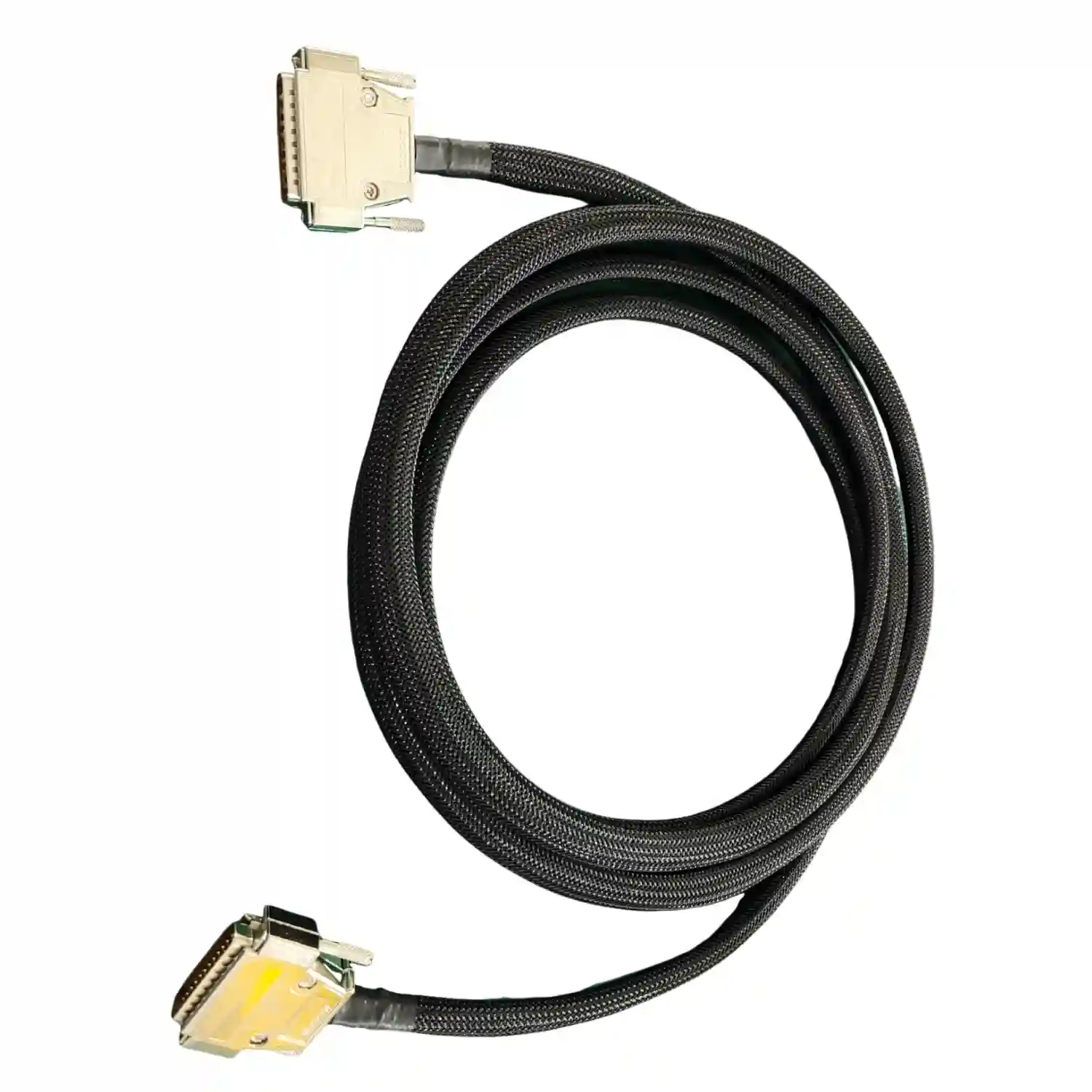
It is common for an industrial measurement or vision OEM to require strict NDA control before technical drawings can be released, which can add a multi-month vetting phase up front. Once an NDA and supplier qualification data are accepted, a typical formal inquiry for this class of work specifies the Samtec connector families, a defined cable length, and a target lead time. The manufacturing question is not just whether the connector can be sourced; it is whether the assembly can be released with pinout, length, crimp, continuity, and traceability controls tight enough for an engineering buyer to approve. The example below is illustrative and not a specific customer record.
TL;DR
- Lock Samtec part numbers, pinout views, and length datum before quoting or sampling.
- Short 100 mm assemblies need bend, label, and strain-relief review before crimping.
- Use IPC/WHMA-A-620 workmanship checks plus 100% continuity and shorts testing.
- Supplier qualification should include NDA, revision control, FAI, and lot traceability.
Table of Contents
Reader Context and Sourcing Objective
This guide is written for design engineers, sourcing managers, and supplier quality engineers who already have a connector family in mind and are deciding whether a contract cable assembly supplier can build it repeatably. The buying stage is usually RFQ, prototype release, or supplier qualification, when the drawing is close enough to quote but still has details that can create rework.
A Samtec connector cable assembly is a custom interconnect that uses Samtec connector hardware terminated to discrete wires, ribbon cable, coax, or a small cable bundle. The risk profile is different from a generic lead set because connector orientation, contact pitch, mating height, and pin assignment often leave little room for operator interpretation.
The objective is straightforward: convert a connector drawing and pinout into a production-ready assembly plan. A good quote should tell you the connector availability, wire and terminal choices, tooling path, first article evidence, test method, packaging method, and any drawing assumptions that must be resolved before build.
"For a 100 mm connector cable, I check the measurement datum before I check price. If the length is measured shell-to-shell in one drawing and wire-exit-to-wire-exit in another, the first article will look wrong even when the operator built exactly what was released."
Core Definitions for the Drawing Review
A Samtec connector is a precision interconnect product used when engineers need a defined mating interface, compact contact layout, and repeatable electrical connection between equipment modules or cable ends.
A cable assembly is a built and tested set of conductors, connectors, labels, protection parts, and strain-relief features delivered as one installable item.
First article inspection is the documented approval of the first built sample against drawing, BOM, process, and test requirements before production quantity release.
Continuity testing is an electrical check that verifies each intended connection and screens for shorts between unintended points. For the 20-pin and 10-pin case above, that means every position has a defined pass/fail path in the tester program.
Workmanship language should reference IPC/WHMA-A-620 for cable and wire harness acceptance criteria. Wire insulation and appliance wiring material discussions may reference UL 758 expectations through recognized material systems, while supplier document control can align with ISO 9001 quality management practices.
Decision Table for Samtec Connector Assemblies
Use this table during RFQ review. It forces the buyer and supplier to separate part availability, drawing interpretation, assembly method, and release evidence. That is where most short connectorized cable issues begin.
| Decision | What to Check | Release Risk | Evidence to Ask For |
|---|---|---|---|
| Connector part number | Series, pitch, gender, latch style, mating interface, and lead time | Wrong mating side or unavailable housing delays the build | Approved BOM and supplier quote line |
| Pin count and pinout | Cavity map, wire color, signal name, no-connect positions, and orientation view | Mirrored pinout passes visual review but fails system test | Continuity program printout for 100% of pins |
| Cable length | Measure point, tolerance, bend allowance, and connector exit direction | A 100 mm lead becomes too short after strain relief is added | First article dimensional record |
| Termination method | Crimp applicator, strip length, crimp height, pull-force sampling, and insulation support | Open-barrel crimp variation causes intermittent contact | Crimp height and pull-force log |
| Protection method | Heat shrink, braided sleeve, label position, and clamp clearance | Protection blocks mating access or hides inspection points | Assembly photo and inspection checklist |
| Supplier release | NDA, revision control, test plan, lot traceability, and packaging method | Approved sample cannot be repeated at production volume | FAI pack and lot traveler |
If your program also uses Molex, TE, JST, or Anderson interfaces, compare the release logic with our multi-connector integration guide. For Samtec-specific production support, see our Samtec cable assembly capability page.
"IPC/WHMA-A-620 helps us judge the crimp, insulation support, and workmanship, but it does not replace the customer's pinout map. On multi-position Samtec assemblies, 100% continuity testing is the control that catches mirrored views and cavity mistakes."
Manufacturing Controls from RFQ to First Article
1. Start with controlled documents
The RFQ package should include drawing revision, connector datasheet, approved BOM, pinout map, wire list, length tolerance, label text, inspection class, and packaging requirement. If the assembly is under NDA, the supplier should still provide capability data, quality certificates, and process examples before private drawings are released.
2. Validate crimping before full assembly
Open-barrel contacts need applicator setup, strip length control, conductor brush review, crimp height measurement, and pull-force sampling before the first full harness is built. Our crimping best practices guide explains why a good electrical reading does not prove a mechanically stable termination.
3. Protect short cable exits
A 100 mm lead gives the operator less slack for routing and less room for label placement, heat shrink recovery, or tie-down hardware. Before build, review bend radius, connector exit direction, and any pull load at the mating point. If the assembly sees movement, add strain-relief evidence instead of relying on visual acceptance alone.
4. Test against the released pinout
Continuity and shorts testing should be 100% for every custom Samtec cable assembly. The tester file must match the drawing revision, and the first article packet should show the actual pass record. For complex pin maps, pair this with the controls in our connector pinout verification guide.
5. Release the sample with production evidence
First article release should include dimensional checks, connector orientation photos, crimp records, continuity results, material lots, and packaging approval. A buyer should be able to compare the FAI pack to the purchase drawing without emailing the supplier for hidden assumptions. The same approach is covered in our first article inspection guide.
Representative Project Type (Illustrative): NDA-Gated Samtec Assembly
The following describes a representative project type, not a specific customer engagement.
An industrial measurement or vision OEM requires strict intellectual property protection before engaging a contract manufacturer for custom cable assemblies.
Procurement often involves a multi-tier approval system and a strict NDA requirement, which can add a multi-month vetting phase where technical specifications cannot be shared.
Execute the NDA, provide company background and capability data, then generate a detailed quote once the specifications are released.
A typical formal inquiry for this class of work specifies Samtec connector families, a defined cable length, and a target lead time, released with pinout, crimp, continuity, and traceability controls.
"When a customer spends 3 months qualifying a supplier under NDA, the factory response must be evidence-based: exact connector line, 4-week lead time, traceability plan, and a first article record that a buyer can approve without guessing."
Release Checklist Before You Place the Order
For broader custom cable programs, the same decision logic applies to connector sourcing, overmolding, label control, and test fixtures. Start with our custom cable assembly service page if the Samtec assembly is part of a larger harness package.
FAQ: Samtec Connector Cable Assemblies
What information is needed to quote a Samtec connector cable assembly?
Provide the Samtec series, exact part numbers, pin count, cable length tolerance, wire gauge, pinout map, shielding requirement, annual volume, and test criteria. For a short 100 mm assembly, length tolerance and connector orientation should be locked before the first article build.
Can a 100 mm Samtec cable assembly be built reliably?
Yes, but short leads need stricter routing and strain-relief control. We normally review bend radius, strip length, connector clocking, and test access before release; a 100 mm cable leaves little space for rework after crimping.
Which standards apply to Samtec connector harness workmanship?
Workmanship is commonly reviewed against IPC/WHMA-A-620, wire material selection can reference UL 758, and supplier qualification may follow ISO 9001 controls for document control, traceability, and corrective action.
Should every pin be continuity tested on a custom Samtec assembly?
Yes. A 20-pin plus 10-pin custom assembly should receive 100% continuity and shorts testing before shipment, with the tester program tied to the drawing revision and first article record.
How long does a custom Samtec cable assembly quotation take after NDA release?
If drawings, pinout, BOM, and annual volume are complete, a technical quote can usually be prepared quickly. Where an NDA and supplier qualification are required first, the up-front vetting phase can add weeks to months before the formal inquiry, after which a typical quote and lead time follow.
When should a buyer ask for first article inspection?
Ask for first article inspection before pilot or production release whenever the assembly has more than 10 positions, custom pinout, short length, controlled impedance concern, or a new connector family. The FAI should include dimensional, visual, crimp, and electrical records.
Need a Controlled Samtec Cable Assembly Quote?
Send the connector part numbers, pinout, target length, expected annual volume, and NDA requirements. Our engineering team can review the drawing assumptions before prototype or production release.
Contact Engineering