Control Panel Wiring Assembly Services
We build control panels and wiring cabinets for buyers who need more than loose harnesses or a generic box-build quote. The service combines released wiring package review, terminal and device integration, labeling, test planning, and repeatable production control.
A control panel quote should explain how the wiring stays stable after the first build
Buyers search for control panel wiring assembly services when the risk has moved beyond a single cable or wire harness. They need a supplier that can convert schematics, terminal maps, wire markers, device locations, and final test expectations into a finished panel that arrives ready for installation. The overlap with box build assembly and electromechanical assembly is real, but the buying question here is more specific: can the supplier hold wiring accuracy, identification, and test discipline across repeat orders?
Our answer is grounded in controlled manufacturing. We align the build with documented quality principles associated with ISO 9000, first-build verification practices reflected in first article inspection, and component or safety requirements tied to UL recognized materials when the released package calls for them. The objective is not extra paperwork. The objective is a panel that the next operator can reproduce under the same revision.
OurPCB Engineering Team summarizes the risk clearly: "A panel assembly becomes expensive when the quote leaves wire identification, test limits, or device substitutions undefined. The best quote is the one that exposes those control points before the production slot is booked."

What This Service Controls
The page targets buyers evaluating a supplier for wiring-heavy enclosure work, so the key issue is not only assembly capability. It is whether the supplier can hold that capability across reorders.
Released Wiring Package Review
We review the schematic, panel layout, BOM, wire list, labels, and test method before production so the build is not driven by conflicting markups.
Harness and Device Integration
Internal harnesses, terminal blocks, relays, HMIs, sensors, power supplies, and cable entry hardware are assembled as one controlled panel package.
Identification and Routing Discipline
Wire markers, terminal IDs, bundle paths, tie points, ferrules, and gland positions are tied to the released revision rather than operator memory.
Functional Test Planning
Continuity, point-to-point verification, power-on checks, and customer-specific functional tests are converted into clear pass or fail criteria.
Repeatable Panel Build Route
Programs can move from prototype panels into pilot lots and recurring orders with the right factory route, material plan, and revision control.
Shipment-Ready Output
Finished panels can ship labeled, serialized, protected for transit, and packed with accessory kits or install documents when required.
Control Panel Production Controls
These control points separate a repeatable control panel supplier from a shop that can only build one acceptable prototype cabinet.
| Checkpoint | Common Failure | Our Control |
|---|---|---|
| Drawing and revision control | Shops build from mixed panel markups, so the physical layout matches one file while labels and device references follow another. | We align the released schematic, panel layout, BOM, and wire list before production and isolate redlines or ECOs from active orders. |
| Wire identification and routing | A panel may function once, but unlabeled conductors, loose bundle paths, or inconsistent tie points create field-service confusion later. | Wire markers, ferrules, bundle paths, clamp points, and service loops are captured in the work instruction so reorders match the approved panel. |
| Terminal and device termination | Device landings are electrically correct on one sample but not repeatable because terminal preparation, ferrule use, or landing sequence was informal. | We define the termination method, device interface, inspection points, and hardware checks for relays, breakers, terminal blocks, and cable entries. |
| Functional verification | The panel passes a casual continuity check, but interlocks, I/O mapping, or power-up behavior are not proven against a documented test. | We translate the released package into point-to-point checks, continuity, power-on, or customer-specific functional tests with recorded acceptance criteria. |
| Packout and installation readiness | A panel ships electrically complete but arrives with damaged protrusions, missing labels, or no accessory separation for the installer. | Packout rules cover protection, serialization, accessory kits, and receiving sequence so the installer gets an identifiable, usable assembly on arrival. |
Panel wiring problems are often discovered too late because an early sample was judged only on whether it powered on. A stronger release path uses documented checkpoints before scale-up, including drawing alignment, identification logic, and installation-ready packout. Our related box build assembly process guide explains how those controls fit the wider enclosure workflow.
Technical Scope and Limits
This offer is meant for control-panel and cabinet programs that need production discipline. It is not a generic electrical assembly catch-all.
Typical assemblies
Industrial control panels, machine wiring cabinets, junction boxes, HMI backplates, terminal-box subassemblies, and panel-level electromechanical builds.
Supported build work
Wire cutting and marking, ferrules and terminals, crimping, harness routing, DIN rail device installation, gland and strain-relief hardware, labels, and final test.
Input package
Electrical schematic, panel layout, BOM, wire list, device locations, label artwork, test instructions, and packaging or kitting rules.
Quality framework
ISO 9001 quality controls, IPC-aligned workmanship for wiring tasks, and customer-specific acceptance records for industrial, automotive, or medical-adjacent equipment.
Test options
Continuity, point-to-point verification, insulation checks where specified, power-on validation, and documented first article or pilot-lot review.
Volume range
Single prototype cabinets, pilot lots, replacement batches, and repeat production with no forced MOQ.
Out of scope
PCB fabrication, SMT assembly services, undocumented redesigns, field commissioning, and silent substitutions on released device or terminal part numbers.
Production handoff
Approved panel revision, locked BOM, labeling map, test plan, packout method, and reorder path that preserves the released wiring standard.
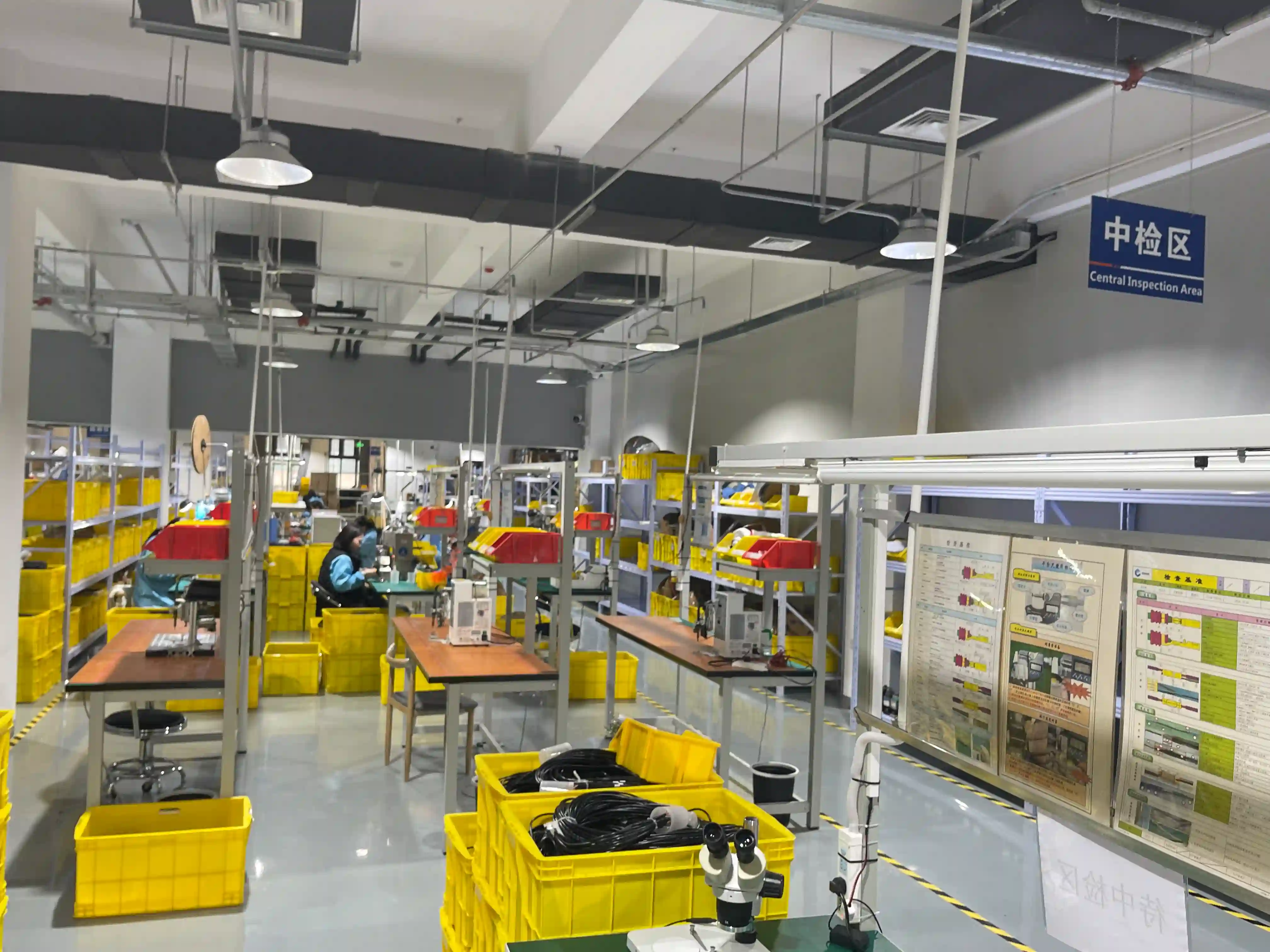
The panel is only finished when the installer can identify, connect, and verify it without guesswork
A control panel that powers up once on a bench can still create cost in the field if wire markers are inconsistent, accessory kits are mixed, or service loops block access during installation. That is why this service ties inspection to installation use, not only basic electrical pass or fail. We connect test coverage, label and packout control, fixture support, and DFM review into one production route.
Buyers moving a panel program from prototype to repeat orders often pair this page with our production-ready cable assembly workflow or our broader box build capability when the project includes more enclosure integration, external I/O kits, or system-level shipping requirements.
"A panel assembly should be judged by reorder stability as much as first-piece function. If the labels, landing logic, or test record are weak, the second order is where the cost shows up."OurPCB Engineering Team
Control Panel Wiring Workflow
This workflow is written for commercial buyers comparing suppliers, not as a generic educational overview.
RFQ and Package Review
We review the control panel package for drawing gaps, device risk, expected annual usage, and required testing before quoting the build route.
DFM and Material Closure
Wire types, terminal methods, panel hardware, entry protection, labels, and approved alternates are closed before material commitments begin.
Prototype or First Article Build
A controlled first build proves the released panel route with production-intent methods, documented inspection points, and preliminary test records.
Approval Package
The buyer receives the records needed for release, such as photos, continuity results, point-to-point checks, label verification, and exception notes.
Pilot Lot or Recurring Production
Approved panels move into scheduled production with revision control, replenishment planning, and a defined China or Philippines build route.
Ongoing Change Control
ECOs, device substitutions, label changes, and test updates are handled as controlled releases so reorders do not drift from the approved assembly.
When Buyers Usually Need This Page
These scenarios separate control-panel buying intent from broader wire harness or generic box-build searches.
You need pre-wired panels, not loose harnesses
This offer fits machine builders and OEMs that want the cabinet or subpanel delivered in a documented, install-ready state instead of assembling it in-house.
Your panel works, but the documentation is still weak
If one sample panel functioned but labels, routing notes, test limits, or device part numbers are still loose, this service closes those gaps before repeat orders.
You are consolidating harness and box-build suppliers
Programs that separate internal harness production from final panel integration often lose time in fit, label, and test handoffs. This page targets that consolidation step.
You need repeatable replacement or service batches
For service parts, retrofit projects, or low-volume machine platforms, the commercial need is stable reordering, not just one acceptable prototype cabinet.
What This Page Covers
Control panel wiring is not the same buying decision as a generic enclosure assembly page.
More wiring detail than generic box build
This page emphasizes conductor identification, terminal mapping, device landing logic, and functional test rather than only enclosure integration.
More install-ready discipline than harness-only work
Internal harnesses are only one part of the deliverable. The finished panel still needs service access, labels, accessory control, and shipment protection.
More reorder stability than one-off bench assembly
The commercial value is the ability to repeat the approved panel under revision control, not simply to wire one prototype cabinet correctly.
Control Panel Wiring Assembly FAQ
Direct answers to the questions engineering, sourcing, and operations teams usually ask before releasing a panel build.
The service covers the practical work needed to turn a released panel package into repeatable output: package review, wire preparation, ferrules and terminations, device installation, internal harness routing, labels, continuity or functional test, and shipment planning. It is built for commercial buyers who need production control, not only bench assembly labor.
Generic box build can include many types of enclosure integration. This page focuses on control panels and wiring-heavy cabinets where terminal mapping, conductor identification, routing discipline, and functional verification matter more than simple enclosure assembly alone.
The fastest quote includes the latest schematic, panel layout, BOM, wire list, device part numbers, label artwork, target quantity, test requirements, and packaging instructions. Photos of an approved sample help, but the released drawing package is what makes the quote and production route stable.
Yes. We support single prototype panels, pilot lots, replacement batches, and recurring production without a forced MOQ. The important distinction is whether the released wiring package and test plan are stable enough for repeat manufacturing after the first build.
Yes. Depending on the released requirements, we can provide continuity checks, point-to-point verification, insulation checks where specified, power-on validation, and customer-specific functional tests. We prefer documented pass or fail limits rather than informal bench confirmation.
Most programs rely on ISO 9001 quality controls and documented internal workmanship rules, with additional customer requirements for labeling, testing, UL-recognized materials, or industry-specific records. We map the practical inspection and test plan to the released panel package rather than assuming one generic standard covers every build.
Related Services and References
Box Build Assembly
Use this for broader enclosure integration beyond wiring-heavy control panels.
CapabilityElectromechanical Assembly
For full system integration that extends past cabinet and panel work.
CapabilityTesting Services
See continuity, hipot, and inspection options that support panel release.
IndustryIndustrial Industry Page
Review the industrial environments and equipment types this service supports.
BlogBox Build Assembly Process
A workflow guide for kitting, routing, test, and release discipline.
BlogWire Harness RFQ Guide
Use this checklist to package drawings and part data before quoting.
Real Project Experience
How we've handled similar wire harness and cable assembly projects
See de-identified project scenarios — supplier qualification, connector-shortage recovery, lead-time compression, and engineering spec lockdown — drawn from real production records.
Need a Repeatable Control Panel Build Route?
Send the schematic, panel layout, BOM, test plan, or sample photos. We'll review the control points needed for a stable prototype, pilot, or production release.