Twinax Cable Assembly
Custom twinax cable assemblies for DAC, active copper, and short-reach differential interconnect programs. We support prototype validation, controlled shielding, and 100% electrical testing for buyers sourcing production-ready high-speed copper builds.
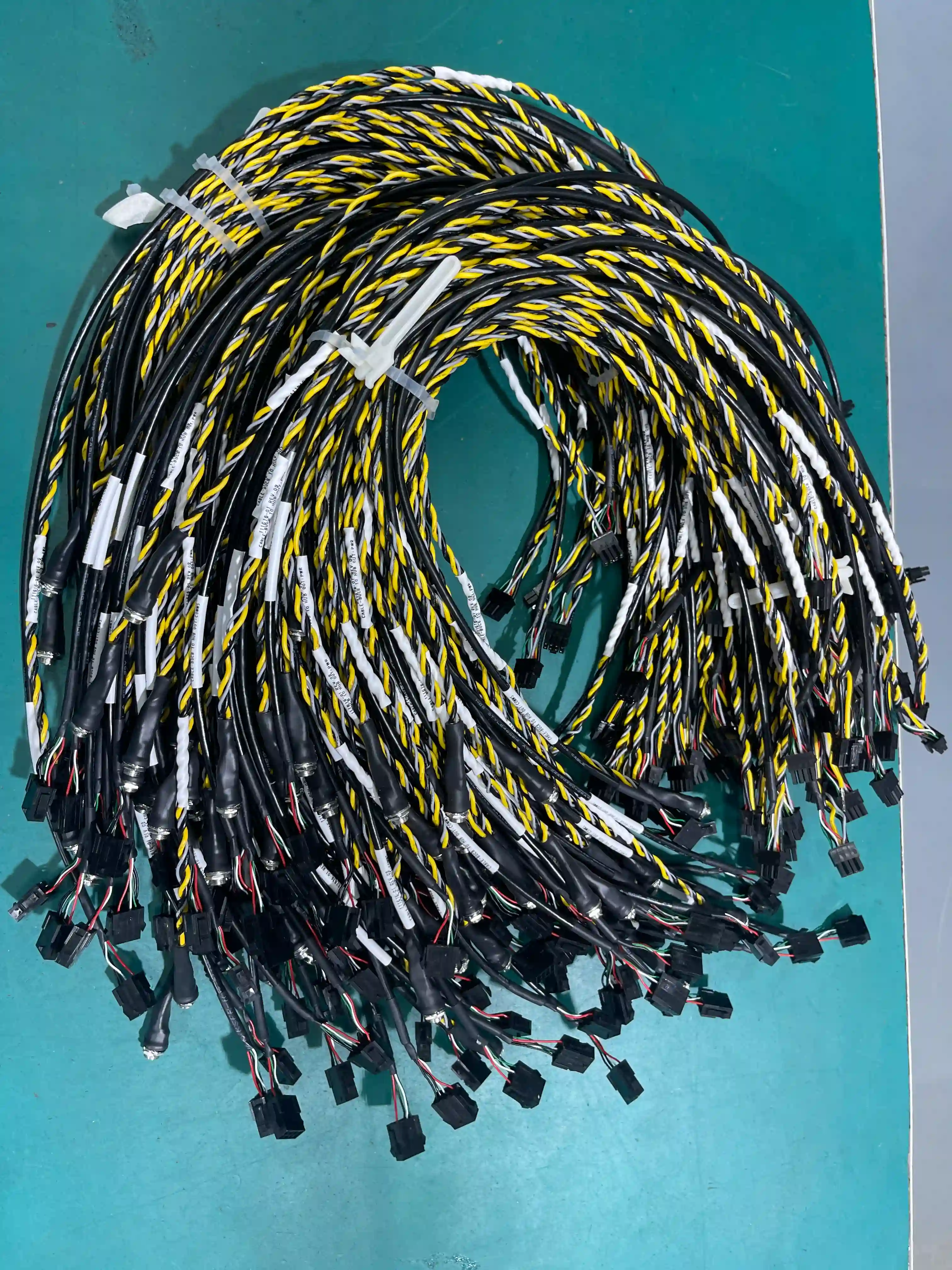
A twinax page that separates high-speed copper from generic cable traffic
Related capabilities include coaxial cable assembly and RF connector cable assembly. Those pages cover RF jumpers, antenna leads, and broader coax connector demand. This page is for buyers sourcing shielded differential copper links, DAC assemblies, and custom twinax interconnects tied to real hardware constraints.
That boundary matters because twinax buying decisions usually depend on reach, bend path, breakout design, and repeatable termination control, not on a generic list of connector brands. We keep the scope aligned to manufacturable cable definitions so prototypes can move into repeat production cleanly.
Best Fit
DAC, active copper, storage, switch, and embedded equipment interconnect builds.
Not a Fit
Generic RF antenna jumpers, facility wiring, or undefined field-install cable supply.
Twinax Cable Formats We Build
These are the build patterns most often requested when buyers need copper interconnects that stay inside a defined reach and channel budget.
What Our Twinax Service Includes
Everything here is grounded in capabilities already present across the site: shielding, crimping, testing, labeling, prototyping, and production control.
Controlled Pair Handling
Twinax programs depend on pair geometry and consistent termination practice, so we keep the build focused on differential integrity instead of treating it like a generic multi-conductor cable.
Shielding and EMI Discipline
We apply the same shielding, drain, and strain-relief control used in our broader shielded cable programs, adapted to high-speed copper interconnect requirements.
Prototype Through Production
You can start with engineering-validation quantities, then release the same approved construction into recurring production without changing suppliers mid-program.
100% Electrical Verification
Every production assembly can be continuity tested, with resistance, insulation, and application-specific checks added where the cable specification requires them.
Connector and Breakout Support
We support custom breakout, labeling, overmold support, and connectorized cable-set planning for storage, switch, telecom, and embedded equipment builds.
Documented Workmanship Control
Twinax assemblies are released against defined build instructions with crimping, stripping, shield handling, and final inspection checkpoints tied to repeat production.
Specifications tied to real manufacturing scope
Capability Scope and Limits
Included scope
- Custom twinax cable assemblies for short-reach differential copper links
- Shielded breakout, labeling, strain relief, and connectorized equipment-side builds
- Prototype through production quantities under released work instructions
Out of scope
- Generic RF jumper sales better handled by the coaxial and RF connector pages
- Field installation labor or network commissioning services
- Undefined long-reach cabling where the system should move to fiber instead of copper
If the project expands beyond a cable set into a larger subsystem, we can route it through box build or related assembly planning as the project requires.
How Twinax Programs Move Through Production
This workflow is built for engineering teams that need first-article validation before locking a repeat cable build.
Channel and Drawing Review
We review link type, conductor construction, target length, connector format, breakout needs, and routing constraints before releasing materials.
Material Selection
The team aligns twinax cable, shielding method, connectors, and strain relief to the approved electrical and mechanical requirements.
Prototype Build
First articles validate fit, bend path, connector orientation, labeling, and assembly handling before a production traveler is released.
Electrical Verification
Assemblies move through continuity verification and any additional job-specific checks required by the print or test plan.
Inspection and Traceability
Finished assemblies are inspected against the released build definition, with labeling and packaging matched to your receiving process.
Repeat Production
Approved builds transfer into repeat manufacturing using the same documented materials, work instructions, and quality checkpoints.
Twinax cable assembly for DAC and differential copper interconnect programs
Twinax cable assemblies live in a narrower buying lane than the average cable page. A buyer looking for a true twinax build is usually working around a short-reach channel budget, a connector format already fixed by the hardware, and a routing envelope that leaves very little room for generic substitution. That is why this page is intentionally separate from our broader coaxial cable assembly and shielded cable assembly offerings.
From a technical standpoint, twinax is a shielded differential medium rather than a single-conductor RF path. If you want the standards context, the background on twinaxial cabling and small form-factor pluggable transceiver families helps explain why direct attach copper remains attractive for very short links even as fiber dominates longer reach. In the data center world, that usually means DAC-style assemblies carrying differential traffic between servers, switches, storage, and accelerator hardware.
The commercial question is not whether twinax exists. The question is whether the cable can be built repeatably enough to match the approved reach, bend path, breakout geometry, and receiving process in your hardware program. That is where our manufacturing scope matters: shielding control, released work instructions, labeling, and final verification all need to be locked before you scale. For buyers comparing copper-fabric options, the surrounding context from InfiniBand and modern Ethernet interconnect ecosystems explains why short-reach copper still holds a clear place when latency, rack density, and transceiver cost all matter at once.
Related resources on this site include data center cable assembly guidance, data center industry support, and telecommunications cable manufacturing. Those pages help frame the application. This page is the quote path for the custom twinax cable itself.
Buyers who need validation first can start with no MOQ and move into 48-hour prototyping for standard, fully defined jobs. Once the first article is approved, we move the same cable definition into repeat production instead of turning each order into a fresh engineering exercise.
Common twinax cable assembly use cases
OurPCB Engineering Team
"Twinax is only cost-effective when the cable definition is tighter than the buying conversation. If the reach, bend path, and termination plan are loose, the savings disappear fast."
That is why we position this page around real interconnect programs instead of broad RF or commodity copper traffic.
Twinax Cable FAQ
A twinax cable assembly is typically used for high-speed differential signaling over short distances, where buyers need strong noise control, consistent impedance behavior, and compact copper routing. The most common examples are DAC interconnects for data center and storage hardware, but twinax also appears in embedded equipment, instrumentation, and telecom systems. The core value is not that it is simply two conductors; it is that the pair geometry, shielding, and termination approach are controlled well enough to support the intended link.
Coaxial cable is built around a single center conductor and a surrounding shield, which makes it ideal for single-ended RF transmission. Twinax uses two conductors as a differential pair inside a shared shield, which makes it a better fit for balanced high-speed copper interconnects such as DAC and other differential links. If the application is really an RF jumper or antenna connection, our coaxial cable assembly service is usually the right page. If the design revolves around differential signaling and short-reach copper channels, twinax is the better match.
Yes. We can support passive DAC-style builds for very short reach and active copper programs where the approved design calls for additional signal conditioning. The useful distinction for buyers is not marketing terminology, but reach, loss budget, connector format, and the exact hardware being linked. We quote the assembly against the real channel definition rather than forcing every job into one stock cable family.
The fastest path is a drawing or cable specification that defines connector format, target length, pair count, shielding, labeling, and required tests. If the project is still in development, we can usually start with the hardware endpoints, target data rate, mechanical space constraints, and photos or CAD of the installation area. That gives enough context to find the missing details before a prototype is built.
Standard production supports 100% continuity verification, and we add additional checks such as resistance or customer-defined electrical verification when required by the job. On these assemblies, repeatability matters as much as any single pass result, so the work instruction, material lock, and inspection method are controlled before the job scales. For specialized high-speed qualification beyond standard production electrical checks, we align with the customer test plan instead of inventing a generic promise.
Twinax is usually strongest at short reach, especially when low latency, simple routing, and lower transceiver-system cost matter. Once the required distance, density, or channel loss budget moves outside the practical copper window, fiber becomes the better choice. That is why many buyers compare this page with our fiber optic and data-center content during selection. The right answer depends on reach, equipment format, thermal budget, and cable-management constraints, not on a blanket rule.
Related Products and Resources
Coaxial Cable Assembly
RF and antenna-focused coaxial assemblies
ProductsShielded Cable Assembly
EMI-controlled cable builds for broader applications
ProductsFiber Optic Cable
Longer-reach optical interconnect alternatives
ResourcesData Center Cable Guide
DAC, AOC, AEC, fiber, and power cabling selection context
IndustriesData Center Industry
Cable assembly support for racks, servers, and interconnect hardware
CapabilitiesTesting Capability
Electrical verification and inspection support
Real Project Experience
How we've handled similar wire harness and cable assembly projects
See de-identified project scenarios — supplier qualification, connector-shortage recovery, lead-time compression, and engineering spec lockdown — drawn from real production records.
Need Custom Twinax Cable Assemblies?
Send your connector format, target length, and test requirements. We support twinax programs from first-article validation through repeat production.