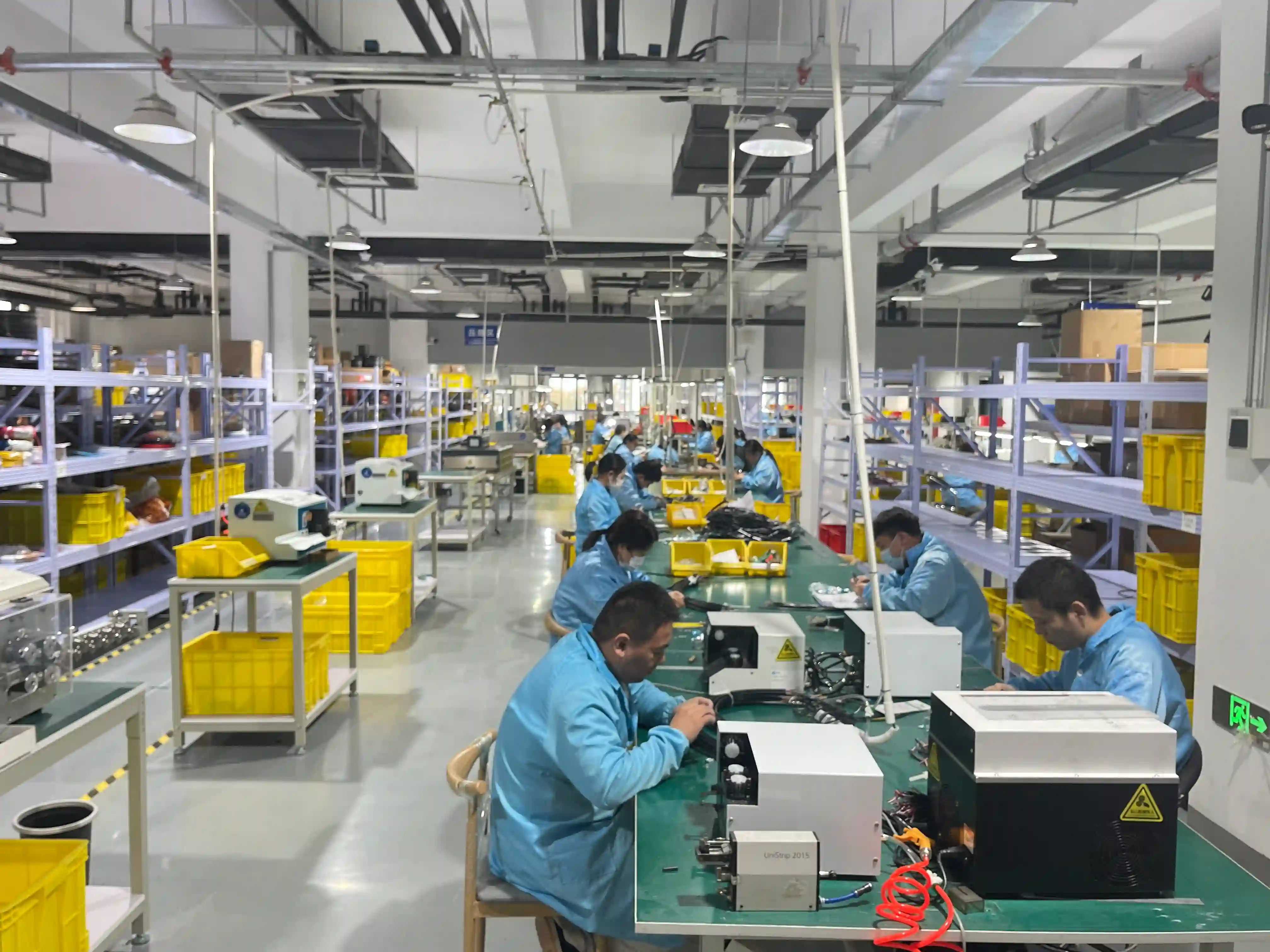
A hyperscale operator in Virginia lost $2.3 million in a single afternoon when a batch of passive copper cables failed at 400G speeds — the assemblies were rated for 3-meter runs but installed across 5-meter spans. Three racks away, a colocation provider ran the same 400G fabric for fourteen months without a single link error. The difference was not the switches, the optics, or the cooling. It was the cable assemblies.
Data center cable assemblies operate under constraints that industrial or automotive harnesses rarely face: sub-nanosecond signal integrity budgets, 2,000 MHz channel frequencies, power densities exceeding 50 kW per rack, and change cycles measured in months rather than years. Choosing the wrong cable type — or the wrong length — does not degrade performance gradually. It drops links instantly.
This guide maps every cable assembly category used in modern data centers: high-speed switch interconnects (DAC, AOC, AEC), fiber optic trunks (MTP/MPO and LC duplex), structured copper (Cat6A and Cat8), and power distribution harnesses. Each section includes specifications, reach limits, cost benchmarks, and the TIA-942 compliance rules that govern them.
Why Data Center Cable Assemblies Matter
Cable assemblies account for roughly 7% of total data center build cost, according to the Uptime Institute, yet they cause more than 40% of unplanned outages traced to physical infrastructure. The math is stark: a $15 DAC cable that fails under load can trigger a cascade that costs thousands per minute in lost compute revenue.
Three factors make data center cabling uniquely demanding compared to general industrial wiring. First, signal frequencies above 500 MHz require controlled impedance along the entire cable path — not just at termination points. Second, airflow management means every cable run affects cooling efficiency; a poorly routed bundle can raise inlet temperatures by 5–8 °C. Third, the migration cycle from 100G to 400G to 800G demands cable plants that support at least one generation beyond the current deployment.
A common mistake in data center builds is treating cable assemblies as a commodity. A a substantial amount passive DAC and a a substantial amount passive DAC from different manufacturers can have completely different insertion loss profiles at 26.5625 GHz per lane. That gap becomes a hard link failure at 400G-SR8.
OurPCB Engineering Team
High-Speed Interconnects: DAC vs AOC vs AEC
Switch-to-switch and switch-to-server links inside a data center rack or between adjacent racks use three interconnect families: Direct Attach Copper (DAC), Active Optical Cable (AOC), and Active Electrical Cable (AEC). Each fills a specific distance and cost window. Deploying the wrong type at the wrong distance is the single most common source of high-speed link failures.
Direct Attach Copper (DAC)
DAC cables are factory-terminated twinax copper assemblies with transceivers molded onto each end. Passive DACs contain no active electronics — the signal travels raw copper, making them the lowest-latency and lowest-cost option per port. At 400G (QSFP-DD form factor), passive DAC reach maxes out at 3 meters. At 800G (OSFP), that ceiling drops to approximately 2 meters because per-lane rates climb to 106.25 Gbaud PAM4, tightening the insertion loss budget.
Active DACs embed a signal-conditioning chip (CDR or linear driver) inside the connector housing, extending reach to 5–7 meters at 400G. The trade-off is 1–2 watts of additional power draw per end and roughly 50% higher cost than passive equivalents.
Active Optical Cable (AOC)
AOCs replace the copper twinax core with multimode fiber, embedding VCSEL transmitters and photodetectors inside each connector. Reach extends to 30–100 meters depending on fiber grade and speed, covering inter-row and even cross-hall links. AOCs weigh 60–70% less than equivalent-length copper, a meaningful advantage in overhead cable trays that already carry thousands of runs.
At 800G, AOC breakout configurations (800G to 2×400G) offer the most versatile fanout option in a single slim cable assembly. The limitation: AOCs are not field-terminable. A damaged connector means replacing the entire assembly.
Active Electrical Cable (AEC)
AEC fills the gap between passive DAC (≤3 m) and AOC (≥10 m). At 800G, AEC is the only copper option that reliably covers the 3–7 meter "middle zone" between top-of-rack switches and end-of-row aggregation. AECs use linear-drive retimer chipsets that regenerate the signal without full CDR recovery, keeping latency below 5 ns added per hop. Cost falls between DAC and AOC — typically $80–$150 per assembly at 400G.
| Parameter | Passive DAC | Active DAC | AEC | AOC |
|---|---|---|---|---|
| Max reach (400G) | 3 m | 5–7 m | 7 m | 100 m |
| Max reach (800G) | 2 m | 3–5 m | 5 m | 100 m |
| Latency added | < 1 ns | ~5 ns | ~5 ns | ~10 ns |
| Power per end | 0 W | 1–2 W | 1.5–3 W | 3–5 W |
| Cost (400G) | $30–$60 | $60–$100 | $80–$150 | $100–$250 |
| Field repairable | No | No | No | No |
| Best for | Intra-rack, ToR | Adjacent racks | EoR aggregation | Cross-row, cross-hall |
Costs reflect Q1 2026 OEM pricing for third-party compatible assemblies. Branded OEM cables (Cisco, Arista, Juniper) typically carry a 40–80% premium.
Fiber Optic Assemblies & MTP/MPO Solutions
Fiber optic cable assemblies form the backbone of every data center beyond a single-rack deployment. Two connector families dominate: LC duplex for individual patch connections and MTP/MPO for high-density trunk links. The fiber grade — OM3, OM4, OM5, or single-mode (OS2) — determines reach, bandwidth, and future-proofing.
Multimode Fiber: OM3, OM4, and OM5
OM3 laser-optimized fiber supports 10G links up to 300 meters and 40/100G (via MPO) up to 100 meters. OM4 extends those distances to 550 meters for 10G and 150 meters for 100G, making it the current volume standard for intra-building links. OM5 (wideband multimode) adds support for wavelength-division multiplexing across the 850–953 nm window, future-proofing the plant for 400G-SR4.2 and beyond without replacing fiber infrastructure.
Single-Mode Fiber (OS2)
OS2 single-mode fiber handles backbone and campus-level links from 500 meters to 10+ kilometers. For data centers requiring 400G-DR4 or 400G-FR4 optics, single-mode is the only option. The per-meter fiber cost is lower than multimode, but the transceivers (SFP-DD, QSFP-DD) cost 3–5× more than their multimode equivalents.
MTP/MPO High-Density Trunk Cables
MTP/MPO connectors pack 8, 12, 24, or 72 fibers into a single ferrule, enabling one cable to carry what would otherwise require dozens of individual LC duplex patches. A 72-fiber MTP trunk replaces 36 duplex LC patch cables, reducing tray fill by over 80%. Per ANSI/TIA-568.3-D, MTP connectors in data centers must maintain insertion loss below 0.35 dB per mated pair. Polarity management (Method A, B, or C per TIA-568) is critical — a polarity mismatch does not cause partial signal degradation; it causes a complete link failure.
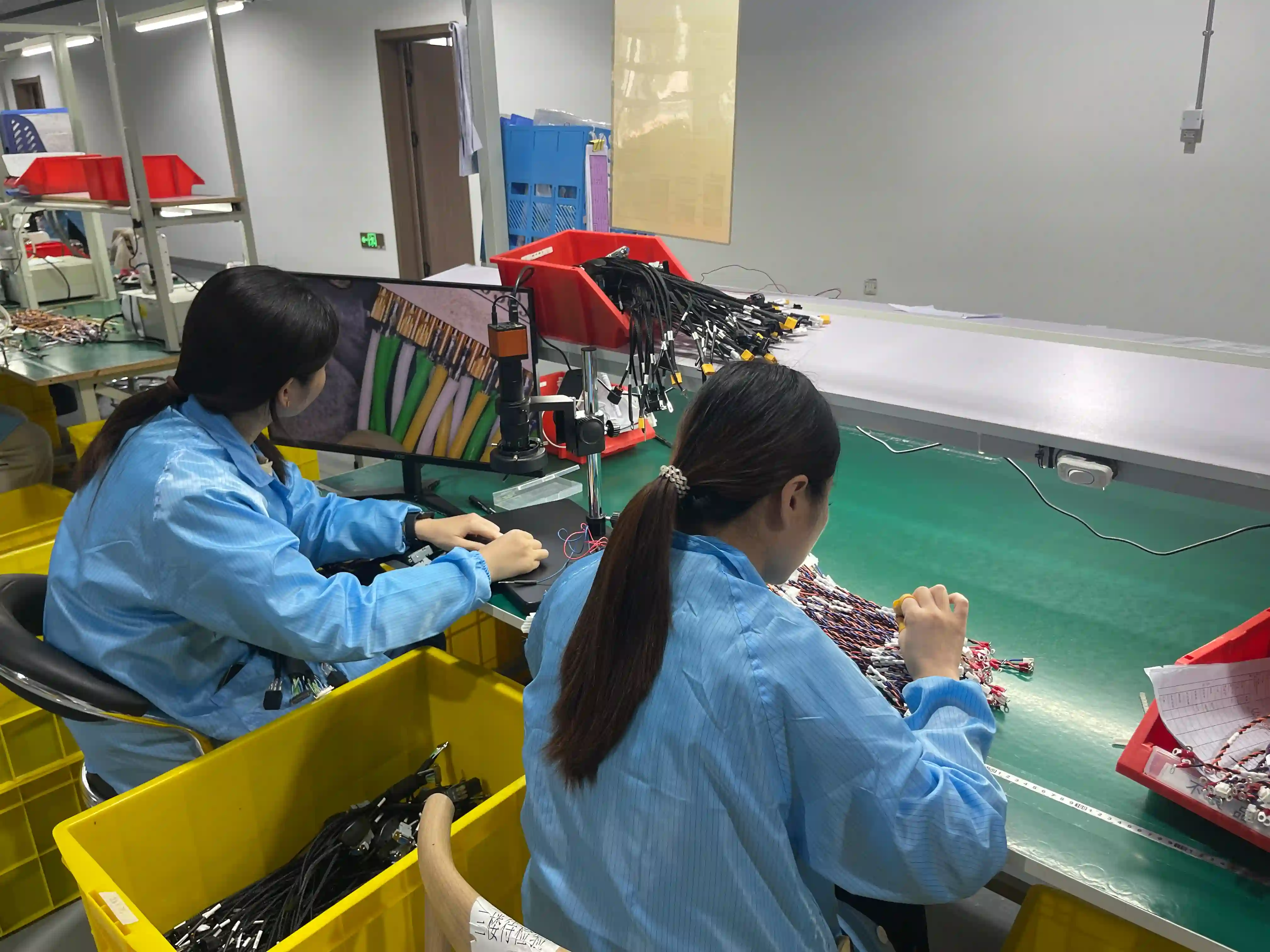
"We test every MTP/MPO trunk with an interferometer, not just an optical power meter. A connector face with 0.3 dB insertion loss can still fail under vibration if the end-face geometry is outside the IEC 61755-3-31 spec. Radius of curvature, apex offset, and fiber protrusion all matter at 400G-SR8 link budgets."
OurPCB Engineering Team
Structured Copper Cabling: Cat6A and Cat8
Structured copper cabling handles management network connections, out-of-band console access, BMC/IPMI links, and Power over Ethernet (PoE) for devices like IP cameras and wireless access points inside the data center. Cat6A remains the workhorse: it supports 10GBASE-T at distances up to 100 meters and delivers up to 90 W PoE under IEEE 802.3bt Type 4.
Cat8 (TIA-568.2-D) pushes frequencies to 2,000 MHz and supports 25GBASE-T and 40GBASE-T, but the maximum horizontal run drops to 30 meters. That constraint limits Cat8 to intra-rack and adjacent-rack applications. ANSI/TIA-942-C (published May 2024) now requires a minimum of two Category 6A or higher cables to every wireless access point, up from the previous recommendation of one.
For custom cable assemblies, shielded (S/FTP) construction is preferred over unshielded in data centers due to alien crosstalk at 500+ MHz. Every shielded run requires proper grounding at both ends per TIA-568-C.2 — a floating shield acts as an antenna, worsening EMI rather than reducing it. See our shielded vs unshielded cable guide for detailed grounding best practices.
Power Cable Assemblies & PDU Whips
Power distribution unit (PDU) whip cables deliver AC or DC power from the rack-level PDU to individual servers, switches, and storage arrays. A modern high-density rack drawing 30–50 kW requires PDU whips rated for 30A or 60A circuits at 208V three-phase, using IEC 60320 C19/C20 connectors for servers and C13/C14 for networking equipment.
Custom power cable assemblies for data centers differ from standard power cords in three ways. First, jacket materials must meet NEC Article 645 and UL 2556 flame-resistance ratings for plenum or riser spaces. Second, cable lengths must be manufactured to exact specifications — excess slack in a 50 kW rack blocks airflow pathways that the cooling system depends on. Third, color-coded jackets (typically red for A-feed, blue for B-feed) prevent the cross-connection errors that defeat redundant power architectures.
For DC-powered facilities (common in hyperscale deployments), busbar-to-server cable assemblies use ring or fork terminals crimped to 4–2/0 AWG conductors, rated for 48V or −48V DC distribution. Proper crimping practices are essential here — a high-resistance crimp joint on a 60A DC feed generates enough heat to trigger thermal shutdown.
TIA-942 Compliance Requirements
ANSI/TIA-942-C (2024) defines minimum cabling infrastructure requirements across four data center tiers. Tier I (basic) requires a single cable pathway with no redundancy. Tier IV (fault-tolerant) requires fully redundant, concurrently maintainable pathways with no single point of failure in the cabling plant. Most enterprise colocation facilities target Tier III (concurrently maintainable), which requires redundant cable pathways but allows shared backbone trunks.
Key cabling requirements from TIA-942-C that affect cable assembly procurement include: recognized horizontal cables must comply with ANSI/TIA-568.2-D for copper and TIA-568.3-D for fiber; minimum two Cat6A or higher drops to each wireless access point; recommended minimum two fibers for horizontal and backbone links; and all cable pathways must maintain 25% spare capacity for future growth.
Tier Compliance Quick Reference
Tier I – Basic
Single pathway, no redundancy, 99.671% uptime
Tier II – Redundant Components
Single pathway, redundant components, 99.741%
Tier III – Concurrently Maintainable
Dual pathways, active/passive, 99.982%
Tier IV – Fault Tolerant
Dual active pathways, no single point of failure, 99.995%
Cable Assembly Selection Matrix
The table below maps each data center cable assembly type to its optimal deployment scenario. Match your distance, speed, and budget requirements to find the right assembly category, then refine based on the specific standards and connector types listed.
| Use Case | Cable Type | Speed | Max Distance | Connector |
|---|---|---|---|---|
| ToR to server (same rack) | Passive DAC | 400G / 800G | 2–3 m | QSFP-DD, OSFP |
| ToR to EoR aggregation | AEC | 400G / 800G | 5–7 m | QSFP-DD, OSFP |
| Cross-row spine links | AOC / OM4 MPO | 400G | 30–100 m | MTP-16, QSFP-DD |
| Building backbone | OS2 single-mode | 400G–800G | 500 m – 10 km | LC duplex, MTP-16 |
| Management / IPMI | Cat6A S/FTP | 1G–10G | 100 m | RJ45 |
| High-speed copper (intra-rack) | Cat8 S/FTP | 25G–40G | 30 m | RJ45 / TERA |
| Server power (AC) | PDU whip cable | N/A | Custom length | C13/C14, C19/C20 |
| Busbar power (DC) | DC power harness | N/A | Custom length | Ring/fork, Anderson |
Custom vs Off-the-Shelf Cable Assemblies
Off-the-shelf DAC and AOC cables work well for standard top-of-rack deployments where lengths of 1 m, 3 m, or 5 m match the rack geometry. Custom cable assemblies become necessary when any of these conditions apply: non-standard lengths (reducing slack and improving airflow), custom color coding for A/B power feeds, combined power and signal in a single harness for edge deployments, or MTP/MPO polarity configurations that differ from the standard Method B shipped by most vendors.
When to Go Custom
- Non-standard cable lengths (reduce airflow-blocking slack)
- Color-coded power feeds (A/B redundancy identification)
- Combined power + signal harnesses for edge racks
- Special MTP polarity or breakout configurations
- Volumes above 500 assemblies (cost breakeven)
When Off-the-Shelf Works
- Standard 1/3/5 m intra-rack DAC/AOC runs
- Single-vendor switch environment (use OEM cables)
- Fewer than 100 assemblies (custom MOQ overhead)
- Time-critical deployment (custom lead time: 3–6 weeks)
- Standard Method B MTP polarity is acceptable
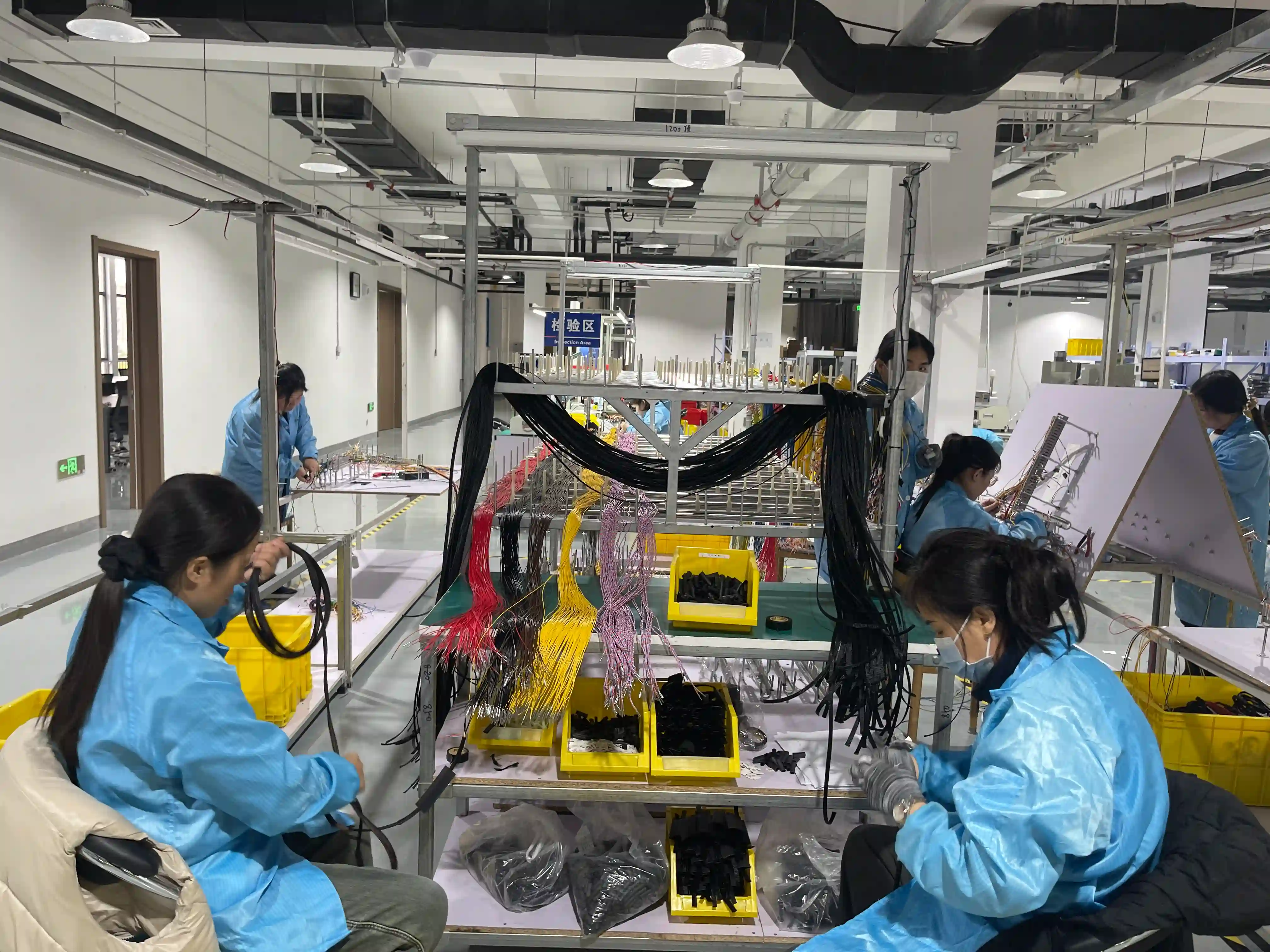
"For hyperscale customers, we manufacture cut-to-length PDU whip sets where every cable is within ±25 mm of the specified length. That precision eliminates slack management entirely and recovers 15–20% of in-rack airflow capacity. Off-the-shelf power cords cannot deliver that."
OurPCB Engineering Team
References
Frequently Asked Questions
What is the difference between DAC and AOC cables in a data center?
DAC (Direct Attach Copper) uses twinax copper conductors and works for distances up to 3–7 meters depending on whether it is passive or active. AOC (Active Optical Cable) uses multimode fiber with embedded transceivers and reaches 30–100 meters. DAC costs less and adds lower latency; AOC covers longer distances and weighs significantly less, improving cable tray management in dense deployments.
I need to connect two racks 5 meters apart at 800G — should I use DAC, AEC, or AOC?
At 800G over 5 meters, AEC (Active Electrical Cable) is the optimal choice. Passive DAC maxes out at 2 meters at 800G, while AOC would work but costs more for short runs. AEC fills this 3–7 meter gap with copper-based signal conditioning that keeps latency below 5 ns per hop while maintaining the 106.25 Gbaud PAM4 signal integrity the link requires.
What MTP/MPO polarity method should I use for 400G-SR8?
400G-SR8 uses 8 parallel fiber lanes per direction (16 fibers total). TIA-568 Method B (straight-through) with a Type-B MTP-16 connector is the industry standard for this topology. Method A requires polarity-flipping patch cables at one end, adding cost and failure points. Confirm polarity before ordering — a single polarity mismatch drops the entire 400G link.
How do I choose between Cat6A and Cat8 for data center copper cabling?
Use Cat6A (up to 10GBASE-T at 100 m) for management networks, BMC/IPMI, and PoE-powered devices like cameras and access points. Cat8 (25/40GBASE-T at 30 m max) is only cost-effective for intra-rack copper connections where you need higher speed but the distance is short enough. For runs beyond 30 meters at speeds above 10G, fiber is more reliable and often less expensive per port than Cat8.
We are building a new data center with 50 kW racks — what power cable specs do we need?
A 50 kW rack on 208V three-phase requires approximately 140A total, typically split across two redundant 60A circuits (A-feed and B-feed). Use IEC 60320 C19/C20 connectors rated for 20A per outlet, with 10 AWG (or 12 AWG for shorter runs) PDU whip cables meeting UL 2556 flame ratings. Color-code red (A-feed) and blue (B-feed) to prevent cross-wiring. Custom cut-to-length cables eliminate the excess slack that blocks airflow in dense racks.
Does TIA-942 require redundant cabling pathways?
It depends on the tier. Tier I and II require only a single cable pathway. Tier III (concurrently maintainable) requires redundant pathways so that one path can be serviced without taking the facility offline. Tier IV (fault tolerant) requires two simultaneously active pathways with no single point of failure. Most enterprise data centers target Tier III, which means every critical cable run needs a secondary path through a physically separate conduit or cable tray.