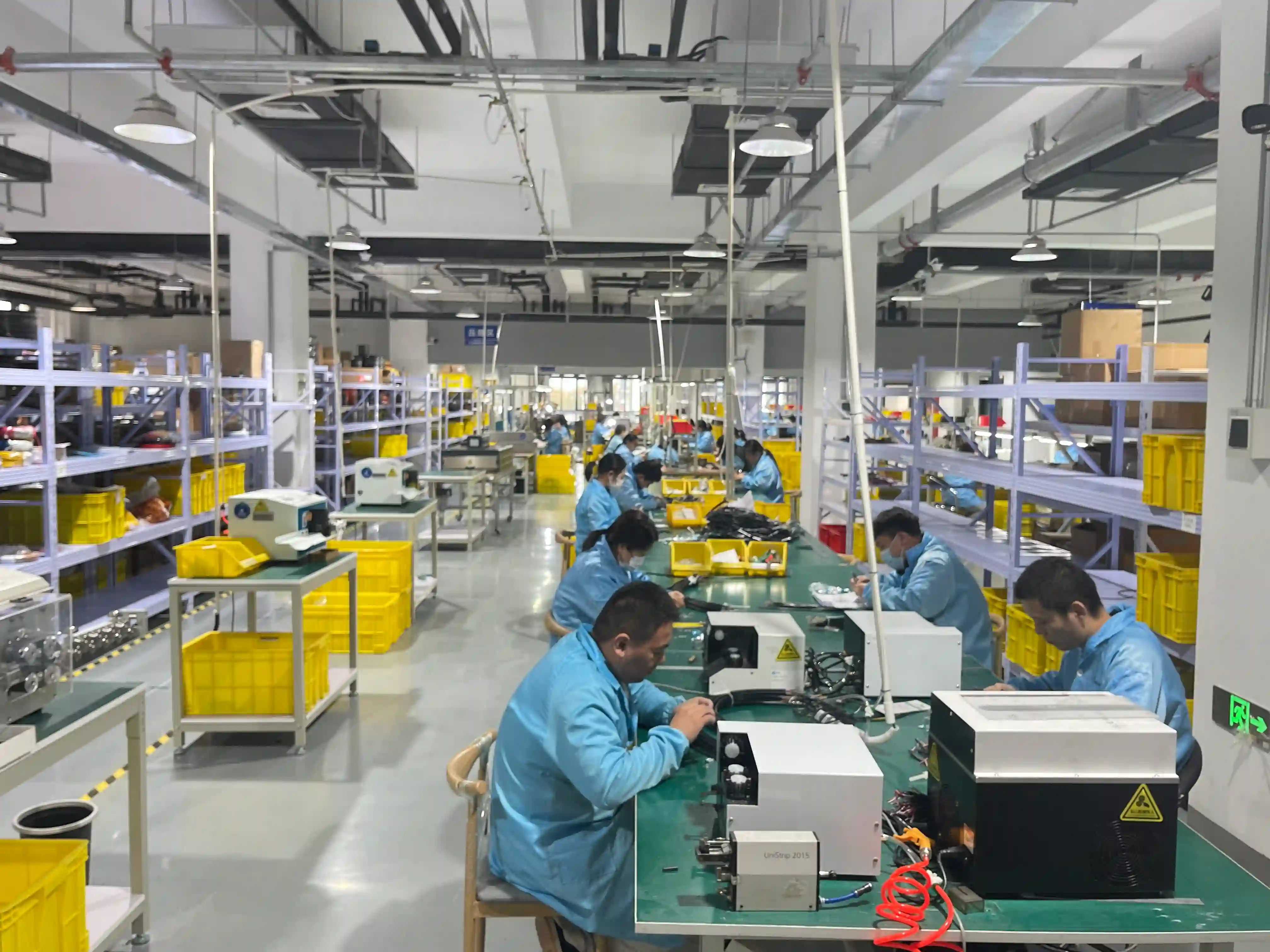
China vs Mexico: Wire Harness Manufacturing
The nearshoring vs offshoring decision for North American buyers— comparing costs, lead times, tariffs, and total landed value.
Table of Contents
For decades, China dominated global wire harness manufacturing with unmatched scale, deep supply chains, and aggressive pricing. But the world has changed. Tariffs, pandemic disruptions, and geopolitical tensions have companies rethinking their sourcing strategies—and Mexico has emerged as the leading nearshore alternative for North American buyers.
In 2023, Mexico became the United States' largest trading partner, overtaking China for the first time in two decades. This shift isn't just tariff-driven— it reflects fundamental changes in how companies evaluate total cost of ownership, supply chain resilience, and speed to market. This guide breaks down the real trade-offs between China and Mexico manufacturing for wire harnesses.
Market Context & Trends
The wire harness industry is undergoing a geographic transformation
$114B
Projected global wire harness market by 2032
#1
Mexico became largest US trading partner in 2023
54%+
Average tariff rate on Chinese goods (2025)
China's Position
China remains the world's manufacturing powerhouse with nearly 6 million manufacturing establishments. Key wire harness production centers in Guangdong, Jiangsu, Shandong, and Fujian provinces offer unmatched component availability and process maturity.
However, rising labor costs, quality concerns, IP risks, and escalating tariffs have eroded China's cost advantage for North American buyers. Many companies are actively diversifying supply chains.
Mexico's Rise
Mexico has emerged as the leading nearshore destination for North American manufacturers. States like Zacatecas have been wire harness hubs since the 1990s, with thousands of workers experienced in harness assembly for automotive and industrial applications.
USMCA trade benefits, proximity to US markets, and wage differentials of up to 80% versus US labor make Mexico increasingly attractive. US-made components are used 4x more by Mexican manufacturers than Chinese.
Factory-gate price alone does not determine the best sourcing location. Buyers should compare total landed cost, including tariffs, shipping, inventory carrying costs, and quality risk, before choosing between China and Mexico.
Complete Comparison Table
Side-by-side comparison for wire harness manufacturing decisions
| Factor | China | Mexico | Advantage |
|---|---|---|---|
| Base Labor Cost | $3-5/hour | $2.50-4/hour | Mexico |
| US Import Tariffs | 54-55% average | 0-25% (USMCA eligible) | Mexico |
| Shipping Time to US | 20-40 days (sea) | 2-7 days (truck) | Mexico |
| Shipping Cost | $3,000-8,000/container | $500-2,000/truck | Mexico |
| MOQ Flexibility | High MOQs typical | Lower MOQs possible | Mexico |
| Component Ecosystem | Extensive, mature | Growing, less depth | China |
| Manufacturing Scale | Massive capacity | Moderate capacity | China |
| IP Protection | Higher risk | Better protection | Mexico |
| Time Zone Overlap (US) | 12-15 hours difference | Same/1 hour difference | Mexico |
| Supply Chain Visibility | Challenging | Same-day visits possible | Mexico |
| US Content Integration | Low (1x baseline) | High (4x more US parts) | Mexico |
Total Cost Analysis
Factory price is just the beginning—here's what really matters
Sample Cost Comparison: $10,000 Wire Harness Order
China Sourcing
- Factory Price$10,000
- Tariffs (54%)+$5,400
- Ocean Freight+$800
- Port Handling/Customs+$400
- Inventory Carrying (30 days)+$300
- Total Landed Cost$16,900
Mexico Sourcing
- Factory Price$11,500
- Tariffs (USMCA eligible)$0
- Truck Freight+$400
- Customs/Border+$150
- Inventory Carrying (5 days)+$50
- Total Landed Cost$12,100
Mexico Savings: $4,800 (28% lower landed cost)
Despite 15% higher factory price, Mexico delivers significantly lower total cost due to tariff advantages and reduced logistics expenses.
Hidden China Costs
- Quality inspection trips ($3-5K per visit)
- Rework/rejection costs (often 2-5%)
- Communication delays (time zone issues)
- Higher safety stock requirements
Mexico Cost Advantages
- Day trips possible for quality audits
- Faster issue resolution (same time zone)
- Lower safety stock (shorter lead times)
- USMCA duty-free for qualifying goods
Lead Times & Logistics
Proximity provides Mexico with a massive speed advantage
China Logistics
- Production Time2-4 weeks
- Ocean Freight to US West Coast14-21 days
- Port Processing + Customs3-7 days
- Inland US Transport3-7 days
- Total Order-to-Delivery5-9 weeks
Mexico Logistics
- Production Time2-3 weeks
- Truck Freight to US Border1-2 days
- Border Crossing + Customs1-2 days
- Inland US Transport1-5 days
- Total Order-to-Delivery2-4 weeks
Speed Advantage Impact
Mexico's 3-5 week lead time advantage enables lean inventory strategies, faster response to demand changes, and quicker new product introductions. For automotive OEMs with just-in-time requirements, this speed difference can be the deciding factor.
Tariffs & Trade Agreements
Trade policy creates significant cost differences
China Tariff Situation
High Base Tariffs
China-origin wire harnesses carry the legacy Section 301 duty for their tariff line (25% on many lines) plus a 12.5% Section 301 forced-labor duty since July 24, 2026, on top of the base duty.
Volatility Risk
Tariff rates can change with political shifts, making long-term cost planning difficult.
No Trade Agreement
China lacks a free trade agreement with the US, limiting preferential access options.
Mexico USMCA Benefits
Duty-Free Access
USMCA-qualifying goods have entered the US duty-free or at reduced rates, and the July 2026 Section 301 notice states that its 10% duty on products of Mexico does not apply to goods entered free of duty under USMCA. Confirm qualification for your product.
Stable Framework
USMCA has a 16-year term to 2036, with a joint review scheduled for 2026. Watch the outcome of that review when you plan a long-term program.
Regional Content Rules
Automotive harnesses can benefit from regional value content rules that incentivize North American production.
Trade Policy Watch
While Mexico currently enjoys significant tariff advantages, some tariff discussions are ongoing. Base tariffs could potentially adjust to 25-30% if certain trade negotiations don't progress. Even at 30%, Mexico would still maintain substantial advantages over China's 54%+ rates.
The tariff situation has fundamentally changed the math. Under earlier market conditions, China's 30-40% cost advantage made it the obvious choice. Today, with 54%+ tariffs, that advantage has evaporated for most US buyers. Companies still sourcing from China are often doing so out of inertia or because they haven't done a fresh total cost analysis. the review encourage every buyer to recalculate their landed costs with current tariff rates.
OurPCB Engineering Team
Quality & Intellectual Property
Critical non-cost factors that influence sourcing decisions
Quality Control Comparison
China Challenges
- Quality inspection requires expensive international travel
- 12-15 hour time difference complicates real-time communication
- Quality issues often discovered weeks after production
- Replacement shipments add 4-6 weeks to timeline
Mexico Advantages
- Same-day factory visits possible from most US locations
- Real-time communication in overlapping business hours
- Faster corrective action implementation
- Replacement shipments arrive in days, not weeks
IP Protection
China Concerns
- Limited IP enforcement historically
- Risk of design copying for local markets
- Shared tooling sometimes used for unauthorized production
- Legal recourse difficult and expensive
Mexico Framework
- USMCA includes strong IP protection provisions
- More familiar legal system for US companies
- Closer oversight reduces unauthorized production risk
- Enforceable NDA and contract terms
Supply Chain Considerations
Component availability and supply chain depth matter
Where China Still Leads
China's manufacturing ecosystem remains unmatched in depth and breadth. With nearly 6 million manufacturing establishments, China's industrial clusters offer capabilities that Mexico is still developing:
Component Availability
Connectors, terminals, wire, and specialty components often available locally with same-week delivery. Mexico often requires imports.
Manufacturing Scale
For very high volumes (millions of units), China's capacity and infrastructure can handle demands that would strain Mexico's facilities.
Tooling & Equipment
Specialized crimping dies, test fixtures, and assembly equipment can be sourced faster and cheaper within China.
Mexico's Growing Ecosystem
While Mexico's supply chain is less mature than China's, it's rapidly developing— and offers unique advantages for North American integration:
- US-made components used 4x more than in China
- Growing connector manufacturer presence in Mexico
- Established wire harness clusters (Zacatecas, Juarez)
- Experienced workforce in harness assembly
- Major automotive Tier 1 suppliers with Mexico operations
- USMCA driving further supplier investment
Decision Framework
When to choose each manufacturing location
Choose Mexico When:
Serving North American markets
US, Canada, Mexico end customers
Speed to market matters
JIT delivery, fast prototyping needs
IP sensitivity is high
Proprietary designs requiring protection
Quality control is critical
Frequent audits, close oversight needed
USMCA benefits apply
Automotive or qualifying goods categories
Supply chain resilience priority
Reducing geographic concentration risk
Consider China When:
Serving Asian markets
China, Southeast Asia end customers
Very high volumes required
Millions of units per year
Specialty components needed
Components only available in China
Long lead times acceptable
Product lifecycles allow 6-8 week transit
Established supplier relationship
Trusted partner with proven quality track record
Price is the primary driver
When factory price offsets tariff impact
"China vs Mexico: Wire Harness Manufacturing only becomes production-ready after measurable validation. That usually means 100% continuity, a defined insulation threshold such as 500 VDC, and one application-specific check tied to IEC 60529, UL, or the customer's own spec."
Frequently Asked Questions
Common questions about China vs Mexico manufacturing
Can we switch from China to Mexico quickly?
A complete transition typically takes 6-12 months, including supplier qualification, tooling transfer or recreation, first article approval, and production ramp-up. Some companies run parallel production for 3-6 months to validate quality before fully transitioning. We recommend starting with new products or lower-risk SKUs before moving critical production.
Is Mexico actually cheaper than China with tariffs?
For most North American buyers, yes. With China tariffs at 54%+, the total landed cost from Mexico is typically 20-35% lower even when Mexico's factory price is 10-15% higher. The key is calculating total landed cost including tariffs, freight, inventory carrying costs, and quality management expenses—not just comparing factory gate prices.
What about component availability in Mexico?
This is Mexico's main weakness. While the supplier base is growing rapidly (especially for automotive), complex or specialty components often need to be imported from the US, Asia, or Europe. Good Mexico suppliers manage this by maintaining component inventory and building relationships with distributors. Lead times for specialty components can be longer than in China.
How do labor costs actually compare?
Direct wages are similar ($2.50-5/hour range in manufacturing regions of both countries), but total labor cost including benefits, training, and turnover often favors Mexico by 10-20%. More importantly, Mexico's proximity reduces management overhead—you can visit monthly instead of quarterly, and communication happens in real-time instead of via email chains with 12-hour delays.
What certifications do Mexico wire harness manufacturers typically hold?
Major Mexico manufacturers typically hold IATF 16949 (automotive), ISO 9001 (quality), ISO 14001 (environmental), and increasingly IATF 16949. Many have UL recognition for wire harness production. The automotive wire harness industry in Mexico is mature with tier 1 supplier quality systems.
Should we dual-source between China and Mexico?
For supply chain resilience, many companies maintain 70/30 or 80/20 splits between primary and secondary sources. However, for wire harnesses, the tooling investment and qualification effort makes true dual-sourcing expensive. A more practical approach is having your primary supplier maintain production capability in both regions, allowing rapid shifts if needed.
Related Resources
Learn more about wire harness manufacturing and sourcing
Our Certifications
Our ISO 9001 and IATF 16949 certifications, and customer-specified agency requirements.
View certificationsWire Harness Manufacturing
Our custom wire harness capabilities for automotive, industrial, and medical.
Explore servicesAutomotive Wire Harness
Specialized harness manufacturing for automotive applications.
Learn moreAbout the Author
OurPCB Engineering Team
OurPCB Engineering Team brings over 15 years of combined experience in global wire harness manufacturing. The team has managed production operations in both China and Mexico, providing firsthand insight into the trade-offs between offshore and nearshore manufacturing. Our engineers help North American companies evaluate their sourcing strategies and optimize total landed cost.
Contact our engineering team for sourcing guidance →Ready to Start Your Project?
Get a 24-hour quote. Our engineering team is ready to review your requirements and provide expert recommendations.