Buyers often talk about cable assembly lead time as if it were a single number, but the real schedule is a stack of different delays. A program can lose days in quotation, weeks in connector procurement, more days in drawing revision, and then another week waiting for first article approval. By the time the build reaches the production line, most of the calendar has already been spent.
The useful question is not, "How do we make assembly faster?" It is, "Which part of the timeline is actually constraining shipment?" In many harness and cable programs, labor is not the main constraint. The bigger problems are uncontrolled BOM variety, slow approvals, late DFM decisions, and supplier parts with no backup path. If you already manage complex programs, this article complements our guides on wire harness DFM, first article inspection, and material substitution control.
Typical calendar-time reduction from disciplined DFM and release cleanup
Common delay range from long-lead connectors and specialty cable materials
Typical first-article approval cycle when criteria are not predefined
Best-performing programs assign one named lead for release coordination
When a harness program misses its ship date, the root cause is often visible earlier as an unapproved alternate, an open drawing question, or a long-lead connector that was not escalated in time.
Where Cable Assembly Time Actually Goes
Total lead time is usually the sum of six stages: commercial alignment, engineering clarification, material procurement, tooling readiness, production scheduling, and final approval or ship release. That matters because each stage has a different solution. Engineering churn is solved by earlier review. Procurement delay is solved by alternate sources, forecasts, or design changes. Factory queue delay is solved by scheduling logic and capacity planning, not by asking buyers to "place orders faster."
The manufacturing literature around Little's law and theory of constraints is useful here: work piles up where flow is restricted, and local speed does not help much if the real constraint sits upstream. In cable assembly, that upstream constraint is often a purchased component or an incomplete release package.
Symptoms of a Healthy Program
- BOM frozen before procurement starts
- Alternate materials approved before shortages occur
- Test method and acceptance criteria defined at release
- First article feedback cycle measured in days, not weeks
Symptoms of a Slow Program
- Quote assumes parts exist but no buyer confirms lead times
- Customer approves samples but packaging and labels are still undefined
- New revision invalidates tooling or test fixture assumptions
- Expediting starts before the actual bottleneck is identified
The Real Bottlenecks by Stage
The table below is the fastest way to diagnose why a cable assembly schedule is slipping. It separates factory time from upstream delays so the corrective action matches the failure mode.
| Stage | Typical Delay | Schedule Impact | Best Action |
|---|---|---|---|
| BOM sourcing | Long-lead connectors or special cable | 2-10 weeks | Approve alternates and forecast demand early |
| Engineering release | Drawing churn and unclear specs | 3-10 days | Close DFM review before PO release |
| Tooling readiness | Missing applicators, dies, or fixtures | 5-15 days | Confirm tooling ownership and validation plan upfront |
| First article approval | Slow sample feedback cycle | 3-14 days | Predefine acceptance criteria and report format |
| Production scheduling | Overloaded line or labor mismatch | 2-7 days | Level-load families and reserve capacity for repeat jobs |
| Final release | Packaging or documentation mismatch | 1-5 days | Freeze labels, pack-out, and compliance docs before build |
Notice that only one row is pure assembly execution. Most missed dates begin with purchased parts, release quality, or approval lag. That is why buyers who focus only on factory cycle time often get disappointed. If the connector is unavailable for 6 weeks, shaving 1 day from bench assembly does not change the shipment date.
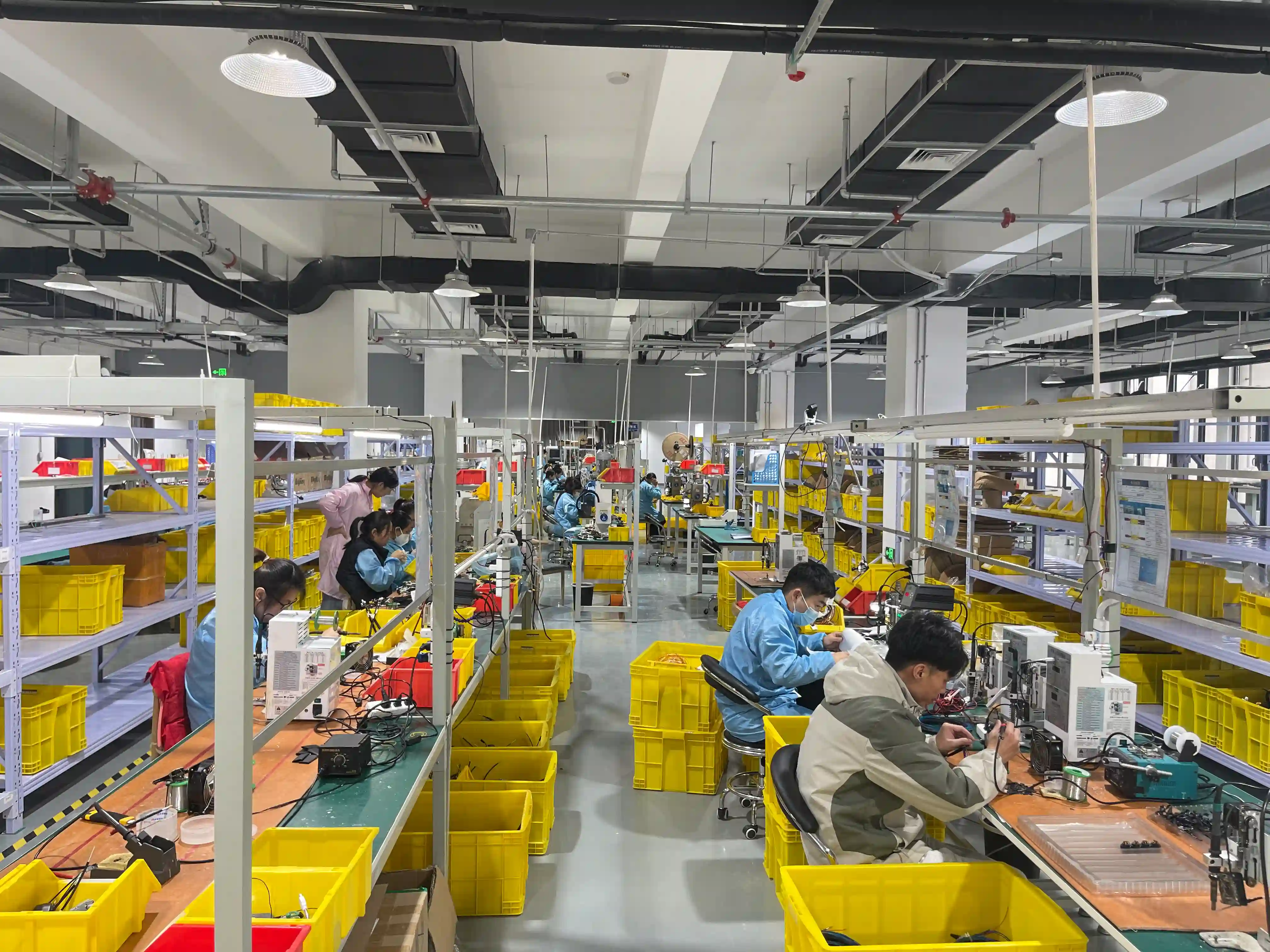
Factory assembly may take only hours, but unresolved program questions extend the calendar. Stable prints, BOMs, labels, tests, and approved substitute paths keep production from becoming the schedule constraint.
Seven Moves That Cut Calendar Time
Standardize the BOM before demand spikes
Part proliferation quietly destroys lead time. Every extra terminal family, seal variant, and protection sleeve adds sourcing complexity. Consolidating to fewer approved parts lowers procurement risk and makes shortages easier to absorb.
Run DFM before the PO becomes urgent
A fast PO into a bad drawing is still a slow project. Resolve conductor gauge, strip lengths, connector orientation, test method, labels, and pack-out rules before the program enters the factory queue.
Qualify alternates before shortages happen
Approved alternate wire, terminals, insulation systems, or backshell accessories are only useful if they are already validated. Reactive substitution during a shortage usually creates approval delay and risk at the same time.
Separate prototype logic from repeat-production logic
Prototype jobs need flexibility; repeat jobs need stability. Using the same release path for both creates confusion, especially around first article approval, material reservation, and test fixture readiness.
Treat approvals as a planned workflow, not email drift
Many schedules slip because samples are waiting in inboxes. Build an approval cadence with named owners, target response windows, and clear pass/fail criteria so first article feedback does not disappear into general correspondence.
Reserve test readiness at the same time you reserve material
A harness is not shippable when assembly ends; it is shippable when testing, records, and labeling also close. That means continuity, hipot, pull-force, or functional fixture planning should happen alongside procurement, not after the first build finishes. Programs that treat testing as a final-step detail often lose multiple days to avoidable rework.
Use expedites surgically, not emotionally
Expedites are useful when capacity exists and the program is otherwise ready. They are wasteful when the true blocker is engineering or material. Before paying expedite charges, confirm whether the date is constrained by component availability, approval lag, or line queue. If you do not know which one is limiting throughput, you are paying for motion instead of progress.
Procurement Strategy and Alternate Approval
For many cable assembly programs, procurement is where most time is won or lost. A BOM that depends on one connector family, one plating option, or one specialty cable jacket becomes fragile immediately. This is especially true in automotive, medical, and industrial control programs where the most constrained parts are often the ones with the longest qualification chain.
The most effective procurement strategy is to split components into three groups. First are controlled parts with no substitution flexibility, such as customer-mandated connectors or regulated materials. Second are parts with qualified alternates, such as approved wire constructions or equivalent protection materials. Third are opportunistic parts that can be standardized across multiple programs. Once you classify the BOM that way, lead-time risk becomes measurable instead of anecdotal.
This is also where formal systems help. An ISO 9001 quality management approach matters because disciplined revision control, supplier qualification, and change approval reduce schedule drift just as much as they reduce defects. On workmanship-controlled products, keeping the release aligned with IPC/WHMA-A-620 expectations prevents downstream inspection surprises that would otherwise hold shipment.
No Substitute
OEM-mandated connectors, medical-grade materials, safety-listed power components, or validated overmold compounds. These parts need forecast discipline because redesign is usually slower than waiting.
Prequalified Alternate
Wire, terminals, seals, labels, braid, or tubing with known validation limits. These parts are the fastest way to recover schedule without compromising release control.
Standardized Commodity
Common consumables and protection materials that can be shared across multiple product families. Standardization reduces purchasing overhead and buffer inventory complexity.
Approve alternates before they are urgently needed. Once a shortage stops the build, every unanswered validation question adds schedule delay.
Factory Scheduling, Testing, and Release Discipline
Once material is ready, the next gains come from disciplined release control. Stable repeat jobs should not compete in the same lane as experimental prototypes or incomplete engineering samples. A clean scheduling model groups similar harness families, protects the critical path for repeatable jobs, and keeps high-variability prototype work from disturbing mature production.
Testing is another hidden source of delay. If the plan requires continuity, hipot, insulation resistance, pull-force verification, or first article dimensional records, those checks must be matched with fixtures, equipment, and approval criteria before the first unit is assembled. Otherwise the job appears complete on the floor but remains blocked at release. Our guides on testing methods and quality inspection points show why this matters operationally: the fastest build is not the one that ends first, but the one that clears test and documentation without looping back.
The same principle applies to packaging, labeling, and shipping instructions. If labels, lot traceability, carton counts, or export paperwork are not defined at release, the schedule can still slip after the harness is electrically good. That delay gets blamed on the factory even though the real failure was release incompleteness.
Capacity Logic
Reserve line time for recurring harness families instead of scheduling every order as a brand-new event.
Fixture Readiness
Confirm test boards, adapters, and acceptance criteria before the first assembled unit reaches inspection.
Approval Windows
Use named customer approvers and target response windows so sample signoff does not drift indefinitely.
Metrics That Matter
If you only track promised ship date and actual ship date, you learn too late. Strong teams break lead time into controllable segments and review them independently. Quote-to-release time tells you whether commercial alignment is disciplined. Material-readiness time tells you whether the BOM is resilient. First article cycle time shows whether approval ownership is clear. Schedule adherence and first-pass yield show whether the factory is executing the released plan without churn.
That measurement discipline creates better decisions than blanket expediting. If procurement is causing 70% of the delay, spend energy on alternates, forecasts, and BOM simplification. If approvals are causing 70% of the delay, redesign the communication workflow. If the line is truly overloaded, then capacity, cross-training, or batch planning is the right lever. This is simple in principle, but most delayed programs still lump every lost day into one vague category called "lead time."
Recommended Lead Time Dashboard
Frequently Asked Questions
What is a normal cable assembly lead time for production orders?
For stable builds with approved materials and no tooling changes, many production orders run in roughly 2 to 6 weeks. Prototype jobs can move in 48 hours to 2 weeks, but long-lead connectors, custom overmolding tools, and first-article approval can extend schedules beyond 8 weeks.
What usually causes the biggest lead time delays in wire harness manufacturing?
The biggest delays usually come from long-lead connectors, drawing revisions after release, missing test requirements, custom tooling, and waiting for customer approvals. In many programs, the true bottleneck is not assembly labor but procurement and engineering churn before production starts.
How much lead time can DFM review reduce in a cable assembly project?
A disciplined DFM review often removes 10% to 30% of total calendar time by eliminating revision loops, reducing unnecessary part variety, and confirming test, labeling, and packaging requirements before the first build starts. The biggest gains usually come before the line is scheduled.
Does adding alternate materials help shorten lead time?
Yes, if alternates are approved before a shortage hits. A prequalified second source for wire, terminals, or protection materials can cut several weeks from recovery time. If the alternate is introduced after a shortage begins, validation and approval can erase most of the time savings.
Should buyers expedite cable assembly orders to reduce lead time?
Expediting can help when the only issue is queue priority, but it does not fix unavailable components or incomplete release data. Paying expedite fees without solving the bottleneck often increases cost by 10% to 25% while moving ship date by only a few days.
Which metrics should I track to improve cable assembly lead time?
Track quote-to-release days, material readiness, first-pass yield, first-article approval cycle, supplier on-time delivery, and schedule adherence. Separating engineering delay from procurement delay from factory delay is critical because each one requires a different corrective action.
Related Reading
Wire Harness DFM Checklist
Prevent revision churn before procurement and production start.
Read articleMaterial Substitution in Wire Harness Manufacturing
Build alternate approval paths before shortages force rushed decisions.
Read articleFirst Article Inspection for Cable Assembly
Speed approval cycles with cleaner FAI packages and acceptance criteria.
Read article