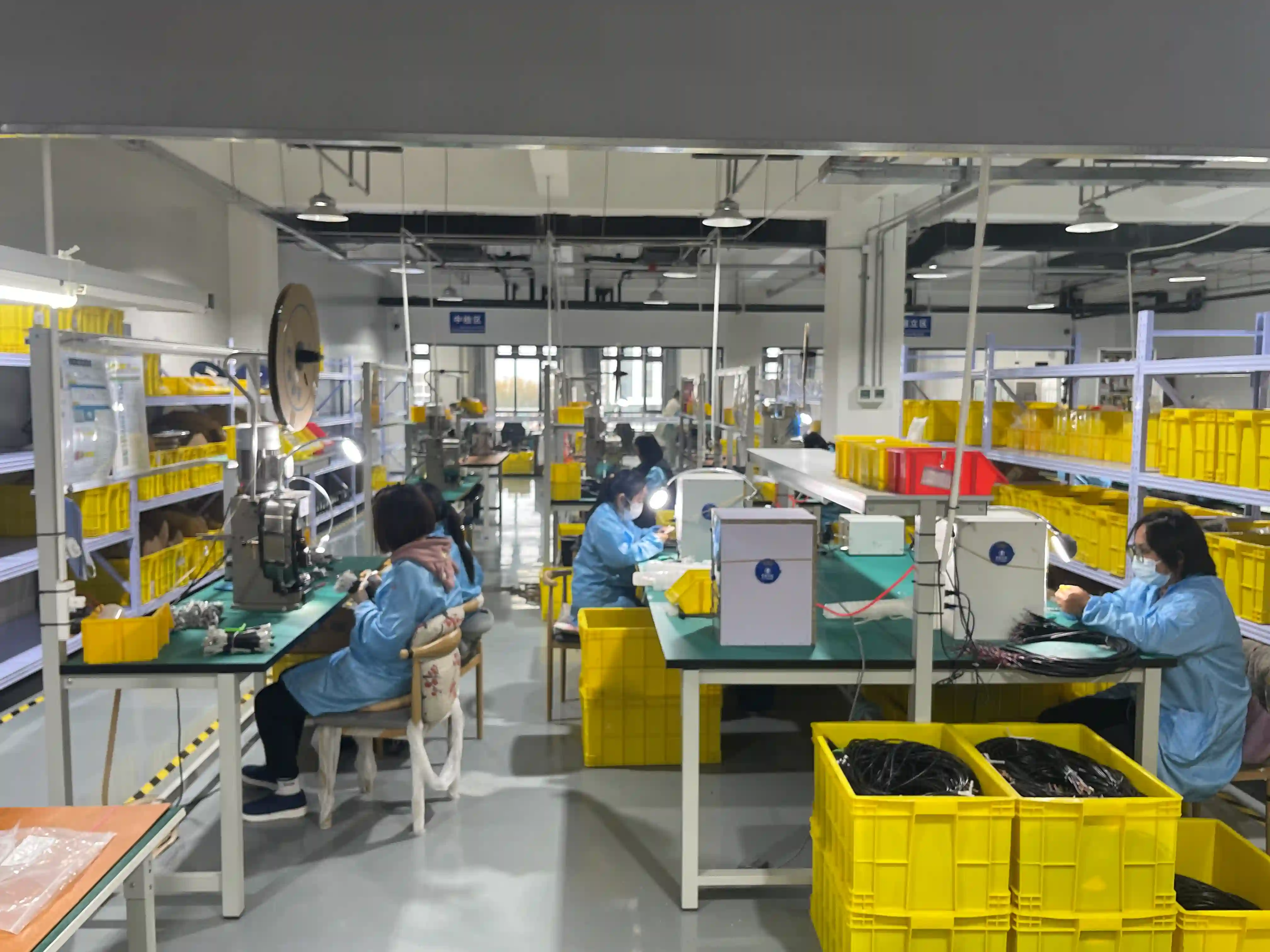
A wire harness for a pacemaker has almost nothing in common with one for a construction excavator—except they're both bundles of wires that need to work flawlessly. The materials, testing, certifications, and design philosophy are completely different.
For industry reference, see cable harness and IPC standards.
This guide explains what makes each industry's harness requirements different, which certifications may apply, and which common design and sourcing pitfalls to avoid.
Industries Covered
1. Automotive
Automotive wire harnesses are the nervous system of modern vehicles—connecting everything from engine sensors to infotainment systems. A typical vehicle contains 40+ kilometers of wiring and over 700 connectors.
Key Requirements:
| Requirement | Details |
|---|---|
| Quality Certification | IATF 16949 mandatory for OEM supply |
| Temperature Range | -40°C to +125°C (engine bay to +150°C) |
| Connector Standards | TE, Molex, Delphi, Deutsch |
| Testing | 100% electrical + vibration + thermal cycling |
| Documentation | PPAP, FMEA, Control Plans, full traceability |
Subsystems we serve: Engine harnesses, instrument panels, door modules, sensor connections, lighting systems, and HVAC controls.
2. Medical Devices
Medical cable assemblies face the most stringent requirements of any industry. When a cable connects to life-sustaining or life-saving equipment, there's zero tolerance for failure.
Critical Considerations:
- Biocompatibility: Patient-contact cables must use biocompatible materials (ISO 10993 tested)
- Sterilization: Cables may need to withstand autoclave (steam), EtO, or gamma sterilization
- EMI immunity: Critical for devices near MRI or surgical equipment
- Flexibility: Patient cables need high flex life without signal degradation
- Cleanability: Surfaces must withstand hospital disinfectants
Certification: Our ISO 13485 certification demonstrates our quality system meets medical device manufacturing requirements. We support Class I, II, and III device manufacturers.
3. Aerospace & Aviation
Aerospace wiring operates in extreme conditions—high altitude pressure differentials, wide temperature swings, constant vibration, and zero opportunity for field repair during flight.
Aerospace Standards:
- Wire specification: MIL-W-22759 (ETFE insulation) or MIL-W-81044 (crosslinked)
- Connectors: MIL-DTL-38999 circular connectors with EMI/EMP protection
- Crimping: MIL-STD-1553 compliant crimp specifications
- Documentation: Full material traceability, first article inspection reports
Weight is critical—we help optimize designs using smaller gauge wire where current ratings allow and specifying lightweight aluminum shielding where copper isn't mandatory.
"Medical and aerospace customers often ask the same question: 'What happens if this cable fails?' When the answer involves patient safety or aircraft safety, the design conversation changes completely. Cost optimization takes a backseat to reliability engineering."
OurPCB Engineering Team
On Critical Applications
4. Industrial Control & Automation
Industrial control harnesses connect PLCs, sensors, actuators, and HMIs in factory environments. These harnesses face oil, coolants, electromagnetic interference, and constant vibration from nearby machinery.
Common Requirements:
- IP ratings: IP65 to IP67 for protection against water jets and dust
- Connectors: M12 and M8 industrial standards
- EMC: Shielded cables for noise-sensitive signal transmission
- Chemical resistance: PUR or PVC jackets rated for specific oil types
We work with brands like Phoenix Contact and WAGO for terminal block solutions that simplify field installation and troubleshooting.
5. Robotics & Motion Control
Robotics cables face perhaps the most demanding flex requirements of any industry. A robot arm cable might flex millions of times over its service life—and every flex is a potential failure point.
High-Flex Specifications:
| Flex Type | Bend Cycles | Application |
|---|---|---|
| Standard Flex | 1-2 million cycles | Linear actuators, pick-and-place |
| High Flex | 5-10 million cycles | 6-axis robots, continuous motion |
| Torsion Flex | Specialized | Rotating joints, tool changers |
Our high-flex cable assemblies use specialized conductor constructions (fine-stranded copper with specific lay lengths) and jacket materials designed for continuous bending.
6. Electric Vehicles & New Energy
EV and new energy applications have transformed the wire harness industry. High-voltage battery systems, charging infrastructure, and solar installations require specialized high-voltage harnesses that didn't exist a decade ago.
EV-Specific Requirements:
- Voltage class: 400V and 800V battery systems require orange-jacketed cables per safety standards
- Shielding: EMI shielding critical around power electronics
- Thermal management: High-temperature ratings near battery packs and inverters
- Safety: Interlock circuits, pilot/proximity lines for charging systems
- Connectors: Anderson, Amphenol high-voltage series
7. Marine
Marine wire harnesses battle salt water, UV exposure, and constant vibration. Corrosion is the enemy—a single exposed copper strand will corrode and eventually fail.
Marine Specifications:
- Wire type: Tinned copper conductors (corrosion resistance)
- Insulation: UV-stabilized, oil-resistant materials
- Connectors: IP68 sealed connectors
- Standards: ABYC (American Boat & Yacht Council), USCG requirements
8. Agriculture
Agricultural equipment harnesses operate in dusty fields, through mud, and under blazing sun. They need to survive seasons of abuse with minimal maintenance.
The demands are similar to heavy construction: Deutsch sealed connectors, heavy-wall tubing protection, and strain relief at every stress point. GPS, precision agriculture sensors, and ISOBUS communication add modern connectivity requirements.
9. Telecommunications
Telecom cable assemblies prioritize signal integrity. Whether it's fiber optic, coaxial RF, or high-speed Ethernet, maintaining signal quality across distance is the fundamental challenge.
Signal Integrity Factors:
- Impedance control: Precise 50Ω or 75Ω for RF applications
- Shielding: Double or triple shielding for EMI rejection
- Connector quality: RF connectors with tight VSWR specifications
- Testing: Network analysis, time-domain reflectometry
10. Defense & Military
Military wire harnesses combine the toughest requirements from other industries: aerospace reliability, marine corrosion resistance, industrial ruggedness, and extensive documentation.
MIL-SPEC Requirements:
- Connectors: MIL-DTL-38999, MIL-DTL-5015 circular connectors
- Wire: MIL-W-22759, MIL-W-81044 specifications
- Workmanship: NASA-STD-8739.4 or equivalent
- Testing: Environmental stress screening, shock & vibration
- Documentation: Full lot traceability, first article inspection
"Every industry thinks their requirements are unique—and they're right. But the fundamentals don't change: understand the environment, specify the right materials, verify with proper testing. The industry-specific knowledge is knowing which fundamentals matter most."
OurPCB Engineering Team
On Cross-Industry Experience
Industry Comparison at a Glance
| Industry | Key Certification | Primary Challenge | Common Connectors |
|---|---|---|---|
| Automotive | IATF 16949 | Volume, temperature | TE, Molex, Delphi |
| Medical | ISO 13485 | Biocompatibility | Custom, Amphenol |
| Aerospace | AS9100 | Weight, reliability | MIL-DTL-38999 |
| Industrial | ISO 9001 | EMC, durability | M12, Phoenix Contact |
| Robotics | ISO 9001 | Flex life | Custom, igus |
| EV/Energy | IATF 16949 | High voltage safety | Anderson, Amphenol |
| Marine | ABYC | Corrosion | Deutsch, sealed |
| Agriculture | ISO 9001 | Dust, abuse | Deutsch DT/DTP |
| Telecom | TL 9000 | Signal integrity | RF, fiber optic |
| Defense | MIL-STD | Documentation | MIL-SPEC circular |
Working Across Industries
Our cross-industry experience is an advantage for customers. Solutions developed for automotive temperature extremes can apply to oil & gas. Medical cleanliness requirements inform semiconductor cleanroom harnesses. Aerospace weight optimization techniques help robotic applications.
Whether your project falls neatly into one category or spans multiple industries, our engineering team can navigate the requirements and deliver the right solution.
FAQ
Which industry usually has the toughest documentation requirement for wire harnesses?
Aerospace, defense, and medical programs usually lead because they combine material traceability, revision control, and validation records under standards such as AS9100, ISO 13485, or MIL-spec procurement flow-downs.
What harness changes first when moving from industrial to automotive applications?
Usually the validation stack. Automotive programs quickly add temperature cycling, vibration, CPA retention, and PPAP expectations under IATF 16949, even when the electrical schematic only changes a little.
Do marine wire harnesses need different materials than land vehicles?
Yes. Marine harnesses usually call for tin-plated copper, sealed connectors, and corrosion-resistant support hardware because salt fog can attack standard terminals in well under 500 hours if the finish is wrong.
How do robotics cable requirements differ from general industrial cable?
Robotics adds dynamic flex life, torsion, and bend-radius limits. It is common to validate 5 to 10 million cycles or more, which pushes the design toward fine stranding, TPE jackets, and controlled clamp geometry.
Can one supplier support multiple industries with the same process controls?
Yes, but only if the core system is disciplined. A factory can share crimp validation, 100% electrical testing, and traceability infrastructure across industries while layering the extra records or standards each market demands.
"Wire Harness Solutions for 10 Key Industries: Requirements & Standards only becomes production-ready after measurable validation. That usually means 100% continuity, a defined insulation threshold such as 500 VDC, and one application-specific check tied to IEC 60529, UL, or the customer's own spec."
Explore Industries
About OurPCB Engineering Team
OurPCB Engineering Team has supplied wire harnesses to manufacturers in all 10 industries covered in this article. Its cross-industry perspective helps customers understand what's truly necessary versus over-specified, and where proven solutions from one industry can solve problems in another. Contact our engineering team for industry-specific consultation.