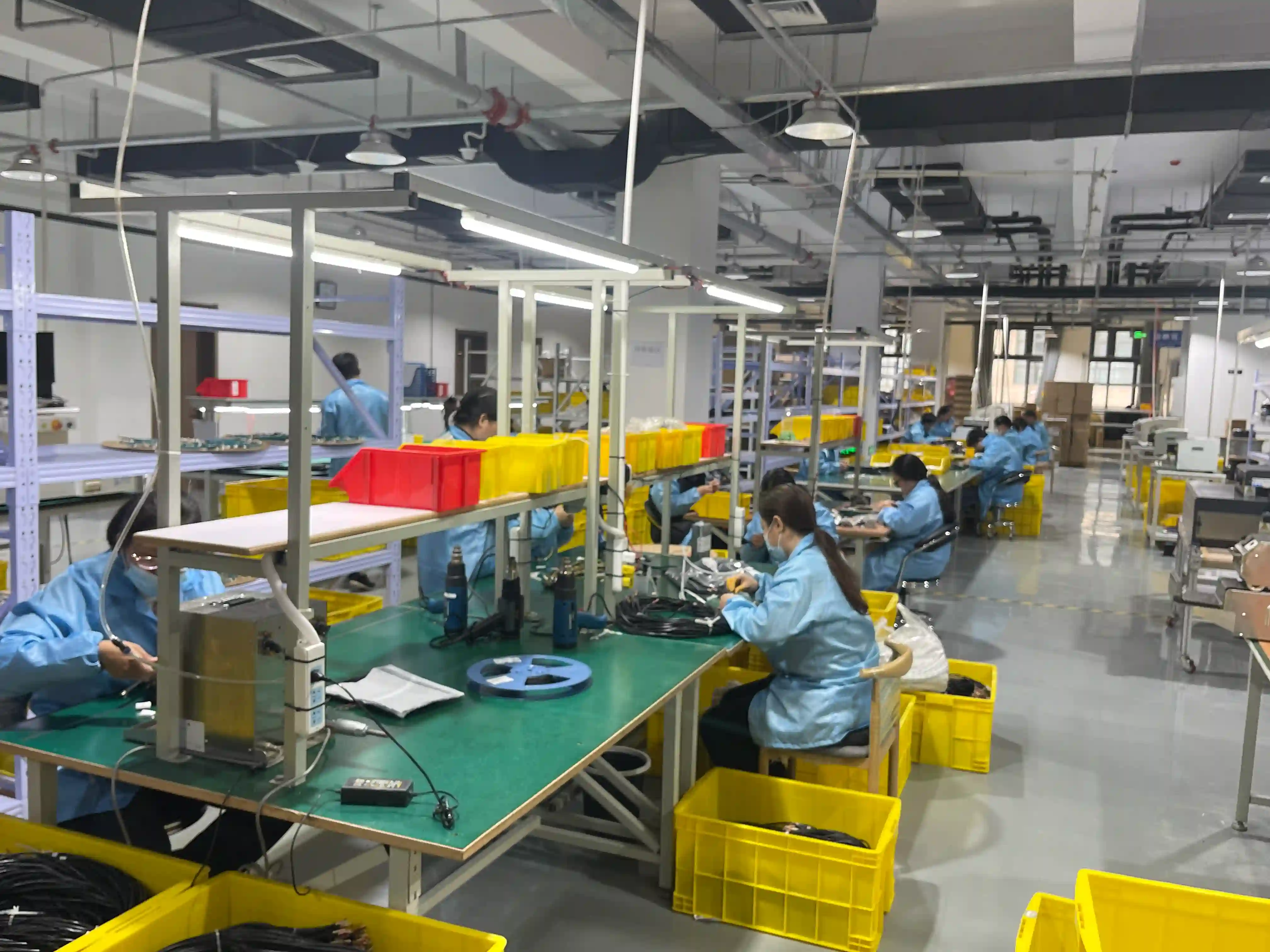
The global wire harness market reached $103.59 billion in 2025 and is projected to grow to $147.46 billion by 2034, driven by electric vehicle adoption, medical device innovation, and industrial automation. As production complexity increases and quality demands tighten, more manufacturers are confronting a fundamental question: should we build wire harnesses in-house, or outsource to a contract manufacturer?
This isn't a simple cost comparison. The make-vs-buy decision involves capital investment, labor strategy, quality systems, intellectual property, scalability, and long-term competitive positioning. Get it right, and you free up resources, reduce costs, and gain access to specialized capabilities. Get it wrong, and you face quality problems, delivery failures, or sunk capital in equipment you can't fully utilize.
Whether you're evaluating outsourcing for the first time or reconsidering your current sourcing strategy, this guide provides the analytical framework, cost models, and evaluation criteria you need to make a confident decision. For related guidance on selecting the right manufacturing partner, see our top 8 questions to ask your cable assembly supplier and our guide to spotting red flags in supplier evaluation.
The True Cost of In-House Wire Harness Manufacturing
Many companies underestimate the full cost of in-house wire harness production because they focus on direct labor and material costs while overlooking the substantial infrastructure investment required. Before you can produce a single harness, you need equipment, space, trained personnel, and quality systems—all of which represent significant capital and ongoing expense.
Capital Investment
- Automated crimping machines: $15,000–$80,000 each
- Wire cutting and stripping equipment: $10,000–$50,000
- Continuity and hipot testers: $5,000–$40,000
- Assembly boards, tooling, fixtures: $20,000–$100,000
- Total minimum setup: $200,000–$500,000+
Ongoing Operational Costs
- Trained assemblers: $35,000–$55,000/year each (loaded)
- Quality inspectors and supervisors: $50,000–$75,000/year
- Facility space: 2,000–10,000 sq ft at $10–$25/sq ft
- Equipment maintenance and calibration: $15,000–$40,000/year
- Inventory management, scrap, and rework: 3–8% of material cost
Hidden Costs Most Companies Overlook
- • IPC/WHMA-A-620 training and certification costs
- • Applicator changeover time between product runs
- • Material minimum order quantities and waste from short runs
- • Engineering time for fixture design and process development
- • Quality system maintenance (ISO 9001, UL compliance)
- • Employee turnover and retraining (industry average: 25%+)
A common sourcing mistake is comparing an internal direct labor rate against a contract manufacturer's piece price without accounting for equipment depreciation, quality system overhead, material waste, and the opportunity cost of management attention. A complete total-cost analysis should include all of these factors.
Benefits of Outsourcing Wire Harness Manufacturing
Contract manufacturers who specialize in wire harness production operate at a fundamentally different cost structure than companies for whom harness assembly is a secondary activity. Their advantages compound across multiple dimensions, from purchasing power to process expertise, and these benefits are particularly significant for companies whose core competencies lie outside of cable assembly.
Immediate Cost Savings
Avoid $200K–$500K+ in capital equipment investment. Convert fixed costs to variable costs that scale with actual demand, eliminating the risk of underutilized equipment during slow periods.
Specialized Expertise & Equipment
Access automated crimping, ultrasonic welding, laser wire marking, and advanced testing equipment without purchasing it. Benefit from operators with thousands of hours of harness assembly experience.
Scalability & Flexibility
Scale from prototype quantities of 10 units to production runs of 100,000+ without hiring, training, or capital investment. Respond to seasonal demand swings without carrying overhead during slow periods.
Quality & Compliance
Leverage existing ISO 9001, IATF 16949, UL, and IPC/WHMA-A-620 certifications that would cost $50,000–$150,000 and 6–12 months to achieve independently.
Volume Purchasing Power
Contract manufacturers buy connectors, terminals, wire, and sleeving in bulk across all their customers, securing volume discounts that a single company cannot match on its own.
Focus on Core Competencies
Free up engineering, management, and floor space to focus on what differentiates your product—whether that is electronics design, software, system integration, or customer relationships.
For a deeper look at how manufacturing efficiency drives cost savings, see our article on lean manufacturing principles for wire harness production.
Risks and Challenges of Outsourcing
Outsourcing is not without risk. Understanding these challenges upfront allows you to mitigate them through proper supplier selection, contractual protections, and communication protocols. The most common issues are avoidable when you know what to watch for.
Intellectual Property Concerns
Sharing designs with an external manufacturer creates IP exposure. Mitigate with NDAs, restricted access to full system drawings, and choosing manufacturers with established IP protection track records.
Quality Control at Distance
You lose direct oversight of production. Counter this by requiring IPC/WHMA-A-620 compliance, establishing incoming inspection protocols, and scheduling regular audits. Request first-article inspection reports for every new product.
Communication & Coordination
Engineering changes, rush orders, and quality issues require fast communication. Choose suppliers in compatible time zones and establish dedicated project contacts. Delays often stem from unclear specifications, not supplier incompetence.
Lead Time Dependencies
Typical outsourced lead times are 2–6 weeks depending on complexity and component availability. Plan accordingly and maintain safety stock for critical assemblies. Domestic suppliers offer 1–3 week advantages over offshore.
Minimum Order Quantity Constraints
Many contract manufacturers require MOQs of 50–500 units to cover setup costs. This can be challenging for low-volume, high-mix programs. Look for manufacturers that specialize in prototype-to-production flexibility.
Domestic vs Nearshore vs Offshore: A 2026 Comparison
Once you decide to outsource, the next decision is where. Each region offers distinct advantages and trade-offs. The right choice depends on your volume, quality requirements, lead time sensitivity, and cost targets. For a more detailed comparison of the two dominant offshore and nearshore options, see our China vs Mexico wire harness manufacturing guide.
| Factor | USA (Domestic) | Mexico (Nearshore) | Asia (Offshore) |
|---|---|---|---|
| Labor Cost | $18–$30/hr | $3–$5/hr | $2–$5/hr |
| Typical Lead Time | 1–3 weeks | 2–4 weeks | 6–10 weeks |
| Import Tariffs | None | 0–25% (USMCA) | 25–54%+ |
| IP Protection | Excellent | Good | Variable |
| Quality Oversight | Easy site visits | Day-trip audits | $3–5K per visit |
| Communication | Same time zone | 0–2 hr difference | 12–15 hr difference |
| Shipping Cost | $200–$800 | $500–$2,000 | $3,000–$8,000 |
| Best For | Low volume, fast turn | Mid-high volume | Very high volume |
How to Evaluate a Contract Manufacturer
Not all contract manufacturers are equal. A thorough evaluation should cover certifications, technical capabilities, supply chain maturity, financial stability, and communication quality. The Wire Harness Manufacturers Association (WHMA) provides industry standards that serve as useful benchmarks for evaluation.
Essential Certifications Checklist
- ISO 9001:2015 — Quality management system (baseline requirement)
- IATF 16949 — Automotive quality standard (required for automotive)
- UL Recognition — Underwriters Laboratories product safety
- IPC/WHMA-A-620 — Wire harness workmanship standard
- ISO 13485 — Medical device quality (if applicable)
Technical Capabilities Assessment
- Automated and semi-automated crimping capability
- 100% electrical testing (continuity, hipot, insulation resistance)
- Crimp force monitoring and pull testing equipment
- Prototype through production volume capability
- Engineering support for DFM review and optimization
Supply Chain & Financial Stability
Beyond technical capability, evaluate the manufacturer's supply chain maturity and business stability. Key indicators include established relationships with major connector distributors (Molex, TE Connectivity, JST), inventory management systems, consistent on-time delivery performance above 95%, and financial stability demonstrated through years in business and customer reference diversity.
According to IBISWorld industry data, there are approximately 271 wire harness manufacturers in the United States employing 15,494 workers, providing a reasonable pool of qualified domestic suppliers for evaluation.
Contract-manufacturer evaluation should include a representative first-article inspection report, recent crimp-force monitoring data, and relevant customer references. A supplier's ability to provide objective evidence helps demonstrate its quality culture.
Building Your ROI Model
A rigorous cost comparison requires looking beyond piece price. Total cost of ownership includes everything from capital depreciation and labor overhead to quality costs and opportunity costs. The following framework captures the full picture.
| Cost Component | In-House | Outsourced |
|---|---|---|
| Capital Investment | $200K–$500K+ | $0 (tooling only: $1K–$10K) |
| Labor (per unit) | $18–$30/hr loaded | Included in piece price |
| Quality System | $50K–$150K to establish | Included (certified) |
| Scrap & Rework | 5–10% (learning curve) | 1–3% (mature process) |
| Flexibility | Fixed capacity | Scale on demand |
| Lead Time | Faster for small batches | 2–6 weeks typical |
| IP Protection | Maximum | NDA Required |
| Scalability | Limited by equipment | Virtually unlimited |
Break-Even Analysis Rule of Thumb
For most companies, in-house manufacturing becomes cost-competitive only when annual volume exceeds 50,000 units of the same assembly, the product design is stable (fewer than 2 engineering changes per year), and you can dedicate at least 2 full-time assemblers to harness production without pulling them for other tasks. Below these thresholds, outsourcing almost always delivers lower total cost.
When to Keep In-House vs When to Outsource
The decision is rarely all-or-nothing. Many successful manufacturers use a hybrid approach, keeping some production in-house while outsourcing the rest. Here is a decision framework based on the patterns we see across hundreds of client engagements.
Keep In-House When:
High IP sensitivity
Proprietary designs that represent core competitive advantage
Very high, stable volumes
50,000+ units/year with minimal design changes
Unique processes
Specialized techniques not available from contract manufacturers
Same-day need
Production lines that cannot tolerate any external lead time
Outsource When:
Limited capital
Cannot justify $200K–$500K in equipment investment
Variable demand
Seasonal swings, project-based volumes, or growth uncertainty
Need specialized expertise
Complex assemblies requiring IPC-certified workmanship
Faster time to market
Need production-ready assemblies without building internal capability
The Hybrid Model
Many of our most successful clients keep simple, high-volume harnesses in-house (where their equipment utilization is high) while outsourcing complex, lower-volume assemblies that require specialized tooling or diverse connector types. This balances cost efficiency with production flexibility and lets each party focus on what they do best. For guidance on how automated and manual assembly approaches fit into this strategy, see our article on automated vs manual wire harness assembly.
Strong outsourcing relationships treat the contract manufacturer as an extension of their own team—sharing forecasts, involving them in design reviews, and investing time in the relationship. This collaboration helps suppliers flag problems early and propose cost-reduction ideas instead of competing only on the lowest quote.
Frequently Asked Questions
How much can I save by outsourcing wire harness manufacturing?
Most companies see 30–50% total cost savings when switching from in-house to outsourced production, primarily from avoided capital investment, reduced overhead, lower scrap rates, and volume material pricing. The exact savings depend on your current production efficiency, volume levels, and the complexity of your assemblies. Companies with low utilization of existing equipment see the highest savings.
What is the typical lead time for outsourced wire harness production?
Domestic (US) contract manufacturers typically deliver in 2–4 weeks for standard orders and 1–2 weeks for expedited orders. Nearshore (Mexico) lead times are 3–5 weeks including shipping. Offshore (Asia) lead times are 6–10 weeks including ocean freight. Prototype and first-article quantities can often be turned in 5–10 business days domestically.
How do I protect my intellectual property when outsourcing?
Start with a comprehensive NDA before sharing any technical data. Limit drawing access to what the manufacturer needs for production—they don't need your full system-level design. Use domestic or USMCA-region manufacturers for stronger legal protections. Retain ownership of all tooling and fixtures in your contract. Consider segmenting production across multiple suppliers for highly sensitive designs so no single manufacturer has the complete picture.
What minimum order quantities do contract manufacturers require?
MOQs vary widely by manufacturer. High-volume specialists may require 500–5,000 units minimum. Flexible contract manufacturers serving diverse industries often accept orders as low as 25–100 units, though per-unit costs will be higher due to setup amortization. Many manufacturers offer prototype pricing for quantities of 1–10 units at premium rates. The key is matching your volume profile to the right type of manufacturer.
Should I choose domestic or overseas manufacturing?
It depends on your priorities. Choose domestic for fast lead times, easy communication, strong IP protection, and low-to-mid volumes. Choose nearshore (Mexico) for cost-optimized mid-to-high volume production with good lead times and USMCA tariff benefits. Choose offshore (Asia) only for very high volumes where the significant cost savings outweigh the longer lead times, higher tariffs, and reduced oversight. Many companies use a split strategy with domestic for prototypes and urgent orders, and nearshore or offshore for production volumes.
How do I transition from in-house to outsourced production?
Plan for a 3–6 month transition. Start by qualifying the contract manufacturer with a first-article inspection on your simplest assembly. Run parallel production for 1–2 months to validate quality and delivery. Transfer documentation including drawings, bill of materials, test specifications, and workmanship standards. Establish incoming inspection criteria for the outsourced product. Phase out in-house production gradually, keeping your most critical assemblies in-house longest.
External References
Related Articles
China vs Mexico Wire Harness Manufacturing
Complete comparison of offshore vs nearshore production for North American buyers.
Read article8 Cost Reduction Strategies
Proven strategies to reduce wire harness costs by 15–40% without sacrificing quality.
Read articleTop 8 Questions for Your Cable Supplier
Essential questions to ask before choosing a cable assembly manufacturing partner.
Read articleAbout the Author
OurPCB Engineering Team
OurPCB Engineering Team brings over 15 years of combined experience in wire harness manufacturing across automotive, industrial, medical, and consumer electronics sectors. The team has helped 200+ companies navigate the make-vs-buy decision for wire harness manufacturing, developing sourcing strategies that balance cost efficiency with quality, flexibility, and supply chain resilience.