CAN Bus Cable Assembly
Custom CAN bus cable assemblies engineered for reliable vehicle and industrial network communication. Impedance-matched shielded twisted pair cables with integrated termination for automotive, heavy-duty, and factory automation applications.
CAN Bus Protocol Support
We build cable assemblies for every major CAN-based communication protocol, each with the correct cable specification, connector system, and termination.
CAN Bus Cable Engineering
Every CAN bus cable assembly is engineered for signal integrity, noise immunity, and long-term reliability in demanding vehicle and industrial networks.
120 Ω Impedance Matching
Precision-controlled characteristic impedance with matched termination resistors for error-free signal transmission across the full bus length.
Shielded Twisted Pair Construction
Tightly twisted CAN_H and CAN_L pairs with foil or braid shielding to reject electromagnetic interference in noisy electrical environments.
Multi-Protocol Compatibility
Cable assemblies designed for SAE J1939, CANopen, CAN FD, DeviceNet, and other CAN-based protocols with correct pinout and termination.
EMI/RFI Noise Immunity
Engineered shielding and proper grounding techniques ensure reliable data transmission in high-noise environments near motors, inverters, and power electronics.
High-Speed CAN FD Support
Cable designs optimized for CAN FD data rates up to 8 Mbps with controlled impedance and low signal attenuation for next-generation vehicle networks.
Harsh Environment Rated
IP67/IP69K rated connector assemblies with oil-resistant, UV-stable, and flame-retardant jacket materials for demanding operating conditions.
Technical Specifications
Detailed specifications for our CAN bus cable assemblies. All parameters conform to ISO 11898 physical layer requirements.
| Protocol Standards | ISO 11898, SAE J1939, CANopen, DeviceNet |
| Data Rate | Up to 8 Mbps (CAN FD) |
| Characteristic Impedance | 120 Ω ± 5% |
| Wire Gauge | 18 AWG – 24 AWG (application dependent) |
| Cable Construction | Shielded twisted pair (STP) |
| Shield Types | Foil, braid, or foil + braid combination |
| Termination Resistance | 120 Ω (1%, ¼W) |
| Connector Types | DB9, M12, OBD-II, Deutsch, terminal block |
| Max Bus Length | 40 m @ 1 Mbps, 1000 m @ 50 Kbps |
| Max Nodes per Segment | 30 (J1939), 127 (CANopen) |
| Operating Temperature | -40°C to +125°C |
| IP Rating | Up to IP69K (connector dependent) |
Our Manufacturing Process
A rigorous 5-step process ensures every CAN bus cable assembly delivers reliable communication on your network.
Protocol & Topology Review
We analyze your CAN network topology, protocol requirements (J1939, CANopen, CAN FD), node count, bus length, and environmental conditions to specify the correct cable and connector solution.
Cable & Connector Selection
Selection of appropriate wire gauge, shielding type, and connector system (DB9, M12, Deutsch) based on your protocol, data rate, and environmental requirements.
Impedance-Matched Fabrication
Precision manufacturing with controlled twist rate and impedance matching. Termination resistors integrated where required. All connections soldered or crimped per IPC/WHMA-A-620 standards.
Electrical Verification
100% continuity testing, impedance measurement, and hi-pot testing. CAN bus signal integrity verification with TDR (Time Domain Reflectometry) analysis for critical applications.
Protocol Validation & Delivery
Functional testing on CAN bus test bench to verify communication at target baud rate. Full documentation package including test reports, certificates of conformance, and traceability records.
Industry Applications
CAN bus networks are the backbone of modern vehicle and industrial communication systems.
Heavy-Duty Vehicles & Trucks
SAE J1939 backbone cables connecting engine ECU, transmission controller, ABS, instrument cluster, and telematics modules in commercial trucks, buses, and construction equipment.
Industrial Automation & Machinery
CANopen and DeviceNet cables for PLC networks, servo drives, sensor arrays, and motion control systems in factory automation, packaging, and CNC machinery.
Marine & Off-Highway Equipment
NMEA 2000 (CAN-based) cables for marine electronics, plus J1939 cables for agricultural equipment, mining vehicles, and forestry machines operating in harsh outdoor conditions.
Agricultural Machinery
ISOBUS (ISO 11783) and J1939 cable assemblies connecting tractor ECUs, GPS guidance, implement controllers, and precision agriculture sensors across the vehicle network.
CAN Bus Connector Systems
We manufacture CAN bus cable assemblies with every standard connector type used across automotive, heavy-duty, marine, and industrial CAN networks. Each connector is correctly pinned per protocol specification.
Automotive & Vehicle
- OBD-II (16-pin diagnostic)
- Deutsch DT/DTM (J1939)
- FAKRA (automotive HSD)
- Micro-Fit / Mini-Fit
- Terminal block (panel mount)
Industrial & Automation
- DB9 / D-sub (CANopen standard)
- M12 circular (IP67/IP69K)
- M8 compact circular
- Phoenix Contact / WAGO
- Custom pin configurations
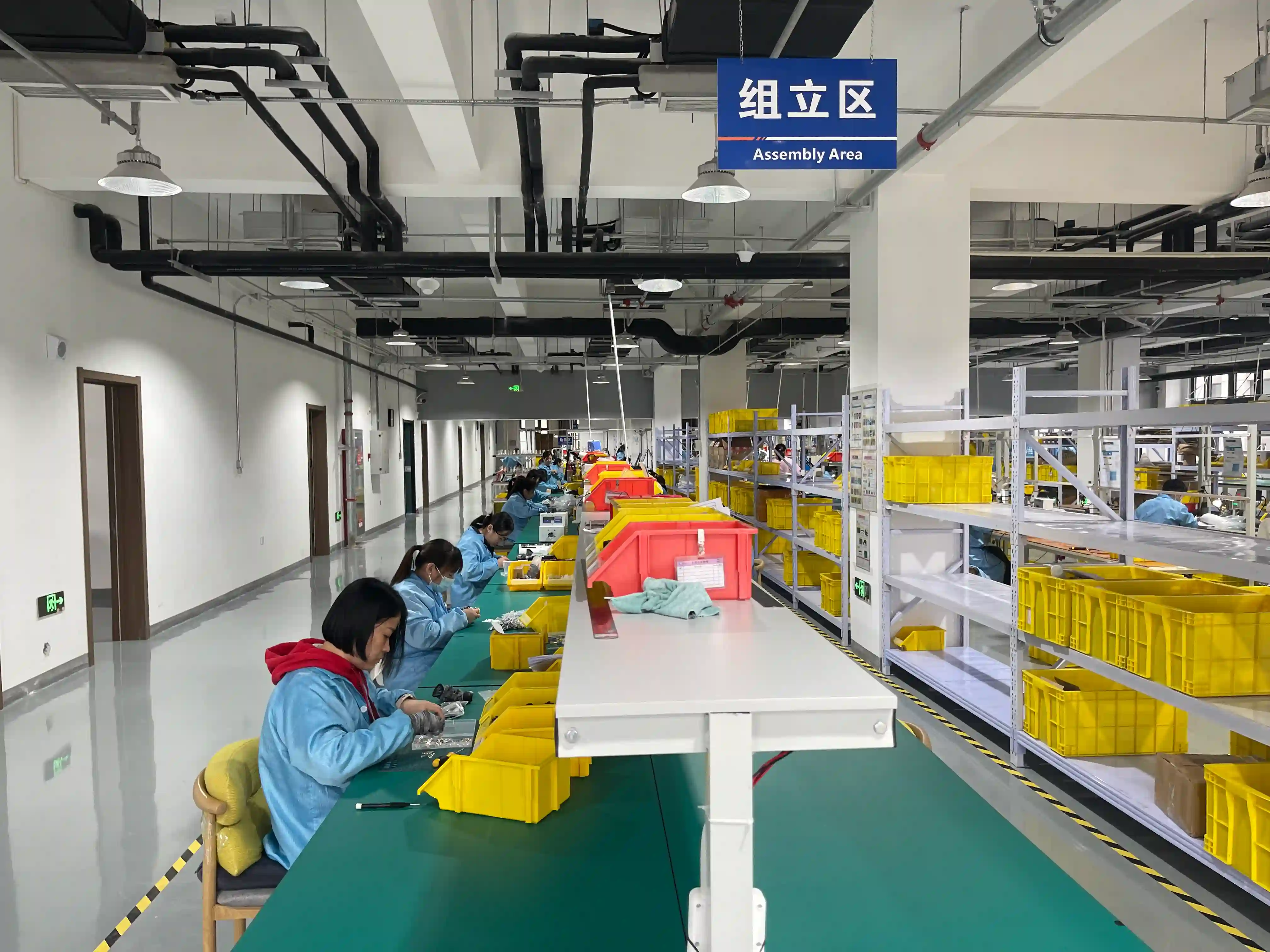
CAN bus cable assemblies demand precision that goes beyond standard wiring. The 120 Ω impedance matching, proper twist rate, and shield termination are non-negotiable — a single impedance discontinuity can corrupt data frames and bring an entire vehicle network down. Signal-integrity testing should verify that the finished assembly meets the network requirements.
Custom CAN Bus Cable Assembly for Vehicle & Industrial Networks
Controller Area Network (CAN bus) has become the dominant communication standard for automotive, heavy-duty vehicle, and industrial automation systems since its introduction by Bosch in the 1980s. As a specialized CAN bus cable assembly manufacturer, OurPCB delivers impedance-matched, protocol-compliant cable assemblies that ensure reliable data transmission across your entire network. Our cable assembly expertise covers every CAN variant from classic CAN 2.0 through high-speed CAN FD.
The physical layer of a CAN bus network is deceptively critical. Unlike Ethernet or USB where the cable simply carries signals point-to-point, CAN bus uses a shared multi-drop bus topology where every node sees every message. This means cable quality directly impacts every device on the network. Incorrect impedance, poor shielding, or improper termination causes bit errors that cascade across all connected ECUs. Our CAN bus cables are manufactured with controlled 120 Ω characteristic impedance and integrated termination resistors to prevent these failures.
For automotive applications, we manufacture SAE J1939 backbone cables for commercial trucks and buses, connecting engine controllers, transmission ECUs, ABS modules, instrument clusters, and telematics units. Our J1939 cables use Deutsch DT/DTM connectors with proper pin assignment per SAE J1939/11 and 18 AWG shielded twisted pair cable rated for the full -40°C to +125°C automotive temperature range.
Industrial CANopen networks require DB9 connectors or M12 circular connectors depending on the environmental requirements. Our CANopen cables support data rates up to 1 Mbps with correct pin assignment per CiA (CAN in Automation) standards. For industrial automation environments, we provide IP67-rated M12 assemblies that withstand coolant spray, vibration, and electromagnetic noise from variable frequency drives.
CAN FD (Flexible Data-rate) is rapidly gaining adoption in modern vehicles, supporting data payloads up to 64 bytes at speeds up to 8 Mbps compared to classic CAN's 8 bytes at 1 Mbps. CAN FD places stricter demands on cable quality — any impedance variation that was tolerable at 250 Kbps may cause frame errors at 8 Mbps. Our CAN FD cable assemblies use premium shielded cable with tight impedance tolerance and low attenuation characteristics verified through TDR testing.
Marine applications use NMEA 2000, a CAN-based protocol for shipboard electronics. Agricultural equipment relies on ISOBUS (ISO 11783), another CAN-based standard connecting tractor ECUs to implements. We serve both marine and agricultural markets with waterproof cable assemblies rated for outdoor exposure, salt spray, and UV radiation.
Quality control is paramount for CAN bus cables. Every assembly receives 100% electrical testing including continuity, insulation resistance, and impedance measurement. Our crimping and soldering processes follow IPC/WHMA-A-620 workmanship standards. Combined with our quality management system, we deliver CAN bus cable assemblies that perform reliably for the life of your product. Contact us to discuss your CAN bus cable assembly requirements.
Many CAN bus communication failures trace back to cable assembly issues — wrong impedance, missing termination, poor shielding, or excessive stub lengths. The cable is the most critical and most overlooked component of the network, so these variables should be controlled before release.
CAN Bus Cable Assembly FAQ
CAN bus cable is specifically engineered with a controlled 120 Ω characteristic impedance using tightly twisted pair construction. Regular cables lack this impedance control, which causes signal reflections, data errors, and communication failures on CAN networks. CAN bus cables also feature proper shielding to reject electromagnetic interference common in automotive and industrial environments.
Yes, we can integrate 120 Ω termination resistors directly into the cable assembly at the specified end nodes. Proper termination at both ends of the CAN bus backbone is essential to prevent signal reflections. We use precision 1% tolerance, ¼W resistors for reliable operation across the full temperature range.
We manufacture CAN bus cables with all standard connector types: DB9 (9-pin D-sub) for CANopen, Deutsch DT/DTM 9-pin for J1939, M12 circular connectors for industrial CAN, OBD-II 16-pin for automotive diagnostics, micro-fit and mini-fit for compact applications, and bare wire/terminal block for panel connections.
Yes, we manufacture CAN FD (Flexible Data-rate) cable assemblies supporting data rates up to 8 Mbps. CAN FD cables require tighter impedance control and lower signal attenuation than standard CAN. We use premium shielded twisted pair cable with controlled geometry to ensure reliable CAN FD communication.
Maximum CAN bus length depends on the data rate. At 1 Mbps, the bus can extend to approximately 40 meters. At 250 Kbps (SAE J1939), the maximum is about 250 meters. At 50 Kbps, lengths up to 1000 meters are achievable. Stub (drop) lines from the backbone to individual nodes should be kept under 1 meter to minimize signal reflections.
Every CAN bus cable assembly undergoes 100% continuity testing, insulation resistance testing, and impedance measurement. For critical applications, we perform Time Domain Reflectometry (TDR) to verify impedance uniformity along the cable length. We can also perform functional CAN bus communication tests at the target baud rate to verify end-to-end signal integrity.
Related Products & Resources
Shielded Cable
EMI-protected cable assemblies
ProductsD-Sub Connectors
DB9 and DB25 assemblies
ProductsM12 Connectors
Industrial circular connectors
ProductsDeutsch Connectors
Heavy-duty vehicle connectors
IndustriesAutomotive Industry
Vehicle wiring solutions
IndustriesIndustrial Automation
Factory network cabling
Real Project Experience
How we've handled similar wire harness and cable assembly projects
See de-identified project scenarios — supplier qualification, connector-shortage recovery, lead-time compression, and engineering spec lockdown — drawn from real production records.
Need CAN Bus Cable Assemblies?
Custom CAN bus cables for J1939, CANopen, CAN FD, and NMEA 2000 networks. Impedance-matched, signal-tested, and ready for your application.